

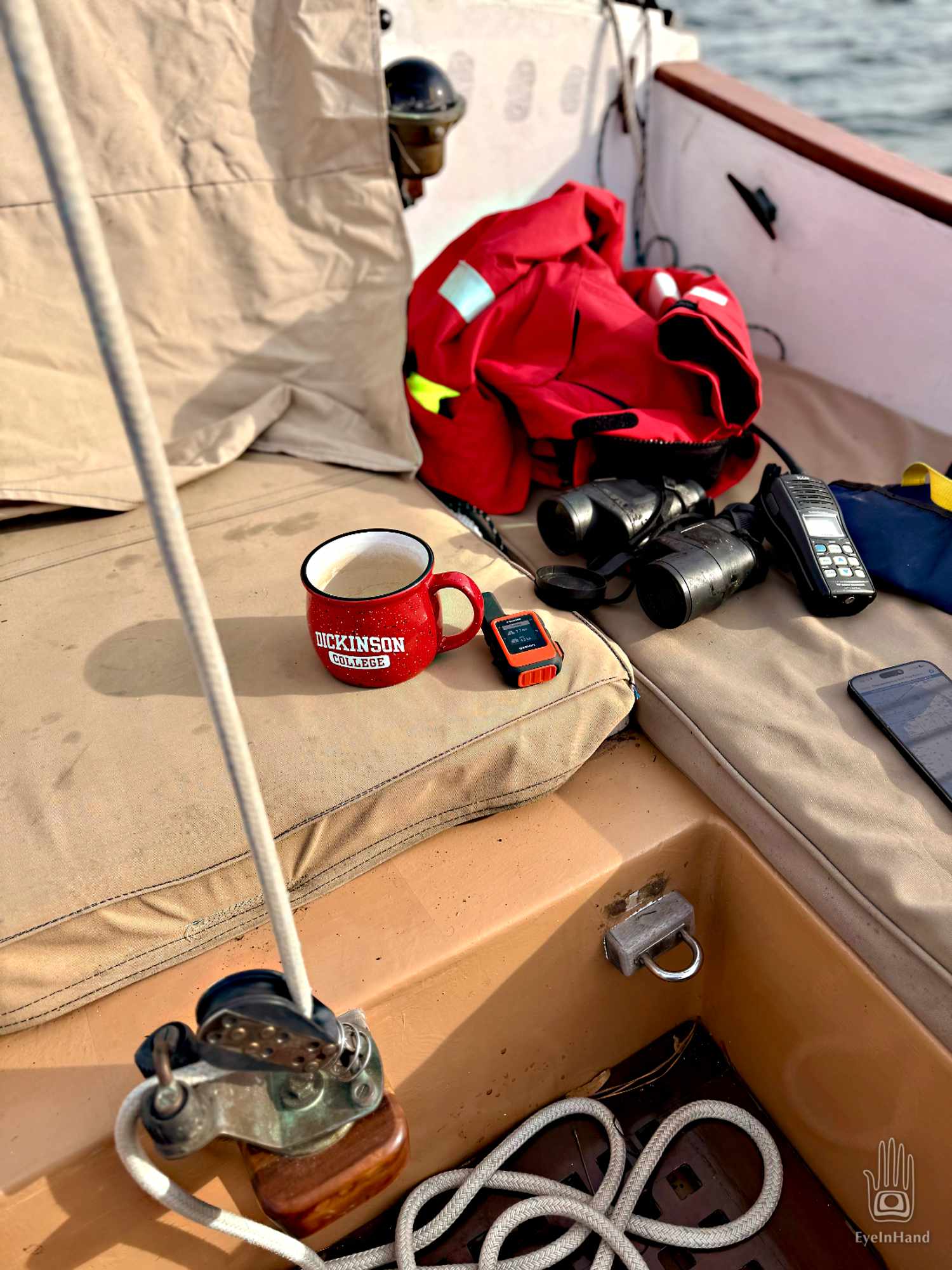
Most people think the captain is always in charge. But there is a brief window every day, ordained by a certain alignment of celestial bodies, when a lowly deckhand is lifted to the pinnacle of importance and completely supersedes the captain’s authority.
This occurs when the sun is in ascension, perpendicular to the zenith, in contact with the horizon. At this precise moment a portal opens. Like a Druid at the solstice in Stonehenge, Buddha beneath the Bodhi Tree, Newton struck by the apple, a muezzin singing the sun to prayer from the top of a minaret, the lowly peon is transformed, becomes a priest in service of a god. He becomes “The Barista”.
Voices are hushed, movements slow and subdued, until the sacrament is complete. The magical elixir is handed up to each member of the crew for their ablutions. At which point normal order resumes, and he who moments ago held the very mysteries of the universe in his hands, is once again a shambling swabbie, sent forward to haul up the anchor from the mud.
Such is the importance of hot coffee on a cold and misty November morning.
Mug of joe in hand, we motor out into sunrise on a mirror of polished brass. Dazzled by the light, we drift out of the winding channel until the keel brushes bottom and we ease her back.


We round Stingray Point and head north across the mouth of the Rappahannock River toward Windmill Point. Birds perch on the poles of fish traps like crucifixes. The sun boils the mist and lifts it overhead, a breeze riffles the water now and then.
The weather forecast is for calm all day, a calm before the storm. It will stay close and quiet until a cold front arrives from the southwest, swings around to west, then north, with gale force winds and a temperature drop of 20 degrees. Timing will be tight. We have started early and need to go hard all day to reach shelter before it catches us. With no wind expected, we’ll have to rely on the motor.
We don’t talk much. I can tell Jonathan is concerned. If we miss this window, it will be days before conditions settle down enough to continue. Logistical complications of a delay are piling up. Mentally, I recite the creeks we’ll pass going north where we can duck for cover.
Ten miles.
Twenty.
Thirty.
The hours drag on to the drone of the motor. The Bay looks slick and greasy, the sun a dull nickel in a murky puddle.

The flat water makes it easy to spot birds migrating south, though. They lift from the surface and clatter off like grasshoppers in tall grass. Hooded Mergansers. Pintails. Blue-winged Teals. Loons.
By late afternoon we spot Smith Point Light with binoculars. It marks the mouth of the Potomac where we’ll make the turn west to exit the Bay. It’s reassuring to see it, but still hours away. A group of watermen in a big open skiff comes astern and sets a drift net. No other boats out.


The sun is getting low, but the sky above is clearing, and we can now see the storm front approaching – a wall of clouds rising to the southwest. Within a half hour it stretches across half the sky. We cut inside the lighthouse to shave a little distance off. Finally we’re in the Potomac and pass Point Lookout. With a soft breeze on the quarter we can raise sails, which improves spirits if not progress. Jonathan recognizes landmarks along the shore. Only an hour or so to go, but now the tide is against us. So maybe two.


It’s full dark by the time we reach the entrance to Smith Creek. Getting in here is less trouble than last night, with a wider channel and clearly lighted markers of red and green. We round into Jutland Creek and the marina where a slip is reserved at the end of the pier. It’s a little too exposed (the regulars take the most protected spots), but at least it’s easy to get into. Which is good, because Jonathan realizes he’s never pulled a boat this size into a slip before. Any size boat, for that matter.
We spend a good hour stowing gear and getting the dock lines just so – enough slack we can jump to the dock, but still keep her from banging pylons. She has to weather wind and waves that will throw punches at us all night. We get cleaned up and head to the marina restaurant for a big hot meal of local seafood and cold beer.


By the time we finish dinner, white caps are charging into the harbor from the Potomac. Boats are bucking in their stalls, halyards are slapping and ringing against metal masts like alarm bells.
I see a bonfire burning bright on a backlot with people around it, so we wander over. It’s a group of retired Greek sport fishermen in folding chairs by the fire, eating pizza out of a box and drinking various concoctions from discrete mugs. They welcome us into the circle and tell their stories of storms and big fish and fooling the game wardens. With a wave of his arm, Gus says the entire dock behind us is now all Greeks, all their boats. (Very big boats.) We’re in their hood. They clearly see themselves as patriarchs of the whole marina. Good people to know.
When we finally leave Gus and his band of merry men, the restaurant is closed and dark.

I wake several times during the night to big gusts that grab Loon and shake her, but she holds her own.
– • O • –
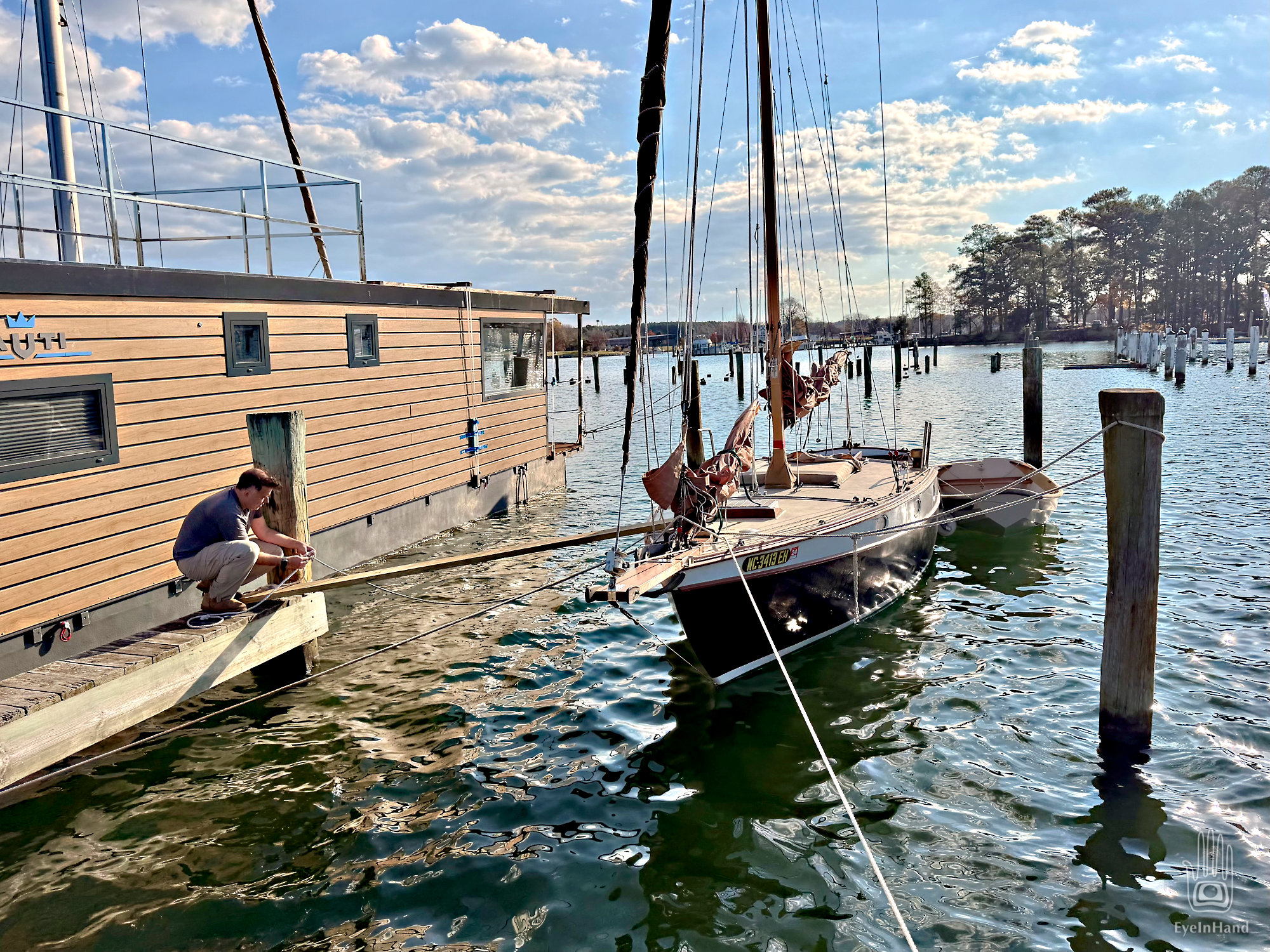
Morning is clear, pleasant calm alternates with sudden blasts of cold wind. Jonathan finds Gus, who shows him where to find a 2×10 we can use for a gangplank. We no longer have to jump back and forth to the boat, but with all the bouncing there’s some acrobatics to it. And we almost lose the plank in the bucking and rocking.

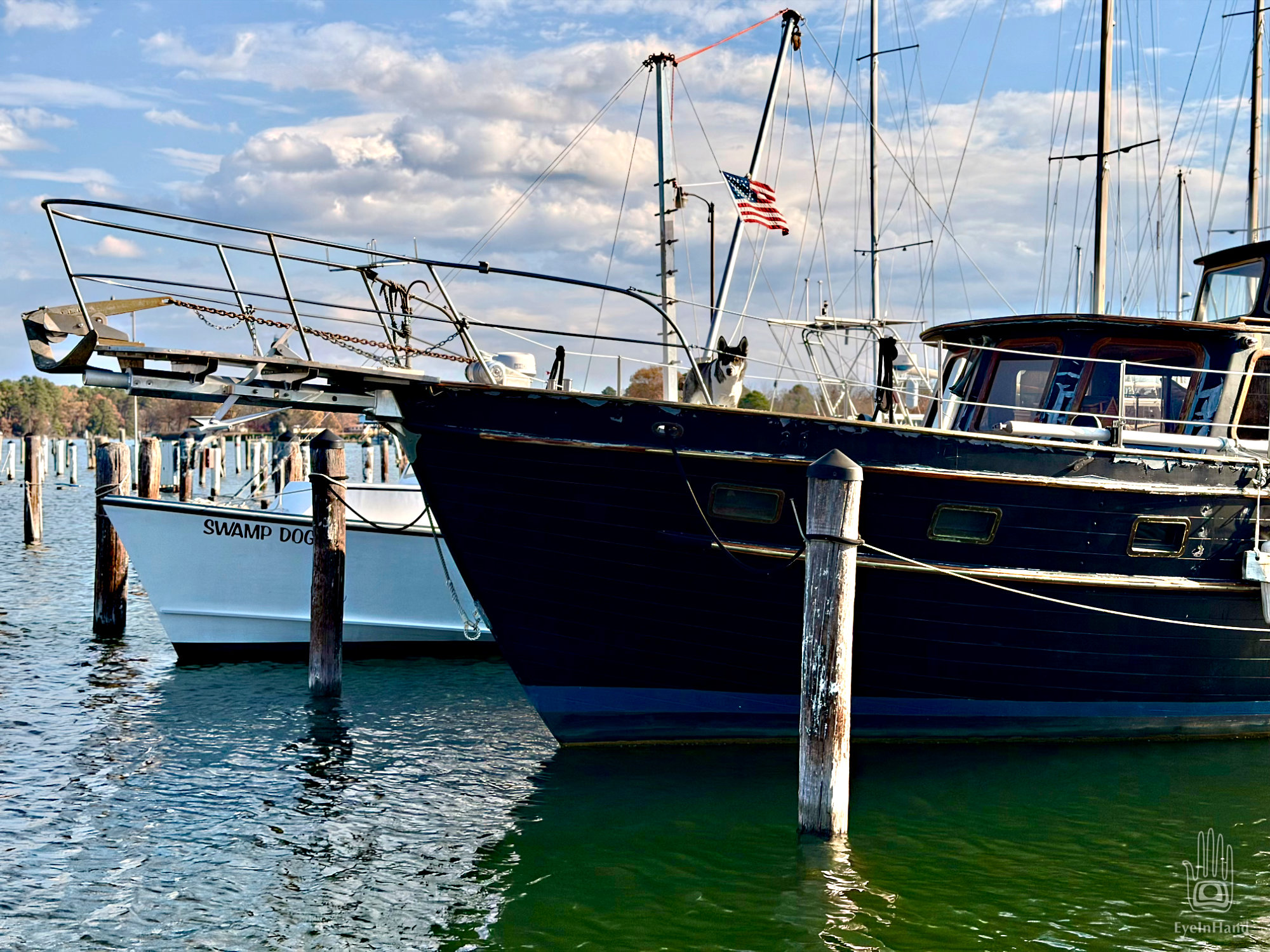
A message from T says she’s on the way. There’s time to wander to docks to see the neighbors. There are many nice boats, some VERY nice (the Greeks) that are so big I can’t get a photo for scale. Not Saudi Prince big, but still. And a couple of live-aboards and “project” boats. One appears to be the pet project of a former marine, done up like a pirate ship. Looks intimidating, but the resident guard dog really, really wants me to play.


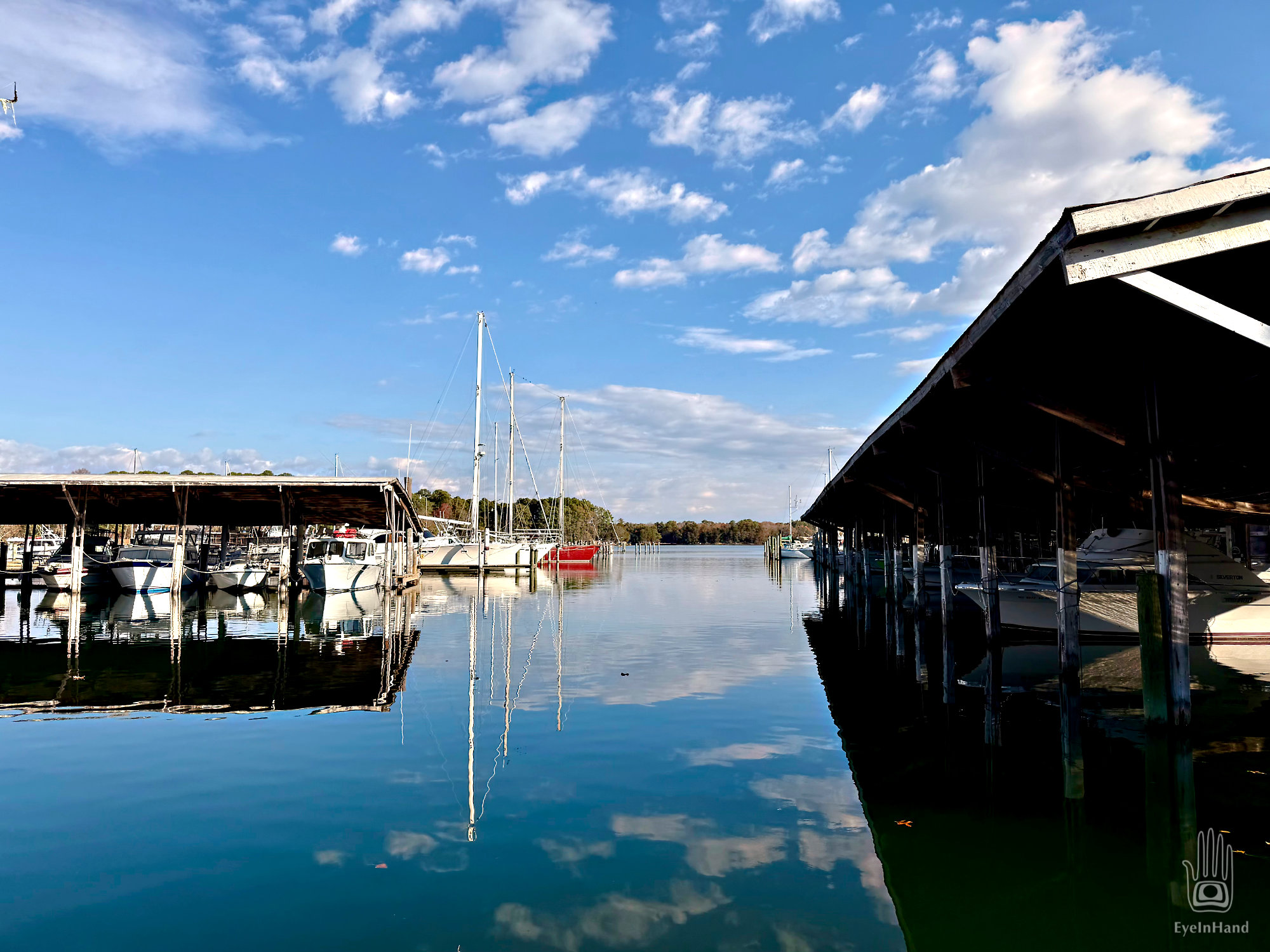
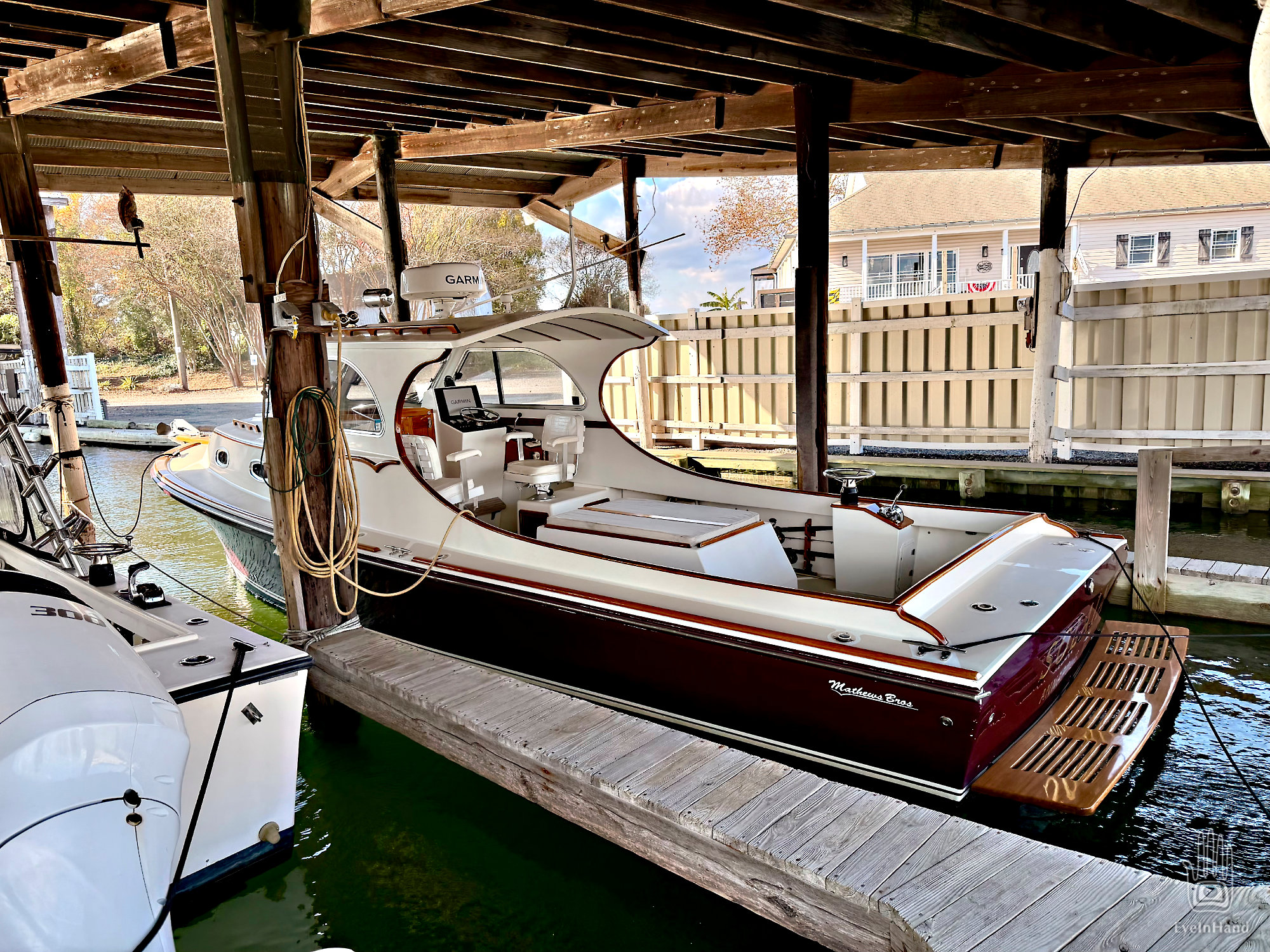

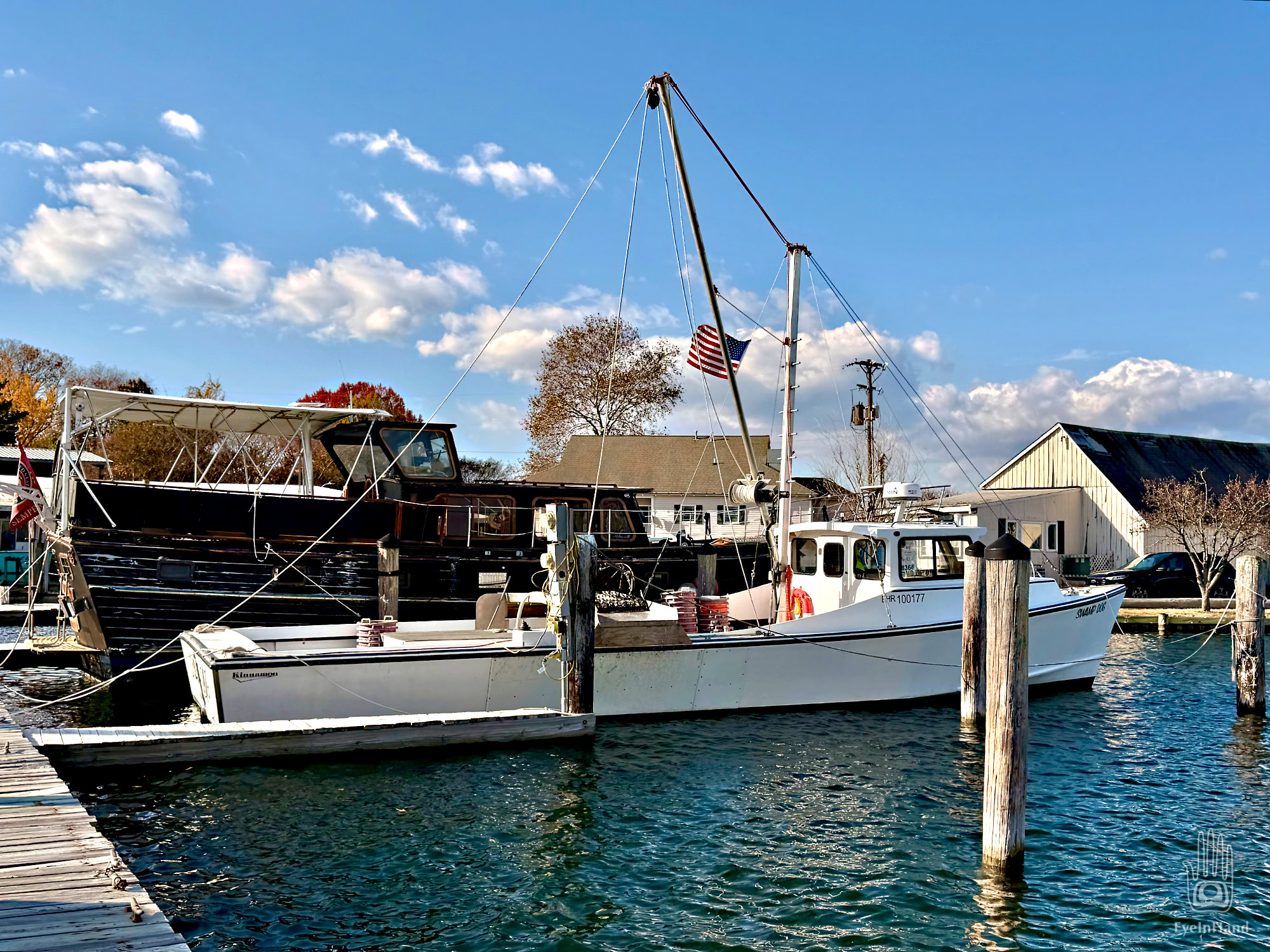
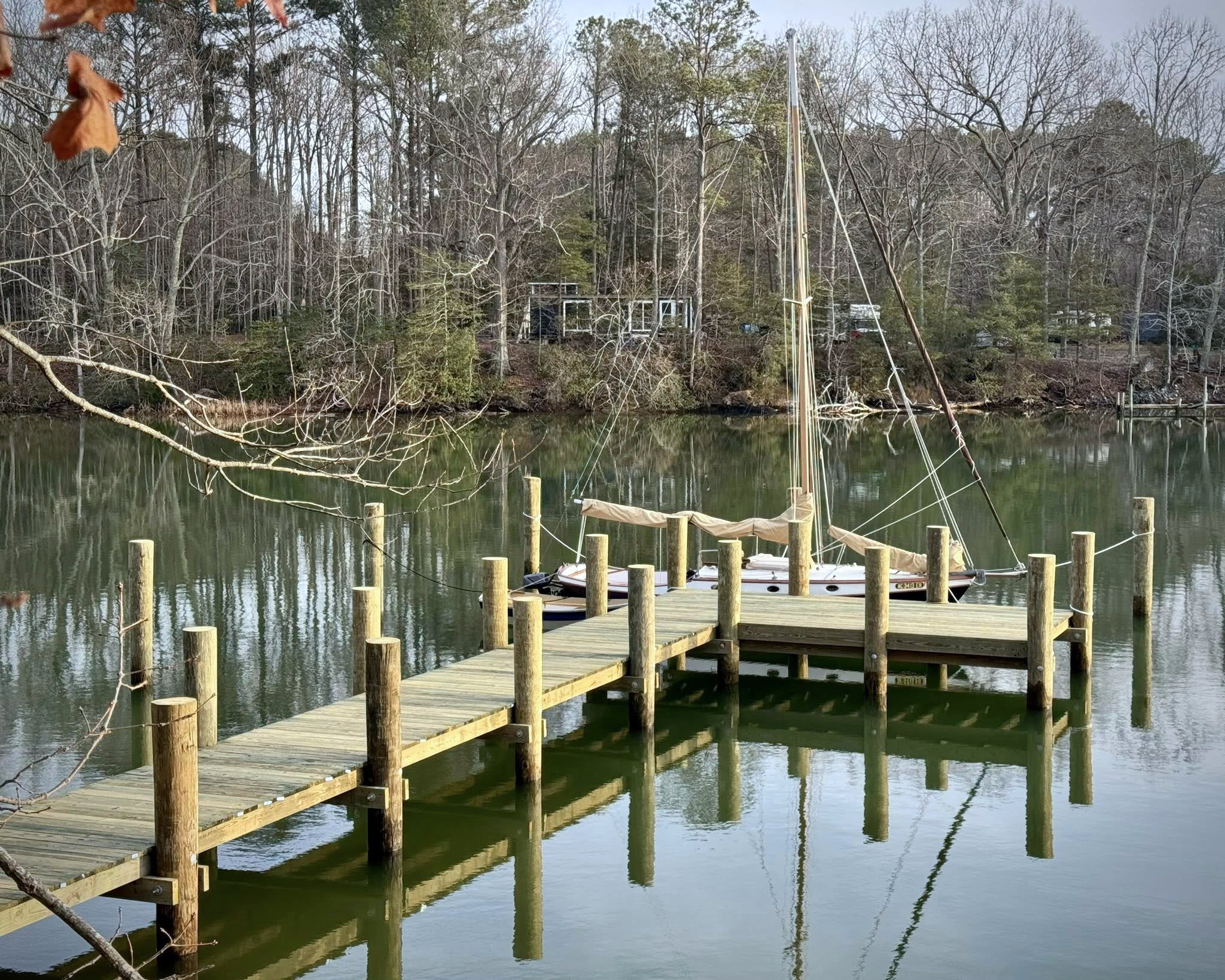
When T arrives, we load up all the gear. Jonathan needs to row his dinghy up the creek. He’ll leave it on shore where he’s having a dock built. We drive around to wait for him. We watch him battle with the wind, but deeper up the creek there’s good shelter from trees along shore. Loon will stay at the marina for now, but eventually will live at her own dock here.


We drop Jonathan off in Alexandria, and get a look at the pilot cutter he’s building in the backyard. The Stone Horse will be good for family adventures while the multi-year project continues. Big projects run in his family. His dad, Jim, who contacted me for this adventure, has built several large boats – the latest a Chesapeake Buy Boat.


More adventures in the offing.
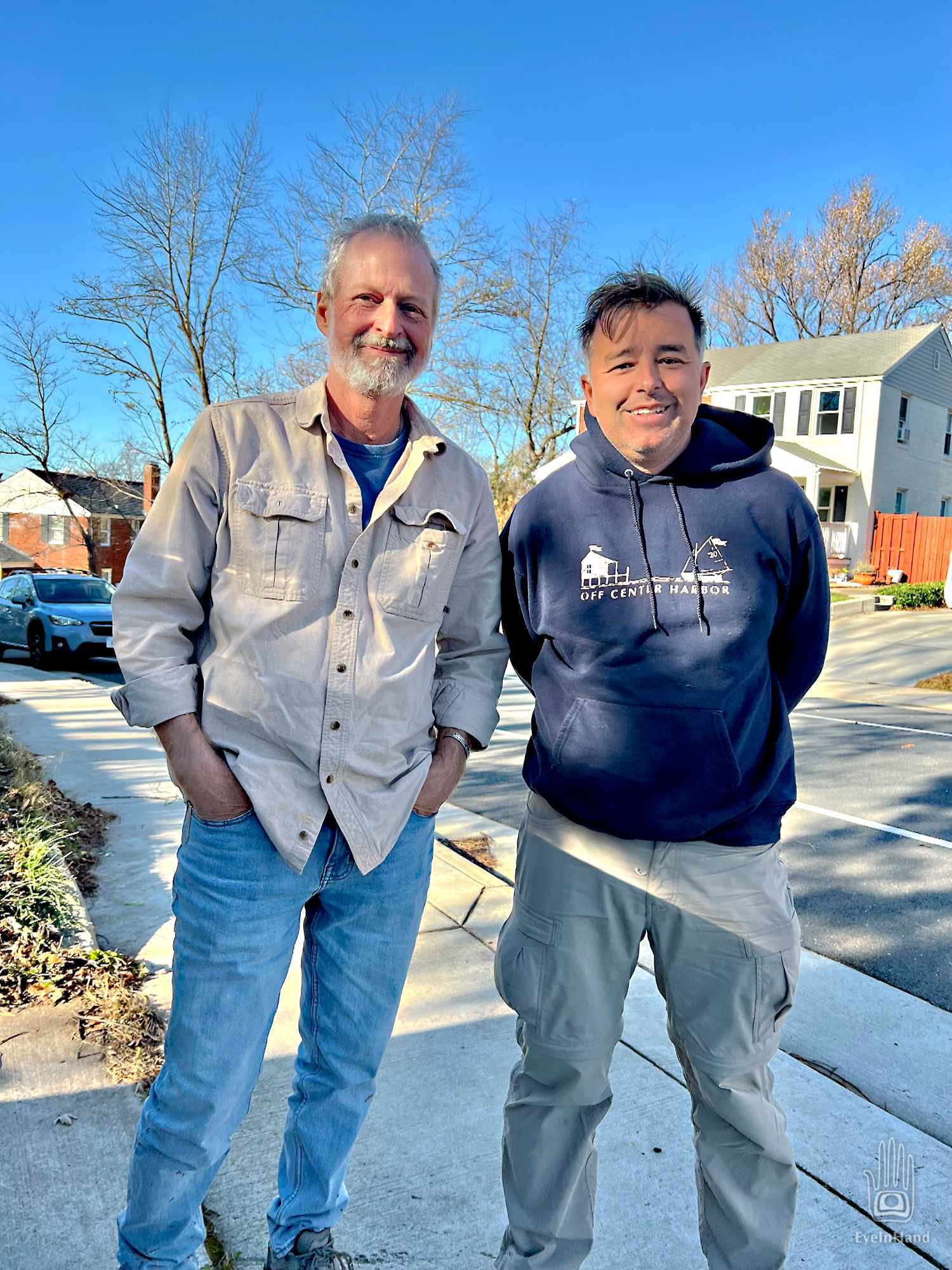
Epilogue: As I write this, Jonathan sends an update. The dock for Loon is complete, and the 2026 sailing season is almost here.