

an infrequent repository of mostly new stuff
Lost in Translation on Jekyll Island, Georgia
All vowels, no consonants. Add extra syllables, but wander off before you get to the end of words, like you lost your train of thought, or just couldn’t be bothered. Sound the way a jellyfish swims – a drifting pulsing rhythm, a heartbeat without hurry, journey with no destination. Speak as from your deathbed, expiring in the ubiquitous oppressive heat and humidity, as we surely are, and you’ve got pretty close.
There are no awards for diction. Honors go to the most elaborate expressions for the simplest things, so surplus phonemes are thrown in for good measure. Here the shade tree mechanic patching your leaky tire (in a wrecked rural town well off the interstate, cicadas throbbing the air like a migraine) will point at the tiny hole he found and not call it tiny. He will instead proudly gesticulate to it with the nub of a missing finger, tip back his ballcap, and share with you his sincere wonder that miracles still astound us every day, if you but have eyes to see. Like a king tapping with his ceremonial sword the shoulder of a new knight, he will pronounce the hole “minuscule.” And still, he will draw out those three syllables closer to five.
This is how you speak Southern.
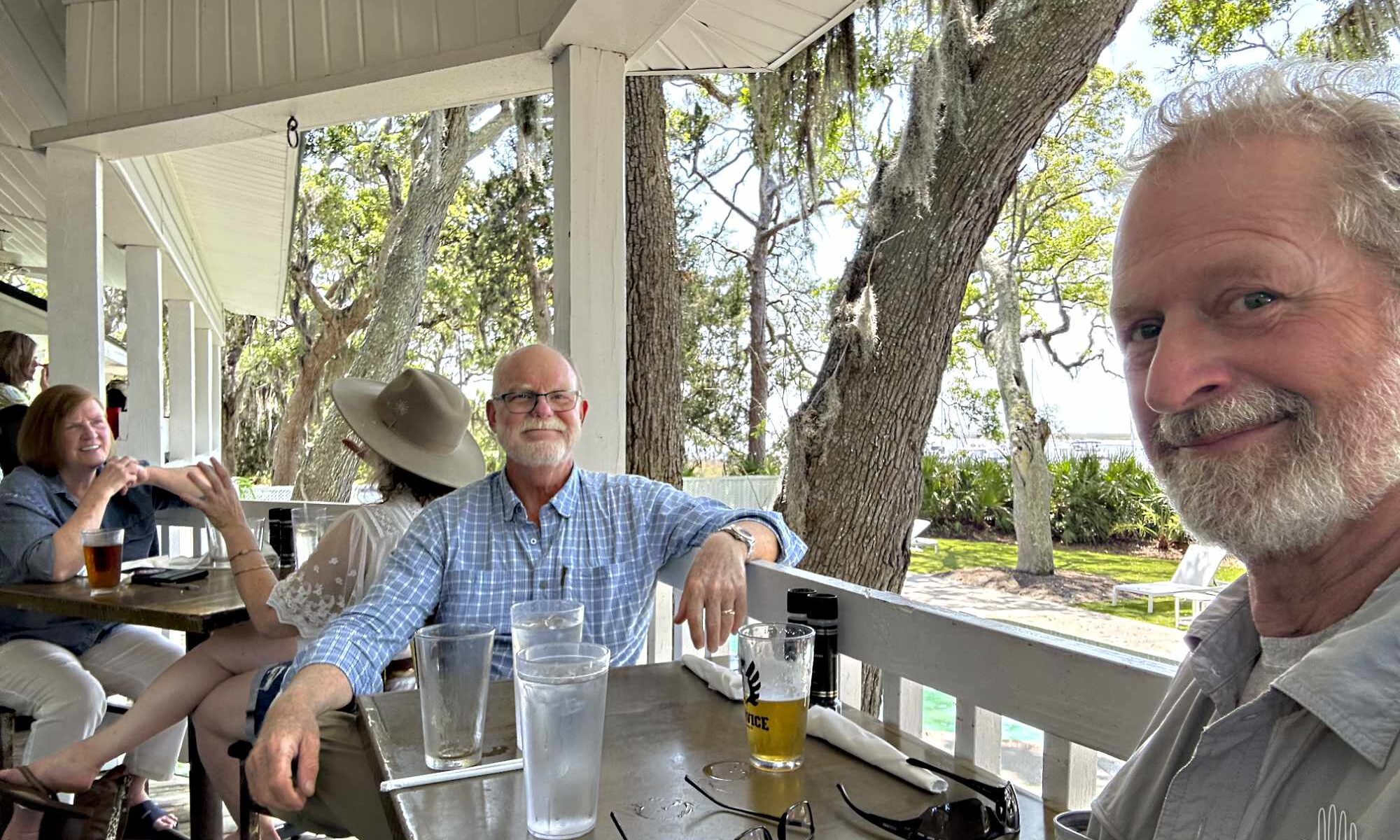
Doug grew up in NJ and was educated in the King’s English – trained, tested, and ranked. He made a living by speaking and writing very clearly to explain medical and bureaucratic arcana to those not inducted into their mysteries. And he was good at it. So it came as quite a surprise that he needed a native Southerner like me to be his interpreter in the Lowcountry. “We ARE still in the US, right?”
Continue reading “Sea Islands 300 : 16-How to Speak Southern”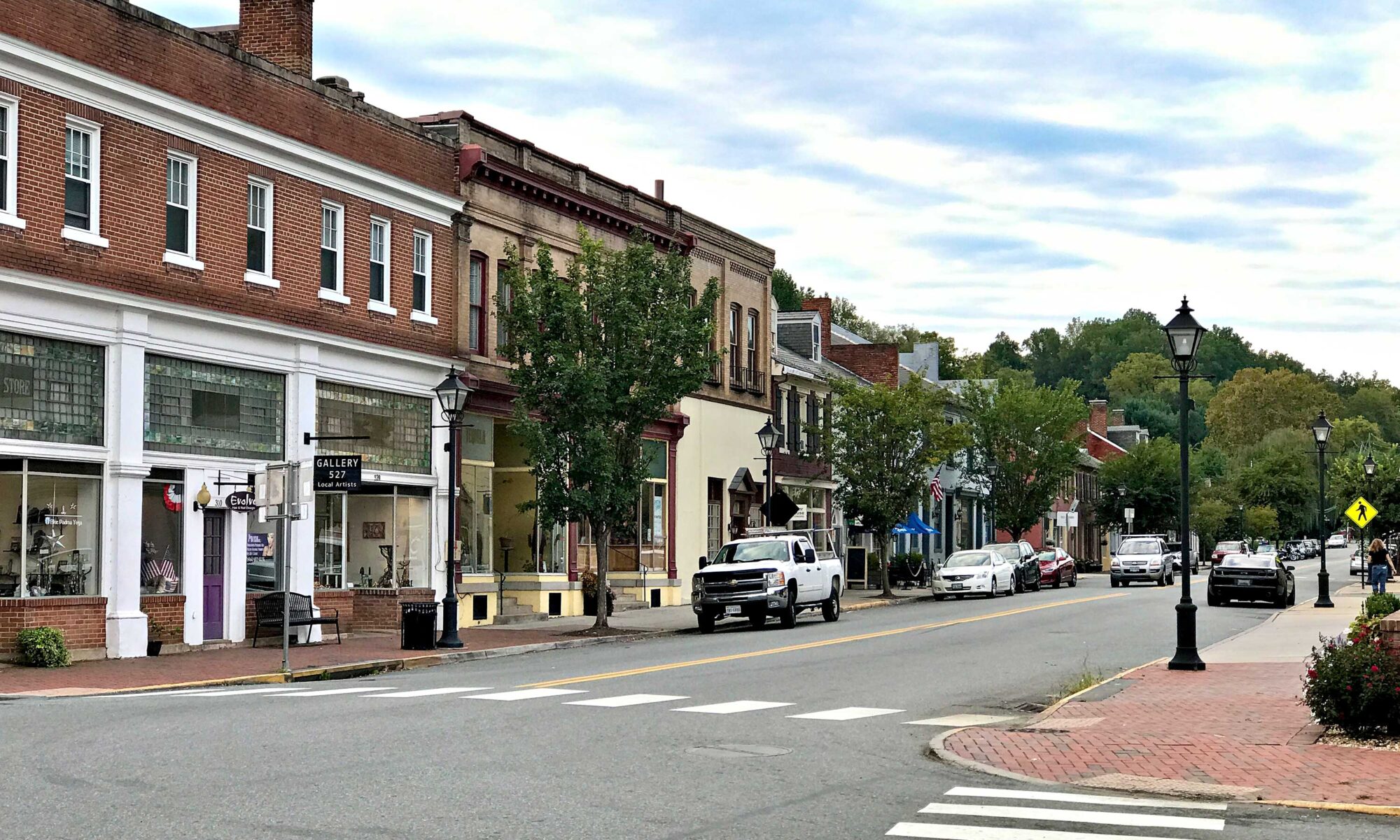
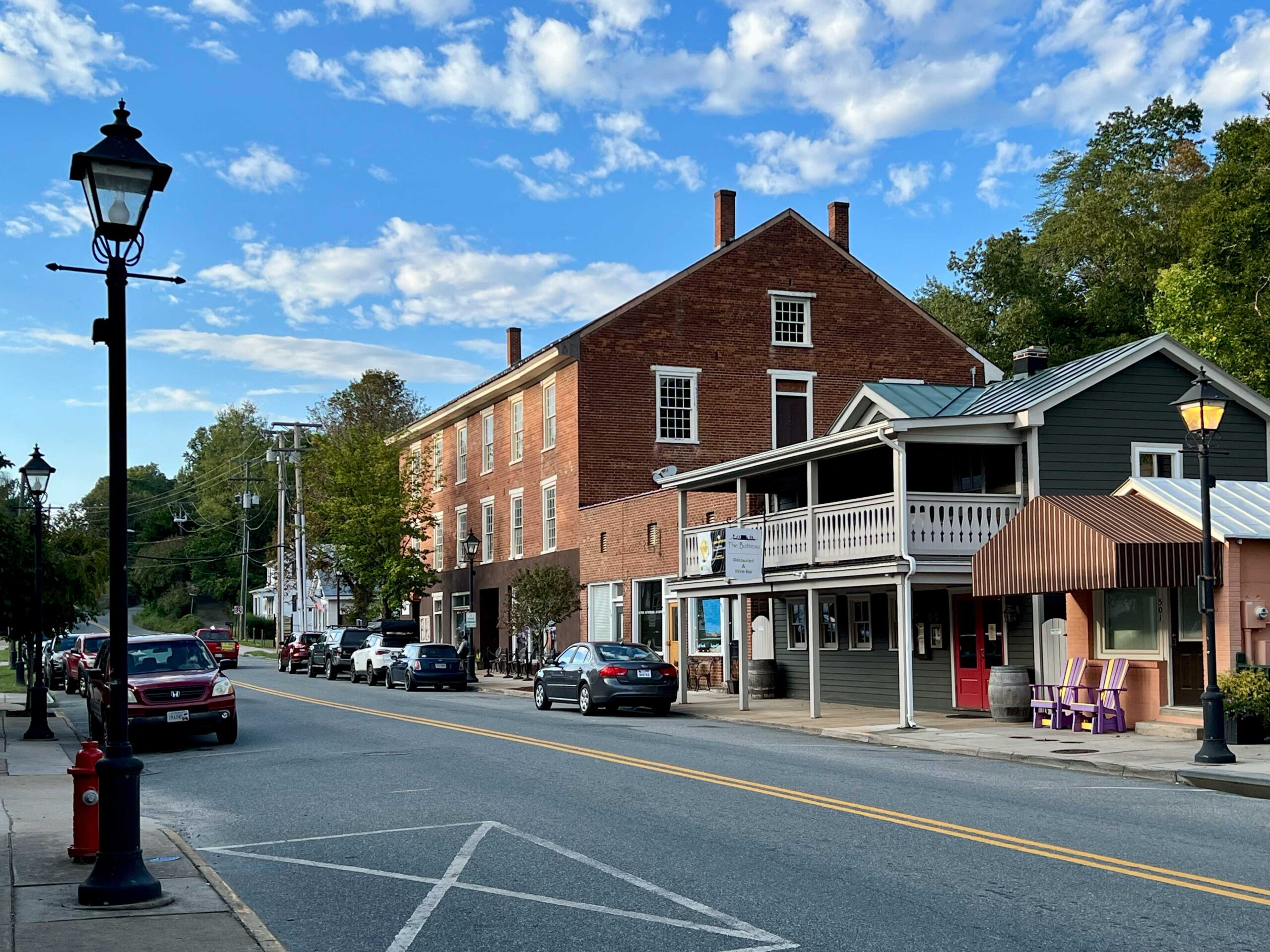
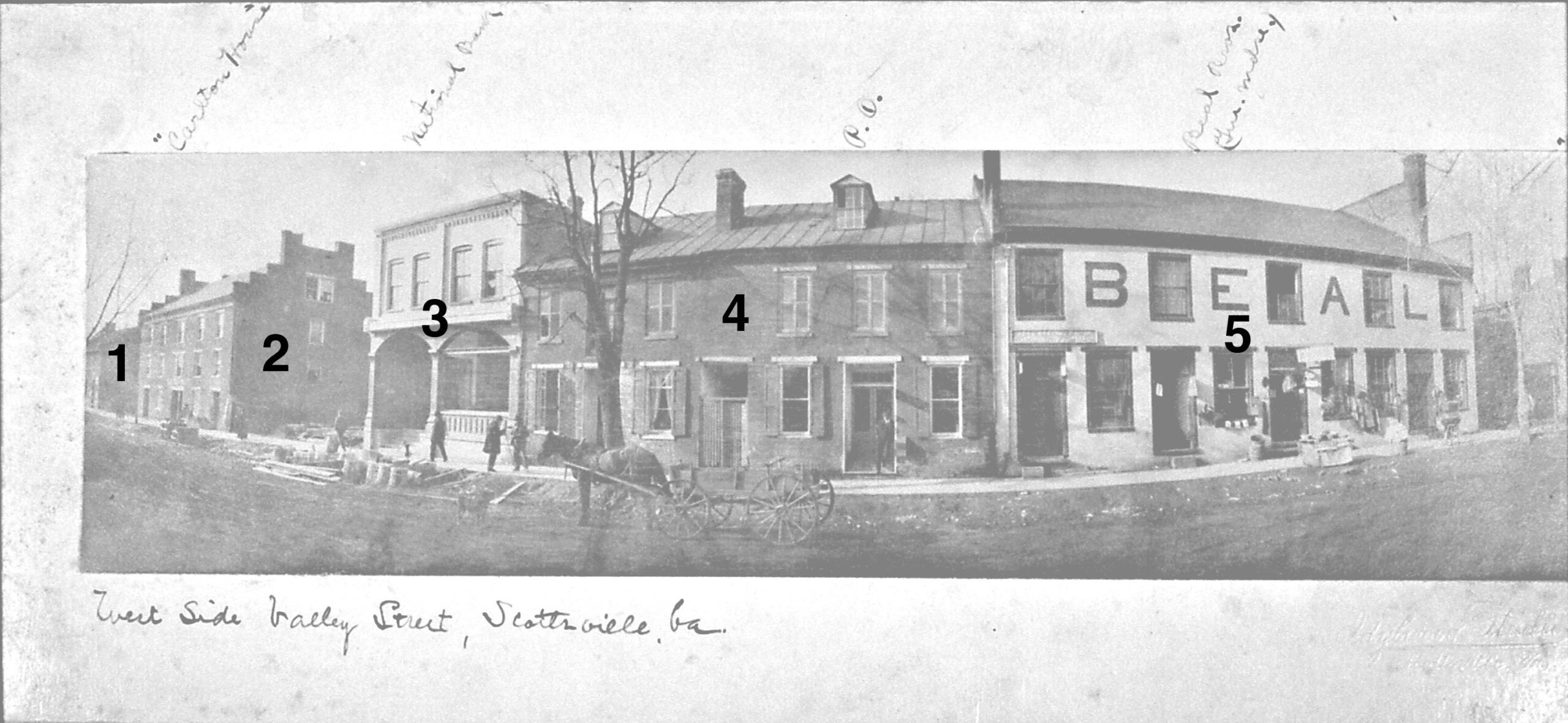
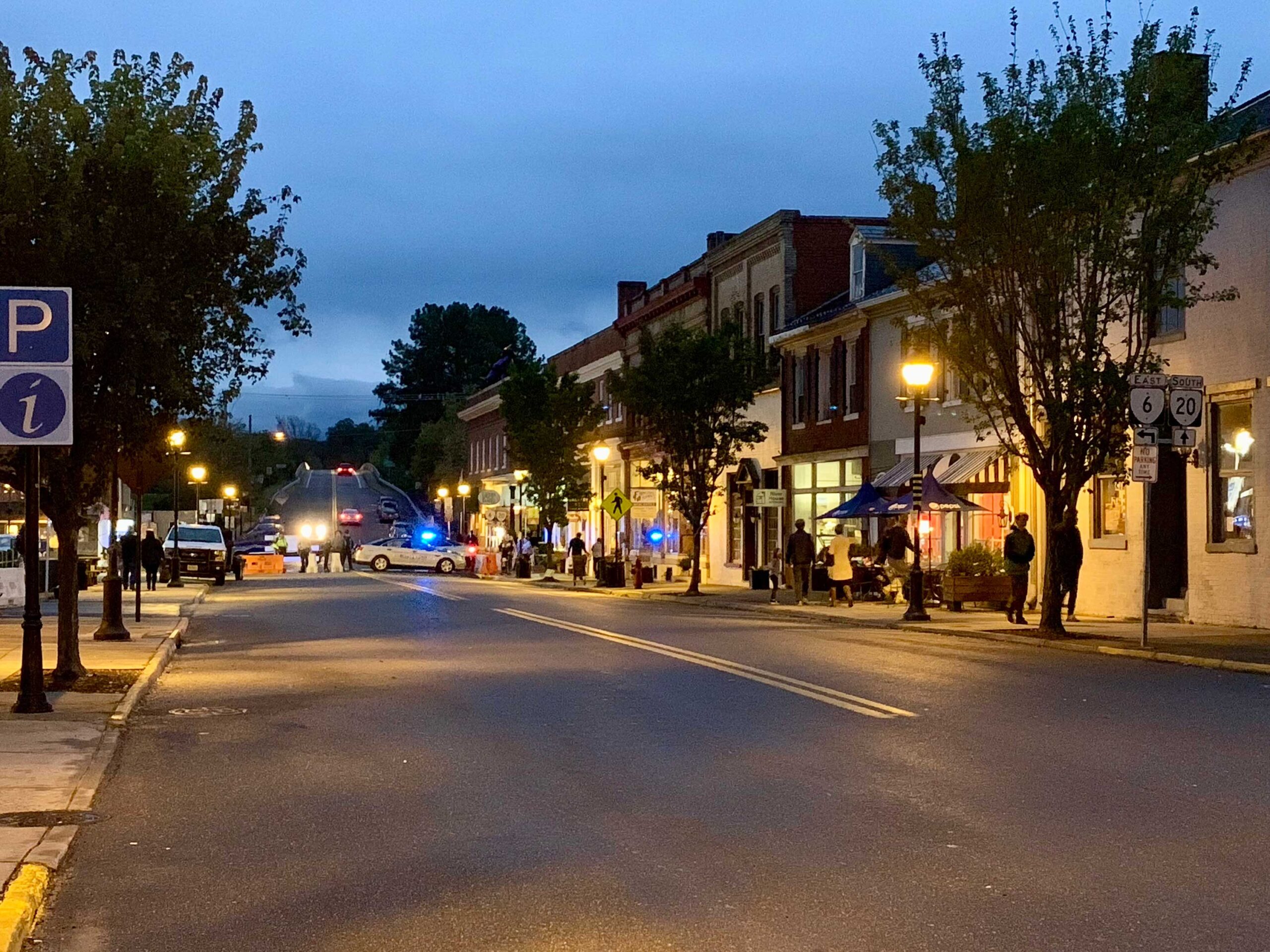
Since the colonial era, Vally Street has been the main commercial corridor in Scottsville. A natural ravine led down the high bluffs to the ferry at Scotts Landing, providing access for wagons loaded with goods and passengers to the James River and trade with the outside world.
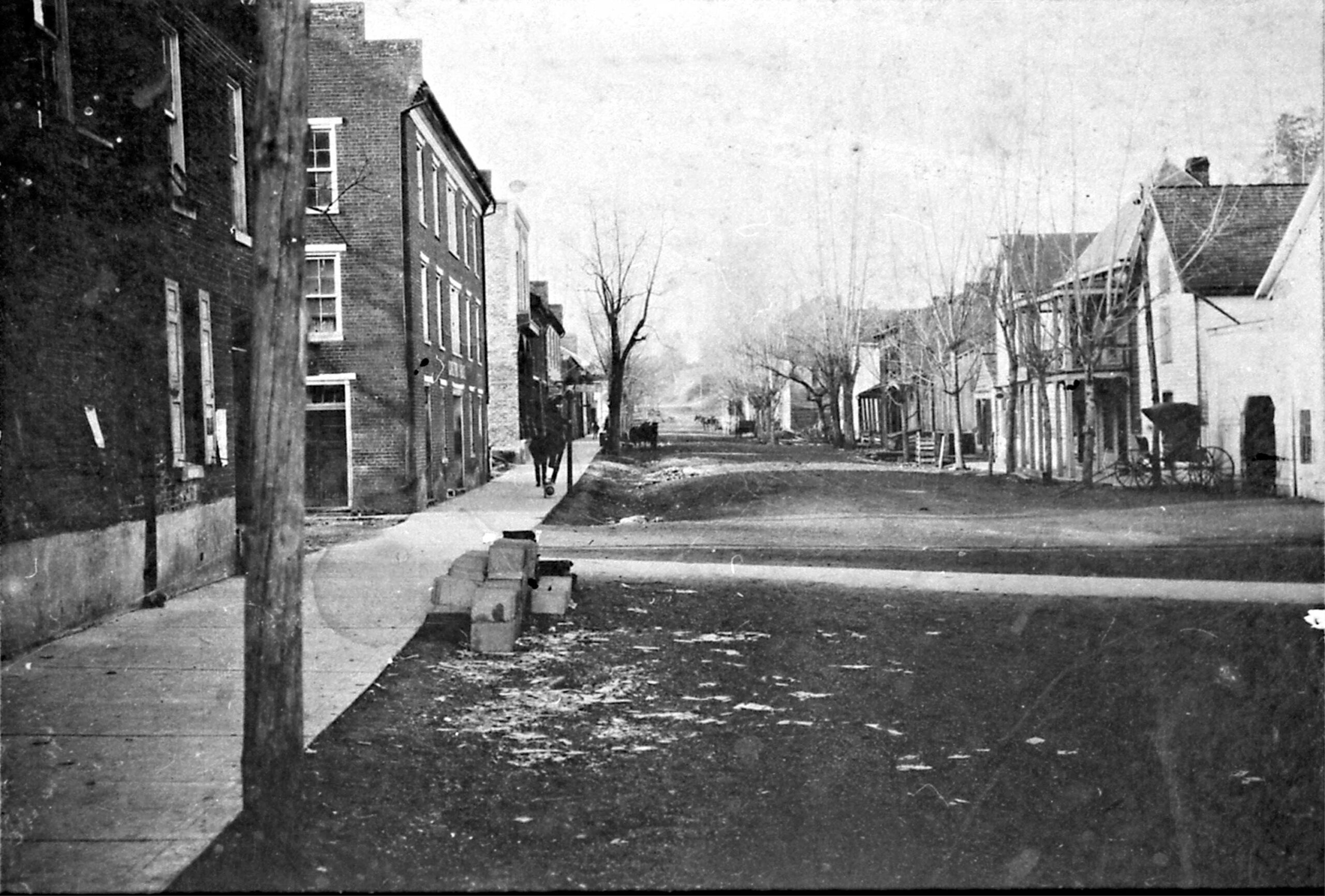
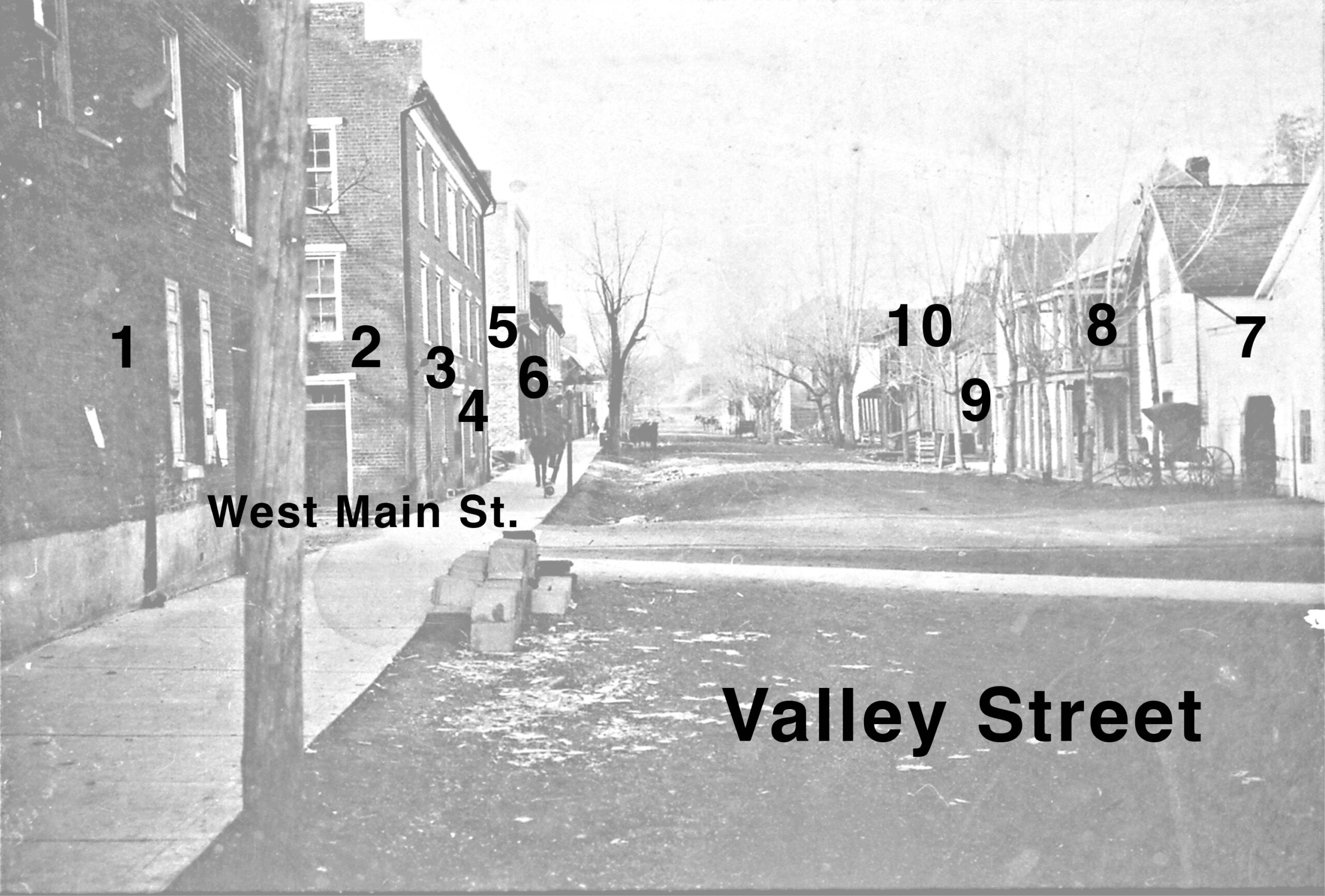
Burgess took the photo above, the oldest in the collection, with his camera pointing north up Valley Street and his back to the James River. On the sidewalk at the left of the photo, a man can be seen standing on a short ladder to light a carbide street lamp. At that corner, Main and Valley street intersect.
See the image below as a guide to these specific buildings:
Burgess captured the west side of Valley Street in this photograph, using his panoramic camera with a fisheye lens.
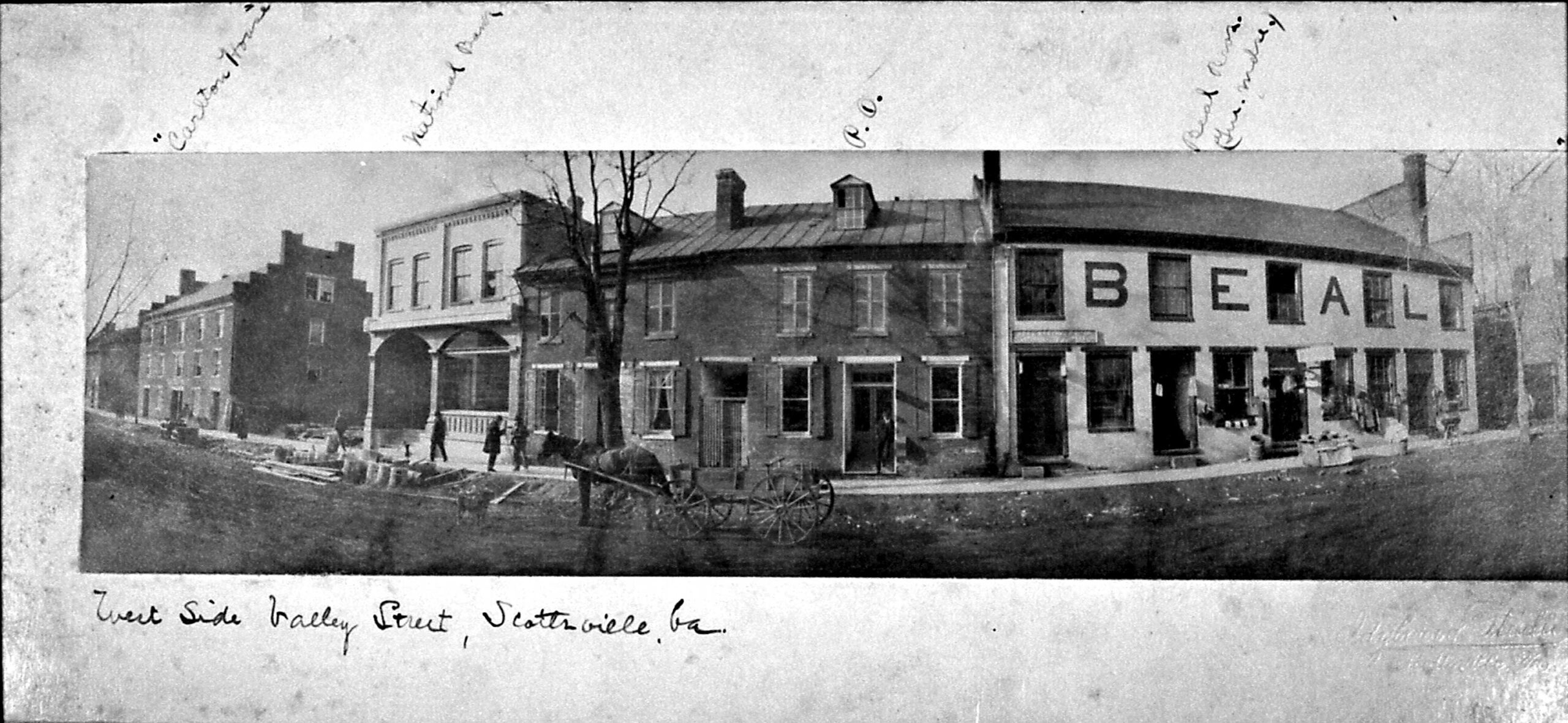
The image below is a guide to specific buildings:
– o • 0 • o –
Population of Scottsville In 1900 Was 1,248; Paper Reveals Interesting Facts
Scottsville Sun, May 15, 1958
The population of Scottsville in 1900, according to the geography of Virginia published that year, was 1,248.
At that time, according to The Scottsville Courier, you could get on a train any afternoon or evening, bound for Lynchburg, Cincinnati, Louisville, Chicago, St. Louis, or any point west, or a train leaving the Scottsville Depot twice a day took passengers to Richmond and the Virginia “seaside.” There was a controversy over the financing of a Scottsville bridge in Buckingham County, with poems pro and con taxation to finance it in the editorial columns.
T.W. Heath knew the value of advertising and advertised his Scottsville Roller Mills, adding that “To my Buckingham patrons, I wish to say that I have made an arrangement with Captain Thomas to ferry them across the river and return for 25 cents per wagon.” He also advertised building materials, painting, paper-hanging, and was an agent for “Antiseptic Laundering.”
For $45 you could buy one “brand new top buggy, and spring, piano box, leather top.” A condensed encyclopedia cost 50 cents, and jobs were offered ambitious salesmen who could make $780 to $936 a year, while the “best shoes in the world” cost $3 a pair.
In the issue of July 5, 1901, we find that a rumor was going around that the Albemarle Soapstone Company had bought a controlling interest in the Virginia Soapstone Company, and the two would merge soon.
D. H. Pitts was elected treasurer and Dr. J.P. Blair secretary of the Scottsville Town Council when Messrs Beal and Pereira were added as new members. The tax on whisky was raised to $40 and a tax on dogs was levied.
The wedding of Frank Russell Moon and Annie Dunscomb Horsley was written up in the social column. It took place June 26, 1901 in Grace Church, Buckingham County. The bride, escorted by her brother, Alexander Caldwell Horsley, was attired in white Paris muslin trimmed with lace and carried a shower bouquet of roses. Her attendants carried ferns and daisies.
Conducting the service was Rev. T.H. Lacy. The groom was attended by his brother, Carey Nelson Moon. Mrs. John Horsley played the wedding march.
Mr. Moon was “a popular and prosperous merchant of Manteo.”
After the wedding, “an elaborate luncheon was served” at Traveler’s Rest, Warminster, home of the bride. She was the daughter of the late John Horsley and great granddaughter of Major Charles Yancy of Virginia.
Mrs. Henry Burton, matron of honor, was attired in her wedding gown of white silk.
Cures for stomach ailments were advertised in several columns.
The Scottsville National Bank was established in 1901 and advertised “a general banking business.” Dr. J.P. Blair was the dentist, who advertised that he would visit Buckingham, Columbia, Arvonia, and Howardsville, and the doctor, J.S. Pendleton, also advertised that he would practice in Albemarle, Buckingham, and Fluvanna. In a town of over 1,000, this seems to show that either not so many people were ill as they are nowadays, or the doctors and dentists put in longer hours, and less time per patient!
Copyright © 2018 by Scottsville Museum
So much drama for such a tranquil place. Past AND present.
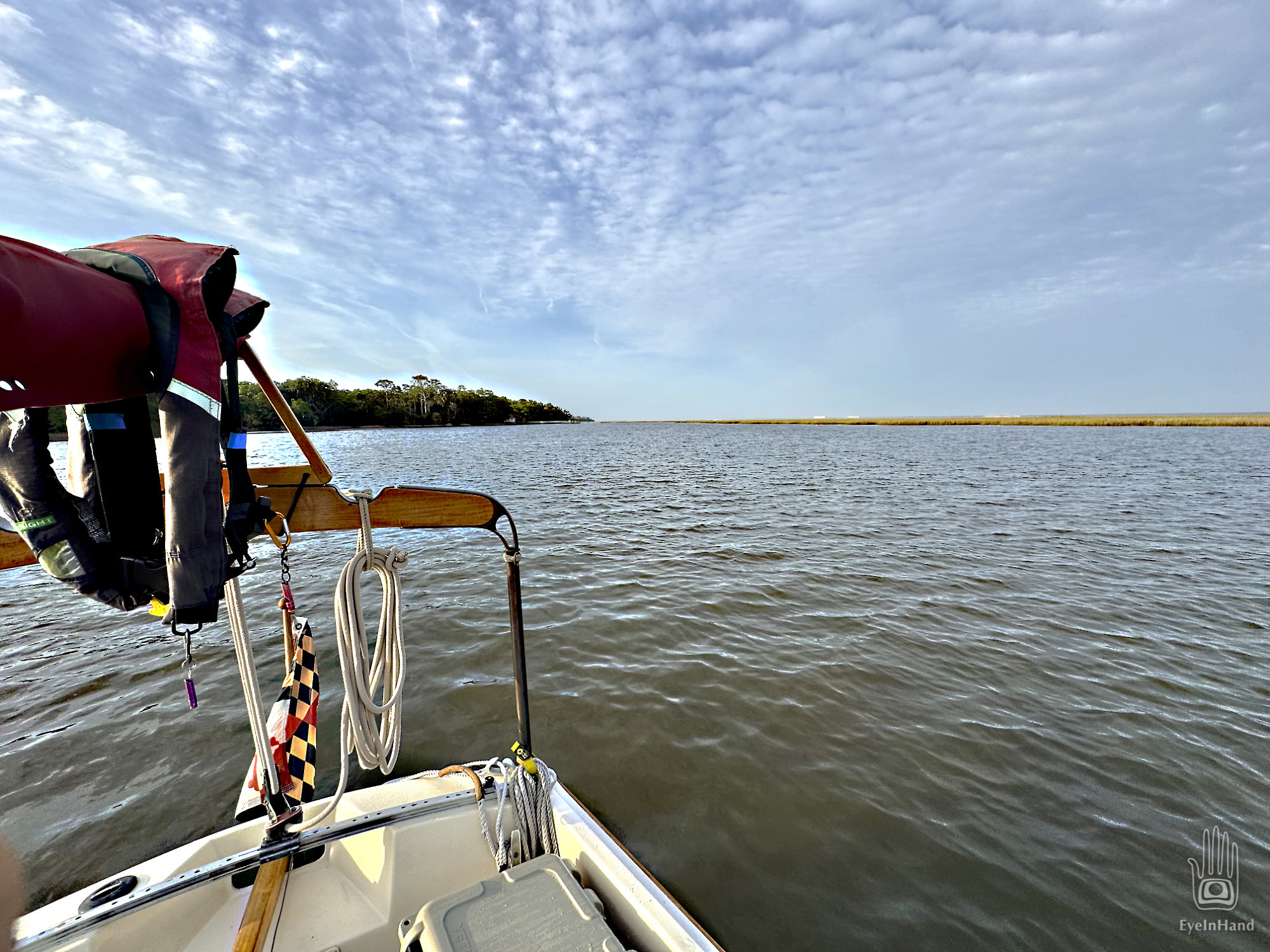
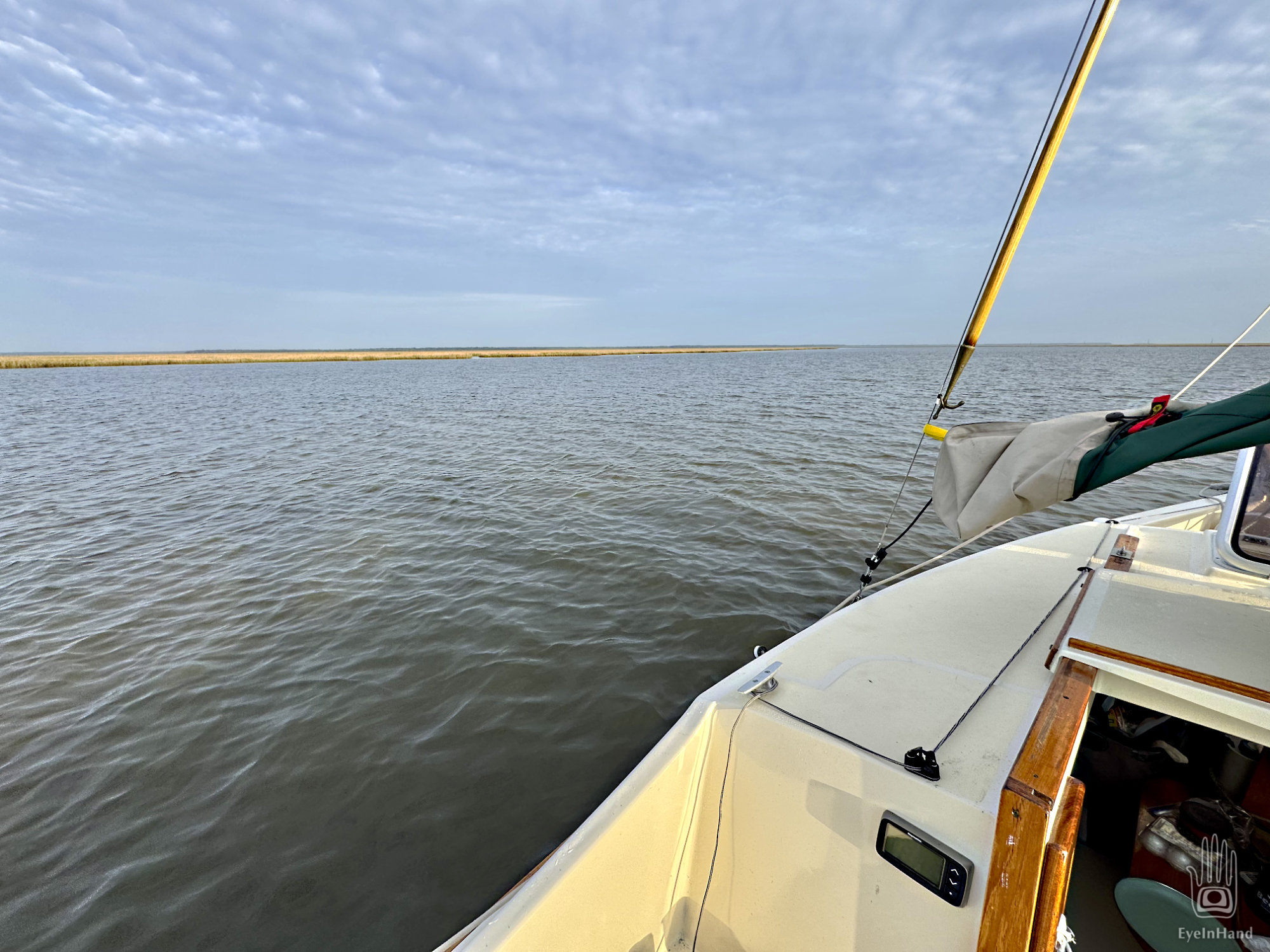
It’s about 4 in the afternoon when we drop anchor in Brickhill River, “river” though not much wider than a creek here. The tide is low and slack, just starting to turn. Toward the west is a broad marsh, so wide and flat we can see the dry-docks of Kings Bay on the horizon to the south. A forested mainland sweeps all the way north in a thin blue line.
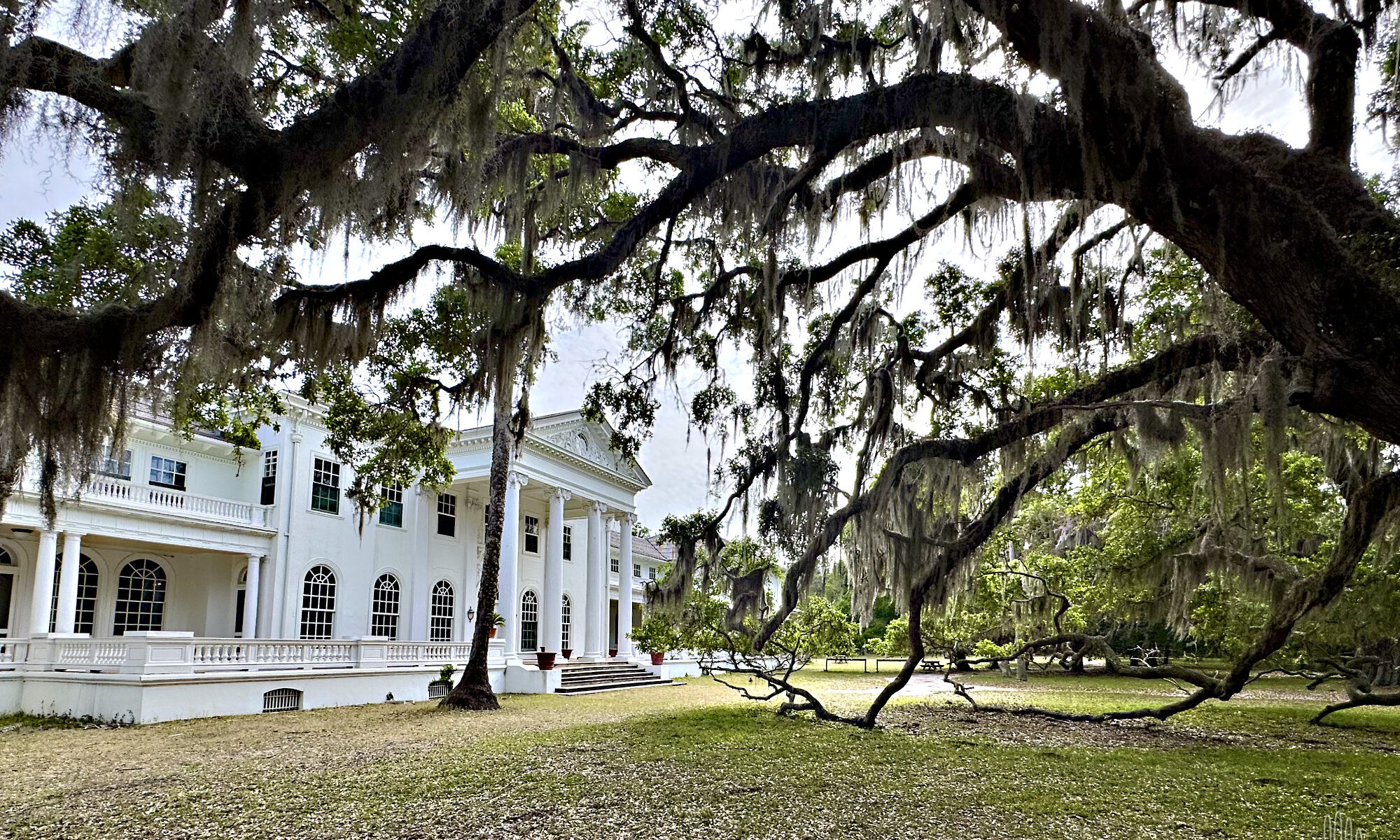
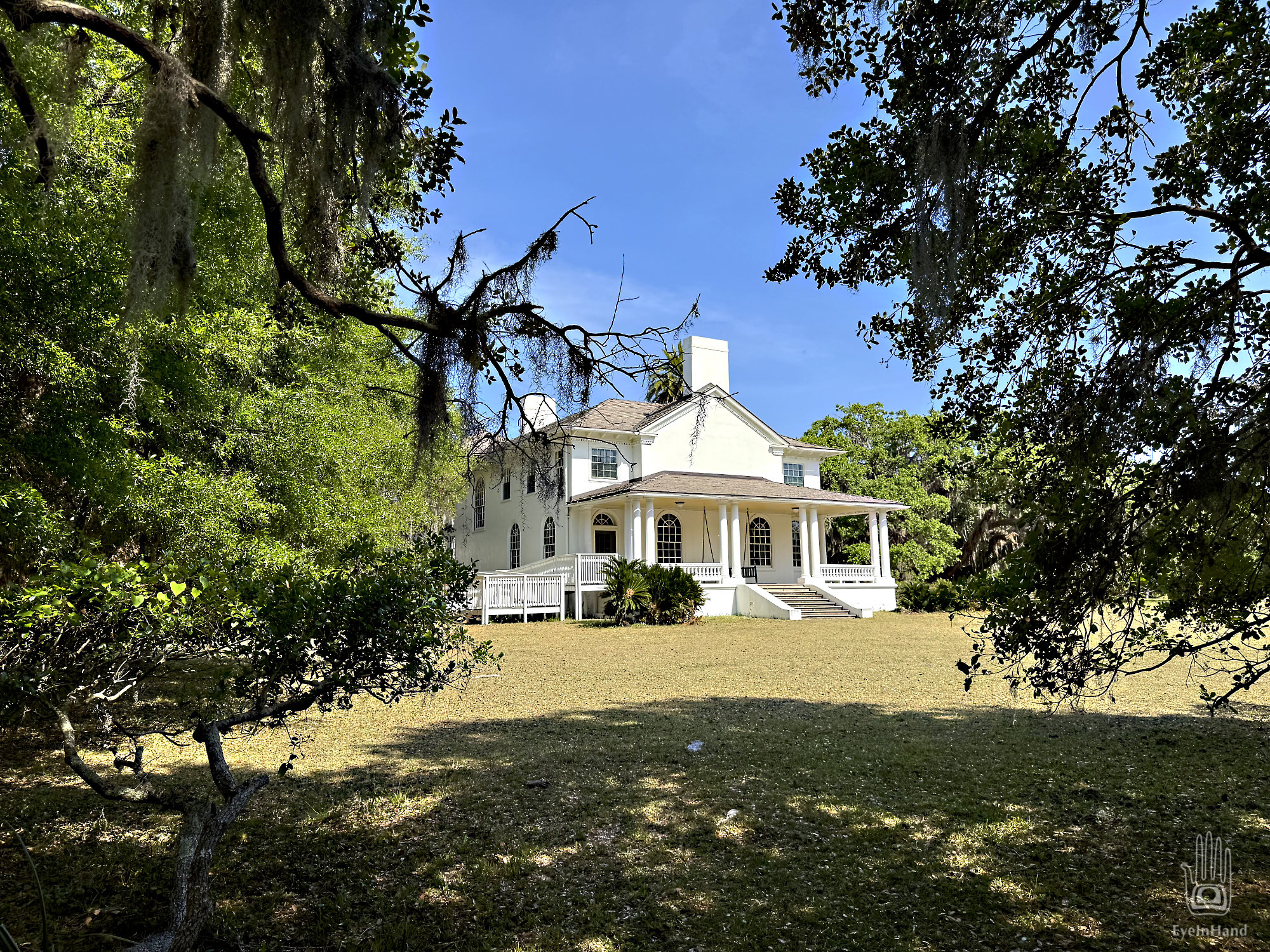
We row ashore and climb the sandy bluff to a sand road. It curls along the bluff under live oaks, circles a grassy lawn big as two football fields. Through the trees are the white columns of the Carnegie mansion known as Plum Orchard. We get views of Tidings as we walk the road. Doug pauses and cocks his head.
“Something doesn’t look right. See how she’s swinging back and forth?”
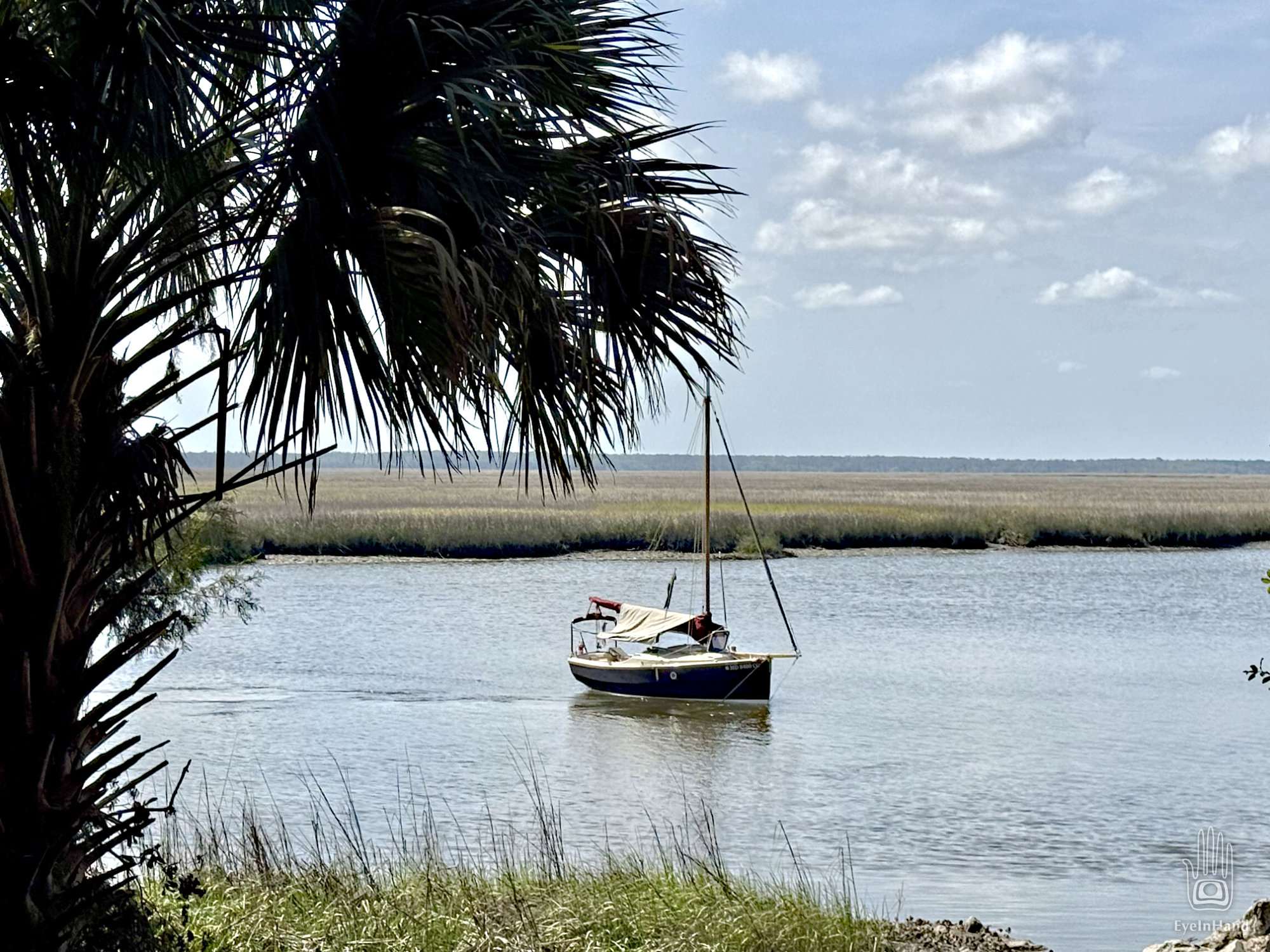
Though the current is still weak, she seems broadside to it, and gently swings to and fro like a pendulum.
“Hmm. Odd. Maybe just the wind. She’s probably fine, right?” I can see Doug pondering while we stroll around to the back of the house.
Went for a short paddle late in the day. The leaves are just starting to turn. Had the whole place to myself.
Found a hornet nest hanging over the creek. Empty, fortunately. Took it home to add to the collection.
These nests are made by bald-faced hornets. Their life cycle is fascinating:
It starts with one fertilized queen choosing a location for the nest and making a few cells with chewed wood pulp. She lays eggs in these cells, which hatch, and she raises them herself. Those offspring become her workers, who build more cells for more eggs, feed their younger siblings, and defend the nest. Every 20 days, a new generation of offspring comes online as the new adults join the workforce. The entire hive is offspring of the original queen, which by late summer can be 1000 strong.
Then the queen switches gears. She lays some eggs to hatch as males and a few new queens. These queens mate, fly off, and bury themselves in rotting logs where they overwinter. The rest of the hive then dies. In the spring, the mated queens emerge, and the cycle begins again.
Because this nest is not yet tattered by winter storms, it must be from this year’s brood. Somewhere nearby, young queens are bedded down waiting for spring.
Little Snow Whites, waiting to raise their own dwarves.
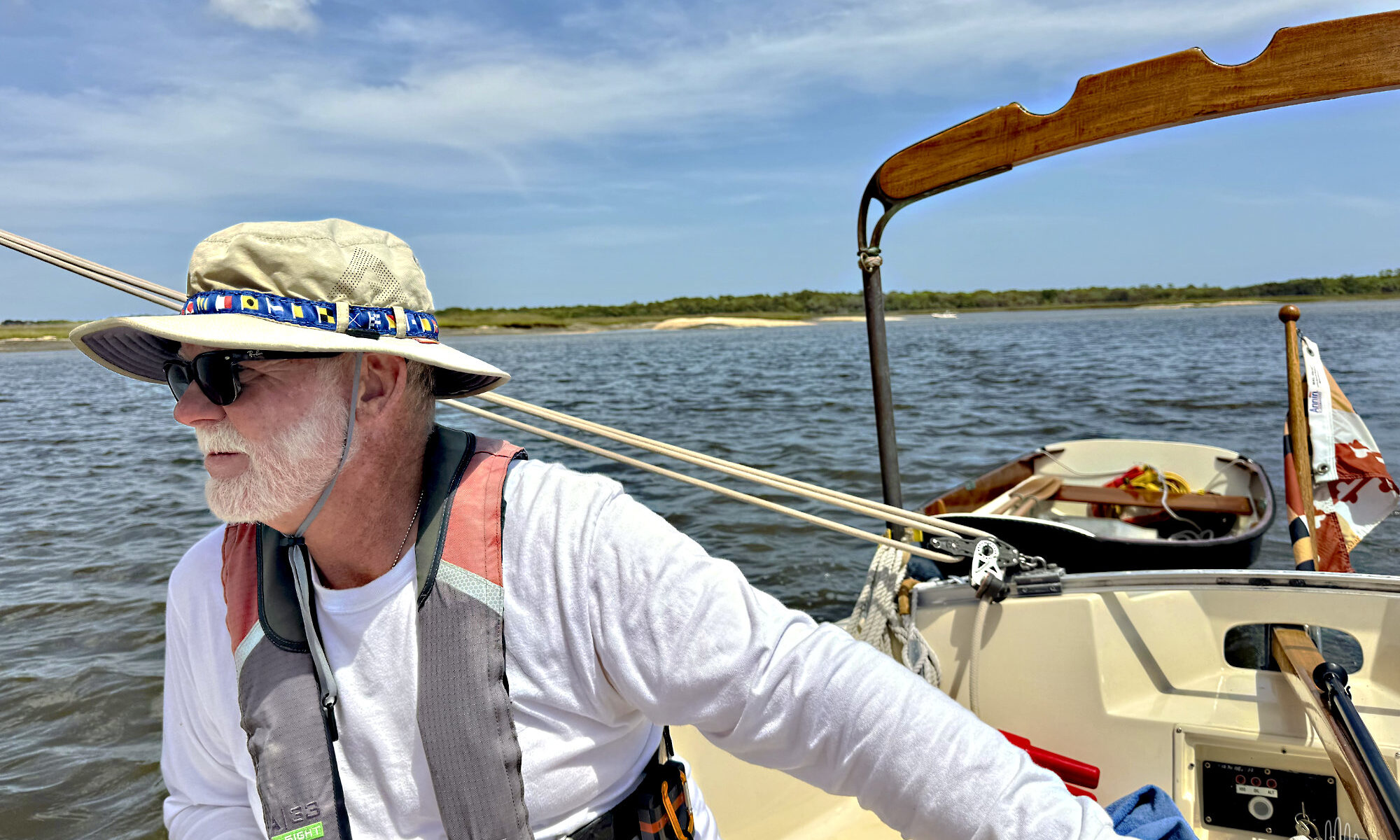
It should have been an easy day.
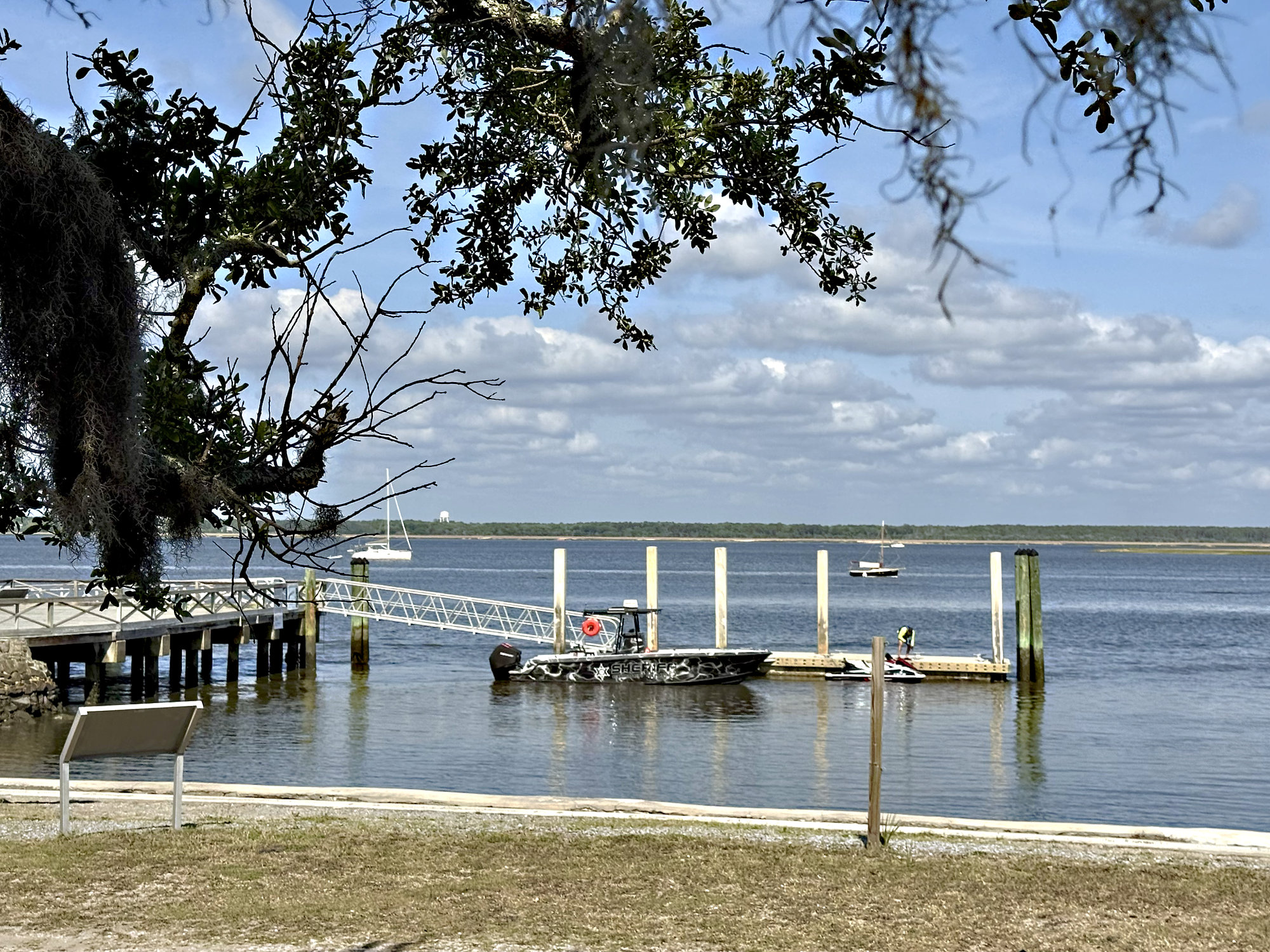
Though Cumberland is the largest of the sea islands at 20 miles long, we only need to go half that far to the anchorage at Plum Orchard. If we continue up the East River, we could bypass Kings Bay Submarine Base to reconnect with Cumberland Sound. But charts show shoals that way. With the tide falling we don’t want to risk it. The more prudent route is back south and around to the west to follow the ICW, which runs right past the base.
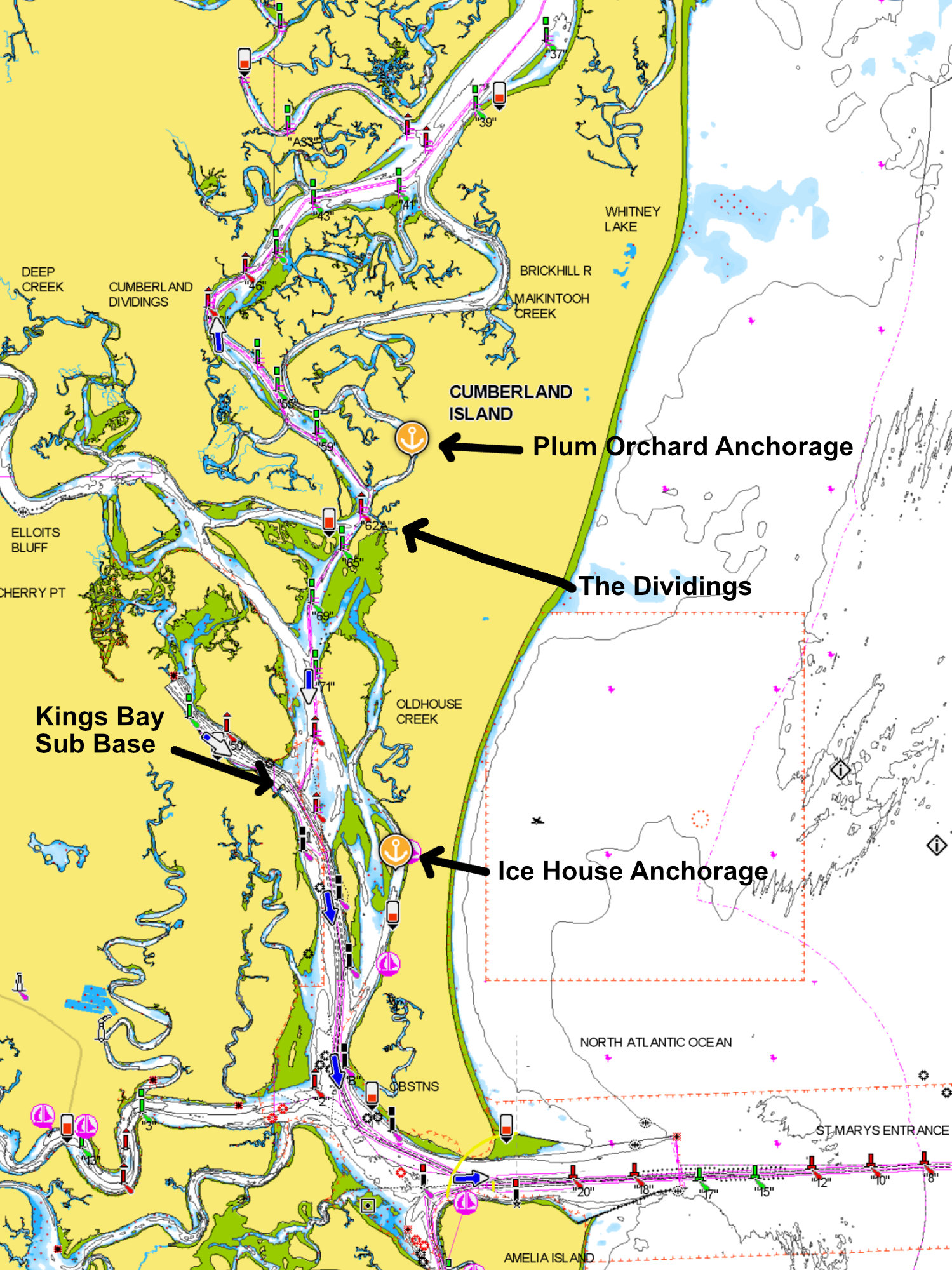
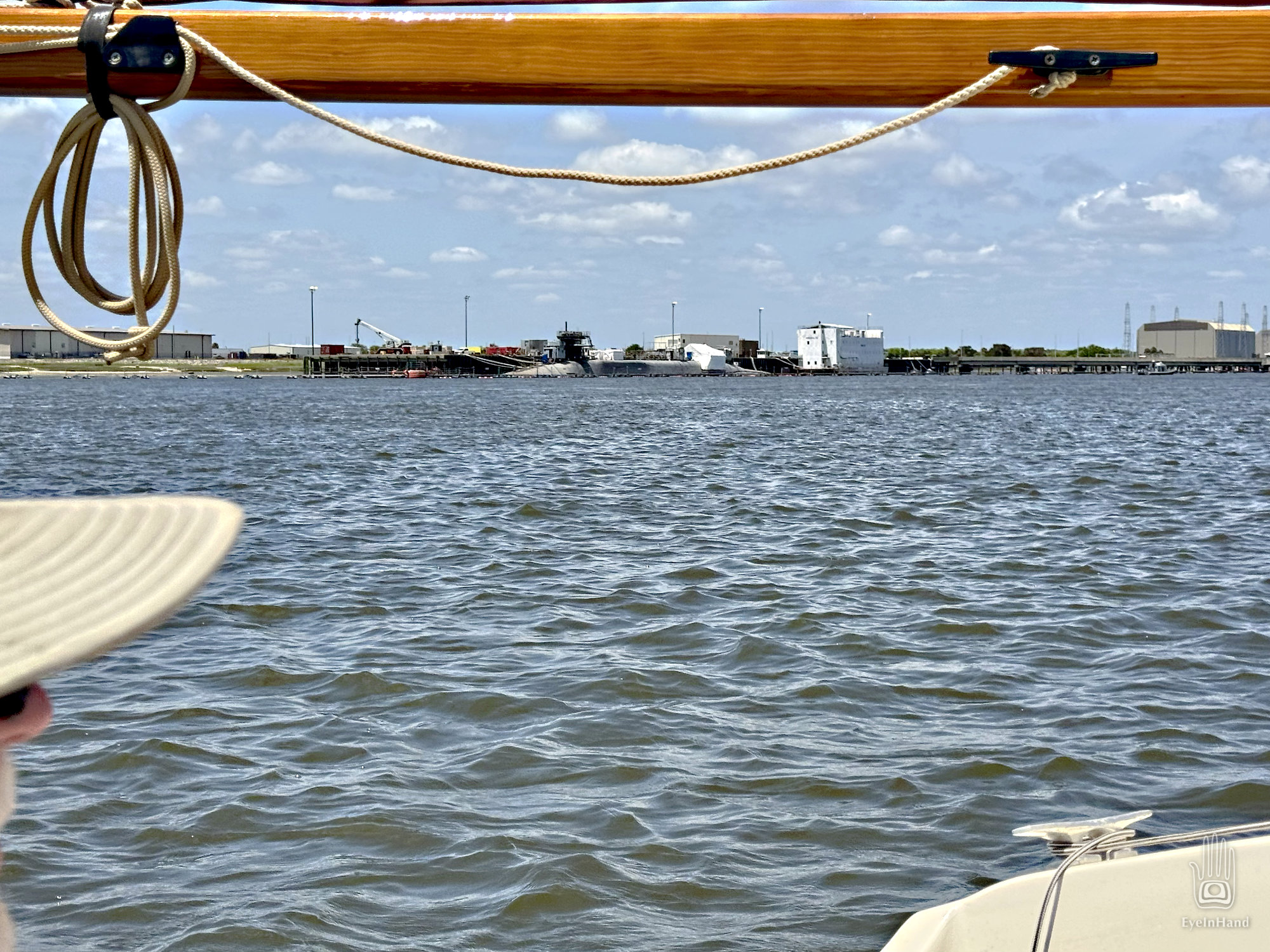
We prefer to give these twitchy military folks a wide berth, so skirt the edge of the channel as far outside as we dare. Last thing we want to do is run aground right here, of all places, and make a nuisance of ourselves. A disconcerting problem is the ICW presently passes through the middle of the “special security zone”. It appears the Army Corps of Engineers dredges frequently for subs to navigate easily; but the ICW is allowed to follow a natural shifting course. Instead of dredging a route to move civilian traffic away from the base, they just move the channel markers.
The marked route now carries us closer and closer to nuclear submarines with their pack of aggressive guard patrols. Doug has me looking for red markers with binoculars while he steers. A sub at the end of the dock looms larger and larger like a beached whale, and still we have to continue toward it.
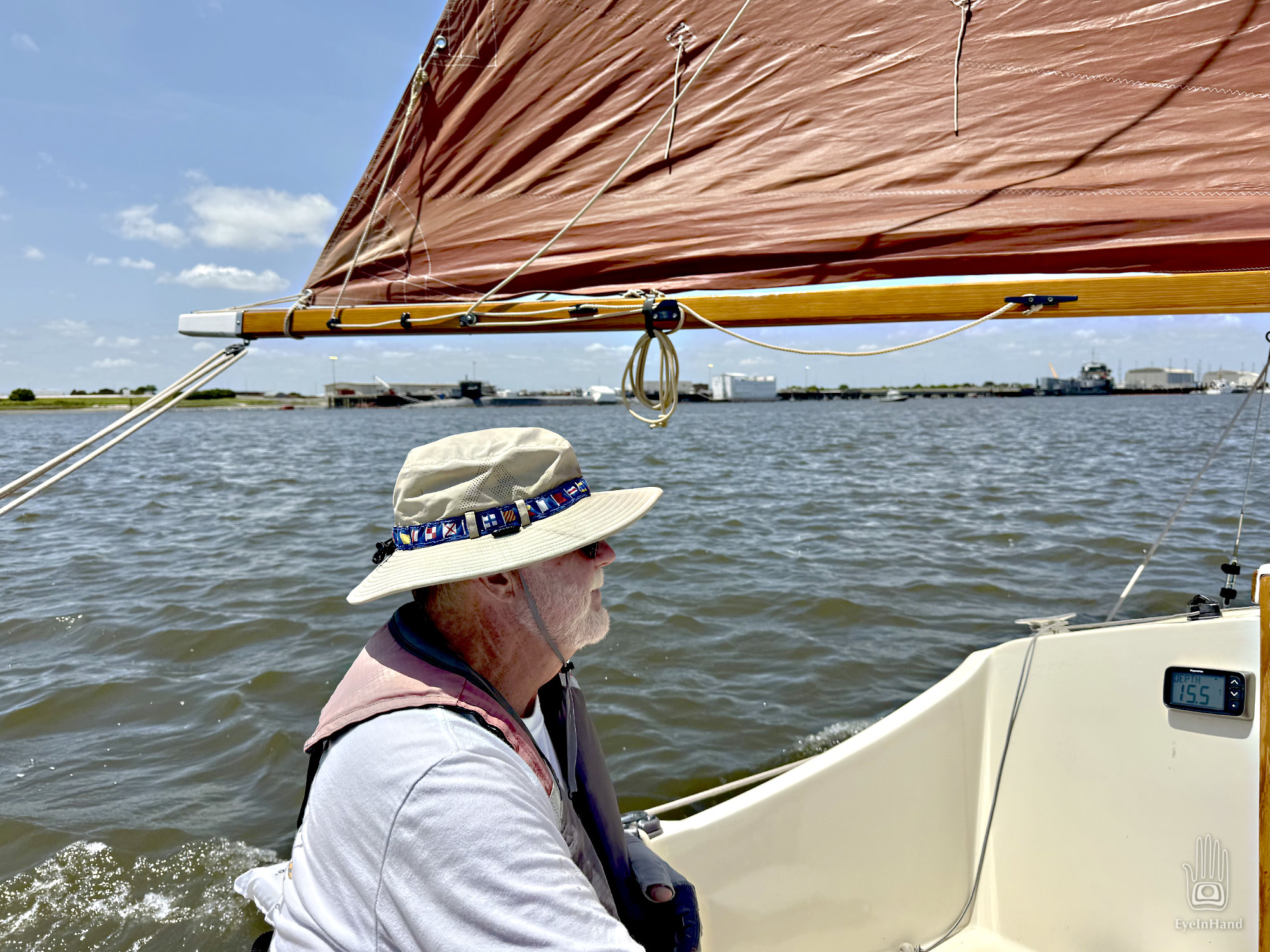
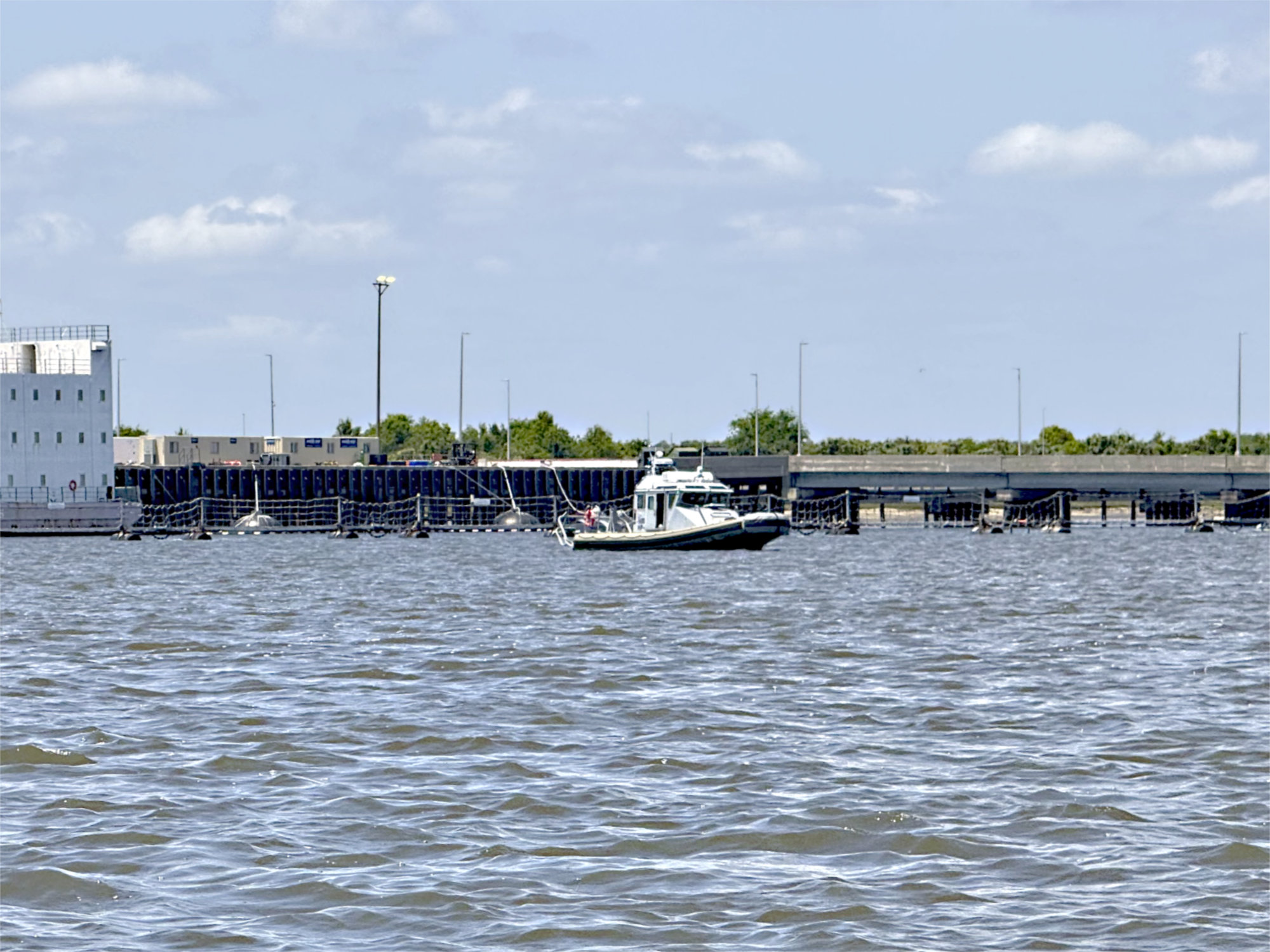
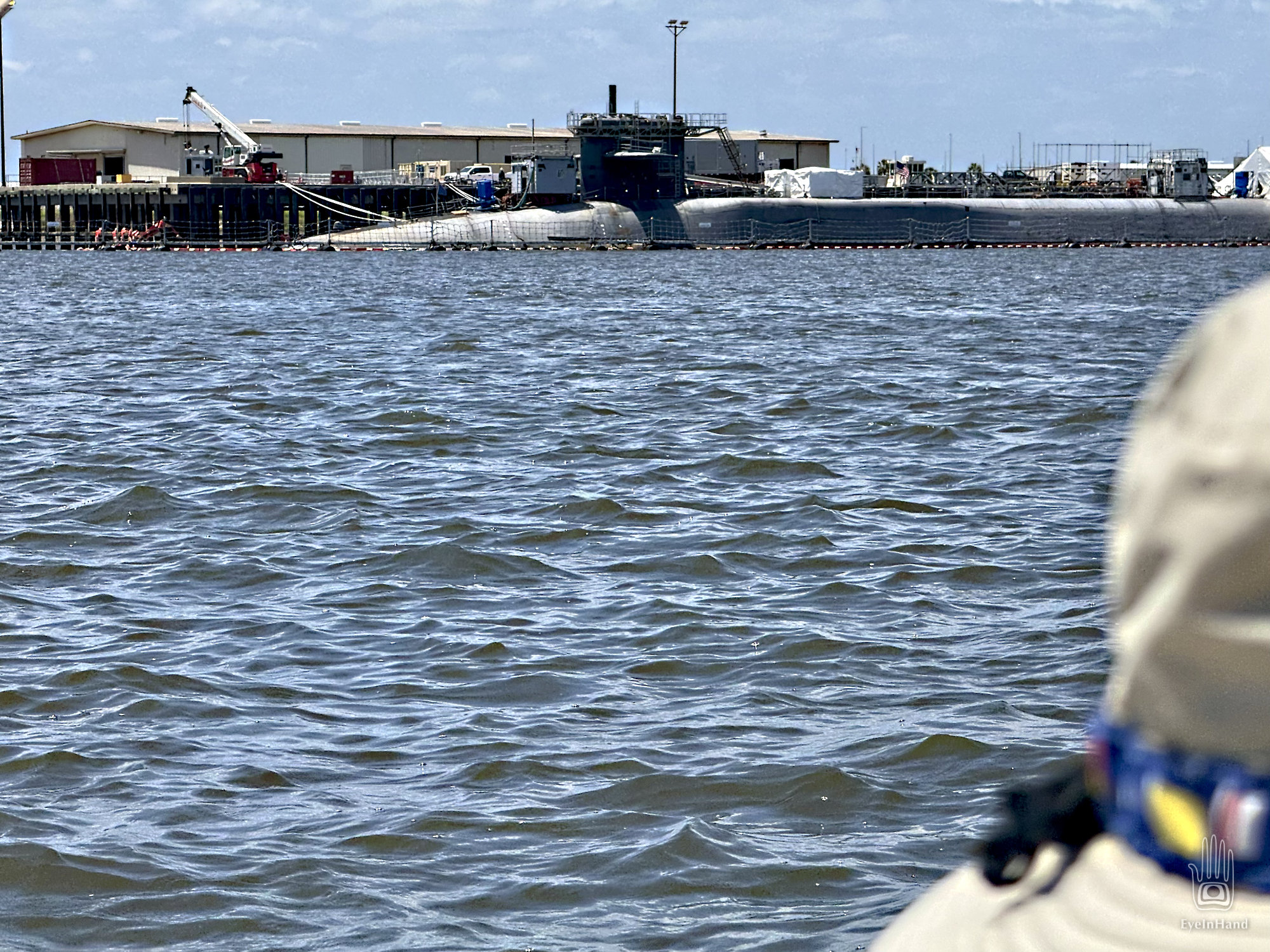
“Here come the dogs,” says Doug. I put down the glasses and see two patrol boats prowling out from the base. They then stalk us like junkyard dogs. Doug waves to them in the most unthreatening way possible and tries to smile big enough for them to see. They do not wave back. We’re not liking this. I see the next red marker, even closer to the base, and say, “That can’t be right, can it? It’s way over there!”
Doug is trying to steer while looking over his shoulder, keeping an eye on the patrol. With all the twisting, the cushion he uses for a back rest goes over the side. The wind and tide push it merrily toward the patrol boats. It’s a new white cushion, one of a pair he bought just for this trip. He really, really wants that cushion back.
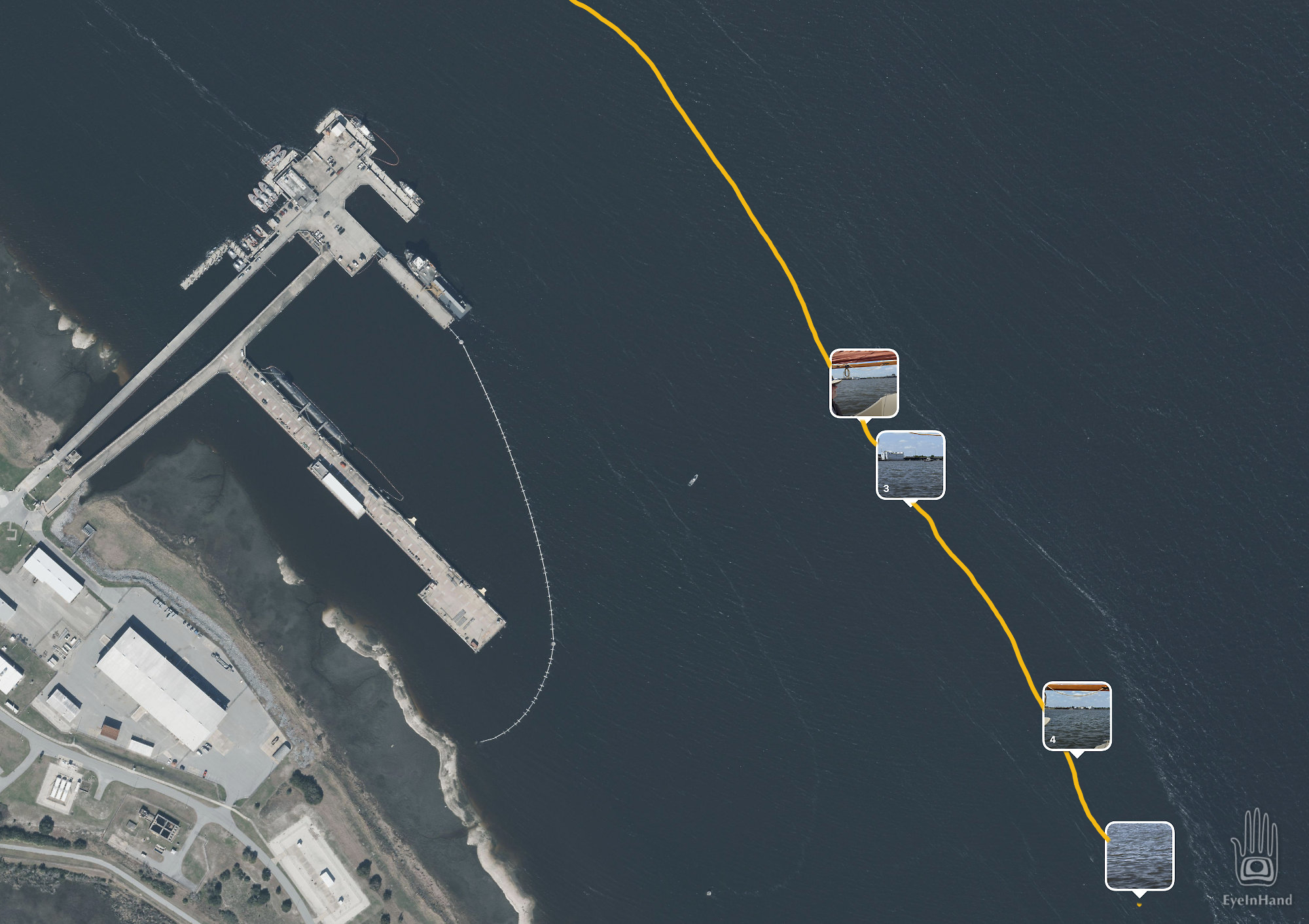
“Doug, the only thing they’ll like less than you throwing cushions at them is us trying to fetch it. And I don’t think they are going to pick it up and bring it to us.” The nearest patrol is close enough now I can see that’s not a harpoon gun mounted in the bow pointed at us, it’s a really big machine gun. I don’t think they like me pointing a camera at them, either.
While Doug runs through scenarios that involve getting the cushion back without getting shot, I look back at the chart to figure out how this makes sense. I touch one of the little warning icons, which I assumed just says don’t piss anybody off here. In fact, it says, almost nonchalantly, the red/green markers reverse and switch sides right here at the base. We’re going the wrong way. We’re outside the channel, over a sandbar, and way too close to that submarine. No wonder the dogs are stalking us.
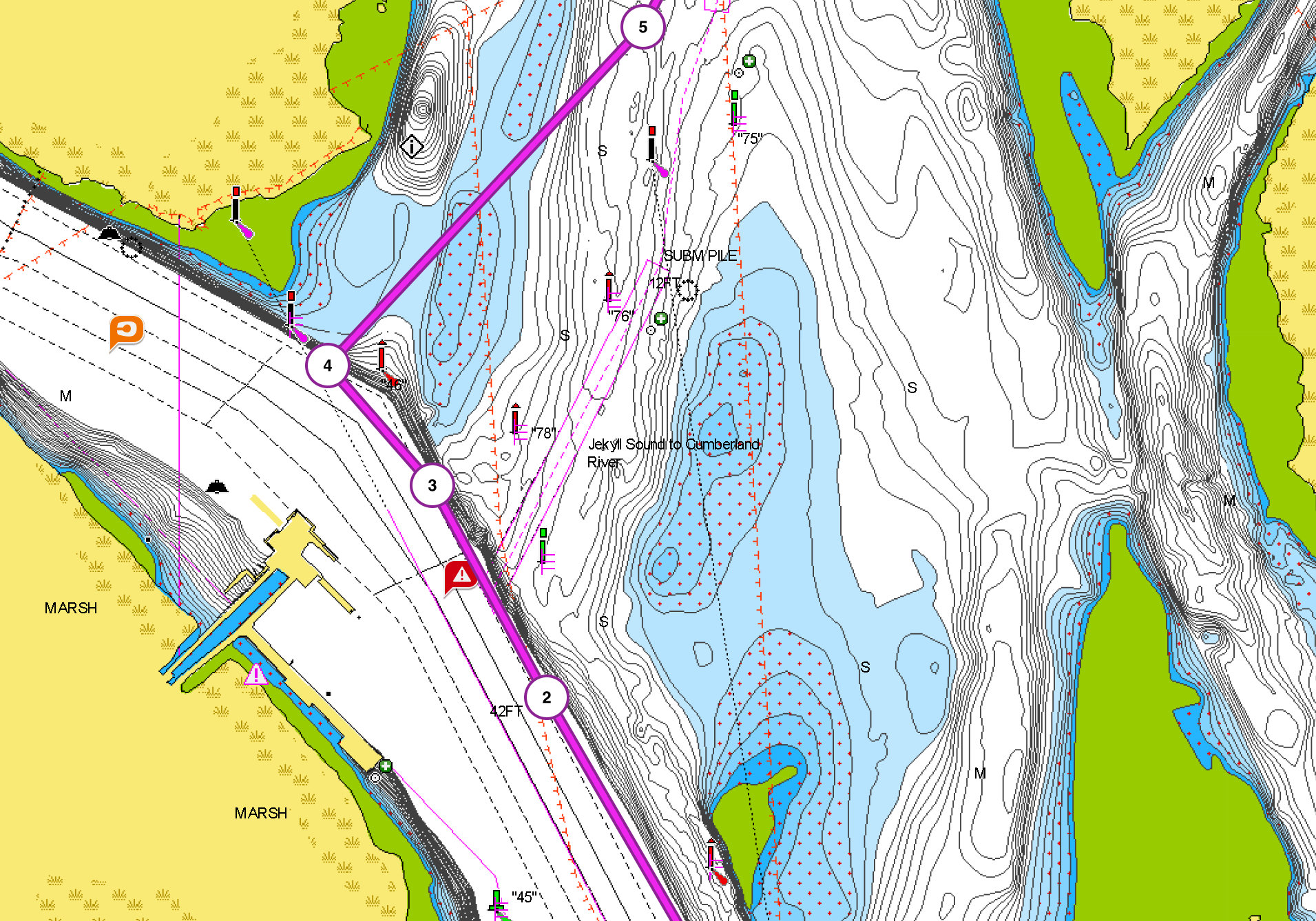
Doug makes a 90 degree turn around Red 46 and points us at the nearest green 100 yards away. It’s shallow enough we can see sunlight on the bottom. We raise the centerboard halfway, and hold our breath until we clear the bar. Back in the channel I see the red marker we should have followed was bent over like it had been hit. No wonder we missed it.
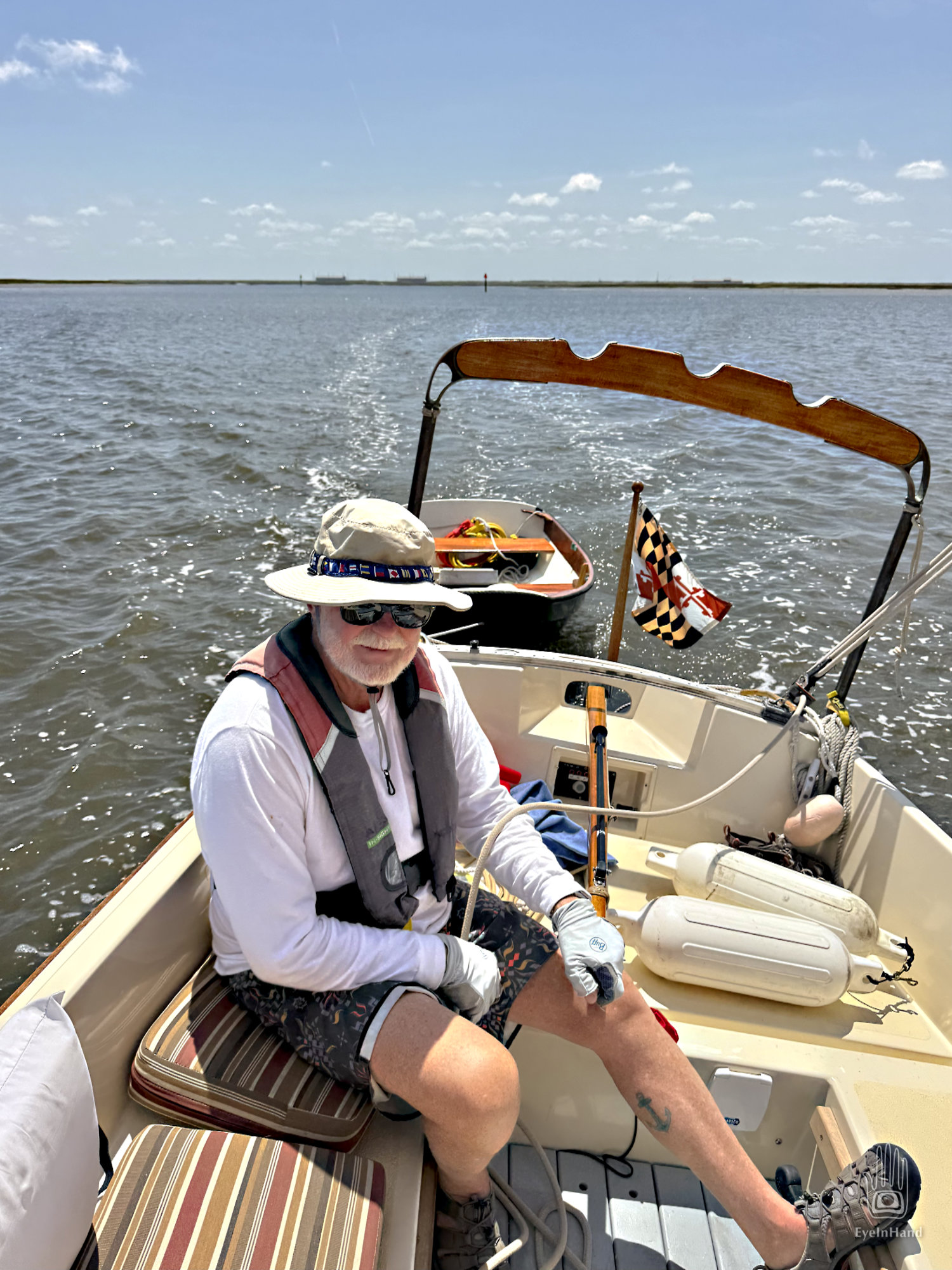
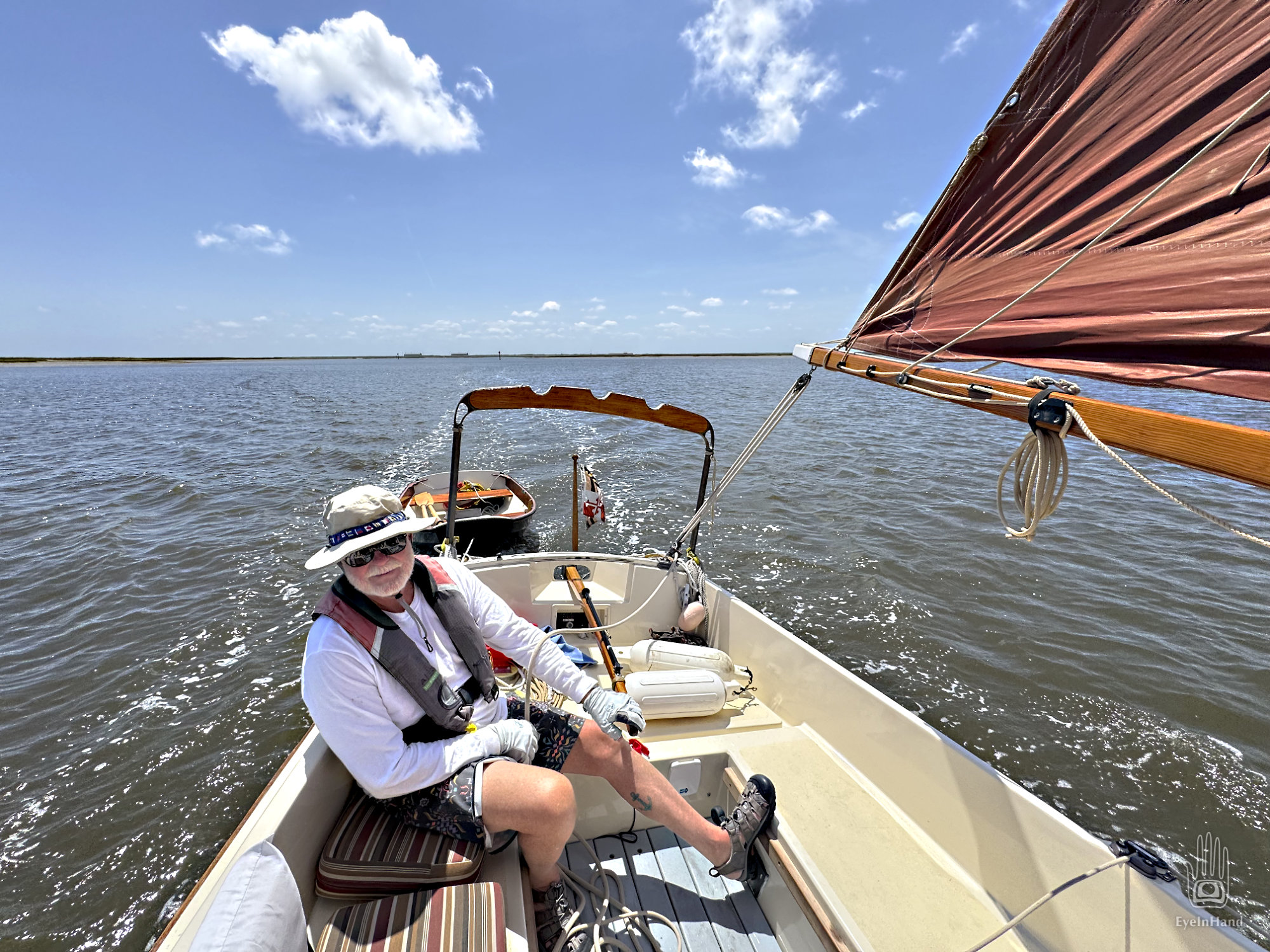
Everything improves the further we get from Kings Bay. Broad marshes fan out on both sides. A fresh breeze comes up from the east, and we have the best day of sailing yet. We aim for Brickhill River, a side creek that curls along the bluff of Cumberland Island. We can anchor there for the night next to Plum Orchard mansion.
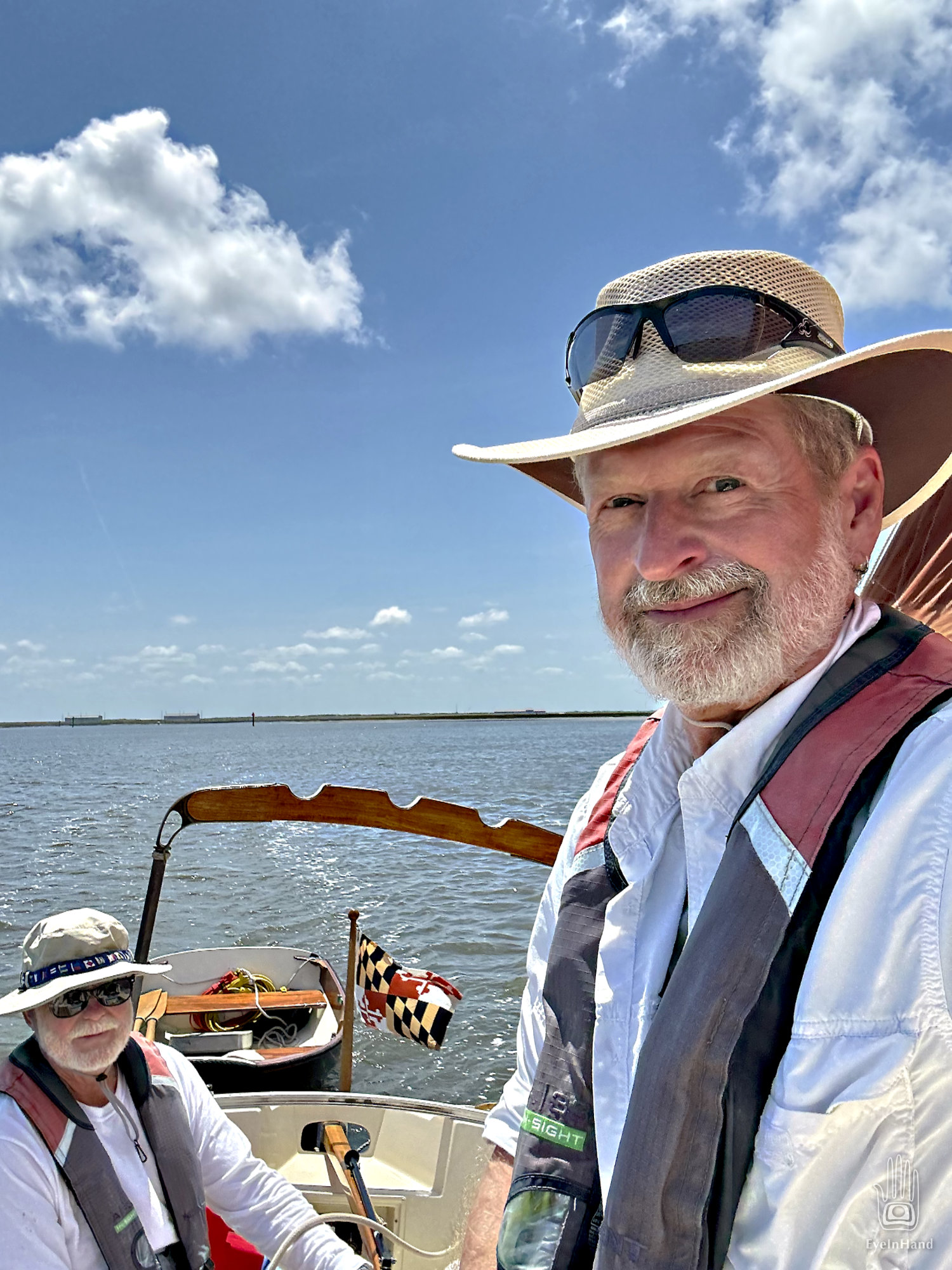
We’re still sailing well, but Cumberland Sound narrows quickly. Sandbars emerge above the water on both sides, temporary buoys are canted over in odd places. Apparently things move around a lot here. Many warning notes in the charts about shifting shoals and boats run aground. This place is known as The Dividings. It’s what Steve Early and I have been calling the Head of the Tide; but in sailing logs for the past several hundred years these places are referred to as “dividings” – where opposing tidal currents meet, then divide and flow opposite directions. At such places, rivers peter out to narrows, and stalled currents let sediment settle out in bars and shoals. Which we now see everywhere.
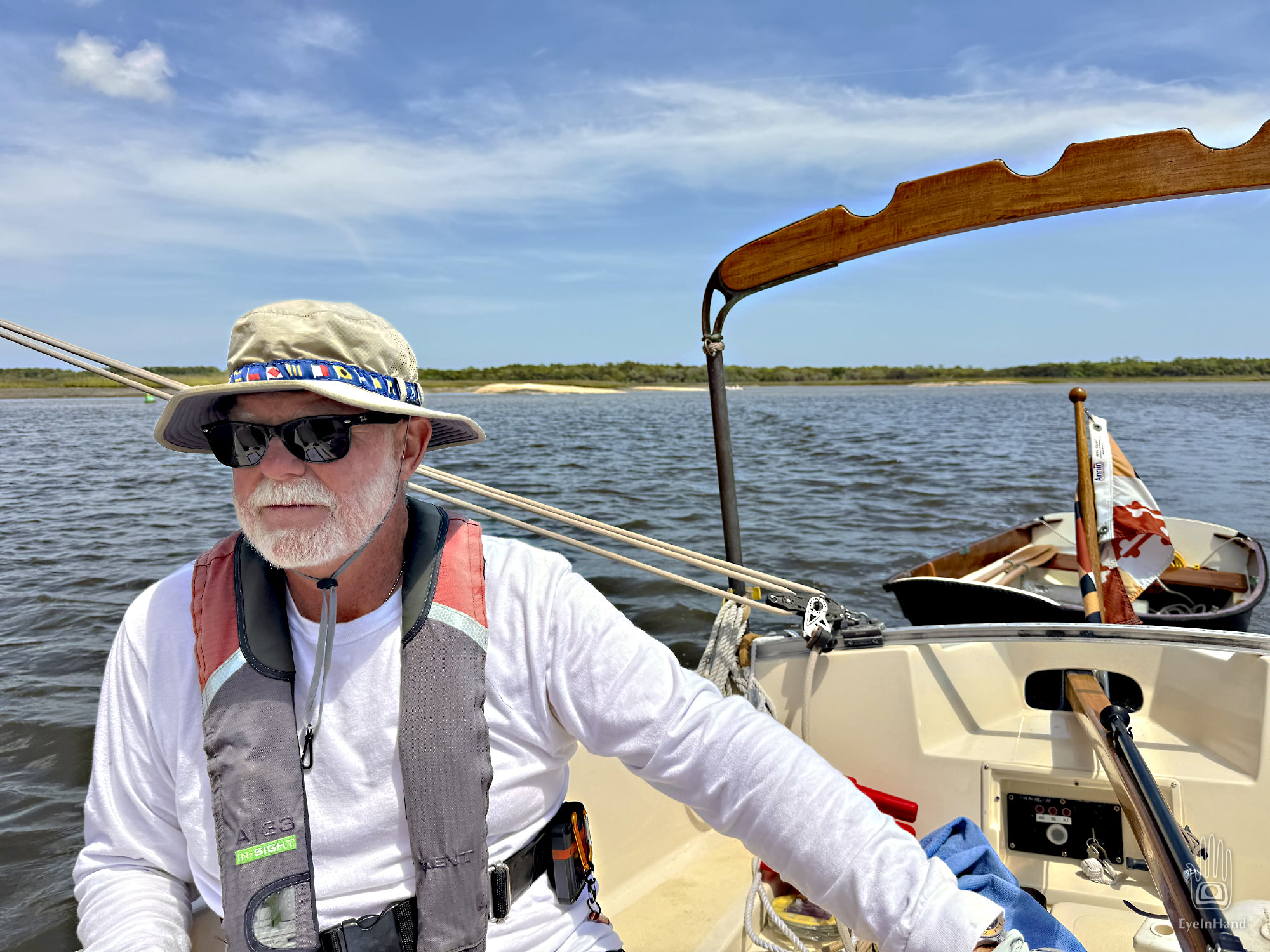
We come to a sharp turn where the channel is only a few boat lengths wide. It’s at this exact point where two separate fleets ran aground in two separate wars, botching the outcome of battles. During the Revolutionary War, a fleet of British schooners came down from the north to meet a landing party at Amelia for an attack on the fort. But the schooners could not tack through the dividings here. They ran aground and remained stuck on the sand until the attack was abandoned. The same thing happened to Union gunboats in the Civil War.
We follow a friendly trawler we met in St. Augustine, and he leads us safely through the turns. We avoid getting stuck, but are so preoccupied that we miss the entrance to Brickhill River, which looks more like a little marsh creek. Catching our mistake we backtrack, then follow it another mile to arrive at the anchorage. It’s secluded, and protected by tall trees. The public dock is closed for repairs, so we won’t have any company. And we have time to row ashore for another hike.
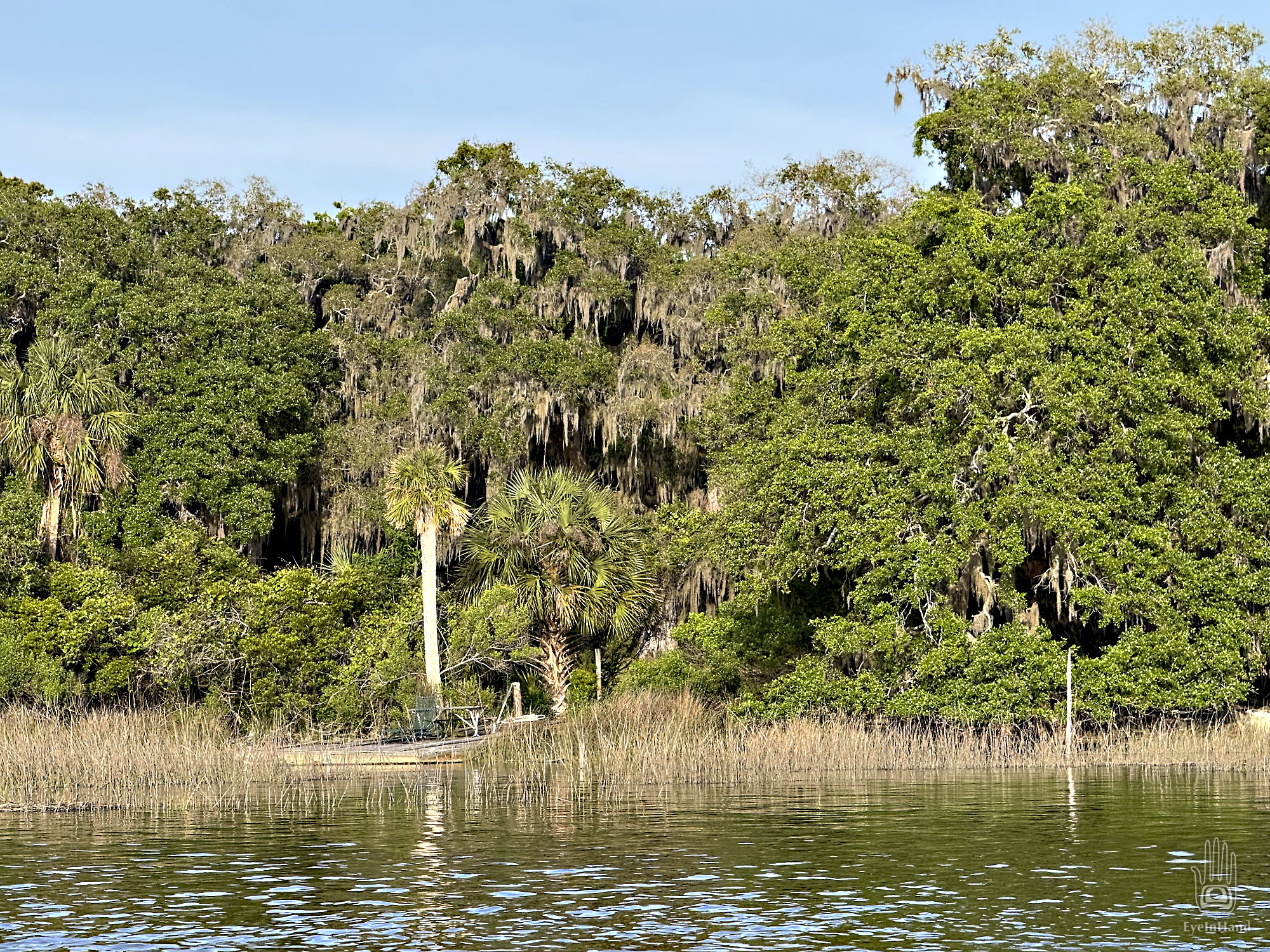
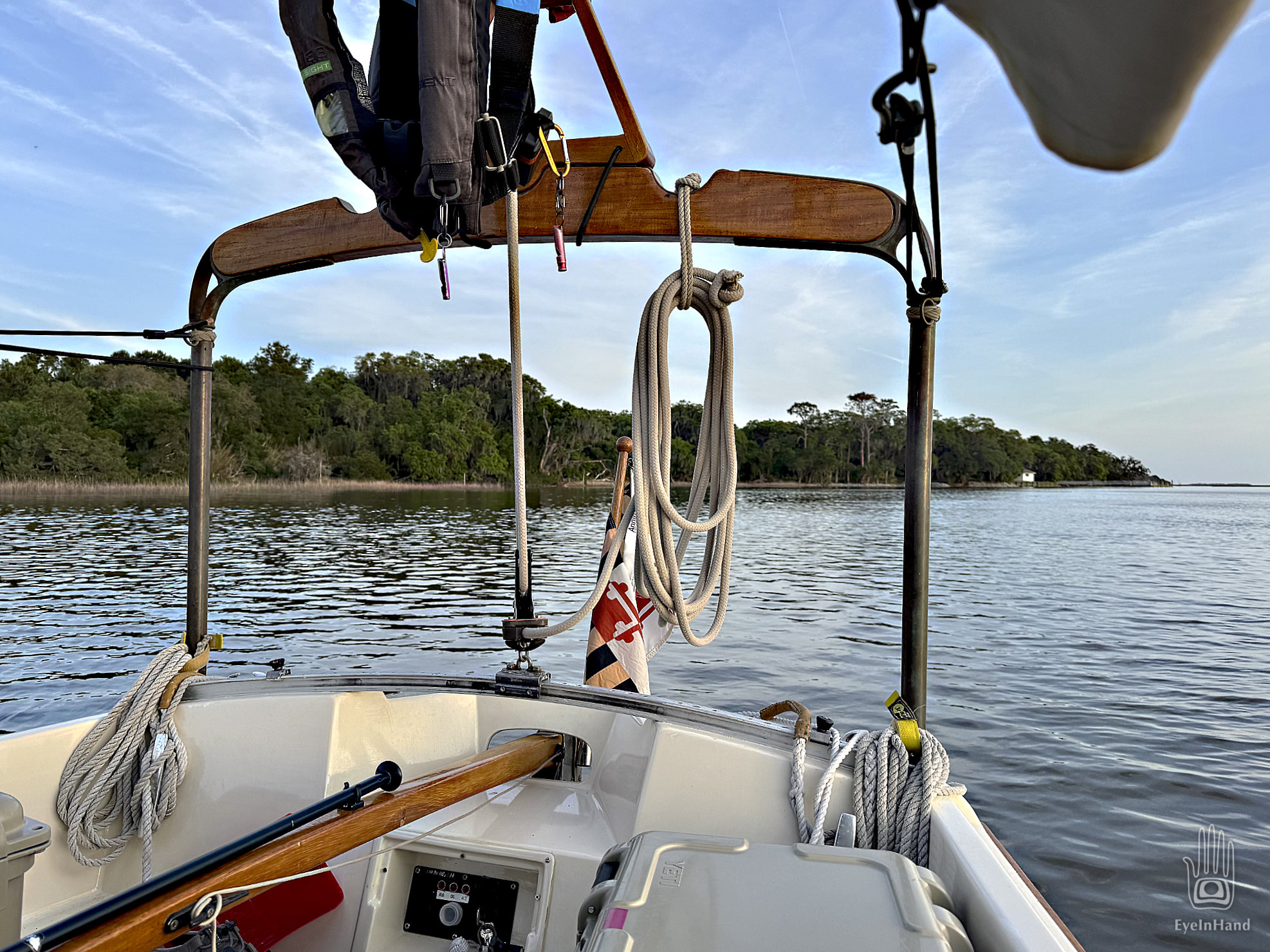


At the dock and gatehouse we find for the first time, as we will for the next two days, that we have almost the whole island to ourselves. There’s no one here to greet us, take our entry fee, or oversee the exhibits. Dozens of park service vehicles are parked neatly in rows in a lot, empty. With all the DOGE cuts to National Parks, and everything here federally funded, there’s not even a ferry to bring people over from the mainland. We will not see a single Park Service employee in the entire two days we spend on the island, which is 20 miles long.

From the dock we walk a sand road through an arched avenue of live oaks. The nave of a living gothic cathedral. This, I thought, is what my art history professor meant when she said a forest is the inspiration for those arches and cathedrals. It was how you got Druids to become Christians.
Winding south, we come to the ruins of Dungeness.

The first American to claim Cumberland Island was General Nathanael Greene, a Revolutionary War hero who served with Washington at Valley Forge. In honor of his service, he was awarded land near Savannah and most of Cumberland Island. Greene died of sunstroke at his Savannah plantation, Mulberry Grove. His widow married their children’s tutor and they moved to Cumberland, where they built the first Dungeness – a 5 story tabby mansion so tall it was used as a navigation landmark. The site chosen was the packed shell ring on a bluff over the inlet, a site sacred to the native Americans for thousands of years prior. “Lighthorse Harry” Lee, Revolutionary War hero (and father to Robert E. Lee, the Civil War general) visited the estate, fell ill and died. He’s buried here. Dungeness, the mansion, burned in 1866.
Oddly enough, it was on Greene’s Mulberry Grove plantation where the cotton gin was invented. That bit or technology turbocharged the southern slave economy setting the national stage for the next big conflict, the Civil War. After that war, half the island was owned by Confederate General William George Mackay Davis, cousin of Jefferson Davis. Scrambling to make a living after the collapse of the Confederacy, Davis wanted to make a resort of the island, giving tours of the Dungeness ruins. But his son, Bernard, accidentally shot and killed his young son in a hunting accident on the island. Distraught, Bernard later killed himself. The combination of tragedies led Davis to sell his part of the island, to Thomas Carnegie.
The increasingly mobile industrial classes, like those who came before, fell under the spell of the Florida land speculators. Carnegie bought Dungeness Plantation, of which he had never before heard nor seen, in Georgia, where he had no connections, from a former Confederate general whom Carnegie had never met. But his wife read a glowing article about the place in a magazine while visiting Amelia on their yacht. Another triumph of marketing for my copywriter friends.
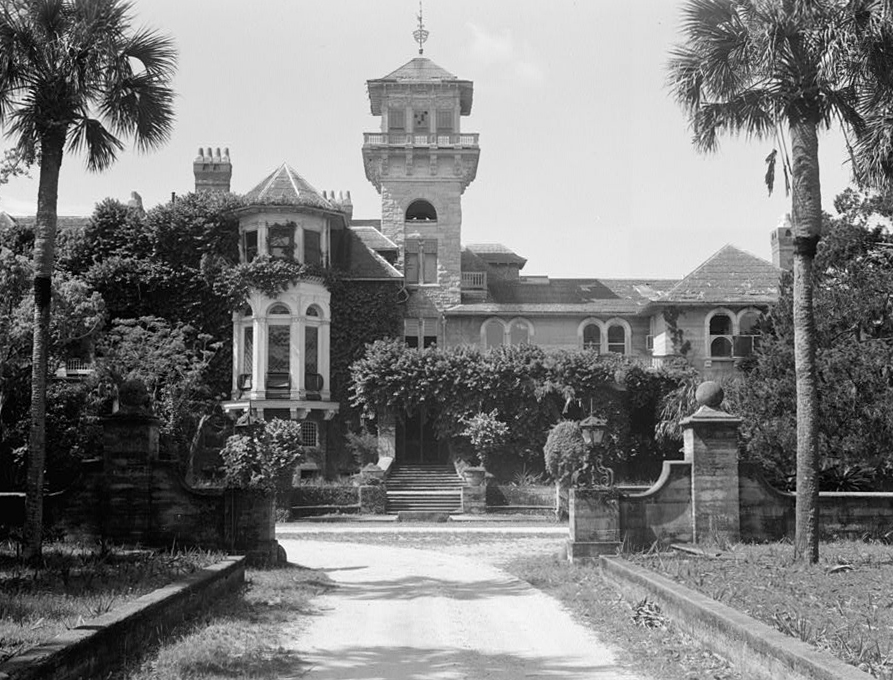
Thomas was brother to Andrew Carnegie. He was instrumental in building the vast family fortune that made them famous. When their consolidated US Steel was purchased through a consortium by J.P. Morgan, it was the most valuable corporation in the world, by far. Thomas purchased half the island from the distraught General Davis and gave it to his wife, Lucy, and began building a new Dungeness on the rubble of the old one. Designed by top architects of the time, it was a vast rambling affair, opulent with Tiffany glass and other elegant features, and remarkably was built and furnished in less than a year. Pittsburgh, with all the Carnegie Steel mills and forges, had become too polluted. Cumberland would be their healthy unspoiled new home.
Then Thomas fell ill and died.
His widow, Lucy Carnegie, hired her children’s tutor to manage the entire estate (there’s a couple of repeating patterns here, if you’re paying attention). William Enoch Page, the tutor, did an amazing job of this. Like crazy good job I won’t get into here – we’re talking water systems, electrical generation, elevators, food production, staffing, construction, etc., all of this back in the late 1800s. Leveraging the windfall from the sale of US Steel, the Carnegie holdings grew to encompass 90% of the island. Separate mansions were built for all of the married Carnegie children, with their spouses and offspring.
Greyfield Inn, originally one of the homes, is still privately owned and run by heirs of the family. We will see another of the homes tomorrow at the north end of the island.

After Lucy Carnegie’s death in 1916, the estate moved into a complex family trust and things began to unwind. Heirs lived in their own mansions scattered across the island. Maintenance of the big house and operations became more and more onerous.
By the end of the Great Depression, no one lived in Dungeness full time, staff and caretakers dwindled to a skeleton crew. A single gamekeeper was tasked with guarding the whole island. One night he shot at a poacher, striking him in the leg. Soon afterward, someone shot holes in the Carnegie yacht and set it adrift. Weeks later, fire was set to Dungeness and it burned to the ground, leaving a shell of thick masonry walls. The wounded poacher, a known vengeful troublemaker, was accused but never convicted.

We stroll around the ruins to the view of the inlet, the view that made this such a strategic location. Feral horses graze on the lawn and drink rainwater from what had once been ornate fountains.

Further on we wander past remains of pool houses, stables, a dairy, then out toward the ocean beyond. The trail, a former road, runs through a maritime forest behind the dunes. Or did. In places the dunes have reclaimed the road as their own. Sand is deep and soft, and hot. After another mile of this we finally debouch onto the beach.


These southern beaches are remarkably wide and flat and hard. In the 1800s, it was popular sport to build sand boats and sail them at high speed for miles. This uncredited photo appears on the cover of “Cumberland Island: A History” authored by one of the Carnegie descendants.


The Florida State Archives has many similar photos taken at Ormond Beach. Honestly, it looks like fun.

Far to the south we can just make out the mouth of the inlet. Rock jetties extend from the shore on each side nearly 3 miles out to sea, for the sea floor is just as flat as the beach. The jetties, with dredging, keep a channel open for passage of submarines, but the rocks are covered at high tide and lie in wait like alligators, ready to chomp an unwary wayfarer. Good example of an aid to navigation becoming a hazard to it.
Another example: Just up the beach we find one of the dredge buoys, its base buried in the sand. Probably broke loose in a storm. These things can weigh six tons. Wouldn’t want to meet one bobbing around in the middle of a dark night on a fiberglass pleasure boat – you’d crumple like soggy origami.


Here on the beach we find ourselves standing at a geographic oxymoron. This very spot on the eastern shore of the US is actually the westernmost point of the entire Atlantic Coast. We are in fact 600 miles west of the easternmost point, up in Maine. If you want to sleep late and still watch the sunrise over the Atlantic, this is the place to do it. When the sun comes up in Maine, you still have over an hour to wait before it rises here. The dredge buoy seems to mark the spot, like the famous bollard in Key West marking the southernmost point in the US.

As owners came and went, livestock was allowed to wander, or simply abandoned. Cattle, hogs, pheasants, goats, and a veritable zoo of exotic creatures remained behind and roamed free for centuries. Today a large herd of wild horses has free rein of the island. Up in the dunes we find a glossy stallion grazing on beach grass.


Another mile up the beach we reach the campground and find a handful of people, the first of the day. We take a dip in the ocean, take cold showers, and head back across the island. The forest canopy is like a big green tent, open underneath.
Striking the river on the west side, we head south on a trail along the shore. Nothing but birds and cabbage palm and Live Oaks draped with Spanish Moss. Finally back at the dock after a four mile round trip, we row back over to Tidings.
There we see a most unexpected sight: a nuclear submarine escorted by a retinue of attendant boats bristling with firepower.

This, we surmise, was the purpose of the “live fire drill” – a ruse, perhaps, to clear the inlet without giving too much away, as it heads to Kings Bay Sub Base across the river. It’s an Ohio Class sub, armed with nuclear Trident ICBM missiles. Each missile costs $70 million, and each sub carries 24 of them. The sub alone costs $3.5 billion. That’s a lot of money and firepower parading by as we relax on the deck of our humble little craft, powered by a one cylinder engine, dining on our one-pot dinner.


It feels like another anachronism, a legacy of the Cold War with its peak nuclear annihilation scare, back when neighbors built bomb shelters in the back yard. “Mutually Assured Destruction” it was called, or just plain MAD, if you were a peacenik. I remember doing Duck and Cover Drills in grade school, as if covering your head with a notebook would save you. An early form of Security Theater.
And here they are, still cruising the oceans half a century later, close enough for me to arouse suspicion in the twitchy escort boats. But the former panic has grown old and tired. We got used to it. We have new scary things to worry about now, though the old scary things never went away. Funny how that works.

Late that night, I wake to the sound of a low rumble and lights flashing in the porthole. Something big is moving upriver sweeping the sound with a blinding spotlight. Or some ship of the future brandishing a laser weapon.
From Spanish Galleons, to pirate frigates, Union gunboats, steam yachts of war-wealthy industrialists, to nuclear subs, there’s a pleasing continuity to it.