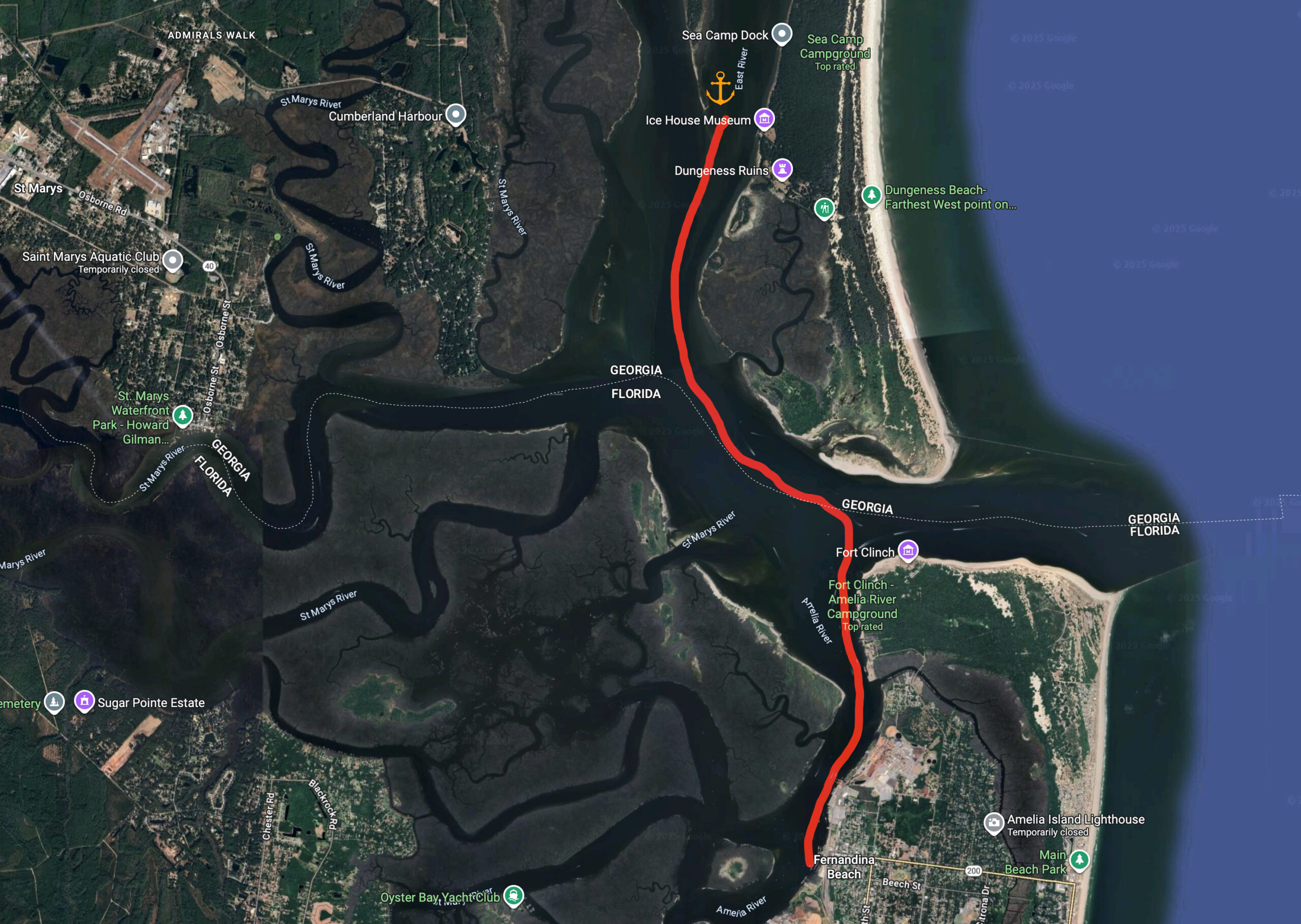
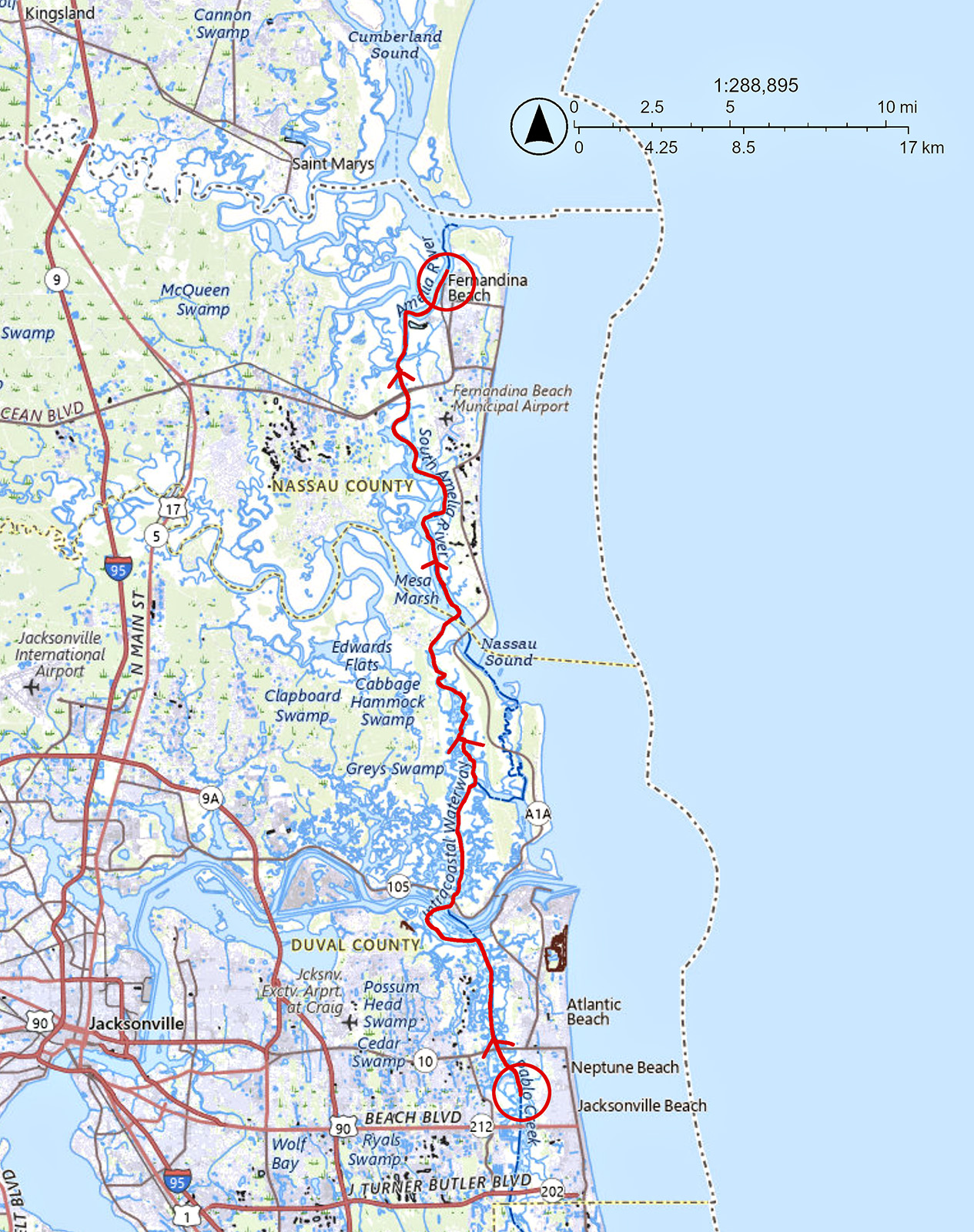
Sail track from Fernandina to Cumberland anchorage
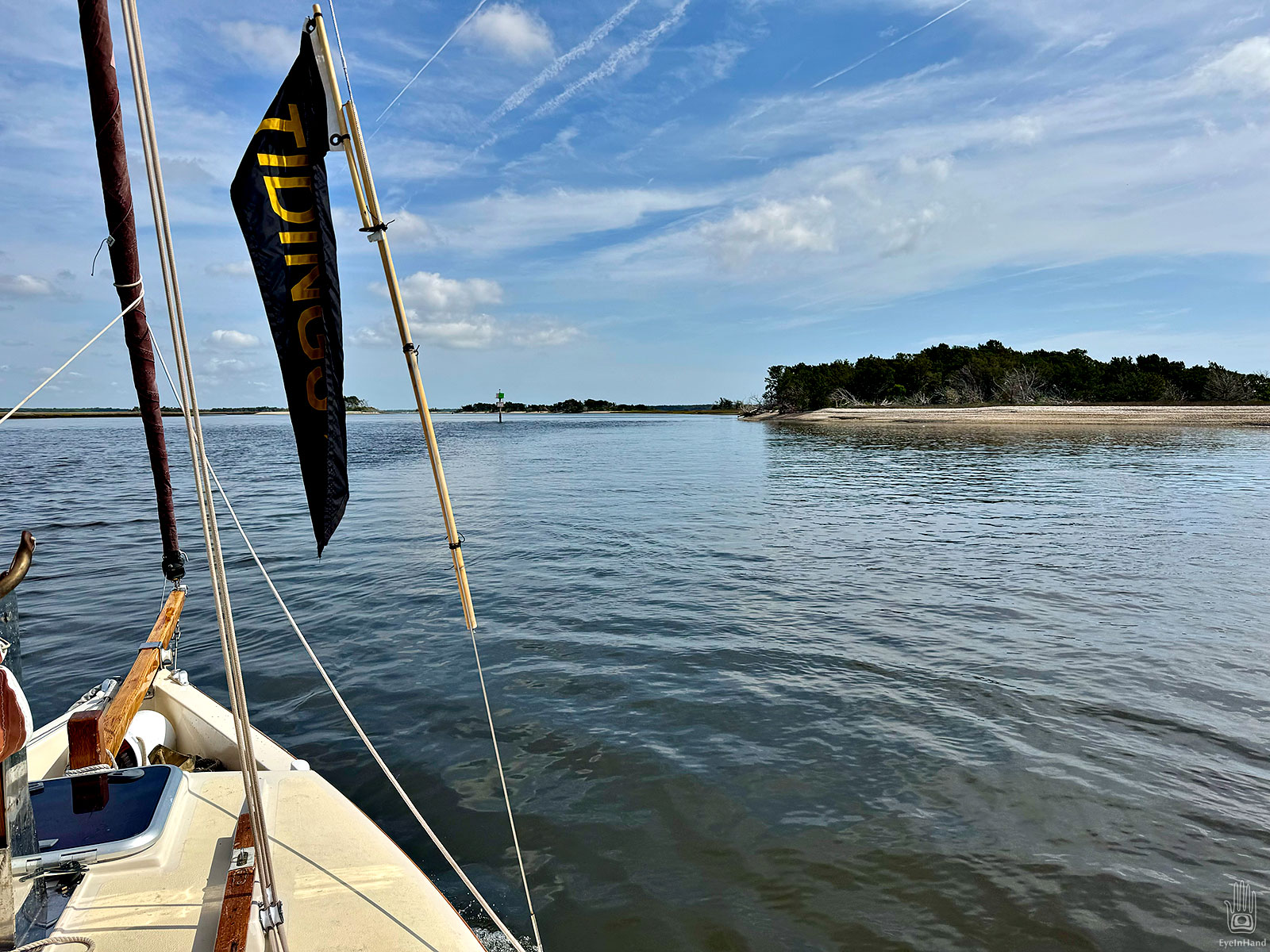
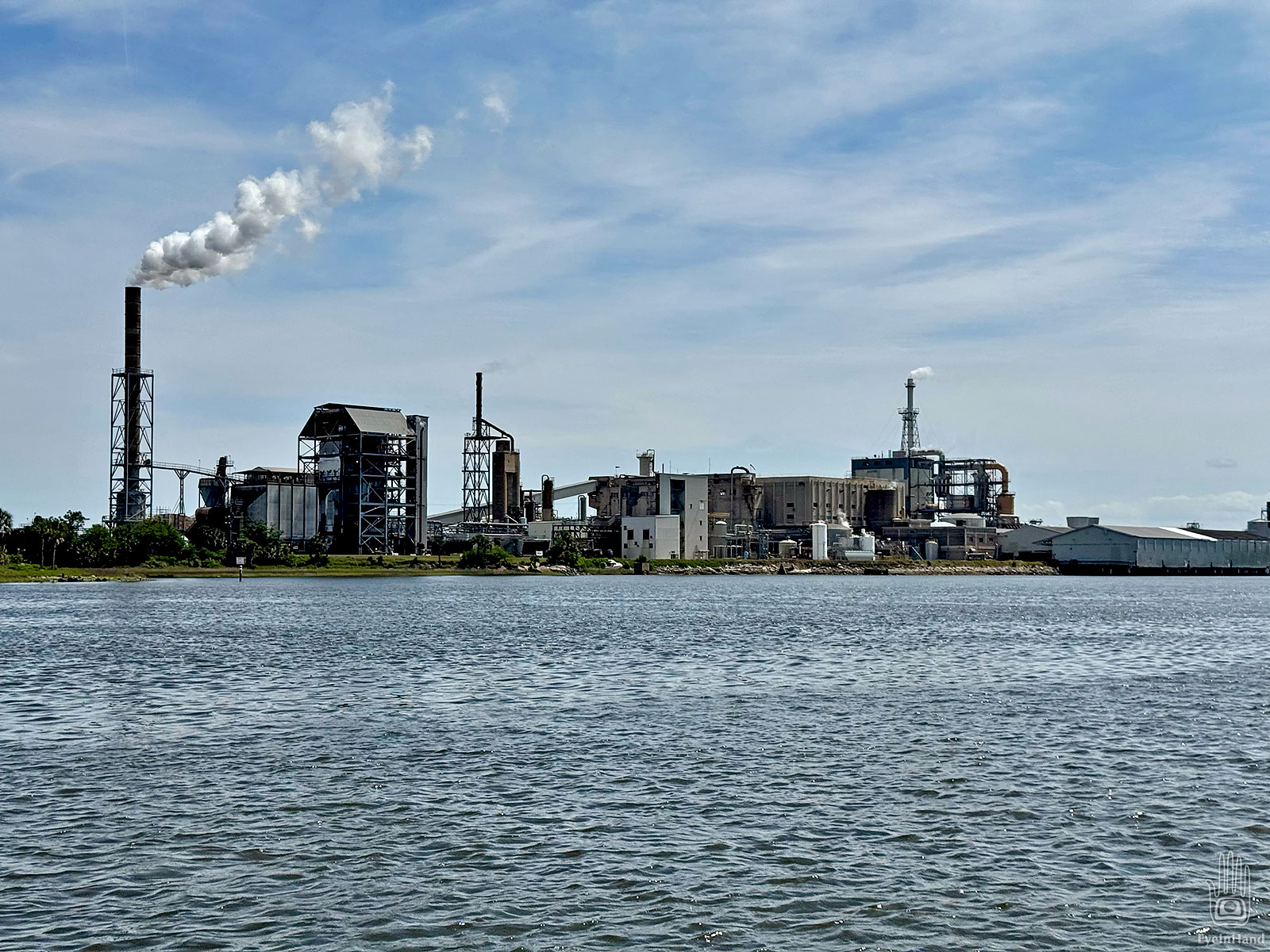
The ampule of sacred cow’s milk in hand, we head back to the harbor and prepare the ship to push north. We drift out on the last of the Amelia River, saluted by train whistles from the pulp mill on the north end – freight cars and conveyors and mountains of sawdust and ships listing with cellulose. A group of boating tourists motors by, lined up like ducks in a row. We’ve seen these all over Florida – little paddle boat size contraptions big enough for two. Big outboards on each one that weigh more than the boat, but a governor on the motor limits them to jogging speed. All hat and no cattle. In St. Mary’s Inlet, we catch a glimpse of Fort Clinch to the east on the tip of Amelia, sunbathers on the beach, and the wide Atlantic beyond.
At some indefinite but pivotal moment, we depart Spanish Florida and the expedition enters the wilderness of British Georgia. It’s like the wave of a magic wand. We know something of immense importance just happened; we just can’t say exactly when. Still, you KNOW something is different, if only an arbitrary border on a map. But we are on the right side of that border now, and welcome it.
Cumberland Island, Georgia
During the Age of Exploration, the St. Mary’s Inlet was a no man’s land between warring European kingdoms. It was the best deepwater port along a hundred of miles of coast between Savannah and Jacksonville. Strategically, everyone with a navy wanted to control it. Forts were built, defended, and lost on both sides of the St. Mary’s Inlet for hundreds of years. The Empire of Spain controlled everything to the south, all the way to the tip of South America. France and England wrestled over everything to the north, with England dominating the middle; but the hold was tenuous. In fact, Spain still controlled Florida all the way up to 1845, almost to the American Civil War. But the border was always porous here, fluid as the waterway. Skirmishes pushed the envelope north until the other pushed it further south.
This problem, as the saying goes, created certain business opportunities. When nascent America entered conflicts with Britain and her European allies, trade embargoes were enacted and blockades deployed to enforce them. But Spain, focused on extracting gold further south, stayed neutral in these conflicts. So enterprising frontier traders would bring goods down the Inland Waterway from southern Georgia – indigo, rice, cotton, timber, tobacco, etc. – and simply slip across the inlet to Fernandina. Effectively sashaying into Spanish Territory where there were no embargoes. From there, goods brought by Spain made their way back north via the same route. The town of St. Mary’s on the mainland of Georgia, and Fernandina on Amelia, though political enemies, in practice were international trading partners.
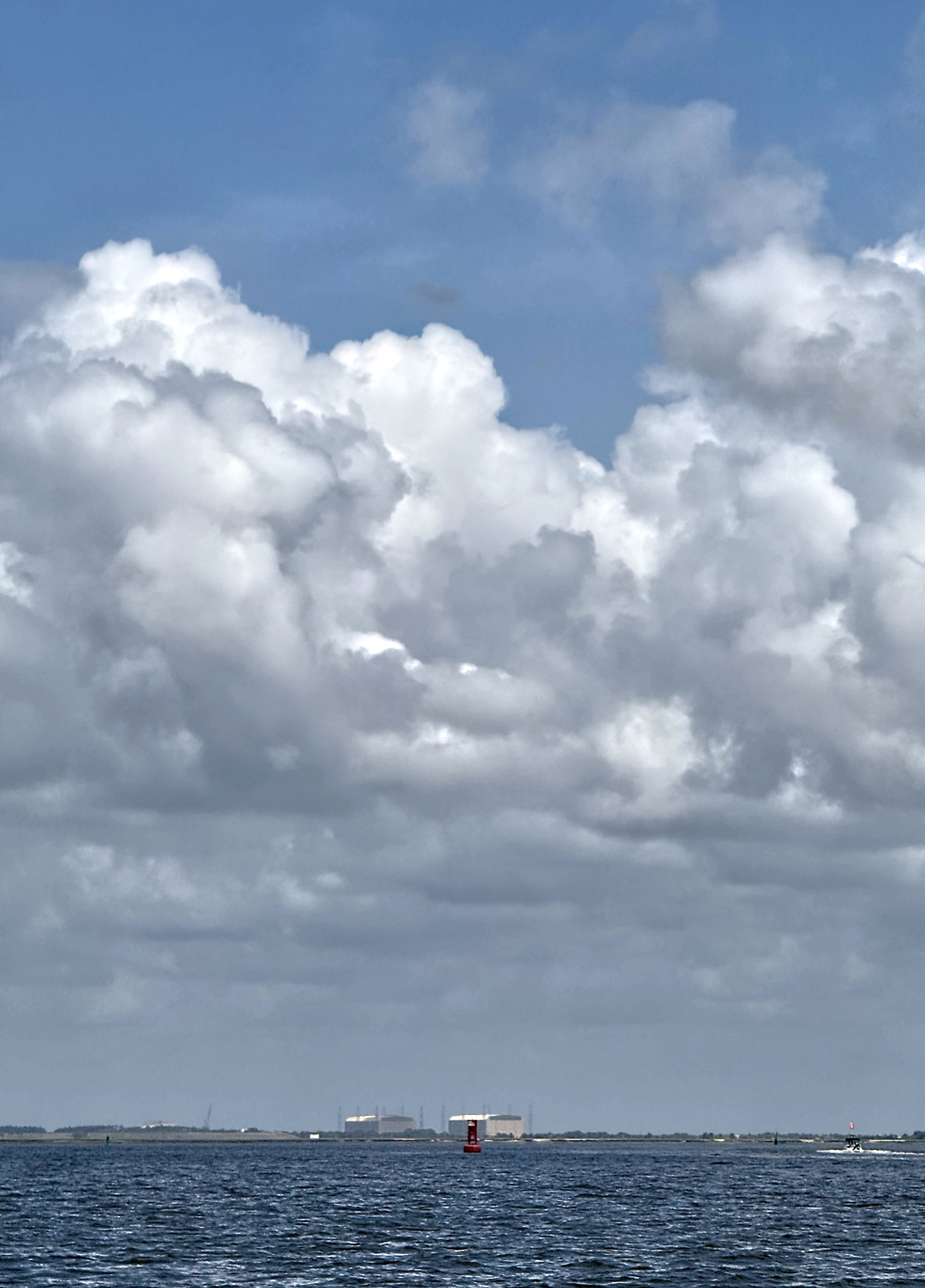
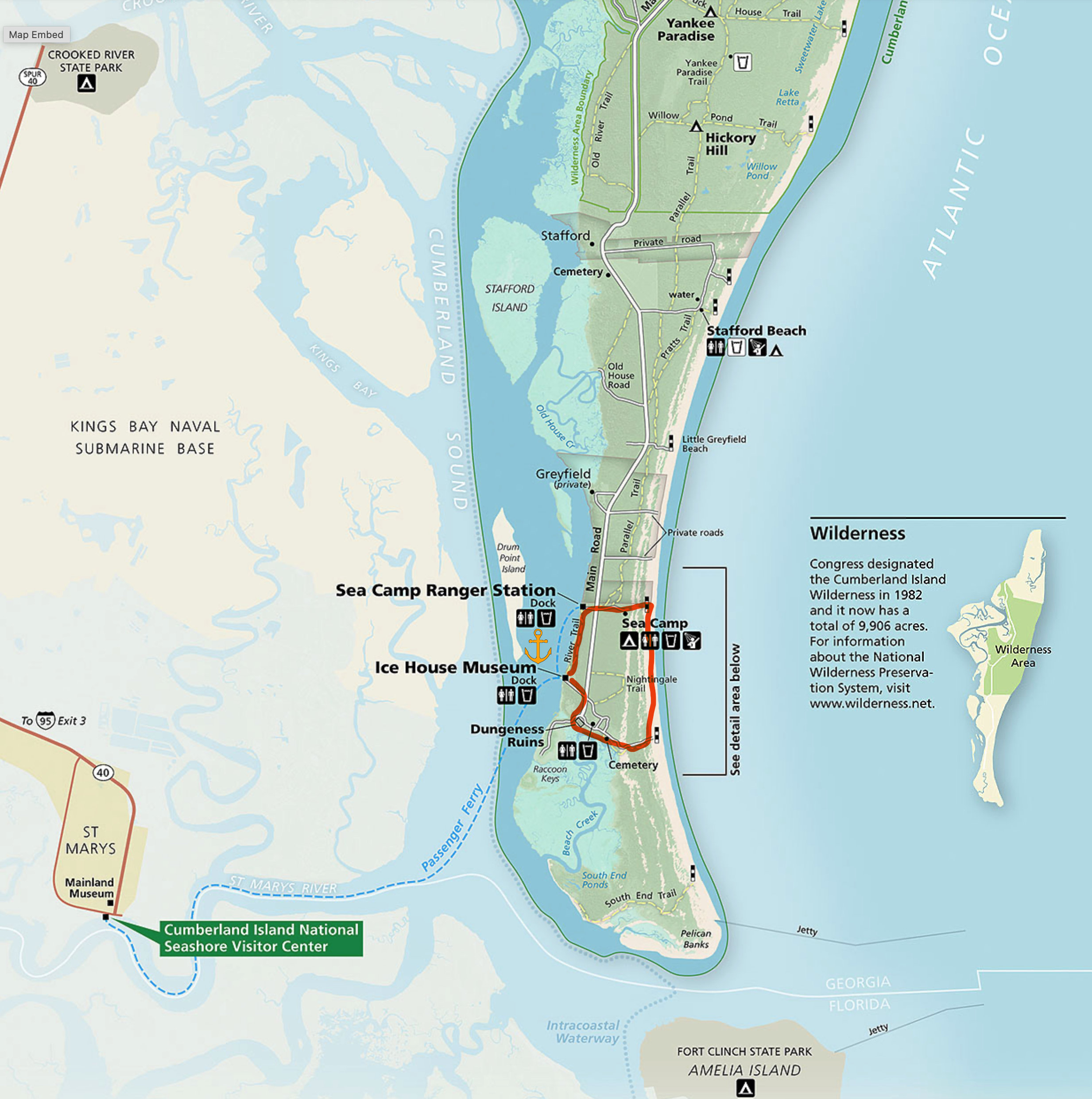
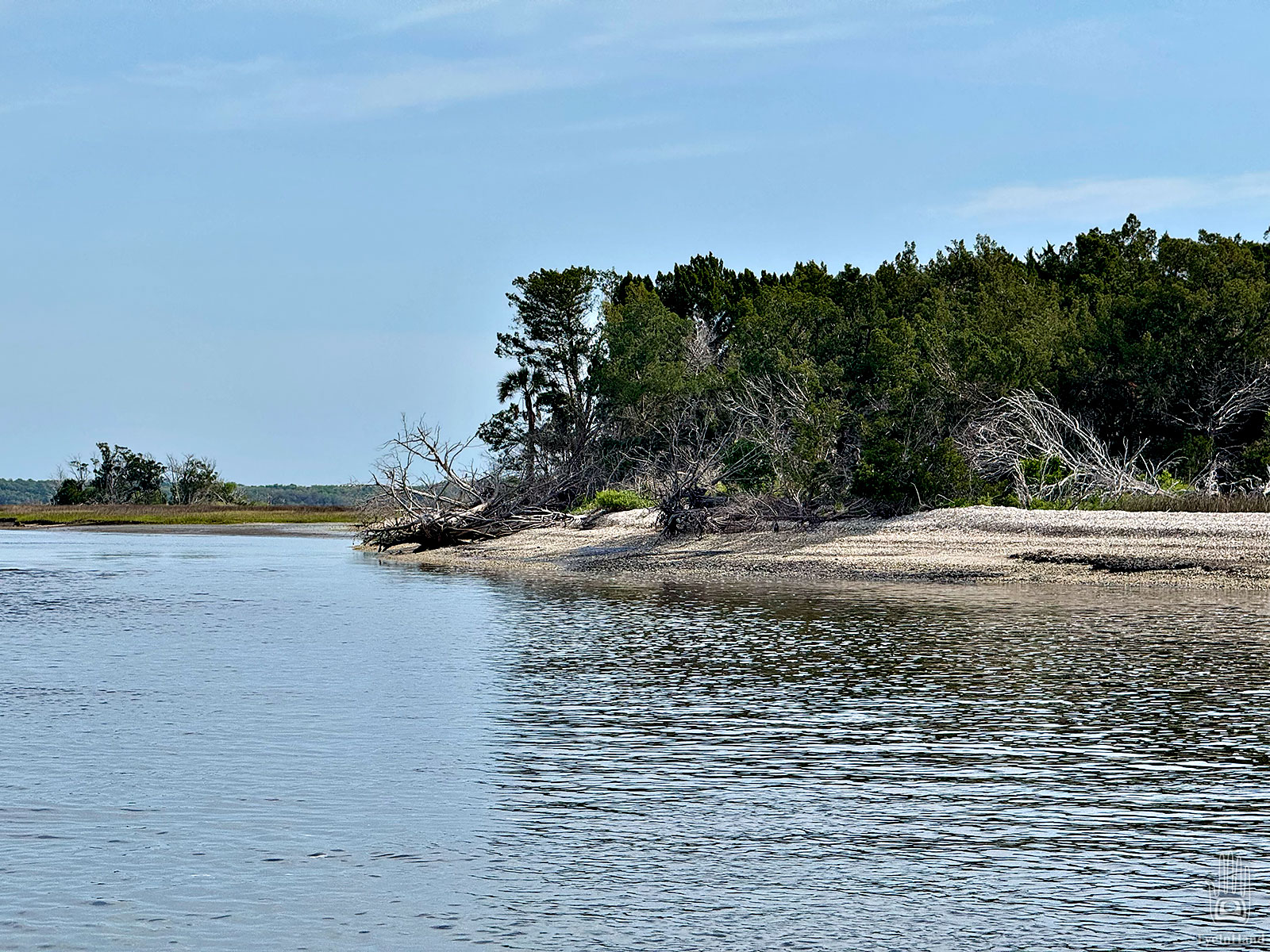
A military presence remains active today. Across the inlet to our left is Kings Bay Submarine Base. Hardened graving dock covers rise in the distance over the trees, the marshes, and Cumberland Sound. We enter the Sound and follow a creek to the right that runs north along the island, heading for an anchorage marked on the charts near the ferry dock. Two larger boats already there, but plenty of room. Which is good, because the 7 foot tides are strong and we need lots of scope to stay put.
A Coast Guard Pon-Pon alert comes over the radio while we prepare to go ashore. All boats are advised to vacate and avoid the St. Mary’s Inlet for the rest of the day for a “live fire drill”. “Glad we don’t need to go out that way today,” says Doug.
Kings Bay submarine base
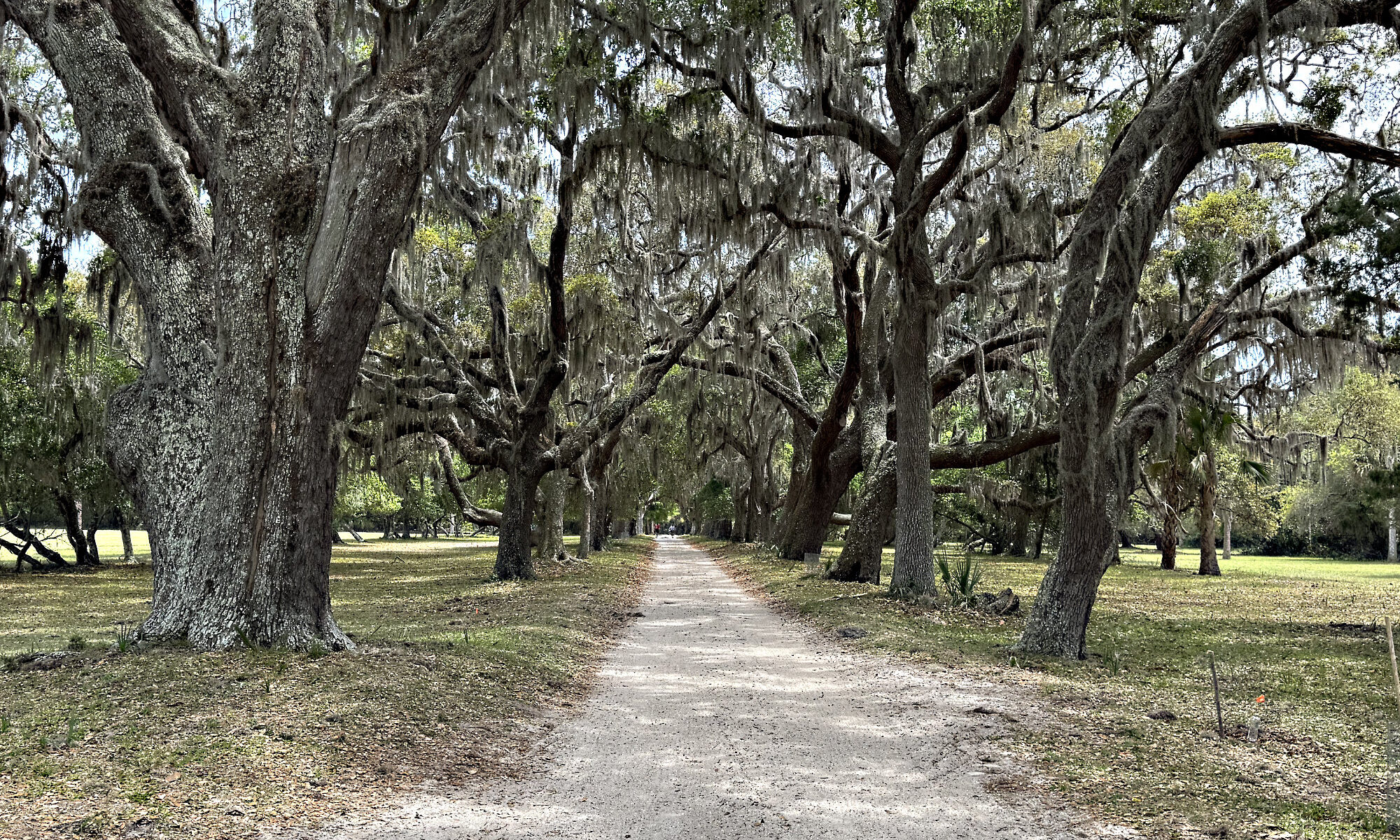
We’ve heard so much about Cumberland Island we will spend extra time here – a day in the south and another on the north end. Variously claimed by colonial empires, a Revolutionary War General, antebellum plantation owners, a Civil War General, and the wealthiest industrial magnate of the early 1900s, it was a prize fought over in the last century by developers and preservationists.
I lived in Georgia when the island changed hands to become a National Seashore: from a private enclave of the uber wealthy family of Andrew Carnegie to become public land. It was a messy transaction that needed the work of state and environmental organizations, cooperation of the Carnegie family, and lots of money; but the deal eventually went through. Cumberland Island is now a National Park, one of the few that can only be reached by boat. Its relative inaccessibility, combined with the remote location far from urban centers, has done more to preserve it than any manmade controls ever could. Most of the island, abiding thousands of years of human history, remains remarkably unchanged.
Walk route, south end of Cumberland Island
Doing a bit of recon with maps, we see there’s a place near the beach on the ocean side of the island marked as having showers. So the rough plan is to walk the southern end of the island for a few miles, strike out east to hit the beach, and walk north along on the shore. We’ll go for a swim and shower off before walking back.
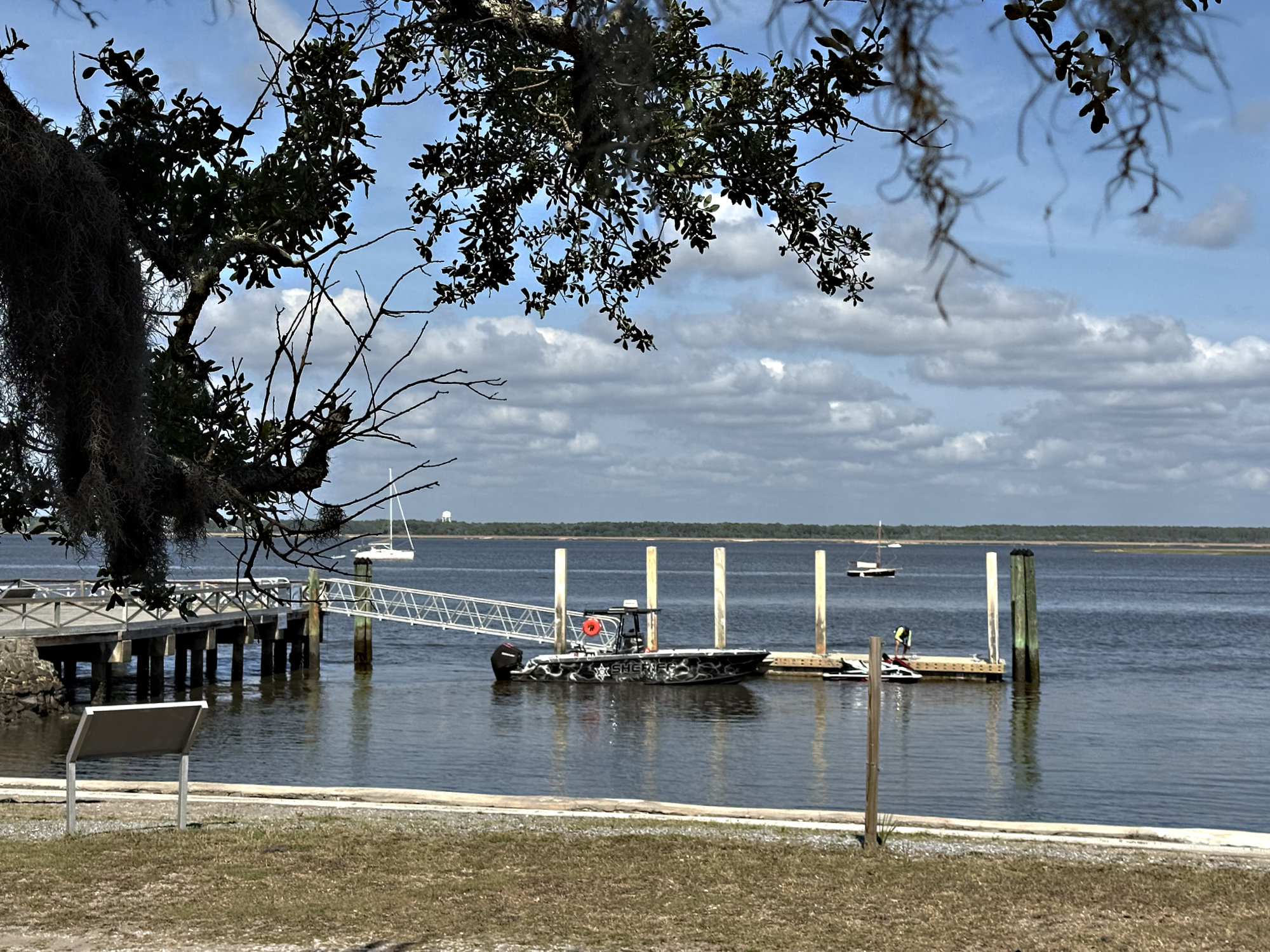
Ice House ferry dock, Tidings at anchor
We pack light – just some water, snacks, and a towel – and lower ourselves into PS, the tender tender, then row diagonally across the fast current for a couple of hundred yards to the dock, which screeches and groans against the tide.
For those not interested in the details, here’s the video:
For years we used a Subaru Forester as a utility and travel vehicle. We could throw kayaks on top and bikes on the back, or haul a boat or utility trailer. Apparently, adding in coolers and camping gear, and us, far exceeded the load capacity it was designed for. This spring we broke both rear springs and struts. I got a finger wagging from my mechanic.
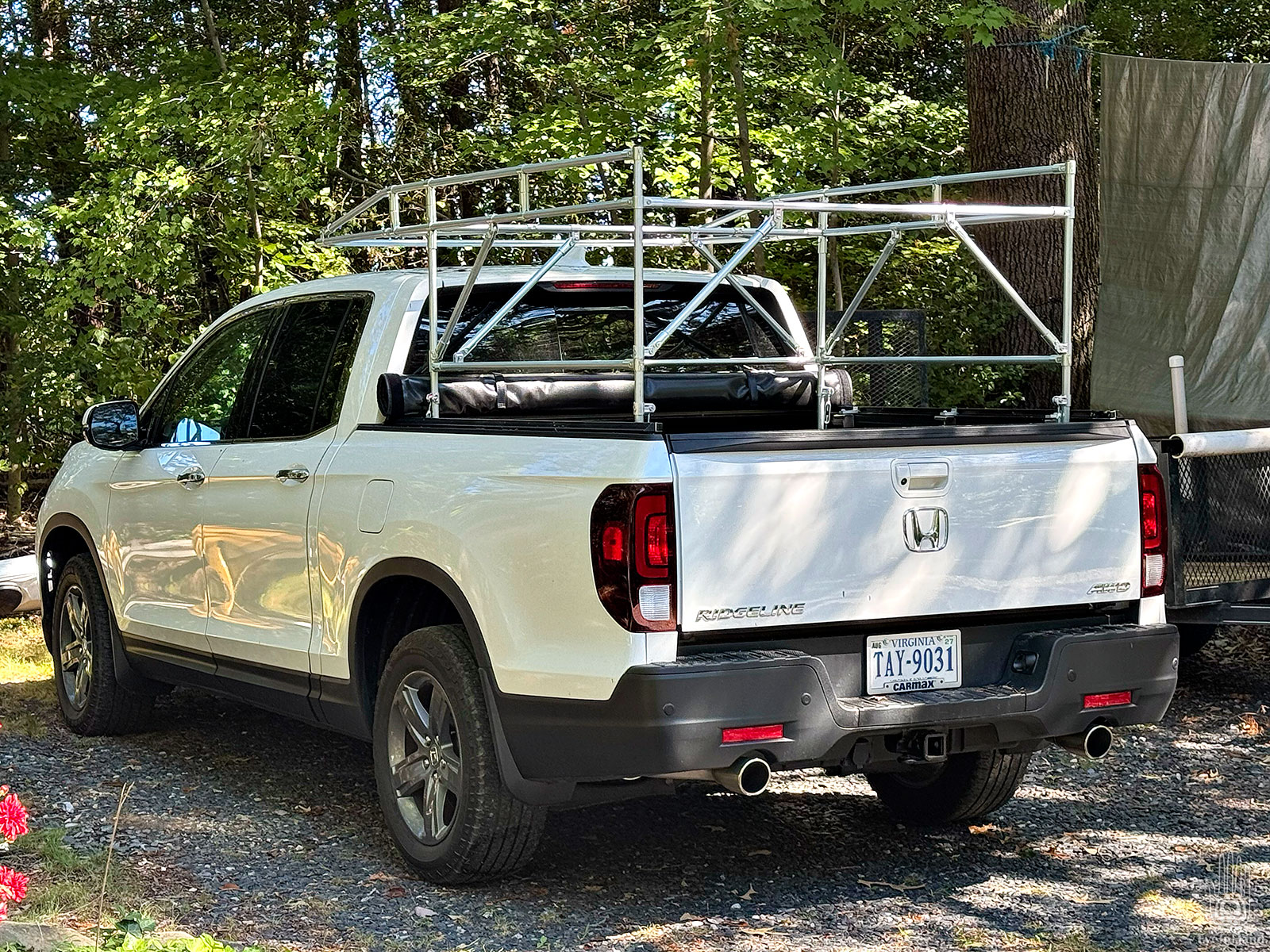
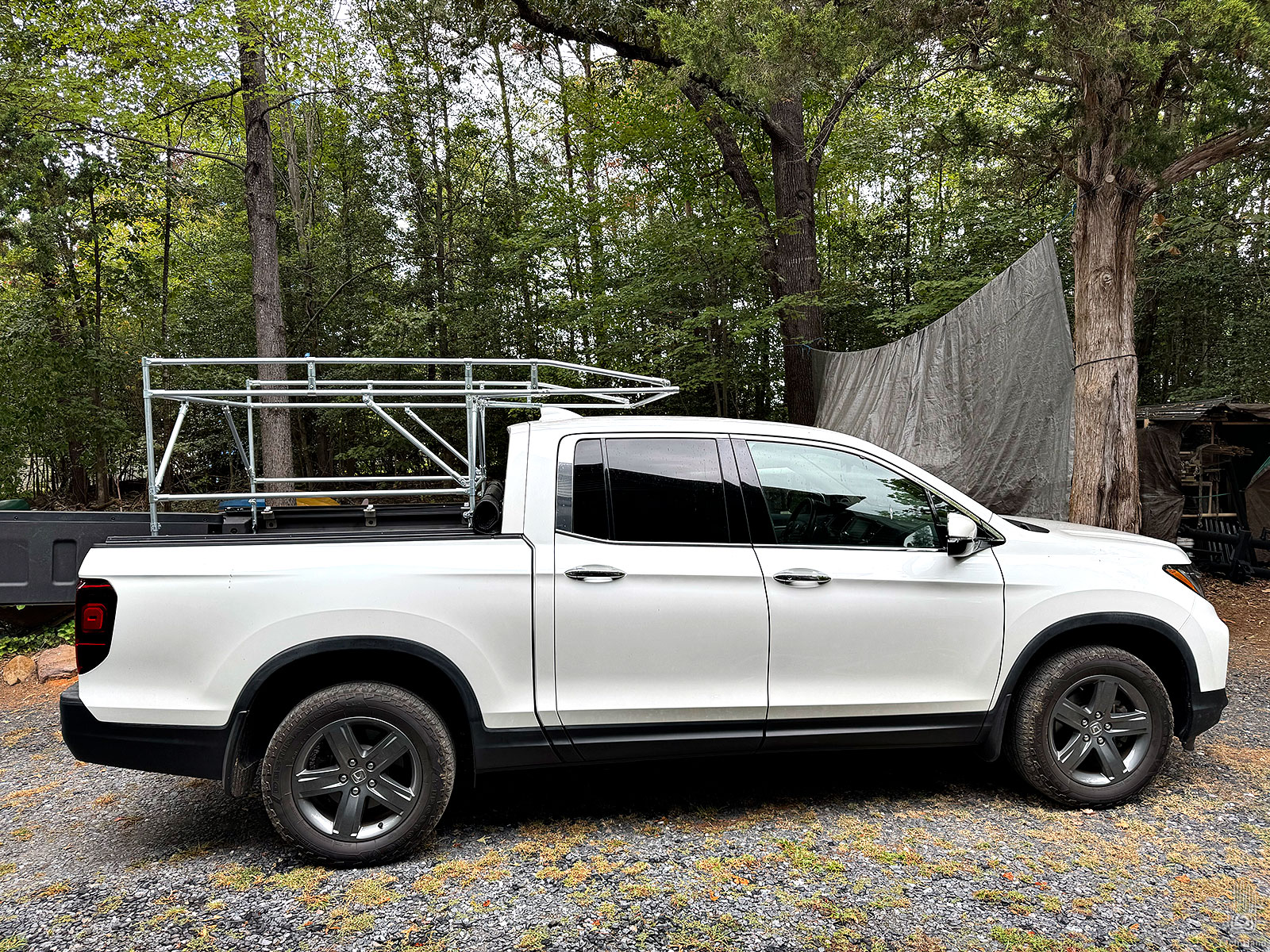
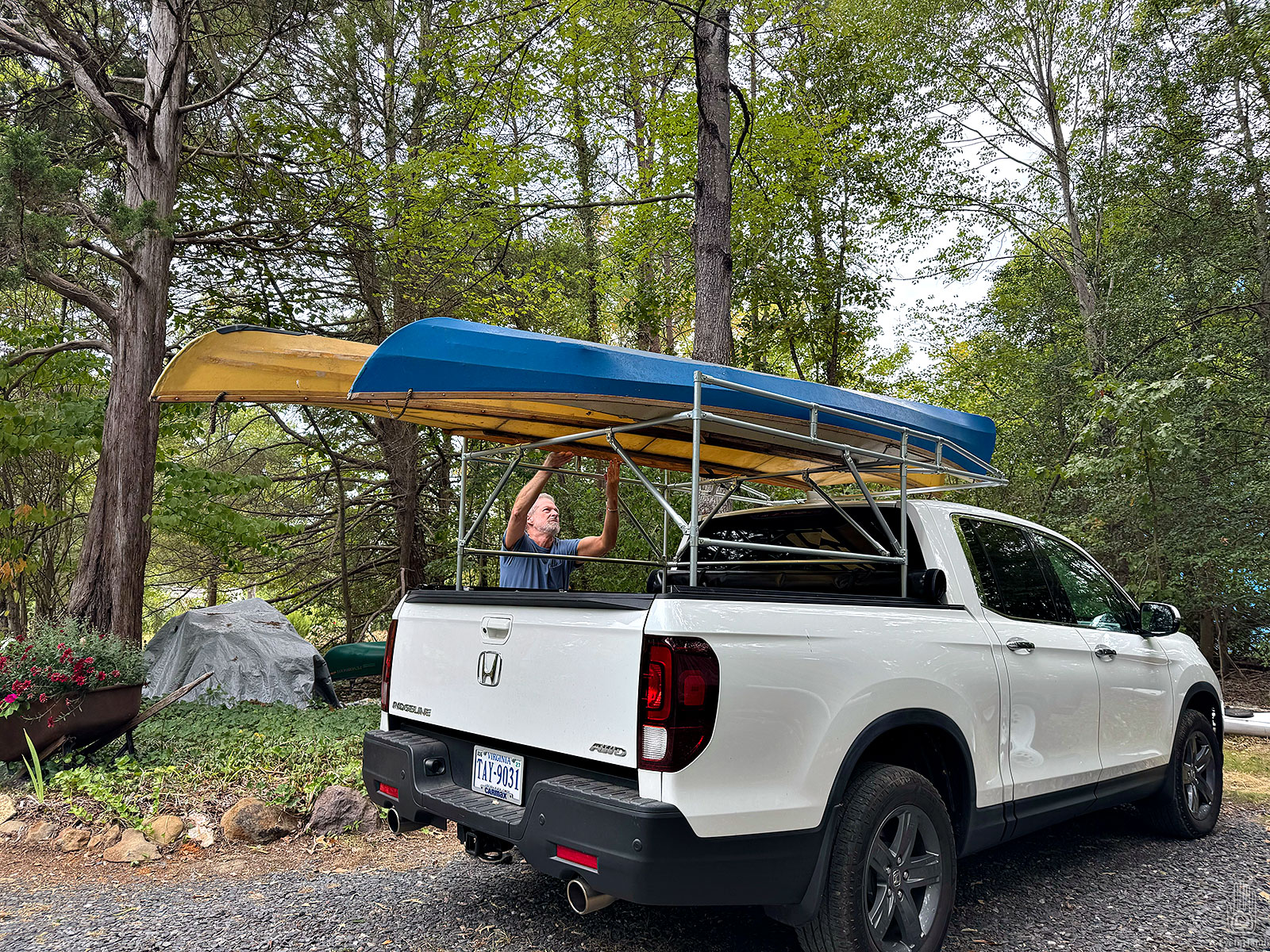
So we traded in the Subaru for a used truck that could handle the loads – a Honda Ridgeline that we’re really happy with.
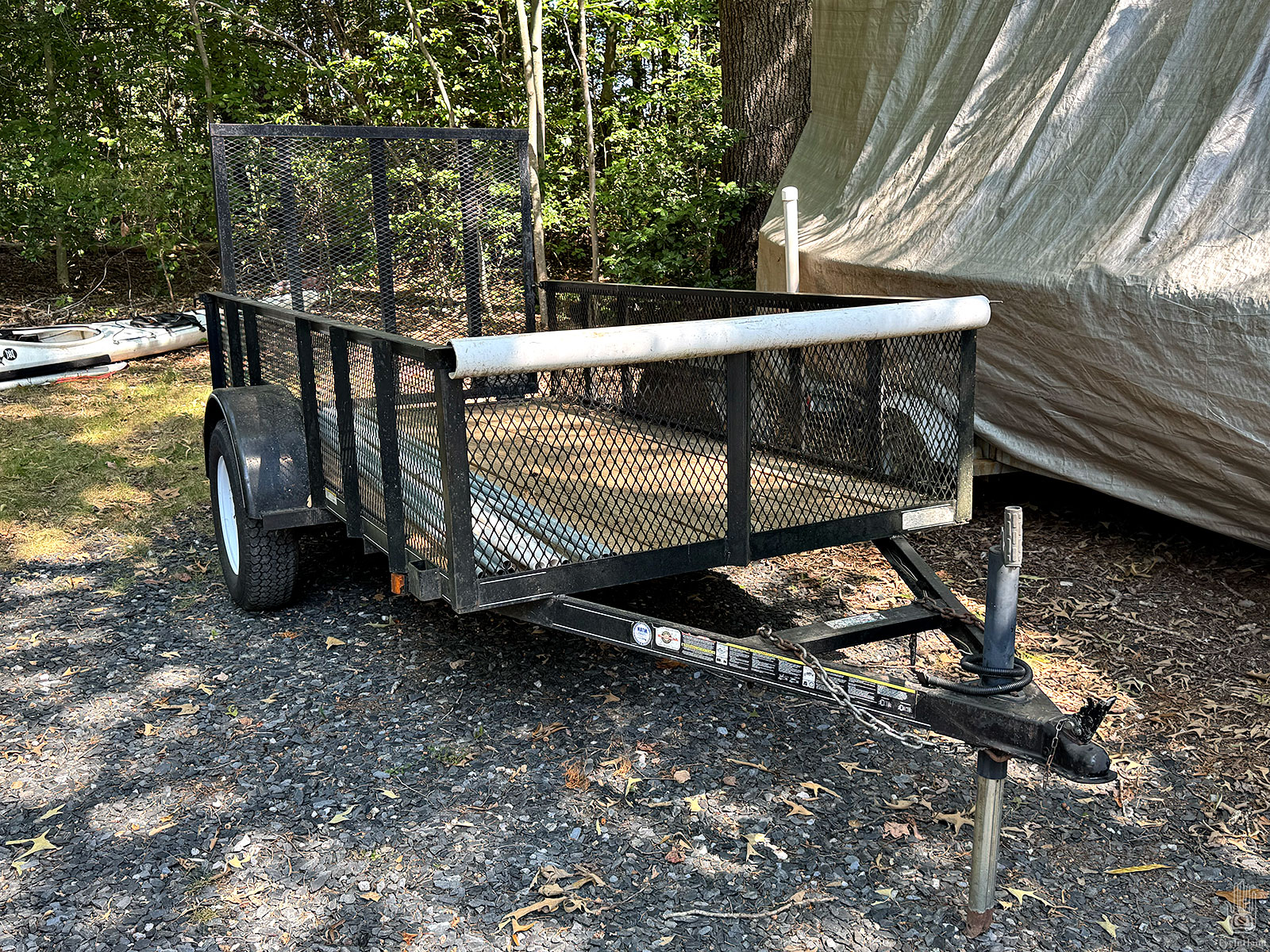
The bed is too short for 17 foot boats, though. It came with a soft tonneau cover, but no roof rack. I could use the 3 ton utility trailer; but many of the local river launches aren’t big enough for that. And hooking up the utility trailer means no boat trailer, or bike rack. We need something more compact.
I looked at off the shelf ladder racks. These are heavy duty steel structures geared toward construction work, meant to stay permanently installed, which means wind noise and a hit on gas mileage all the time, whether you use them or not. It would also mean removing the bed cover. What we need is something lightweight for the kayaks and occasional long lumber, that’s quick to install and remove, so is only on the truck when needed.
Example of a perfectly serviceable wooden rack
The obvious quick and cheap solution is a homemade rack made of 2x4s that just sits in the bed. You can find examples of these online, many are well done. I don’t have a garage to store it in, though, so after sitting out in the weather I’d have to rebuild one every year, or disassemble it for storage. Pressure treated lumber would help with rot, but is heavy. All little annoyances that add up to too much hassle to just go for a short paddle or to fetch something from the lumber yard.
Searching deeper for ideas, I found a small company called Maker Pipe. I came across them years ago when they were running a successful Kickstarter campaign. They manufacture connectors to build all sorts of things out of EMT Conduit. Seemed like a cool idea at the time, but I had no idea they had spun up into a permanent business. Good for them! They’ve taken the idea further. They now make a variety of connectors for different needs, and their website and Youtube channel are chock full of useful fun ideas and helpful info, all geared to small projects like this.
EMT Conduit is galvanized pipe used for running electrical wire, especially in commercial construction. It’s mass produced in 10 foot lengths, which keeps the price low, and is readily available at any hardware or big box store. It’s rigid and strong, bendable, cuts with a simple pipe cutter, and because it’s galvanized inside and out, is rust proof. Maker Pipe’s connectors are also galvanized, so anything you build with these components can stay out in the weather. The whole idea was interesting enough to give it a try.
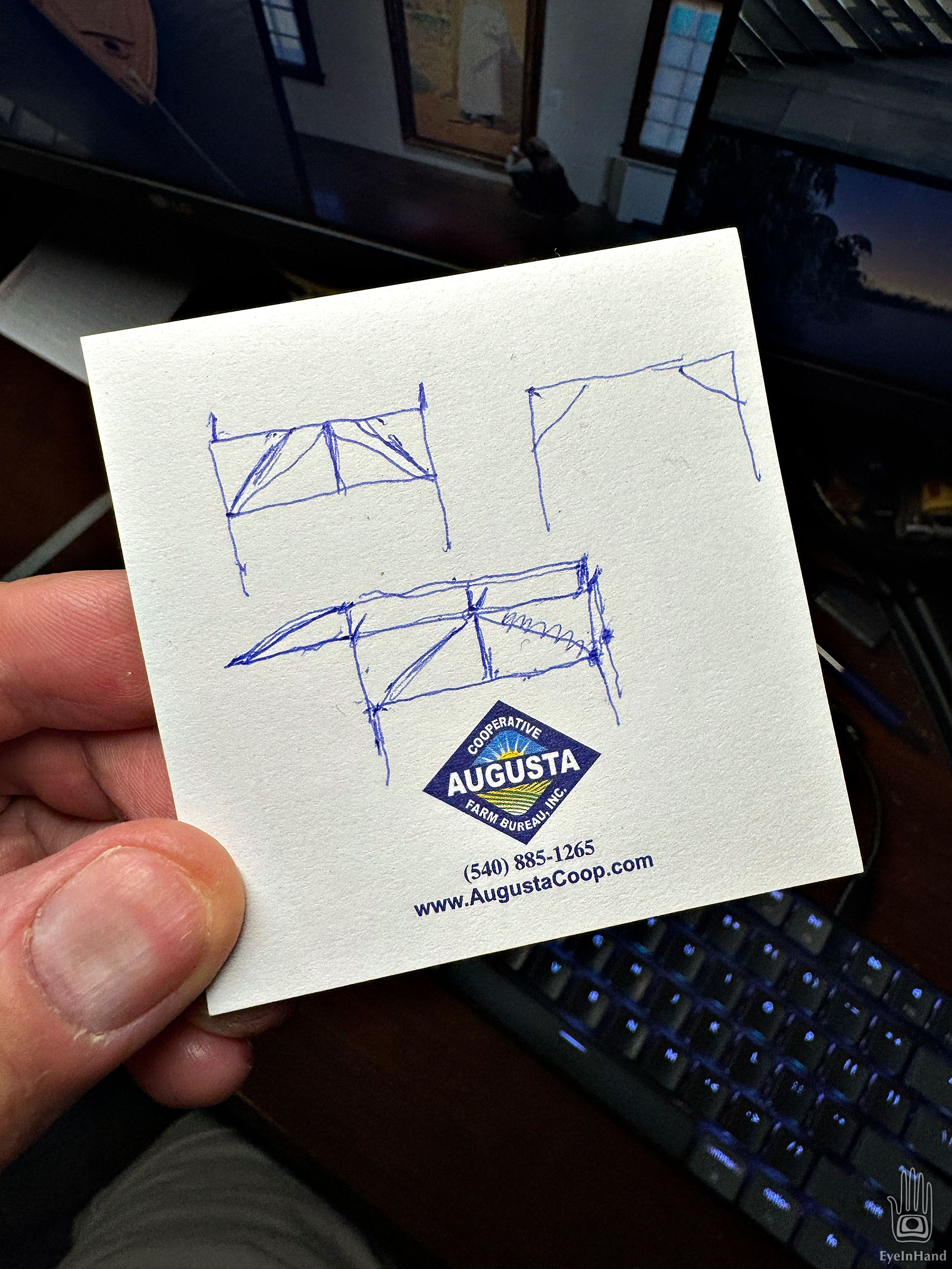
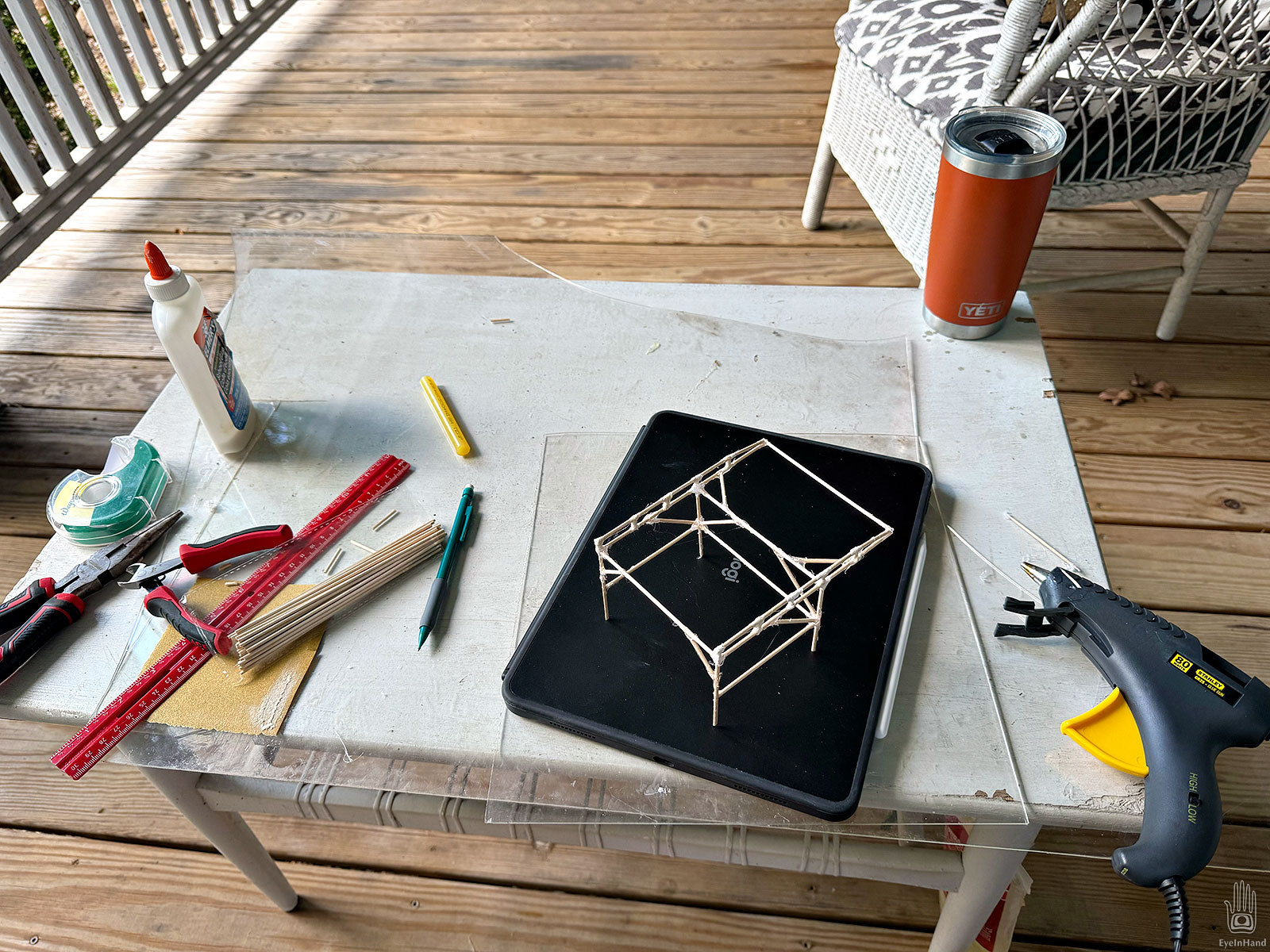
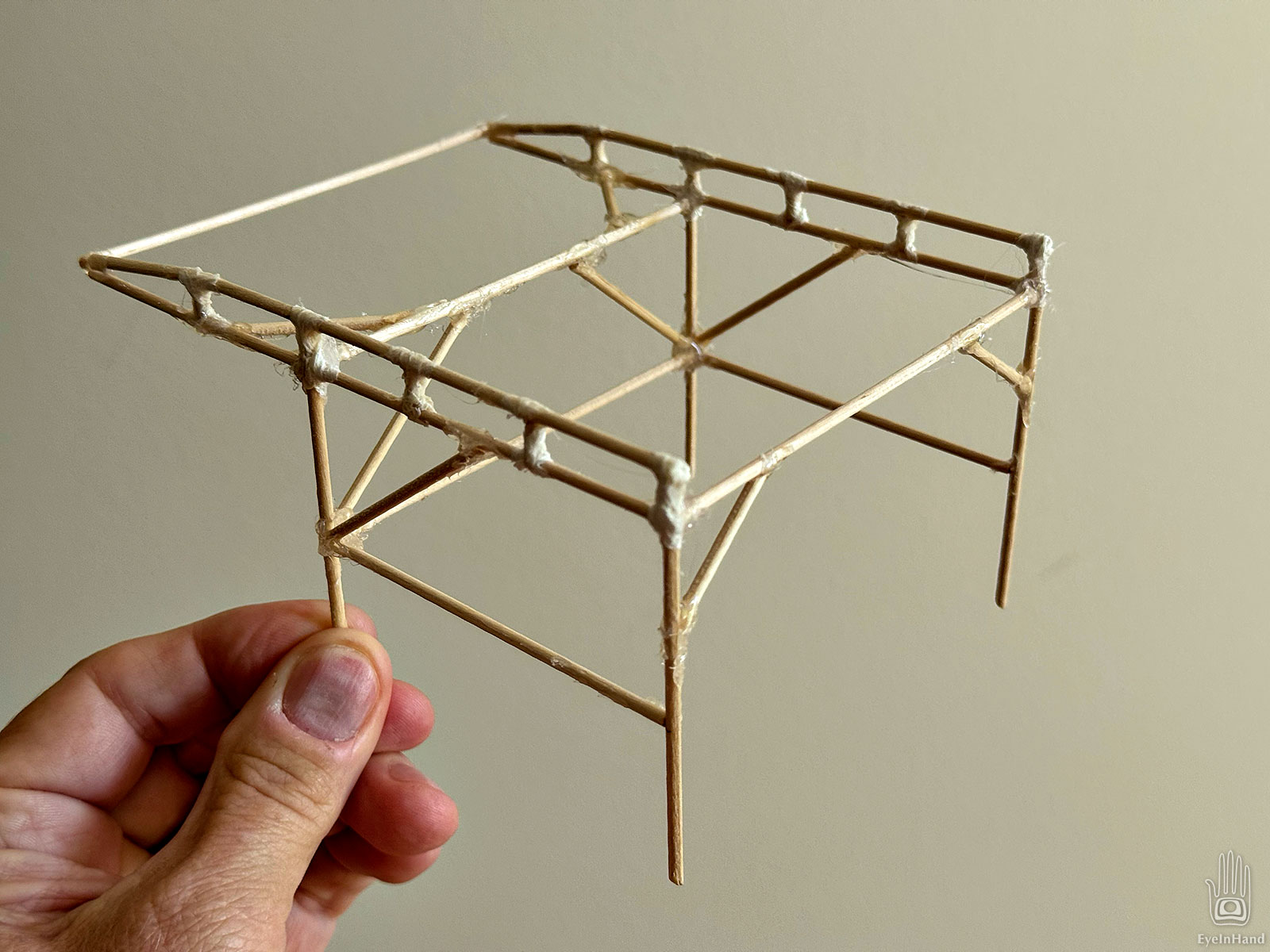
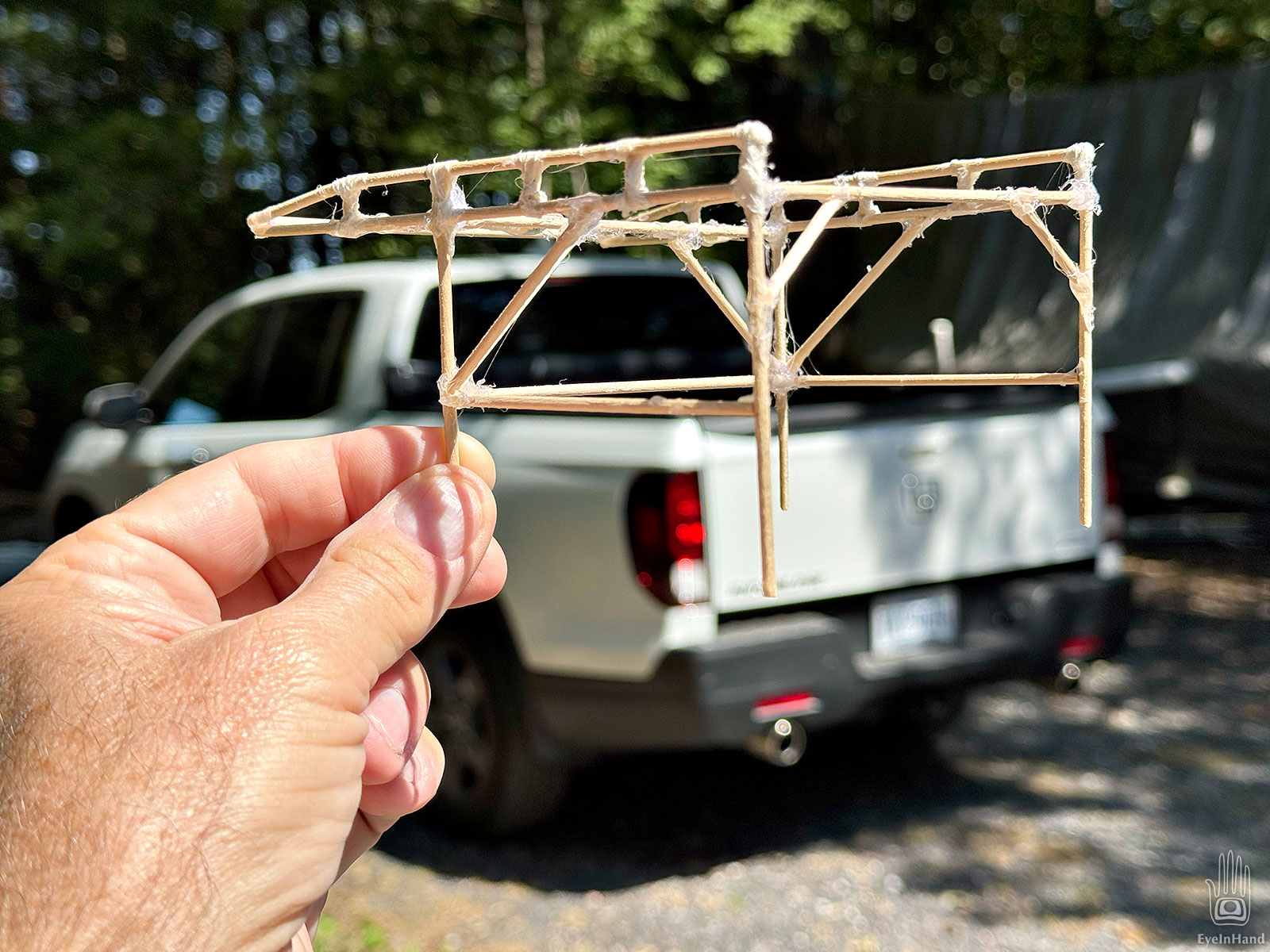
I started with a sketch, then made a model with sticks and hot glue to see how it would all come together.
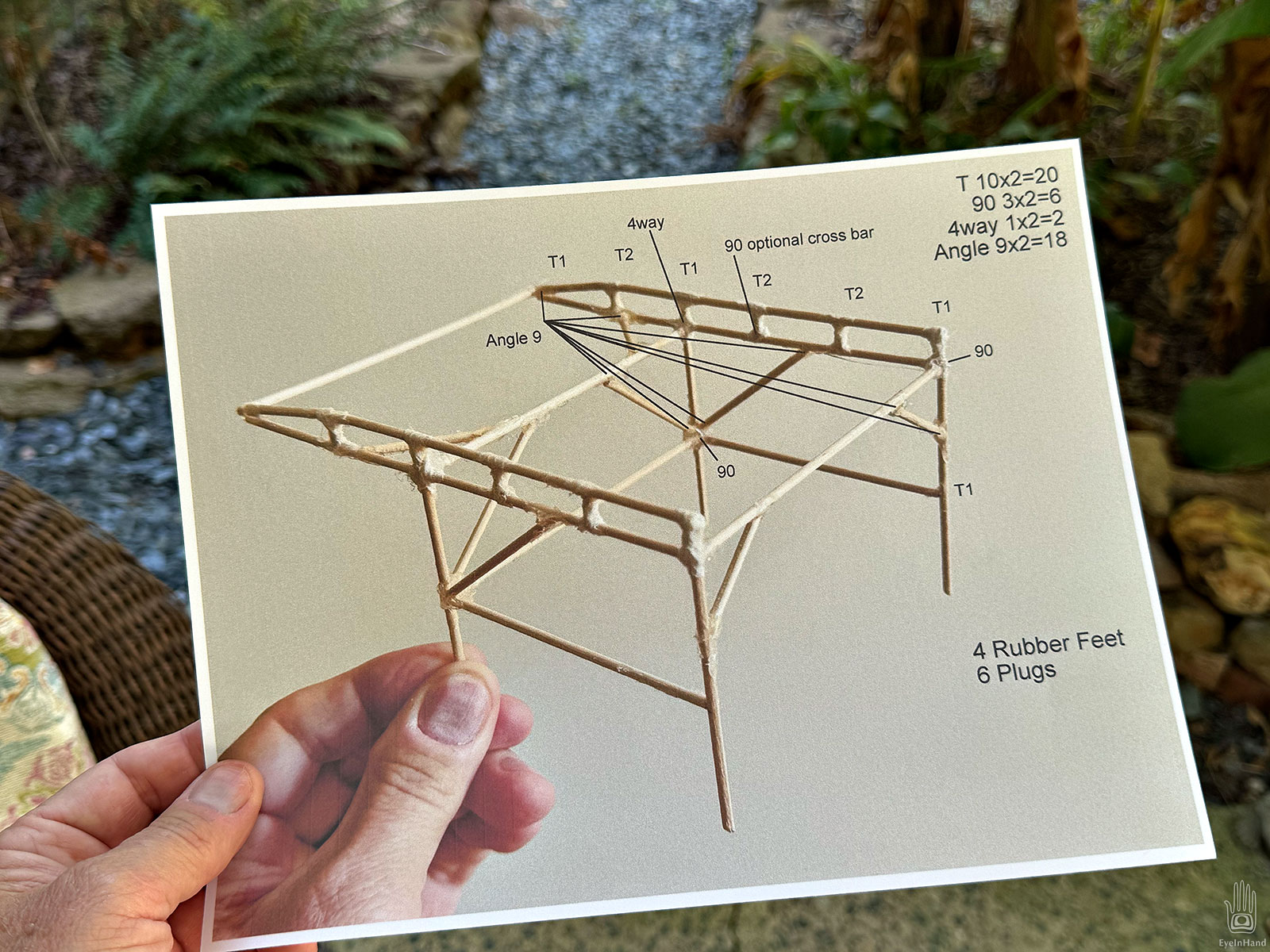
There were some things to sort out, like access to the trunk, leaving the rolled up cover in place, clearing the roof and shark fin antenna, etc. Then I printed a diagram to count up the various connectors and pipe needed.
Initially, I was going to use 1 inch conduit. Based on some fun non-scientific tests by the Maker Pipe team, it’s roughly twice as strong as ¾” pipe.
But 1″ pipe is also twice as heavy. Doing a little math I realized it would be pushing the limit of something I could lift and move around easily. Since I still have the utility trailer for heavy duty jobs, going lighter for this rack makes more sense.
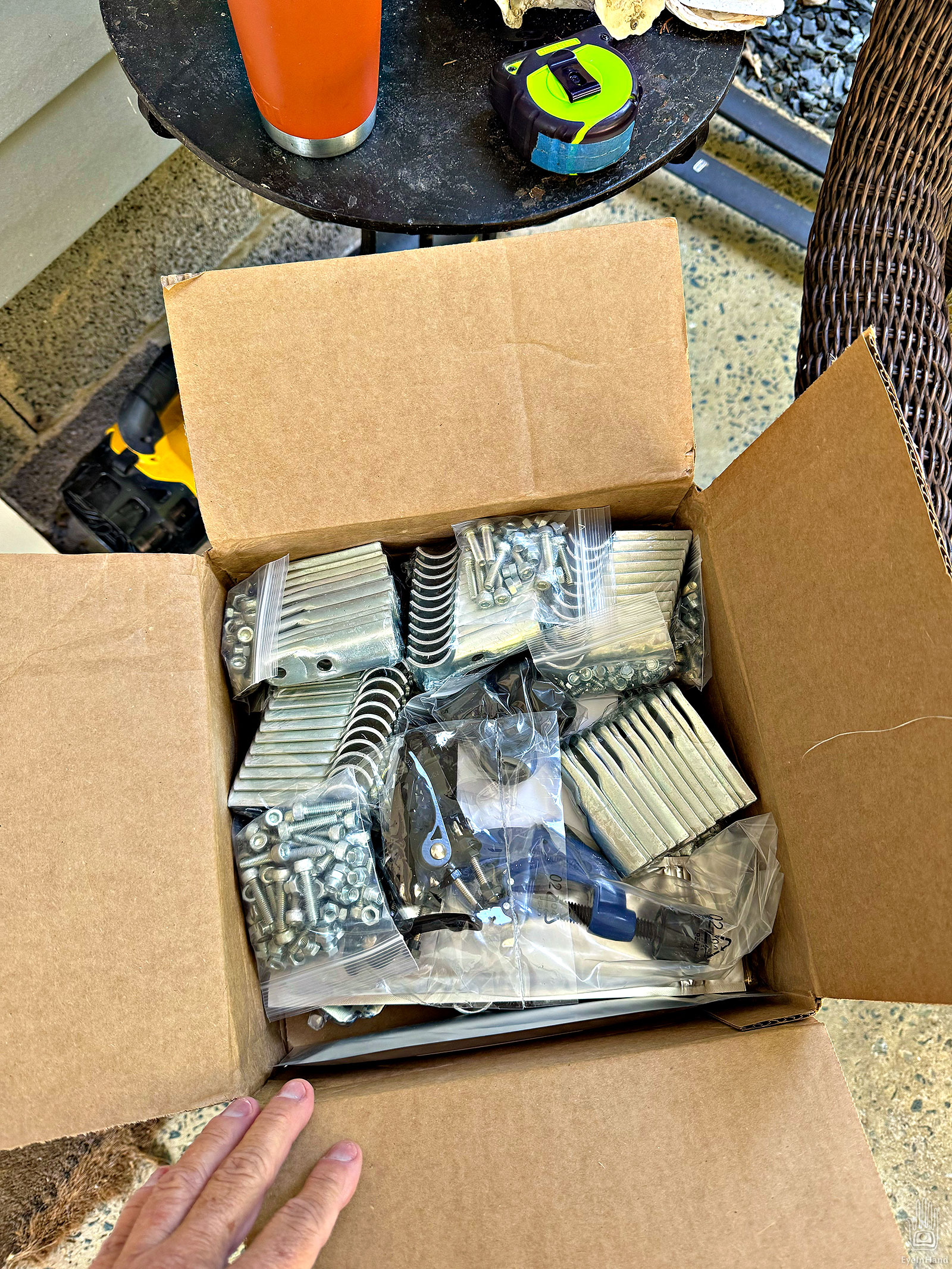
The box of connectors arrived in a few days, everything nicely packed.
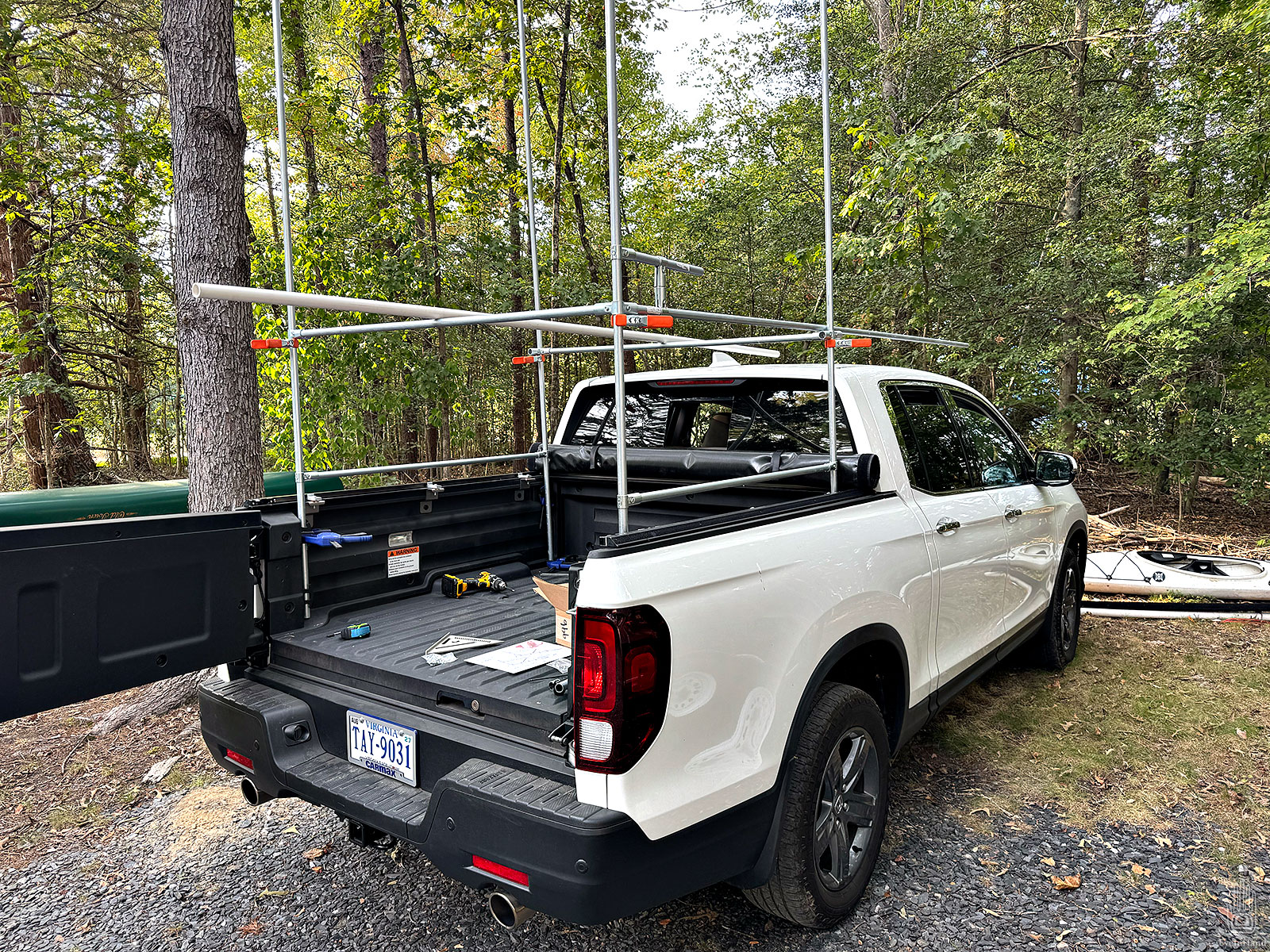
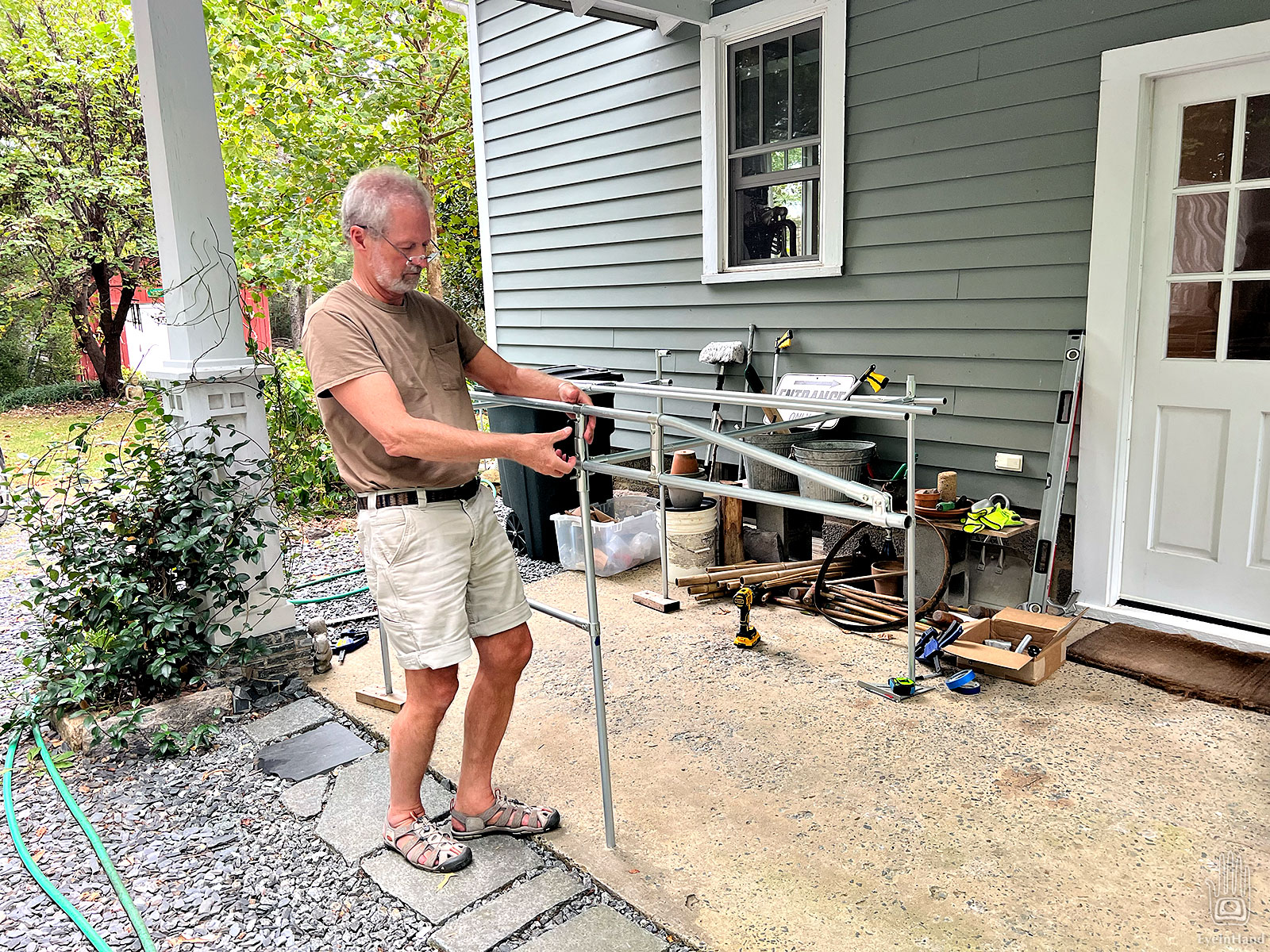
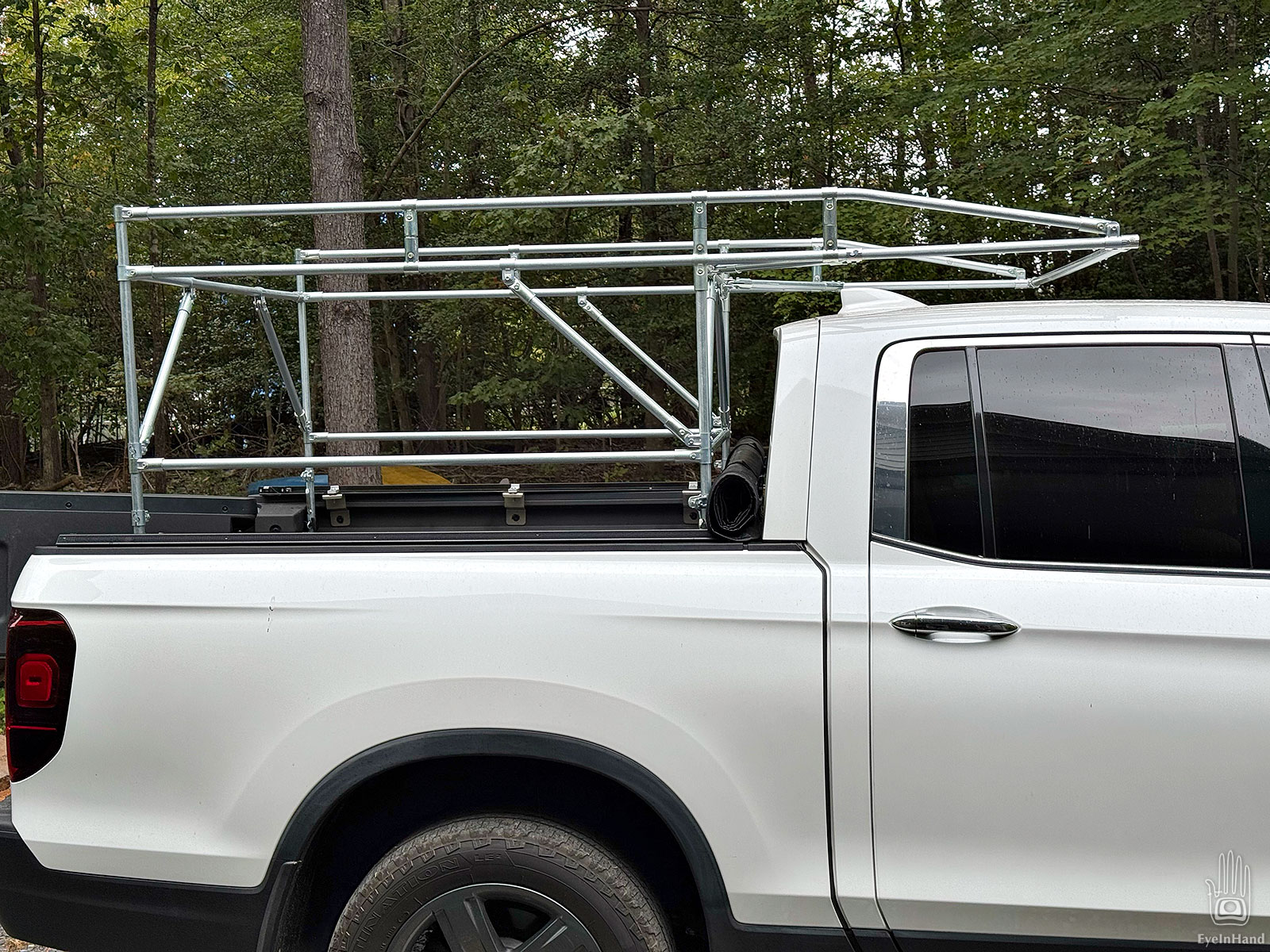
I did some mockups on the truck with clamps and pipe to get final measurements. Then the whole thing went together in couple of hours. Only tools needed were a pipe cutter and a 5mm hex key Allen wrench.
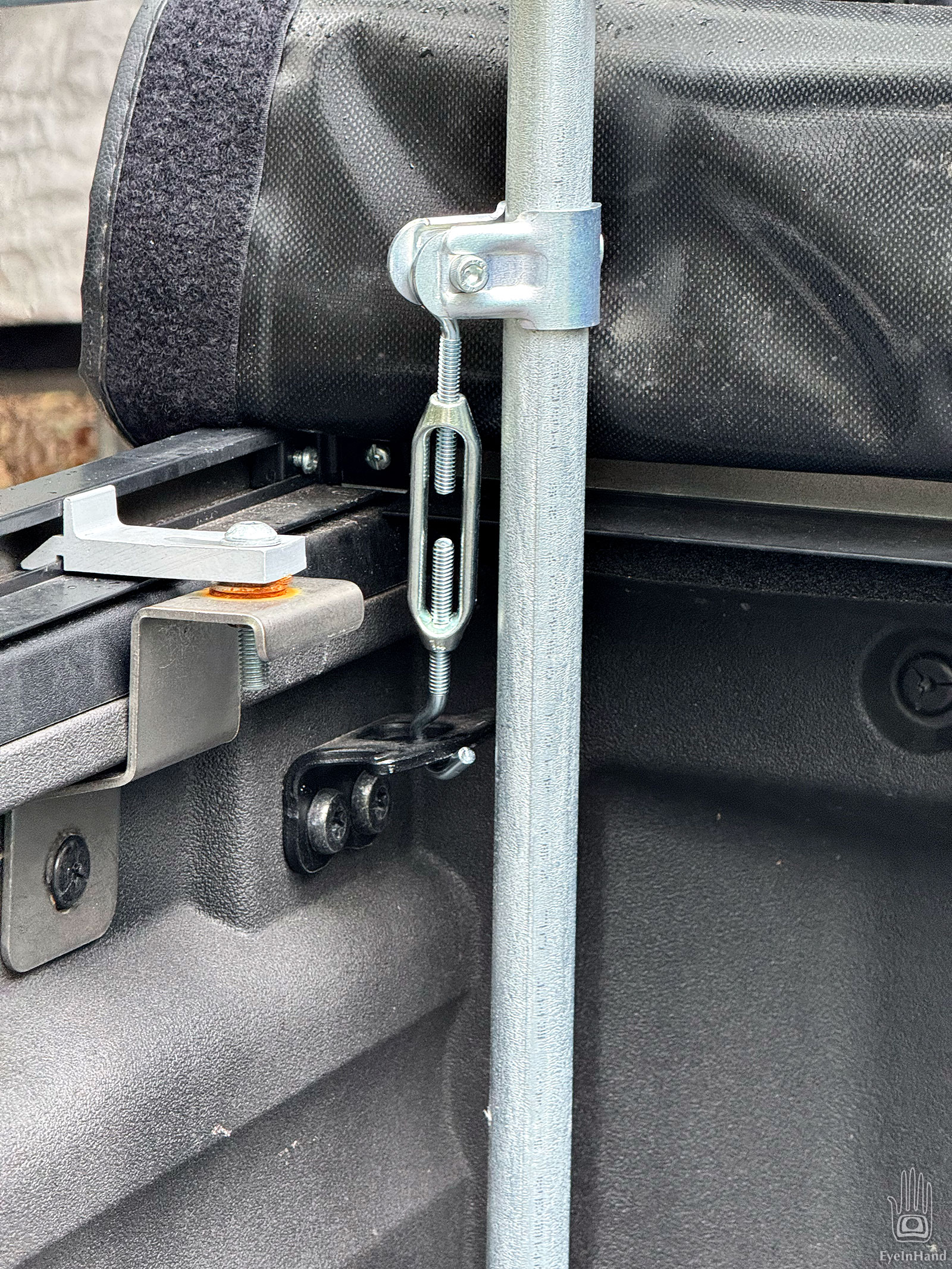
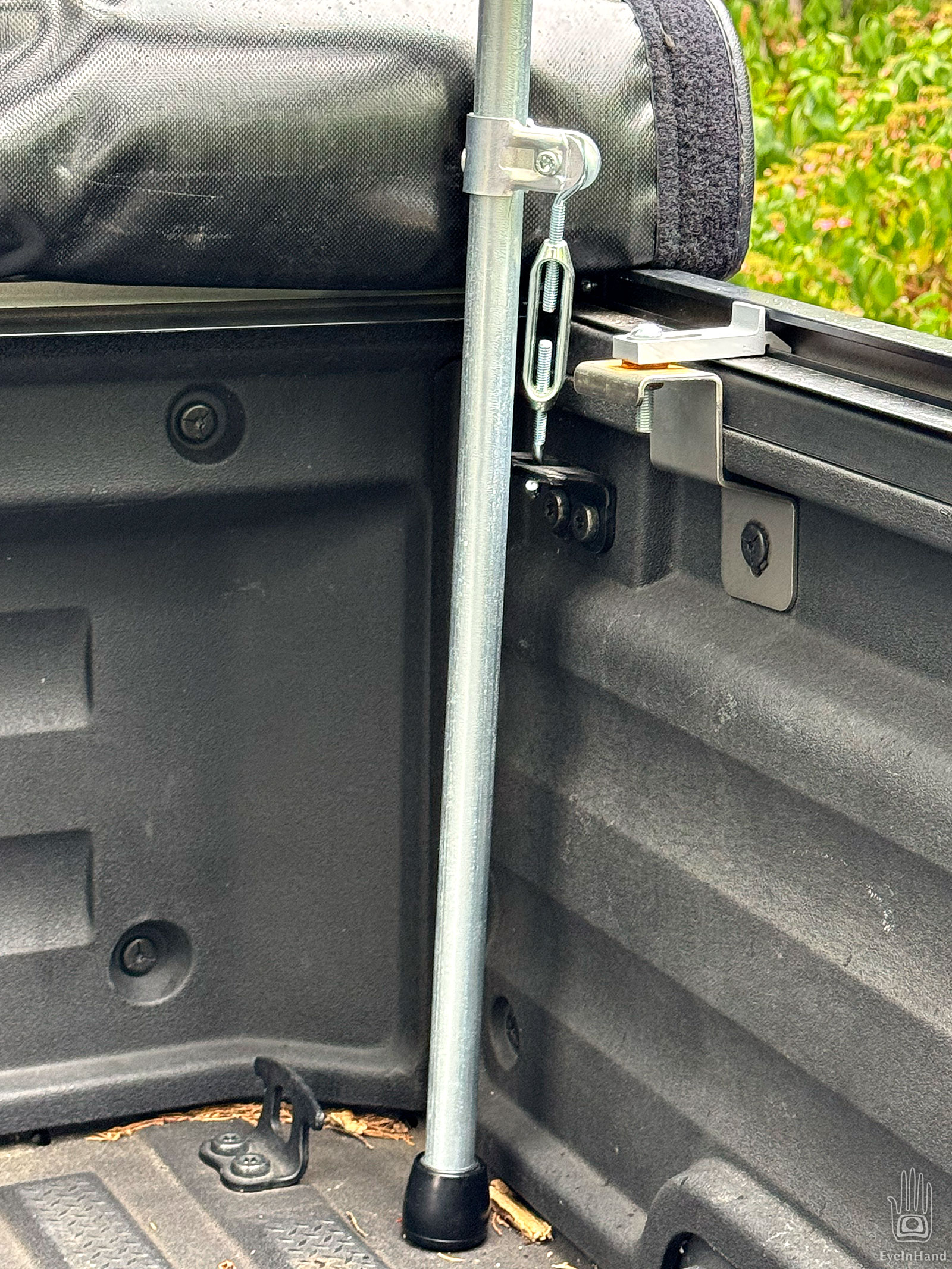
Next day I tested the fit and locked it in with turnbuckles to the existing tie down cleats in the truck, and went for a drive. There’s some wind noise at highway speeds, but not as bad as expected.
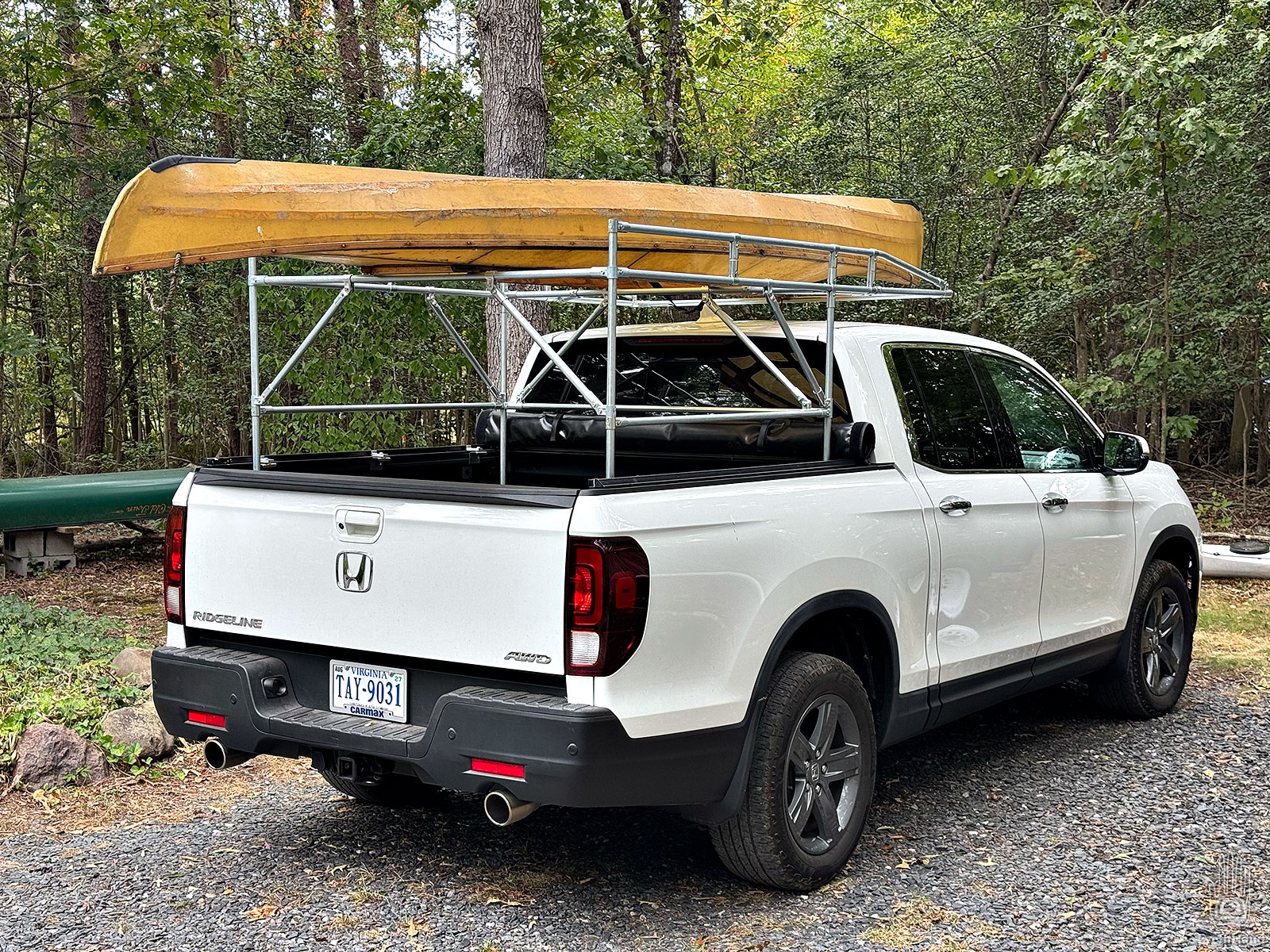
Final test was to throw a kayak on top and go for a paddle. Works great. Only takes about two minutes to lift it in and lock it down. And bonus, it fits nicely in the trailer.
With no further adjustment needed, I dabbed Loctite on all the nuts. Between temperature changes and vibration, don’t want anything jiggling apart at 70mph.
Overall I’m very happy with it. If it lasts 10 years I’ll be even happier.
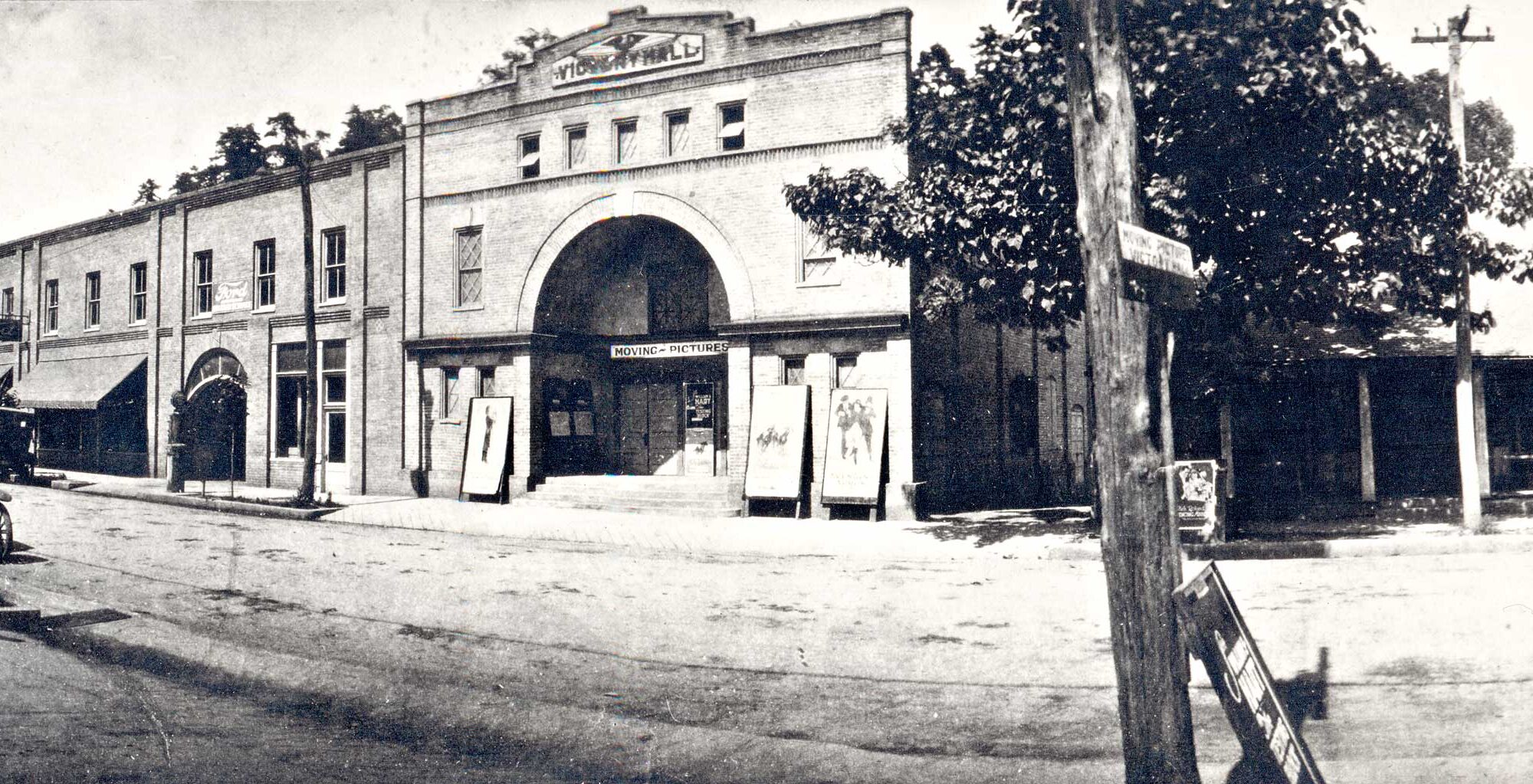
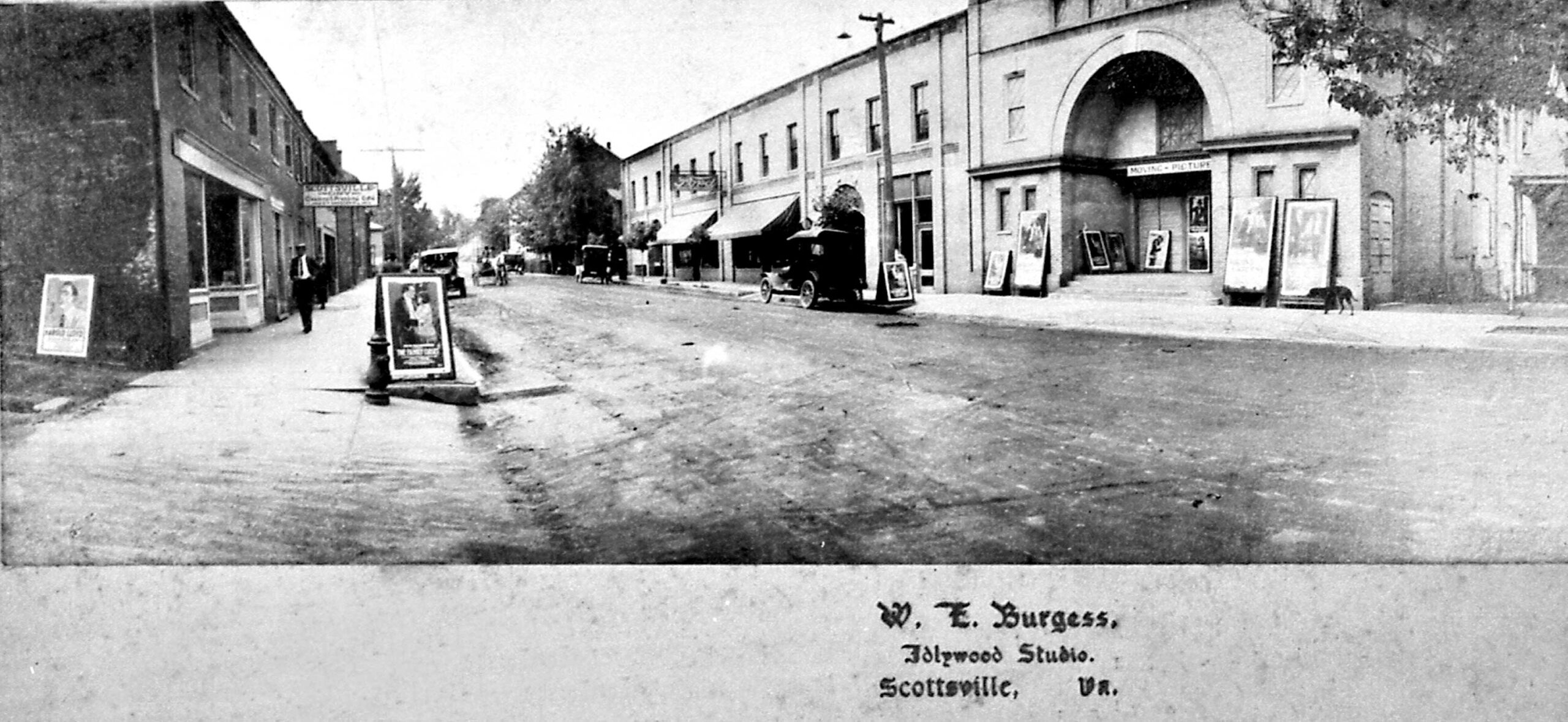
Looking north on Valley Street, Victory Hall on right circa 1925
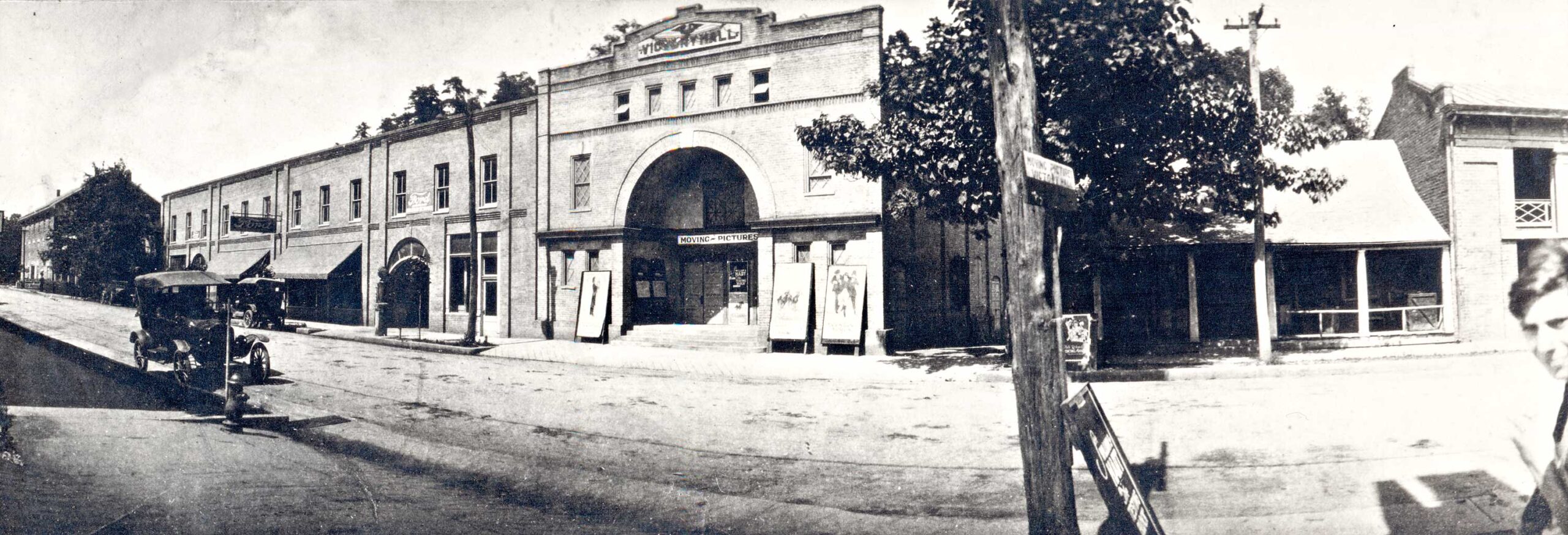
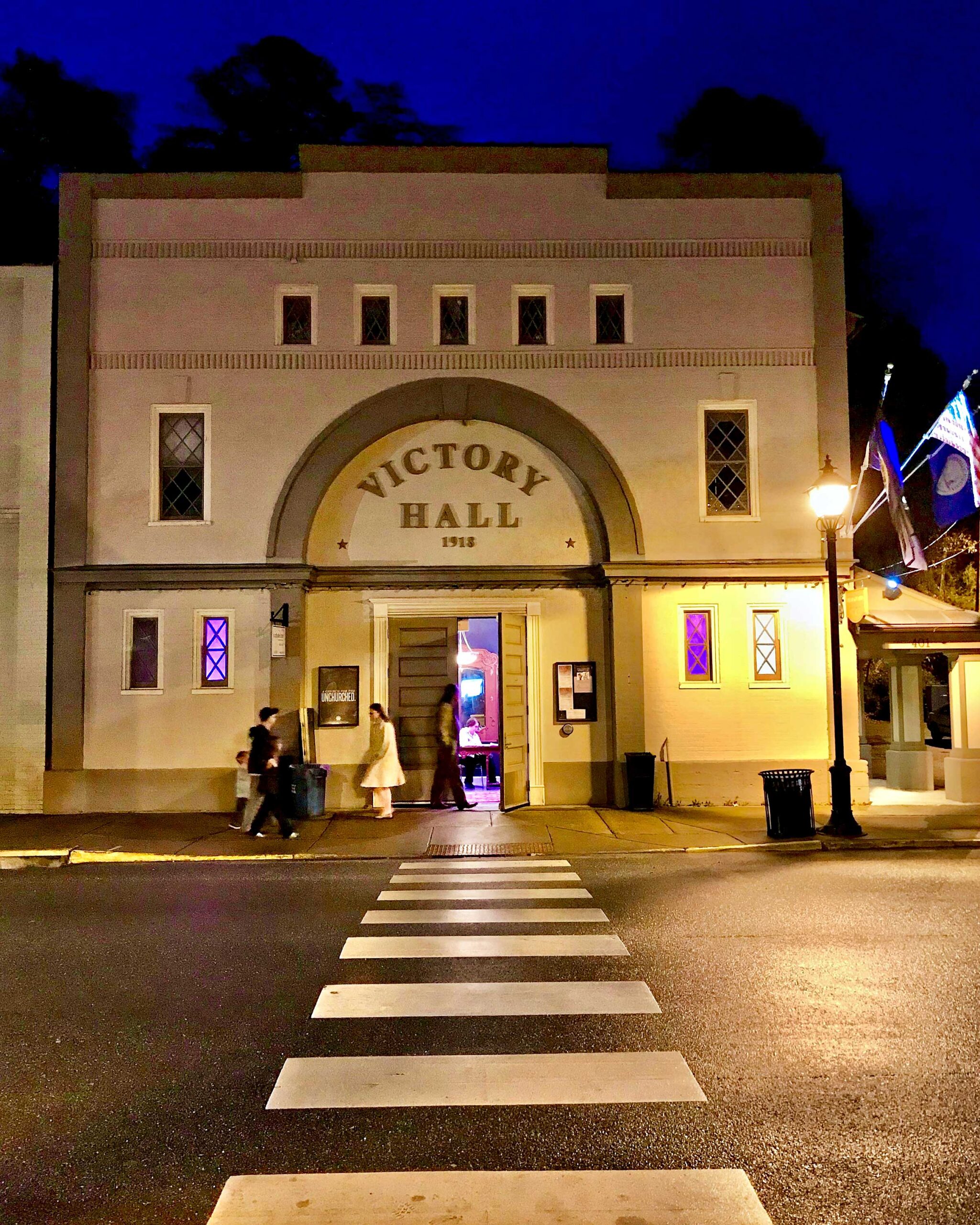
Victory Hall, later called Victory Theatre, was completed in 1920 on Scottsville’s Valley Street to commemorate the Armistice of World I. It was the dream of Scottsville drama teacher, Marion McKay, to have a setting for dramatic performances and traveling vaudeville and Chautauqua shows. Designed by D. Wiley Anderson, a local architect, the hall was constructed of yellowish brick made from John Martin’s foundry on the low grounds of old Snowden. Victory Hall became Scottsville’s cultural center for over four decades as it hosted local dramatic productions as well as the traveling shows that came to town each year. Even the famed violinist Fritz Kreisler once appeared here.
Victory Hall circa 1922
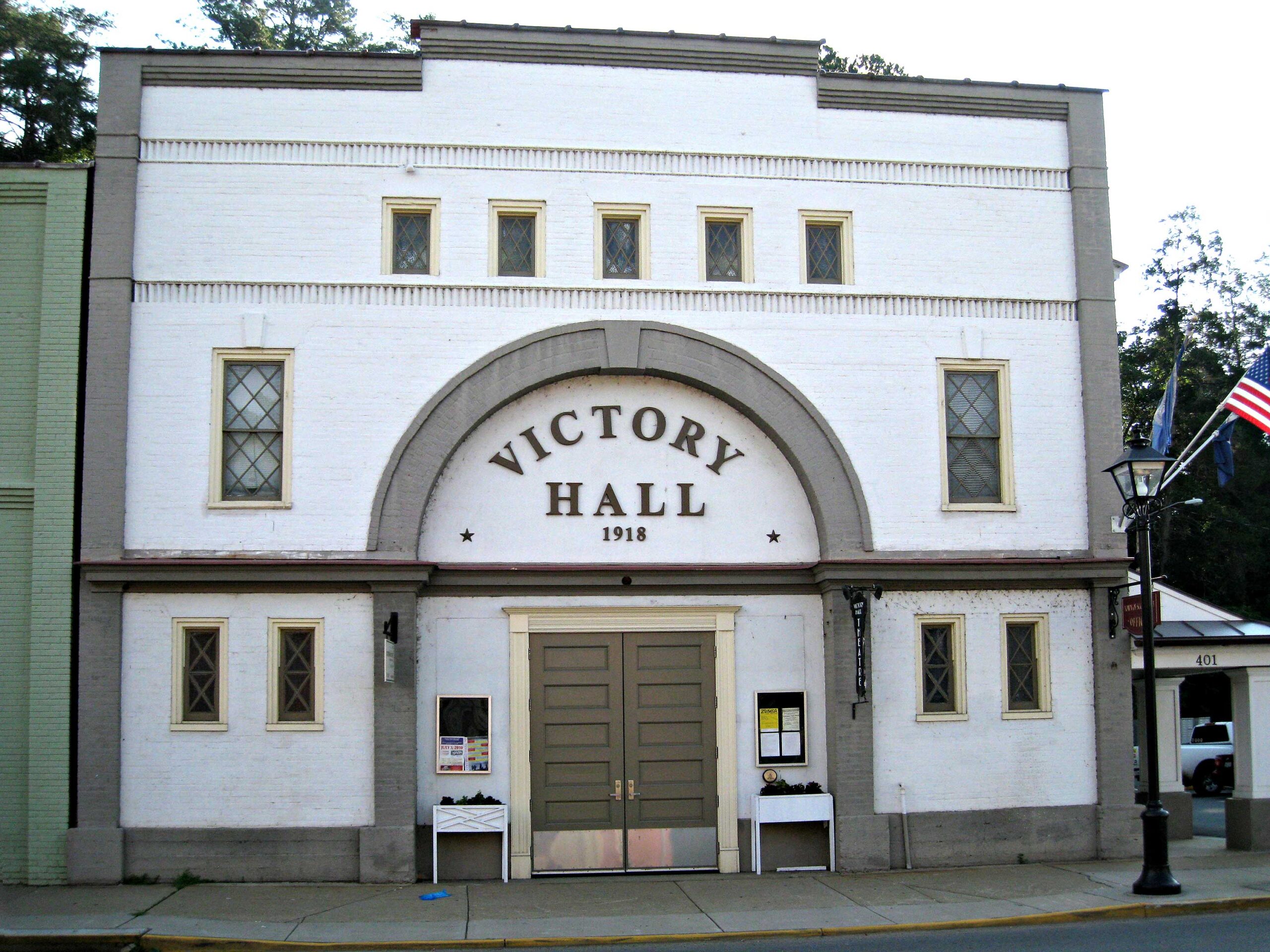
The exterior featured steps, an alcove, and an open half-dome, now preserved in the arch above recently-added front doors. The interior, designed like an opera house, had a lobby, stage, and proscenium. The hall comfortably sat an audience of over three hundred with an interior with a balcony, a lovely heavy velvet stage curtain and embossed valance, and two, large moose heads were displayed on each side of the stage. There were also two backstage dressing rooms. An ornate mirror, recently discovered intact, was part of the elegant decor which included chandeliers and upholstered theatre seats.
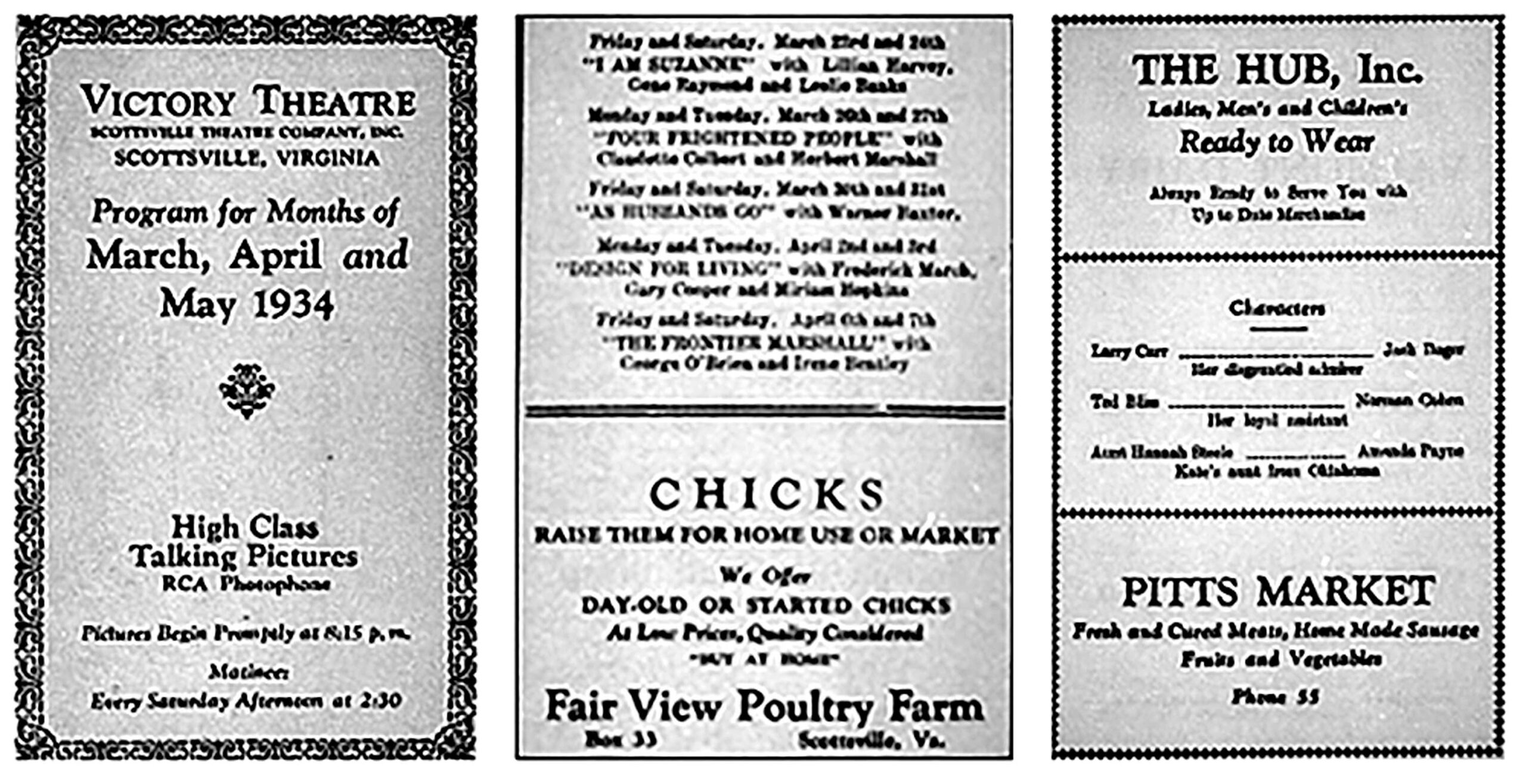
With the advent of movies, William E. Burgess introduced silent films with player piano accompaniment to Victory Hall audiences. Eventually the classics and musicals of Hollywood’s Golden Era were shown here using a big screen and modern projectors; shown below is the Burgess ‘Talking Pictures’ program for three months in 1934. However, live performances and events were always welcome on its stage. For over thirty years, Victory Theatre was the venue for Scottsville High School’s senior class plays, graduation ceremonies, beauty contests, and local talent shows. In the 1940’s and 50’s, many of the future greats of country music performed on the Victory Theatre stage.
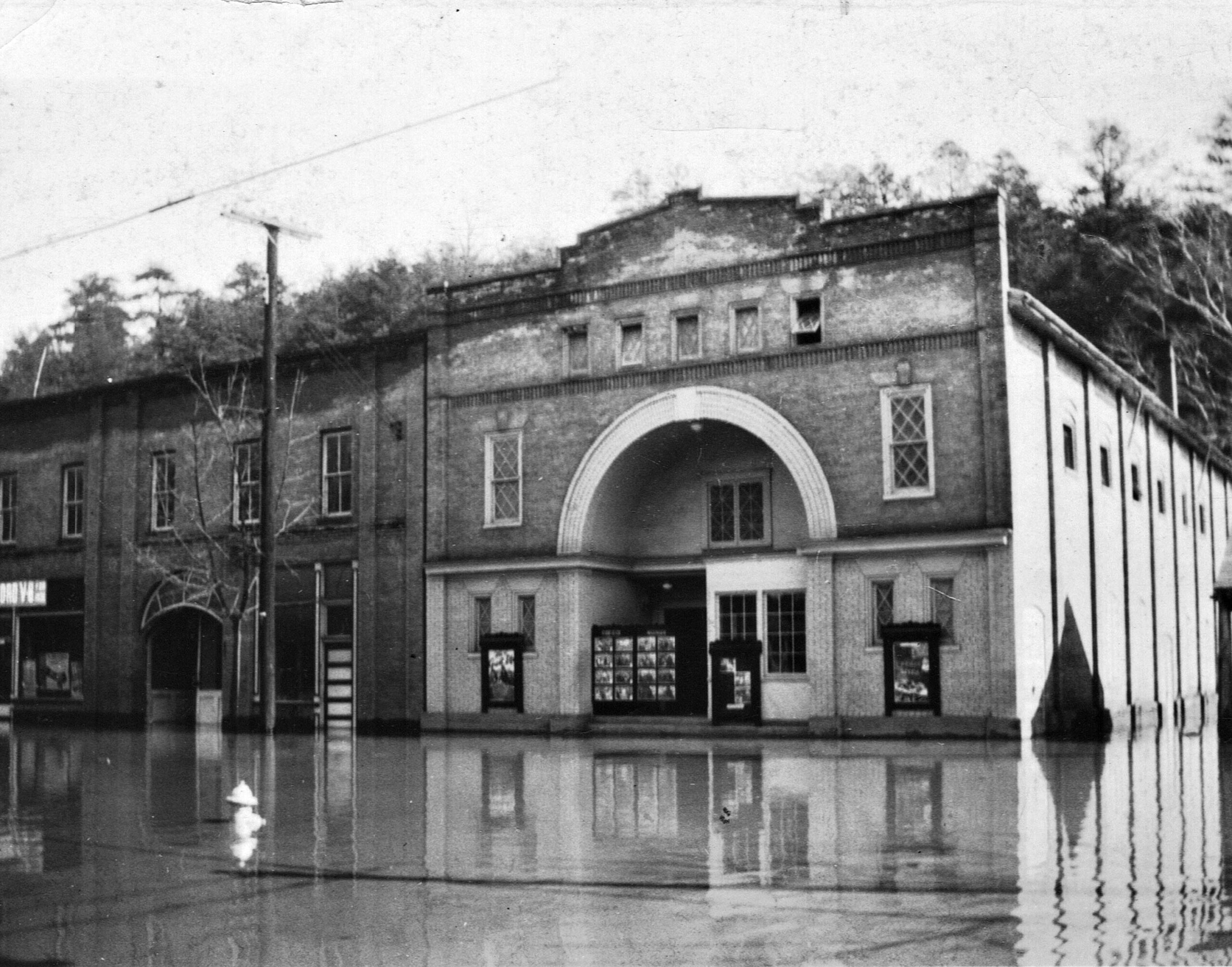
Victory Hall during the flood of 1936Victory Hall, 2010
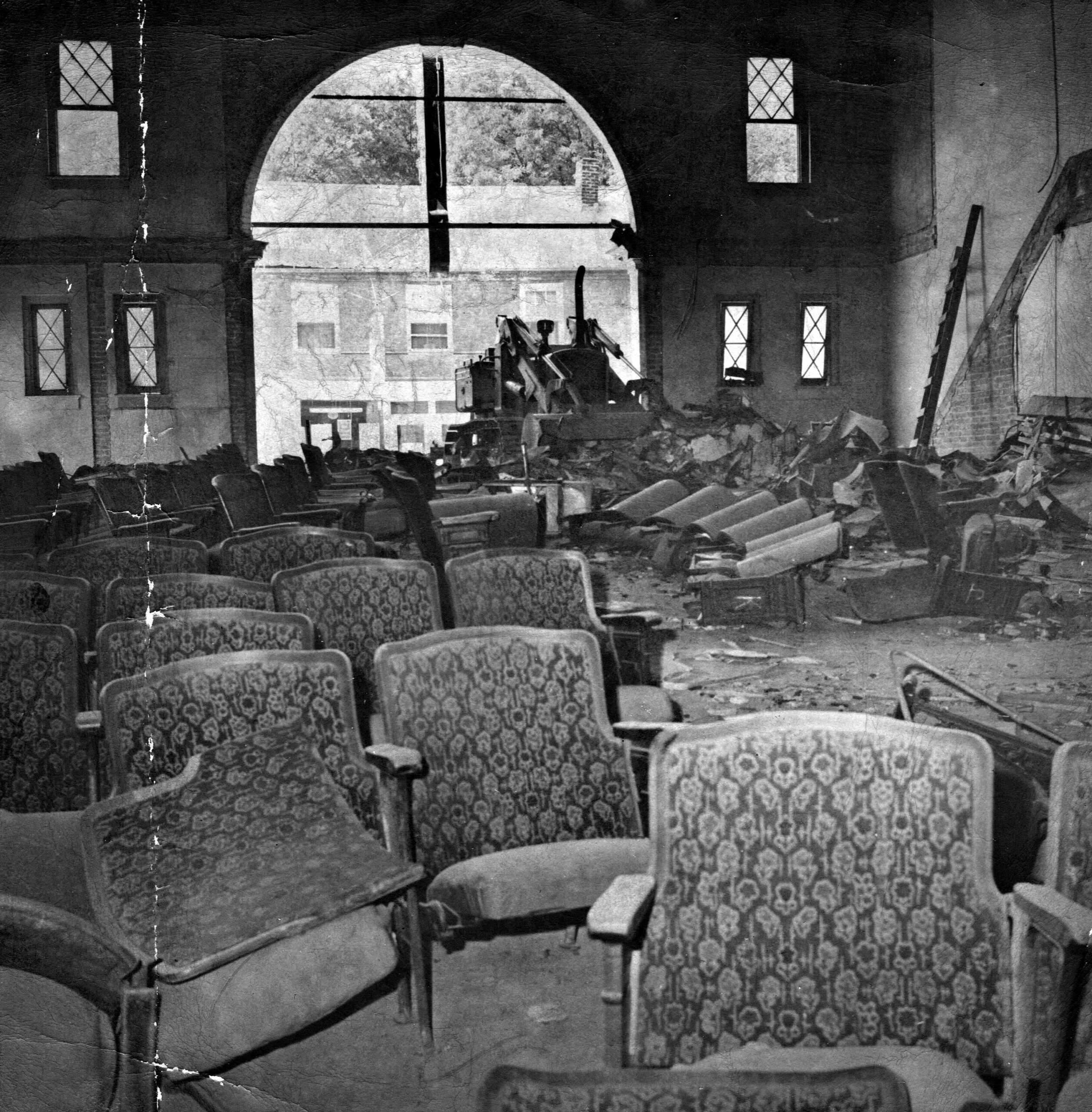
Victory Theatre eventually closed due, in part, to modern transportation and the increasing popularity of television. In the early 1960’s, it was converted into the Scottsville Municipal Building with town offices and meeting rooms upstairs, and a large parking bay downstairs which was first used by the volunteer fire department and later by the volunteer rescue squad for housing vehicles.
Theater conversion to rescue squad in 1967
After the rescue squad moved to its current Scottsville location, the Horseshoe Bend Players received permission to perform The Lion in Winter in the spring of 1999, using portions of the original Victory Theatre stage and auditorium. This was the first dramatic performance in the building in over thirty years.
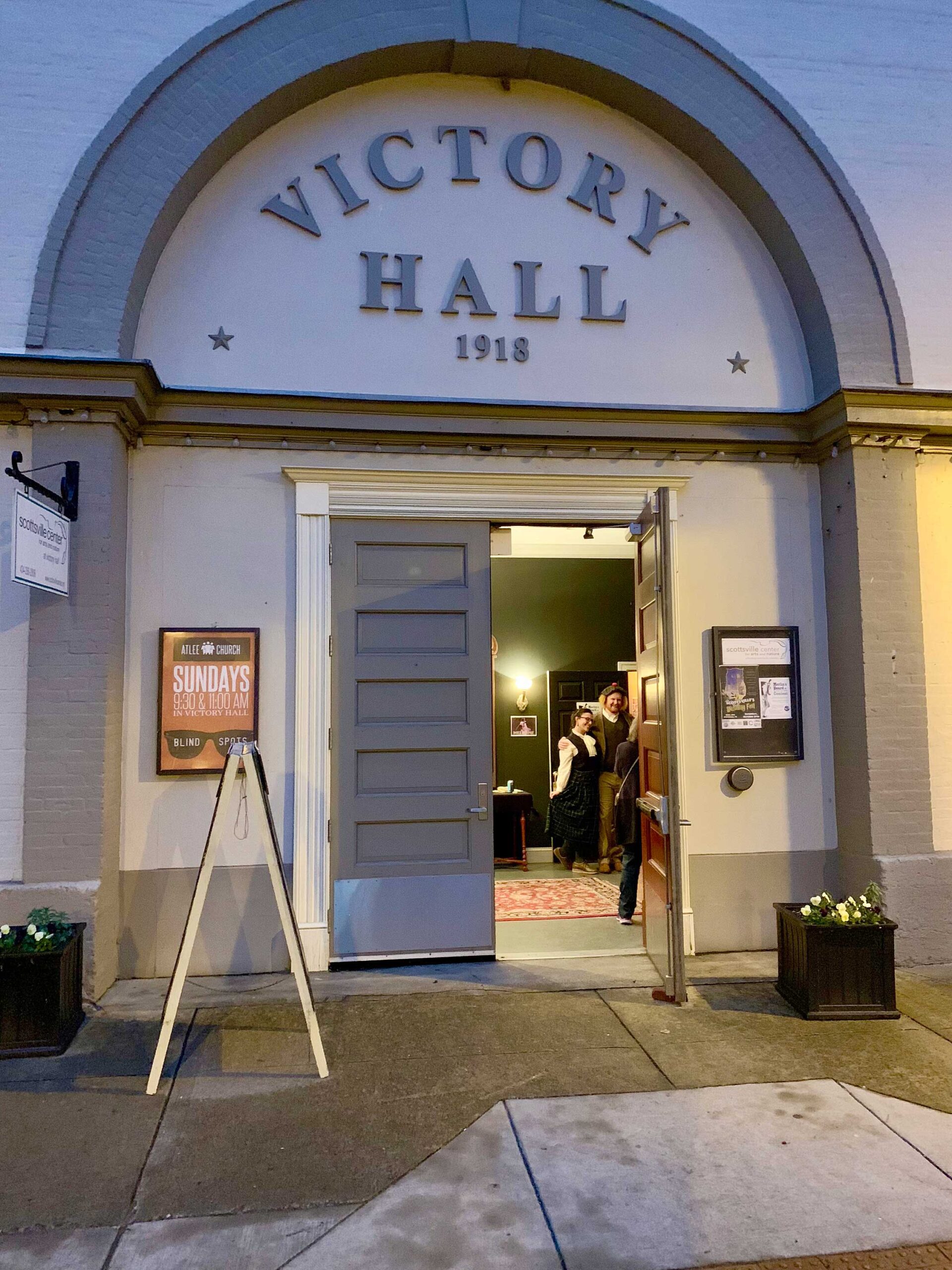
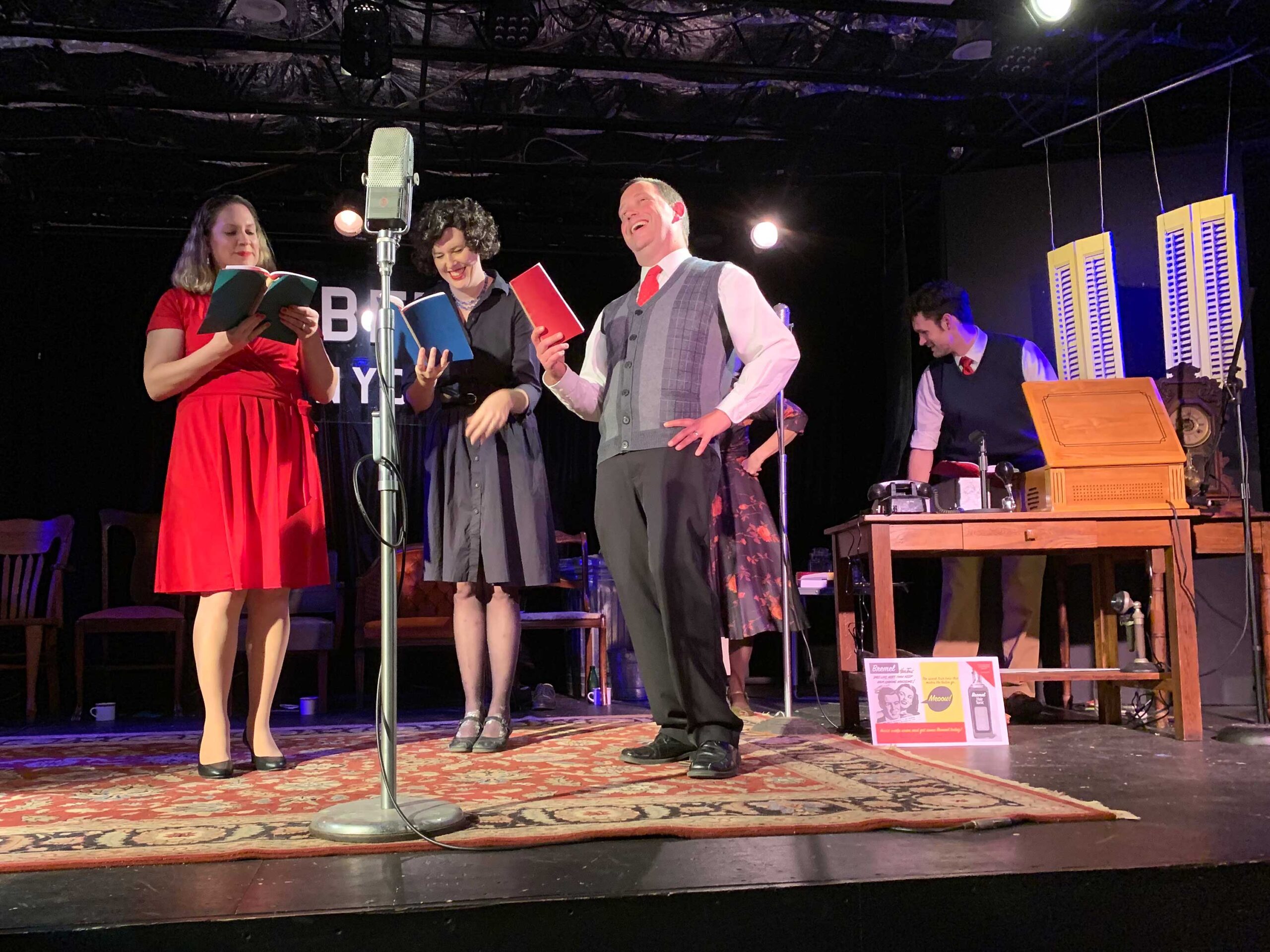
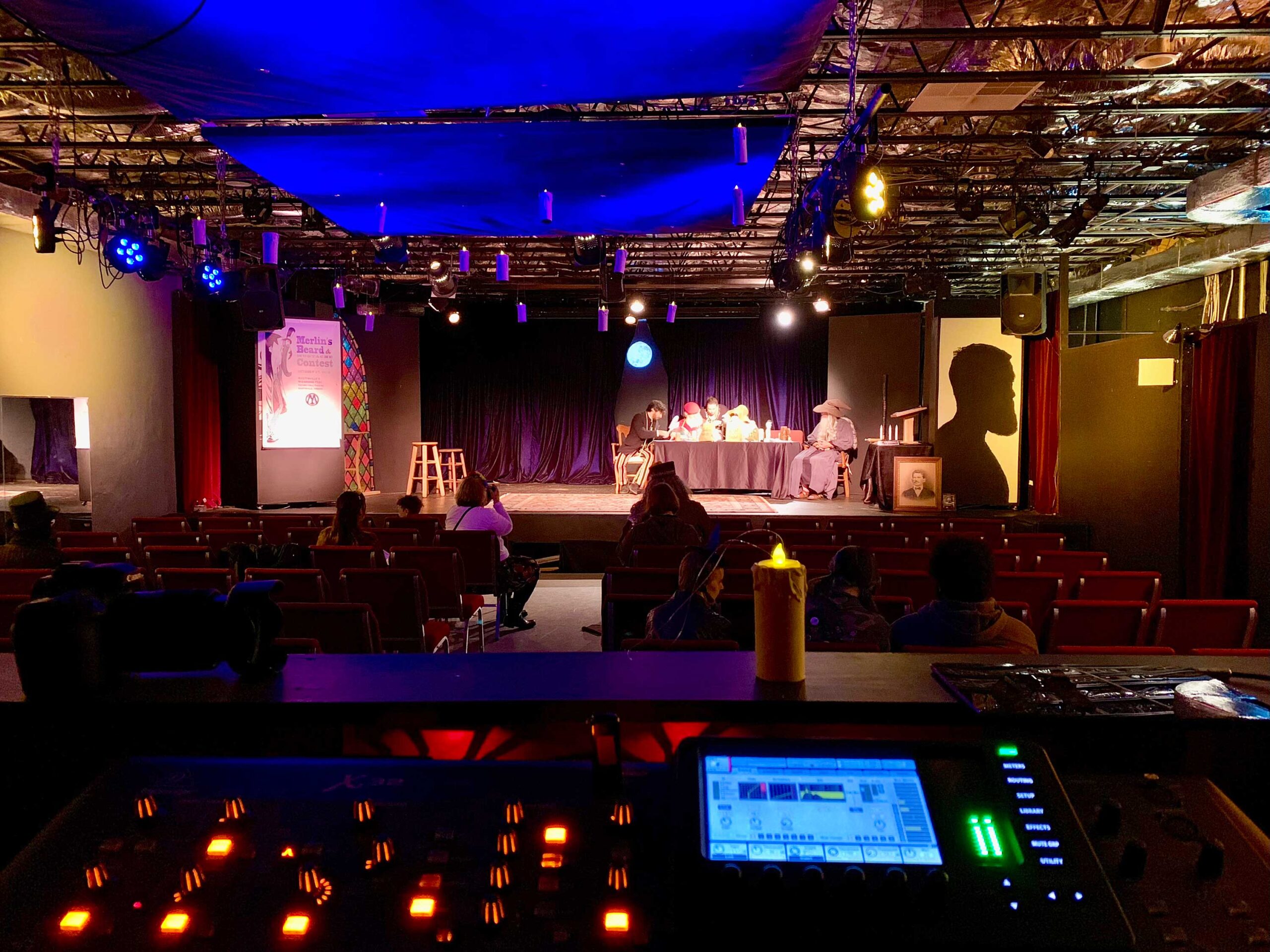
With help from the community and Town Council, the downstairs area of Victory Hall is once again a flexible community theatre space, a venue for music, drama, films, and cultural events. Exterior doors were installed in the front of the building. Interior spaces were constructed accommodating the ‘black box theatre’ performance area, a backstage area, tech booth, and renovated lobby. Scottsville Town Offices remain upstairs in this building.
– o • 0 • o –
Scottsville’s Victory Hall Has Played Many Roles by Robert K. Spencer Scottsville Museum Newsletter Number 9, March 1999
Victory Hall was conceived as a Scottsville community project in 1918 at the Armistice of World War I, when America emerged victorious in the so-called war to end all wars. The leading force behind the project was a lady by the name of Mrs. Marion McKay, a resident and drama coach well known for her productions to entertain townsfolk. Besides commemorating the Armistice, the chief practical impetus for the Victory Hall Project was the fact that Miss Hannah Moore’s Entertainment Hall was no longer usable. Her hall and her pond, which stood at the far east end of what is now known as Jefferson Street and in the shadow of School House Hill, had been the sites of innumerable good times for local folks. The hall had been the town showplace, and the pond, when frozen over in winter, provided great recreational skating.
Mrs. McKay quickly gained the backing of other prominent citizens who recognized the need for a town hall with an auditorium, including local architect D. Wiley Anderson, who drew up the plans for the building, and Mayor Jackson Beal, who probably thought of the idea of people sponsoring bricks for the construction. Soon nearly everyone in the community was helping with the Victory Hall Project.
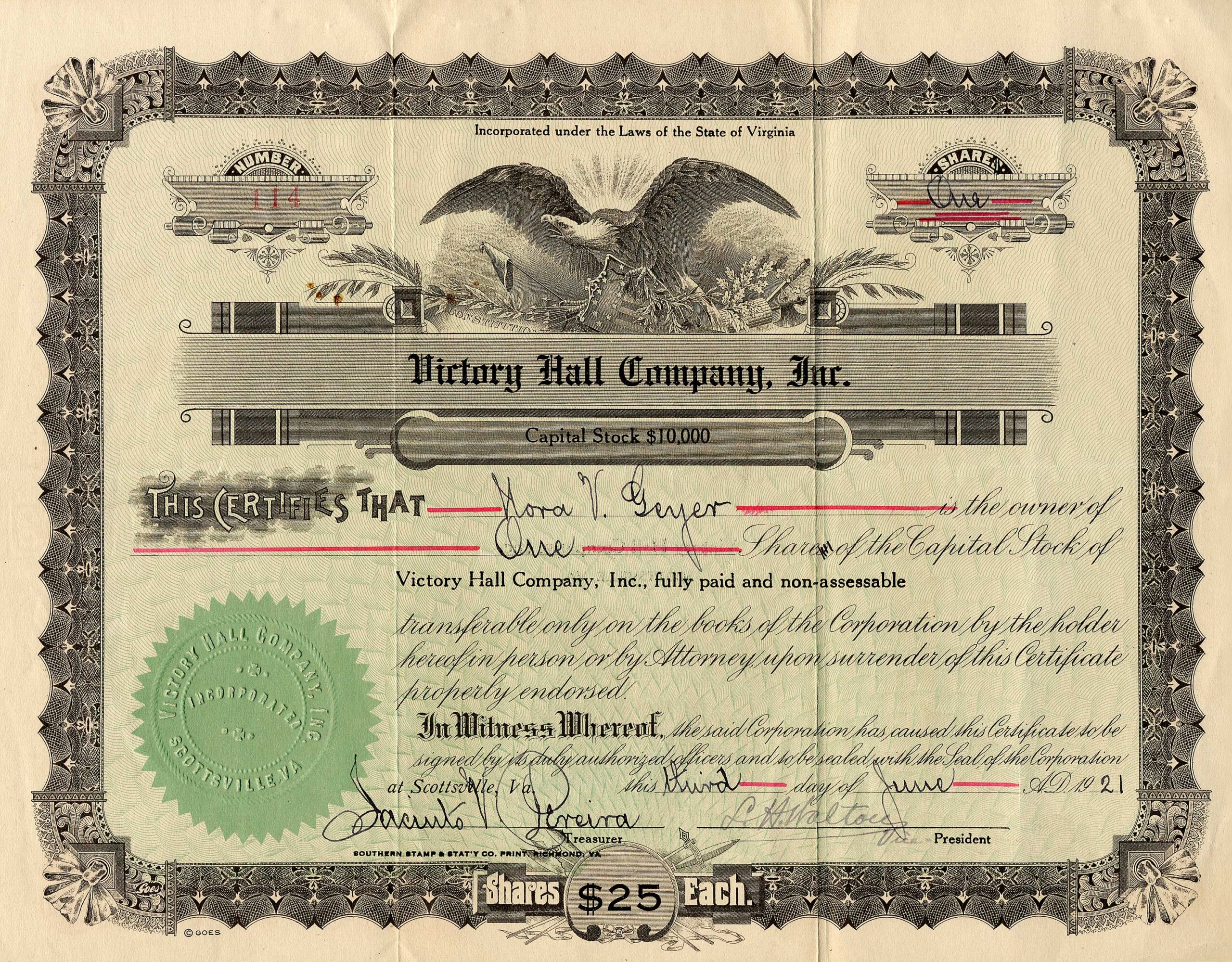
Citizens were invited to subscribe to stocks in the Victory Hall Company, Inc., for funding construction, and certificates were issued. People were asked to buy as many bricks as they could afford for the building. The yellowish gray bricks used were made in John Martin’s foundry located on the lowgrounds at Snowden across the James River Bridge. These bricks also were used in several other structures in town. At a meeting of the corporation held on March 13, 1920, Mr. Jacinto Pereira, Treasurer, reported that to date $2,837.50 had been collected, and he urged that all subscribers who had not paid up should do so immediately, so that the building could be pushed to completion. Indeed, Victory Hall was completed that year, and Scottsville had a spacious new public auditorium that would efficiently and variedly serve the community’s cultural and social needs for several decades.
Not only did the new facility provide a venue for Mrs. McKay’s dramatic productions, it also was acclaimed by the Chautauqua and vaudeville performers who came to town every year and it became the site of many special events and ceremonies of Scottsville High School, and it was a splendid place for town meetings, public recitals and lectures, and forums. For three decades, graduation ceremonies, Senior Class plays, beauty contests, and talent shows were held in Victory Hall.
When the first moving pictures (the “silents”) became available, Victory Hall was leased to Mr. Willie Burgess, the famous local photographer who brought that new form of entertainment to Scottsville Later on, from the mid-1930’s to the early 1950’s, the hall became known as Victory Theatre, showing as many as three feature movies a week. From the late Depression years through World War II, Nelson Tindall and Luther Baber of nearby Centenary leased the theatre and showed the great early musicals and all the war movies. Sometimes there were special showings of movies like “Mrs. Miniver” to benefit the war effort with bond sales. From the mid-1940’s until the advent of TV, the theatre was operated by Reeve Nicholas and Edward “E.D.” Dorrier, who continued to bring all the movies of Hollywood’s Golden Era to our small-town, loyal audiences. It was not unusual on Friday or Saturday evening in the 1940’s for almost all of the 386 seats, including the balcony, to be filled. Tickets then were 35 cents for adults and 25 cents for children under twelve.
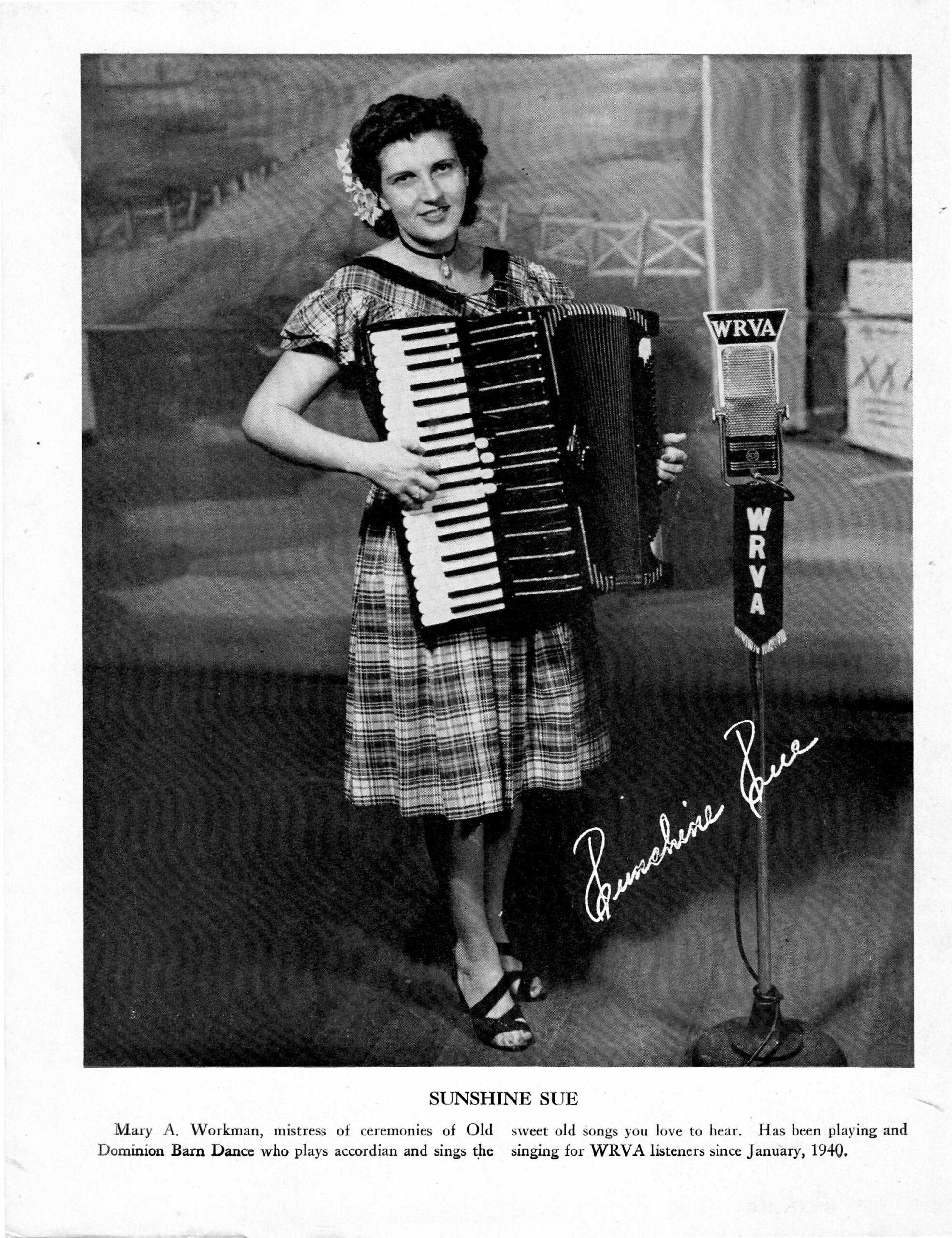
Through all its years of operation, the Victory Theatre also booked an impressive array of “live, in person, on the stage” shows ranging from western movie stars, future country music greats, magicians, and novelty entertainers to Bob Portfield’s trouping Barter Theatre actors. Many of these were sponsored by civic groups wishing to raise funds and, of course, there were annual events like the Lions Club Variety Show and the “Miss Scottsville” Beauty Contest put on by a school group. Country music stars, long “before country became cool,” were a big draw at the Victory Theatre, sometimes necessitating two or more performances. A particular favorite was Sunshine Sue (shown at right) of WRVA Radio in Richmond, and her Old Dominion Barn Dance gang, which included such future greats as Chet Atkins, Grandpa Jones and Ramona, Joe and Rose Maphis, and June Carter Cash. Others who appeared were the Carter Sisters with Mother Maybelle, Lester Flatt and Earl Scruggs, Bill Monroe, Mac Wiserman, Stoney and Wilma Lee Cooper, Patsy Cline, Hank Williams, Smokey Graves, and so on.
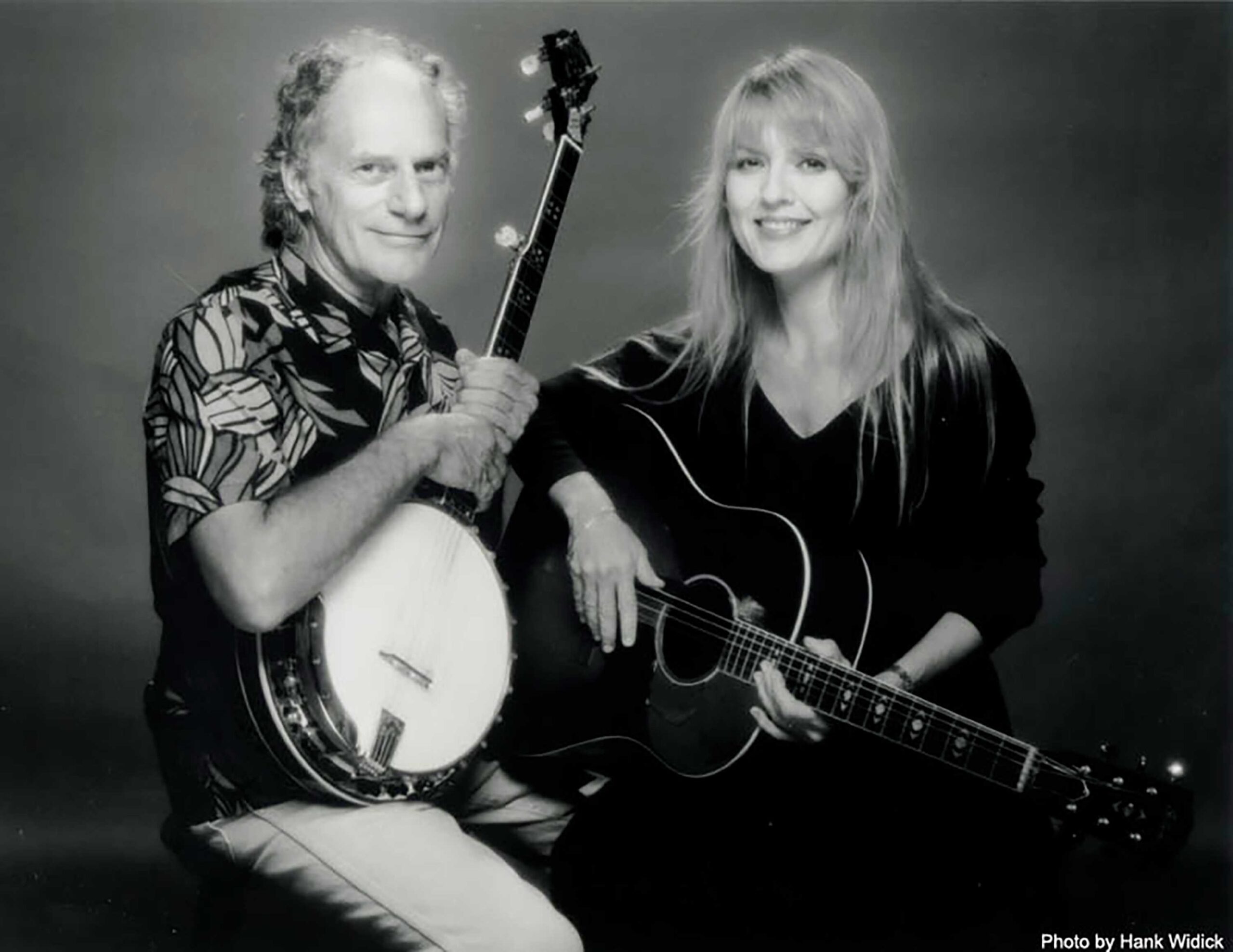
Eddie and Martha Adcock
Scottsville’s own Eddie Adcock, a pioneer world renowned star in bluegrass music, got his start on the stage of the Victory Theatre. Eddie would play his banjo and guitar and sing for the Saturday night crowd before the movie began. At an early age, he joined one of the country music bands that played the theatre. It is hoped that soon Eddie, with his wife and co-star Martha (shown at left), will be able to return to the remodeled stage where he began.
Around 1962, the Scottsville Town Council began to feel that they had a big white elephant on their hands in old Victory Hall. It was noted that the Scottsville Volunteer Fire Department needed larger quarters for its vehicles, so the decision was made to tear out the theatre seats, flatten the cement floor, and create a parking bay for the fire trucks. Also, extensive remodeling was done to the upper level, creating meeting rooms, a town office, a kitchen, and restrooms. So, in 1964, Victory Hall became known as the Municipal Building with the ground floor becoming a large garage. By the mid-1970’s, the Fire Department had built its new station in the uptown area of Scottsville, and the Volunteer Rescue Squad moved its vehicles into the parking bay. Just this past January, the Rescue Squad moved into their new, modern headquarters just outside of town.
Now it is pretty obvious that the old Victory Hall ain’t what it used to be, or even what it has been for the past three decades, but it still can claim a great deal of character and usefulness. The old stage and the dilapidated dressing rooms are still there facing a cavernous space that once was an auditorium. Fortunately for this great old landmark that has played so many roles, there is considerable interest by numerous individuals and several local organizations in turning what is left there into a modest but modern theatre suitable for plays, concerts, lectures, public meetings, and even the showing of movies.
Victory Theatre Remodeling Committee has been formed and working for several months with input from the Scottsville Council for the Arts, the Horseshoe Bend Players, the Family Players Music Studio, an architect, and other interested individuals. The committee will coordinate efforts with town officials on this project. A special fund has been started and contributions have already been received. Anyone interested in helping with the project should contact Robert Spencer, Committee Chairman, or Wyatt Shields, Town Administrative Official.
Top Image Located On: Capturing Our Heritage, CDB03 Roll3Neg20A.tif Roll3Neg20A.jpg Roll3Neg20A.psd
Middle Image Located On: Capturing Our Heritage, CDCG08 CG86cdCG08.tif CG86cdCG08.jpg CG86cdCG08.psd
The images of Sunshine Sue and Eddie and Martha Adcock were contained in the March 1999 Scottville Museum Newsletter and are part of the Robert Spencer collection at Scottsville Museum.
It’s a clear cool morning and we’re feeling peppy. Today we will say goodbye to Florida – sayonara, see ya later alligator! When we cross the St. Mary’s River for Cumberland Island we’ll be in Georgia.
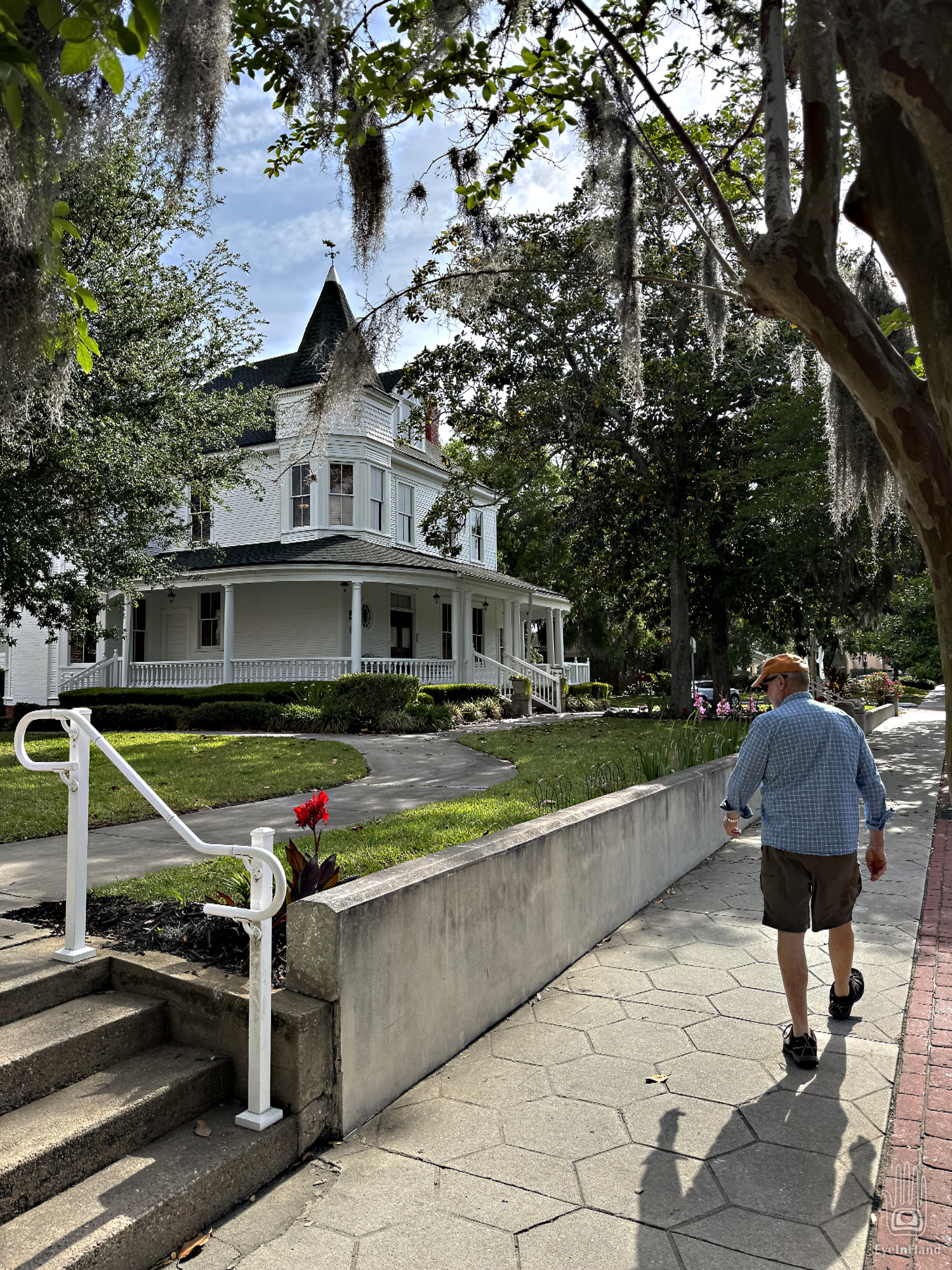
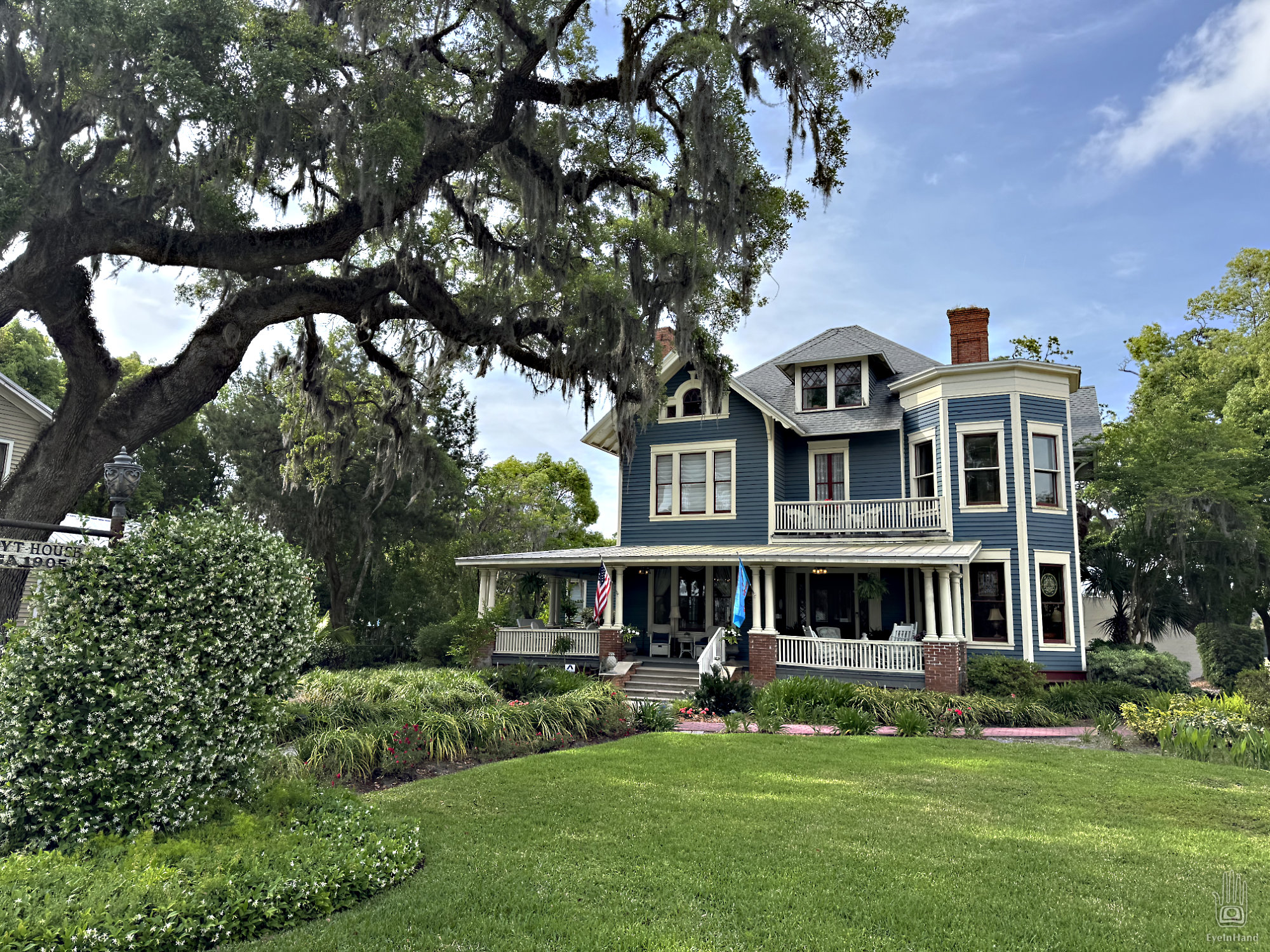
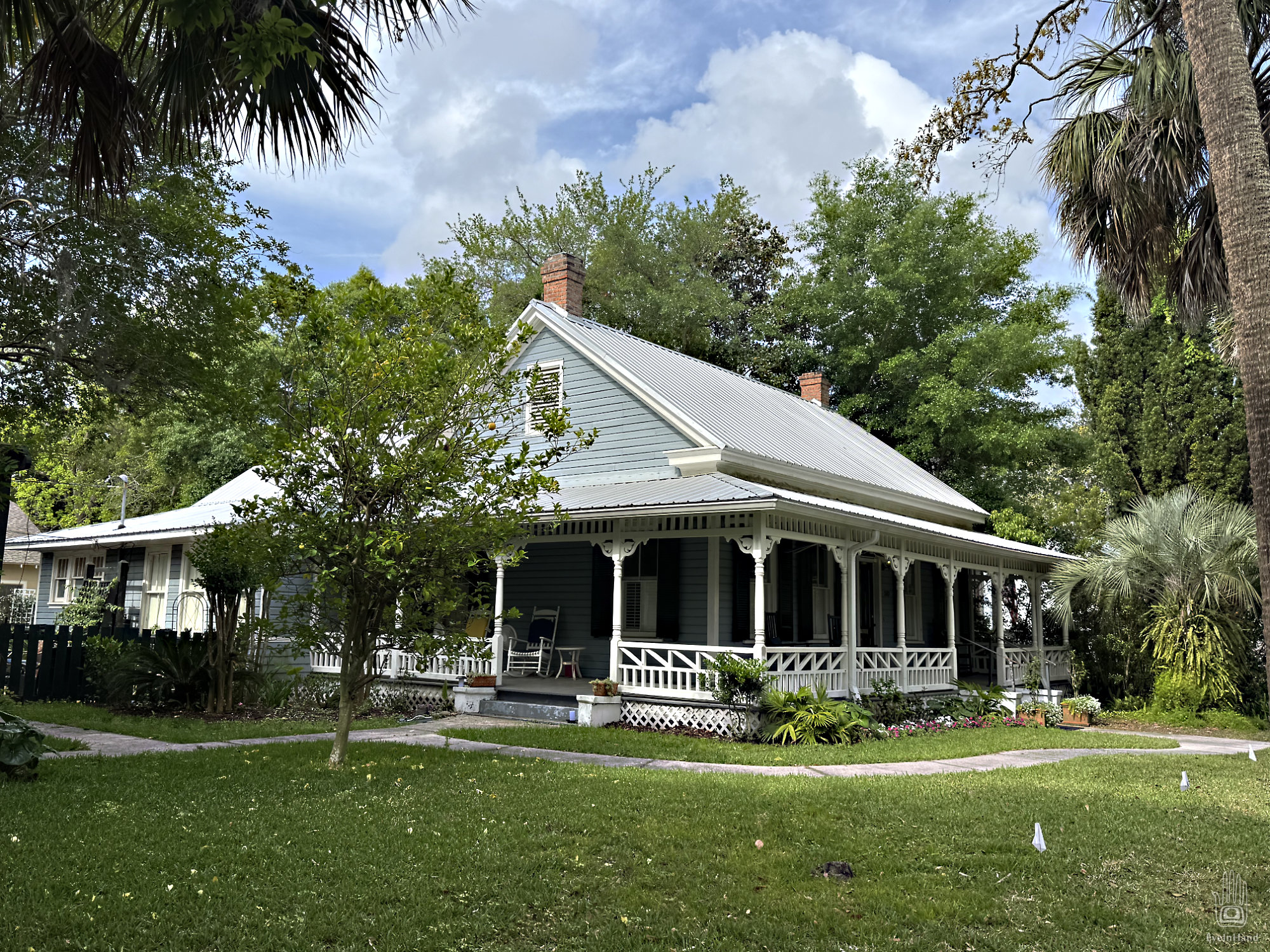
But first, we have to continue questing for Doug’s phone case. We get coffee and bagels in a busy little bakery on Centre Street, browse a fine independent bookstore, and start strolling east – past stately old Victorian homes and Spanish Moss draped parks.
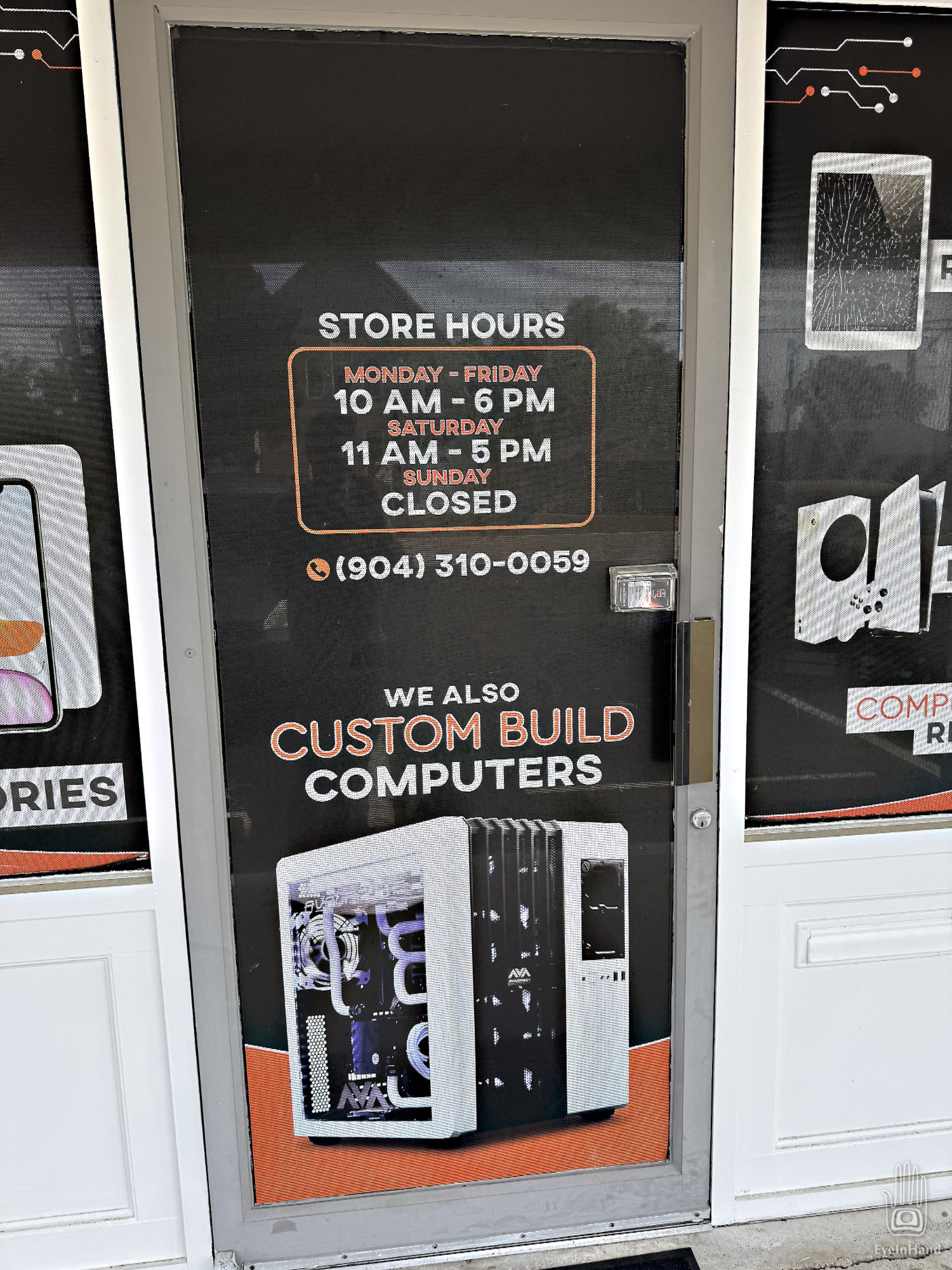
The quest is not immediately promising. We debate whether to consult a local oracle or perhaps just turn back. Then we come to a computer store in a former 7-11. Maybe here? Alas, it’s still closed at this early hour. Too bad, I say, because this is IT. Says IT right on the sign, “Your source for all IT needs.” I’m certain IT is inside.
I shake the door again, discouraged.
Suddenly a black van emblazoned with a hair salon sign drives up, and out steps a young native. (His mom the chauffeur?) He has metal tubes distending his ear lobes, shaggy black locks, and baggy black pantaloons, draped about the waist are chrome chains that swing extravagantly as he lopes toward us. Tattoos of arcane symbols festoon his arms. Perhaps he is a resident shaman. He approaches, nods, then stands between us as he begins to unlock the door.
Astonished by our luck, Doug and I exchange quick looks that say we agree it’s worth the risk, so I ask, “We were wondering if you might have a case to hold this Galaxy we’re carrying around in our pocket?”
“Which Galaxy?”
“A26”
“Nope. You might try the Target.”
“Bullseye. Where is that?”
He points vaguely off in the distance to the south.
We continue walking a few more blocks. But with nothing in sight, decide it’s too far. Maybe there isn’t such a place, and like other natives he’s just mis-directing us away. We give up and turn back.
Off the main drag, in the quiet neighborhoods.
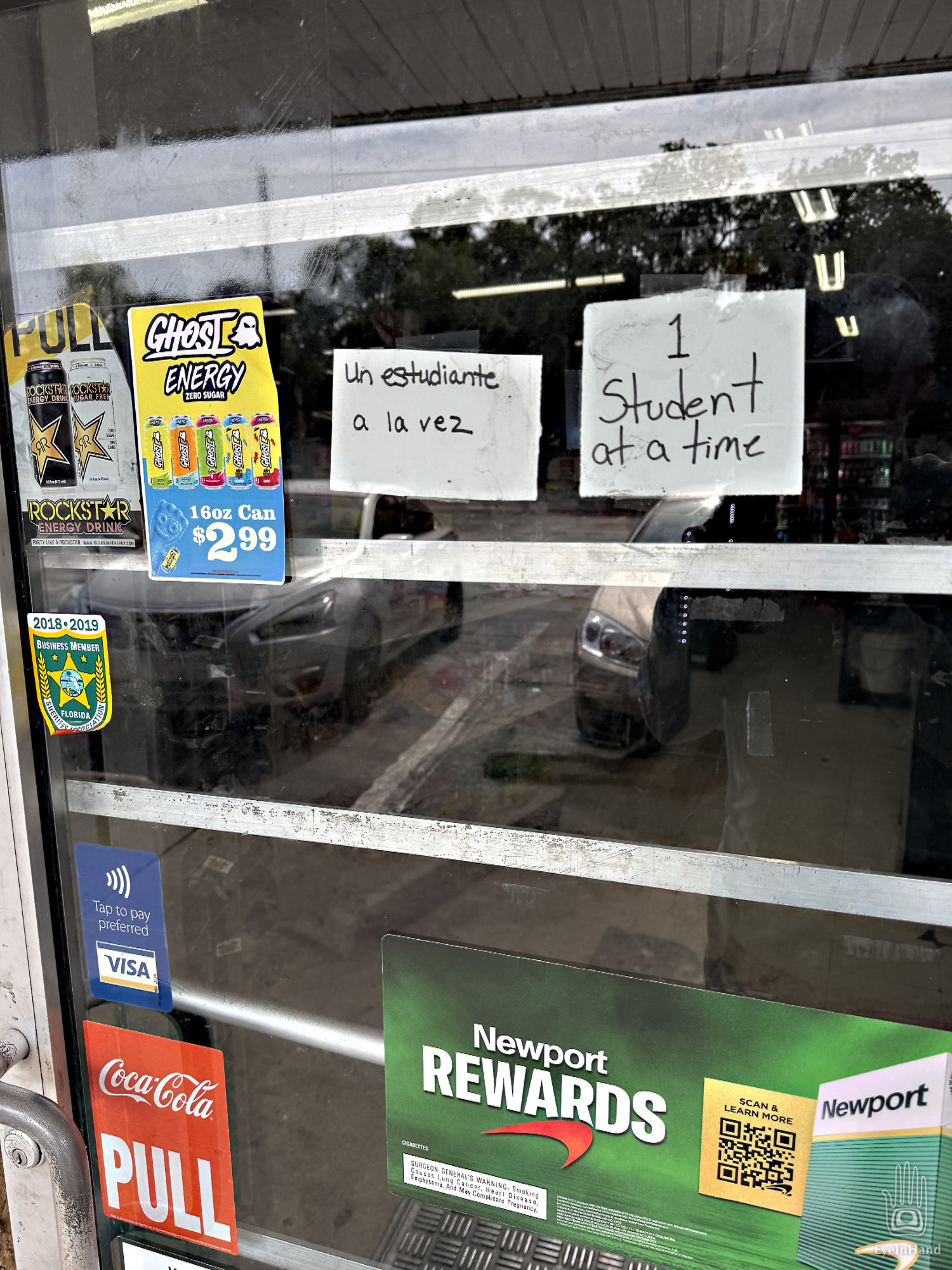
Circling back toward the harbor, we wander through the residential village, and soon come to a rustic Trading Post set off in trees. We stop and consider. Whatever they have in there must be very valuable – there are bars on all the windows and doors.
There’s a sign that says “1 Student at a time”. Maybe it’s the temple of a priest or spiritual guide?
Doug decides we need some supplies. He will forage inside while I make inquiries.
A bell jangles when we open the door. Inside is a curated collection of regional foods and dubious delectations: deep fried pork rinds, dried beef jerky (is it really beef?), pickled bird eggs, dried and salted sliced tubers. Live worms and minnows. There’s a strong odor of old fish. Deer heads and stuffed bobcats on the walls. Faded photos of hunters and fishermen proudly posing with their kills. Marvelous, really, but nothing we want for the larder.
Some sort of soothsayer is held captive in a magical cage made of thick glasslike crystal, apparently forced to watch over the trade goods. Maybe he is under a spell and imprisoned as punishment for offending a local chieftain. Caution is advised, I think. I have to speak to him through a slot in the translucent cube.
“Would you have anything that would hold a Galaxy?” Shakes head, does not appear to speak English. “The Fountain of Youth?” Again, shakes head. If it’s here, he will not divulge its location. Or maybe the spell has also made him mute.
Through pantomimes try to negotiate a trade for some cow’s milk. But he won’t accept the plastic cards issued by the bank of our king. Nor pieces of paper on which we offer to write our names. Digging into various pockets we find a few shiny coins made of fake silver and copper. These he will accept, but only for a smaller vial of cow’s milk. A sharp trader, this holy man.
We wend our way back to the harbor, ampule of cow’s milk in hand. The quest continues . . .
While tidying up Tidings, and ourselves, we’re startled by a husband and wife scuba diver team (whose metier is scrubbing the bottoms of boats in the harbor). I thought they were manatees. Doug tells a story about a scuba diver who repaired his centerboard pennant. He was befriended by manatees. So friendly, in fact, Doug had to distract them while the diver worked or they would muzzle their way into everything he was doing.
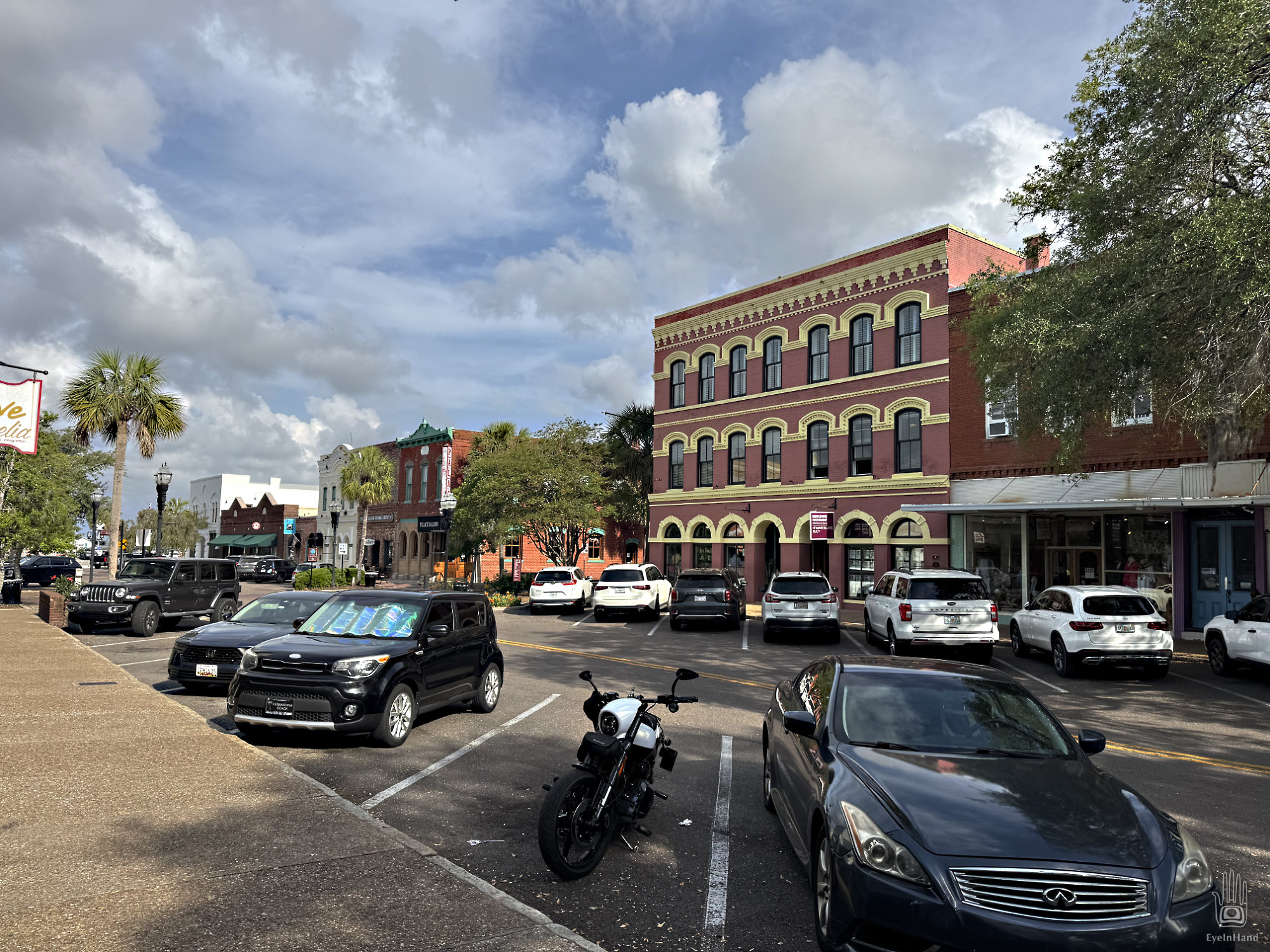
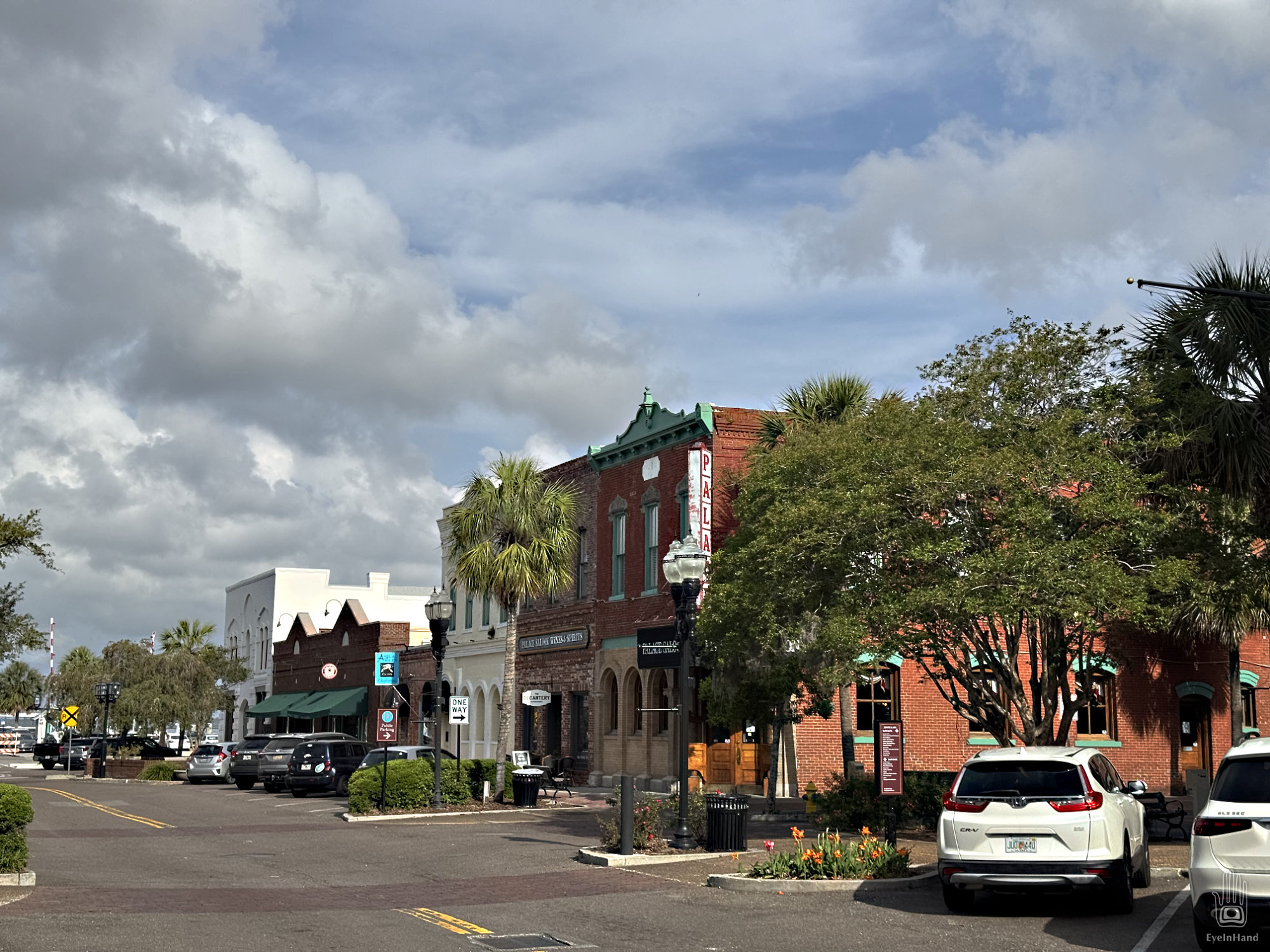
Recomposed and presentable, we walk across the tracks to the historic commercial district of Fernandina Beach, the heirloom brooch pinned to the bodice of Amelia Island.
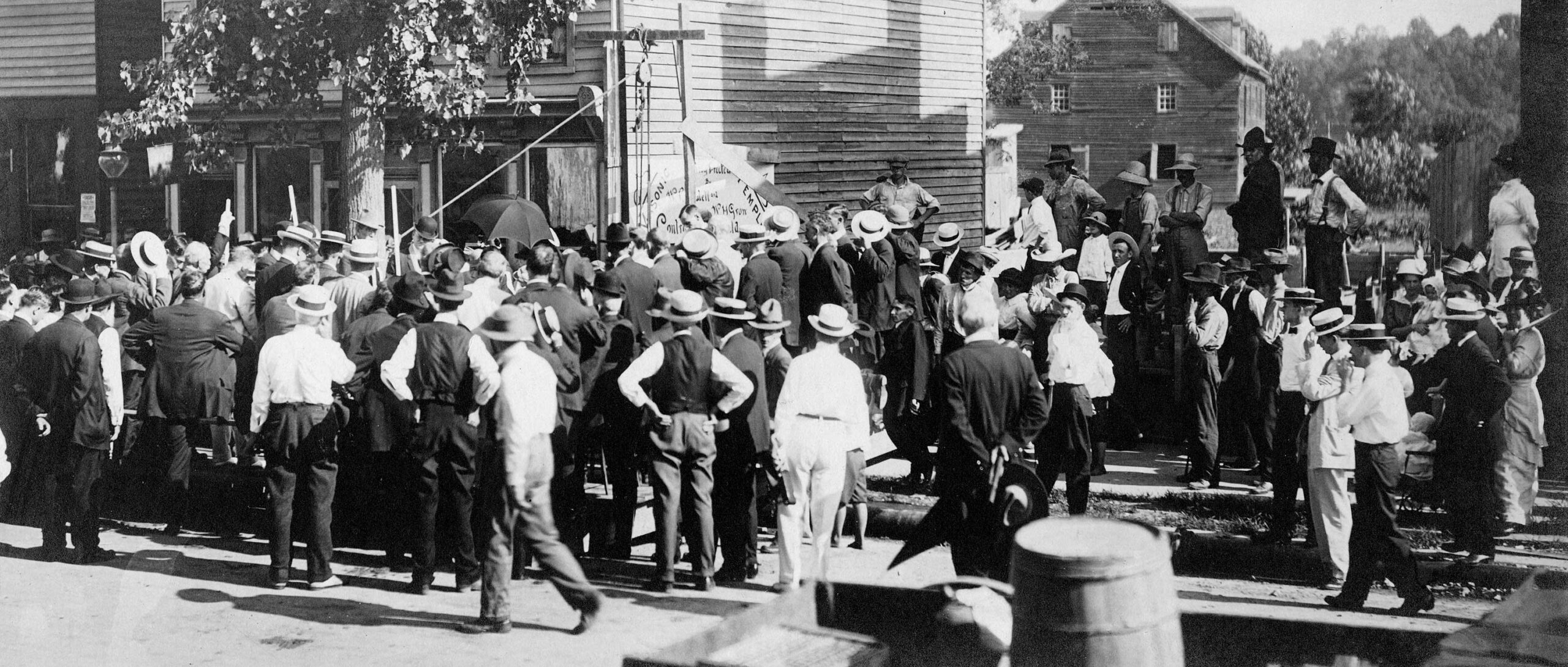
Laying the Masonic Lodge Cornerstone – June 17, 1914
On June 17, 1914, Scottsville Masonic Lodge #45 laid the cornerstone for its current home at 137 Main Street. It was a stirring day in Scottsville with the town band marching down Valley Street, leading Lodge members from their meeting area at Beal’s Hall to the new Lodge site.
Laying the Masonic Lodge Cornerstone – June 17, 1914
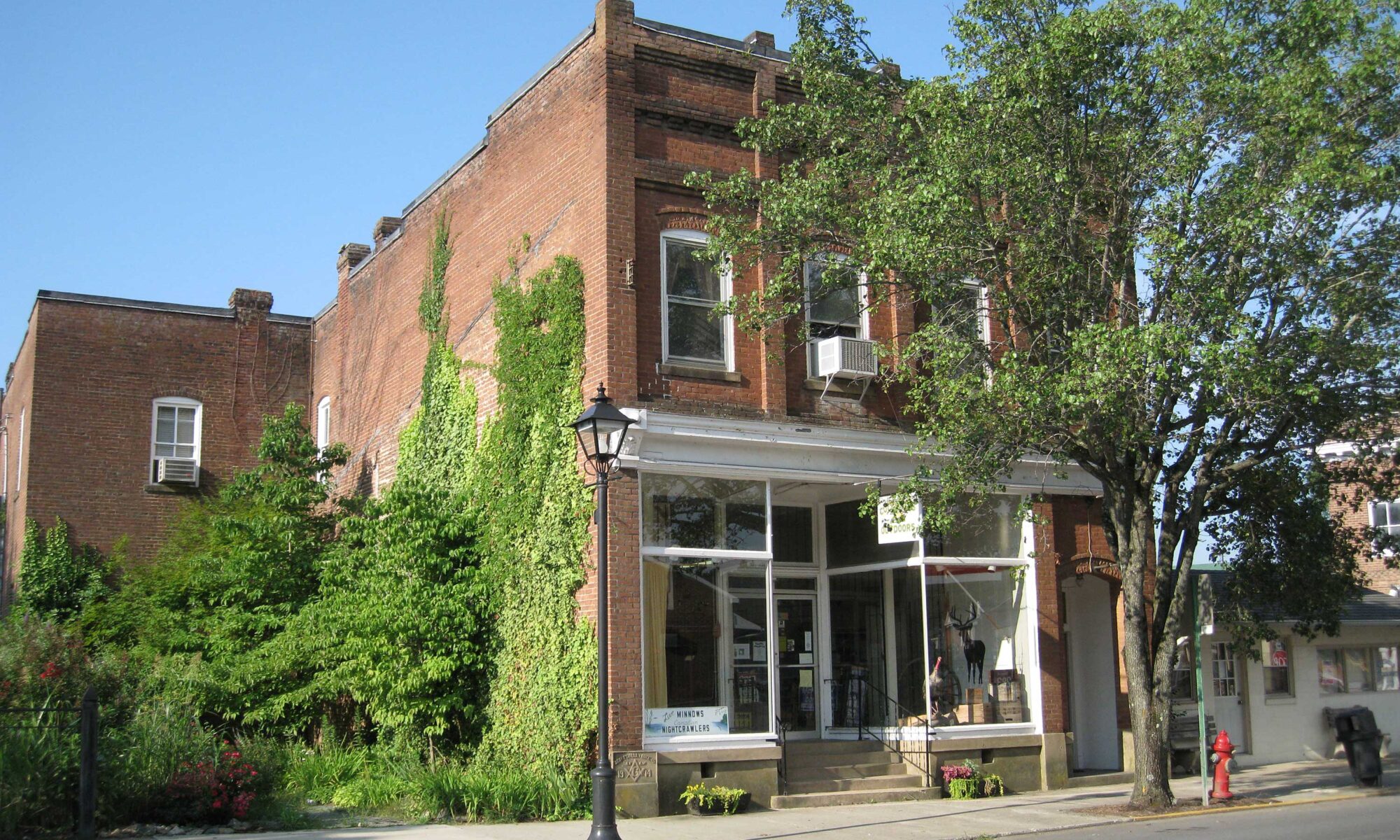
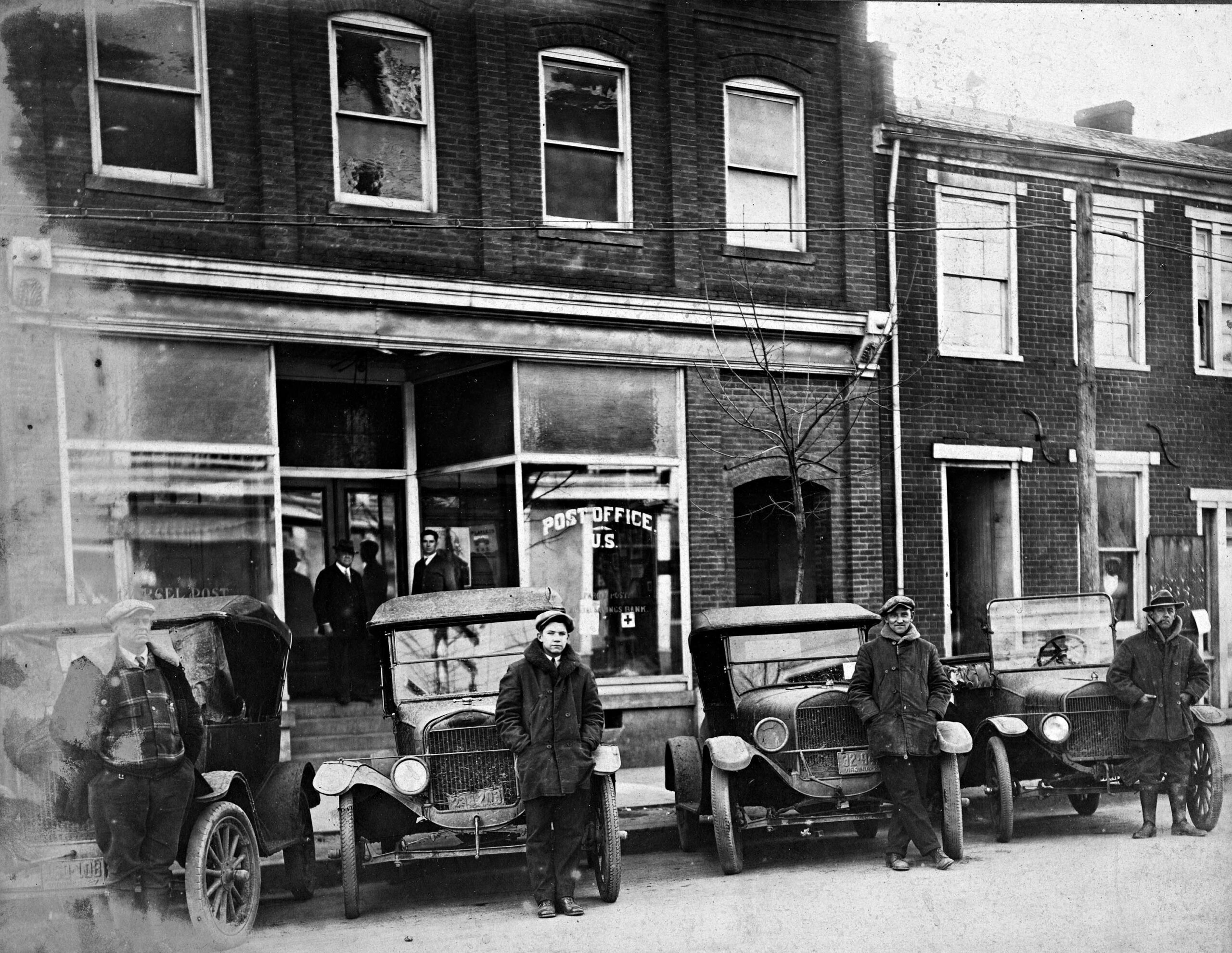
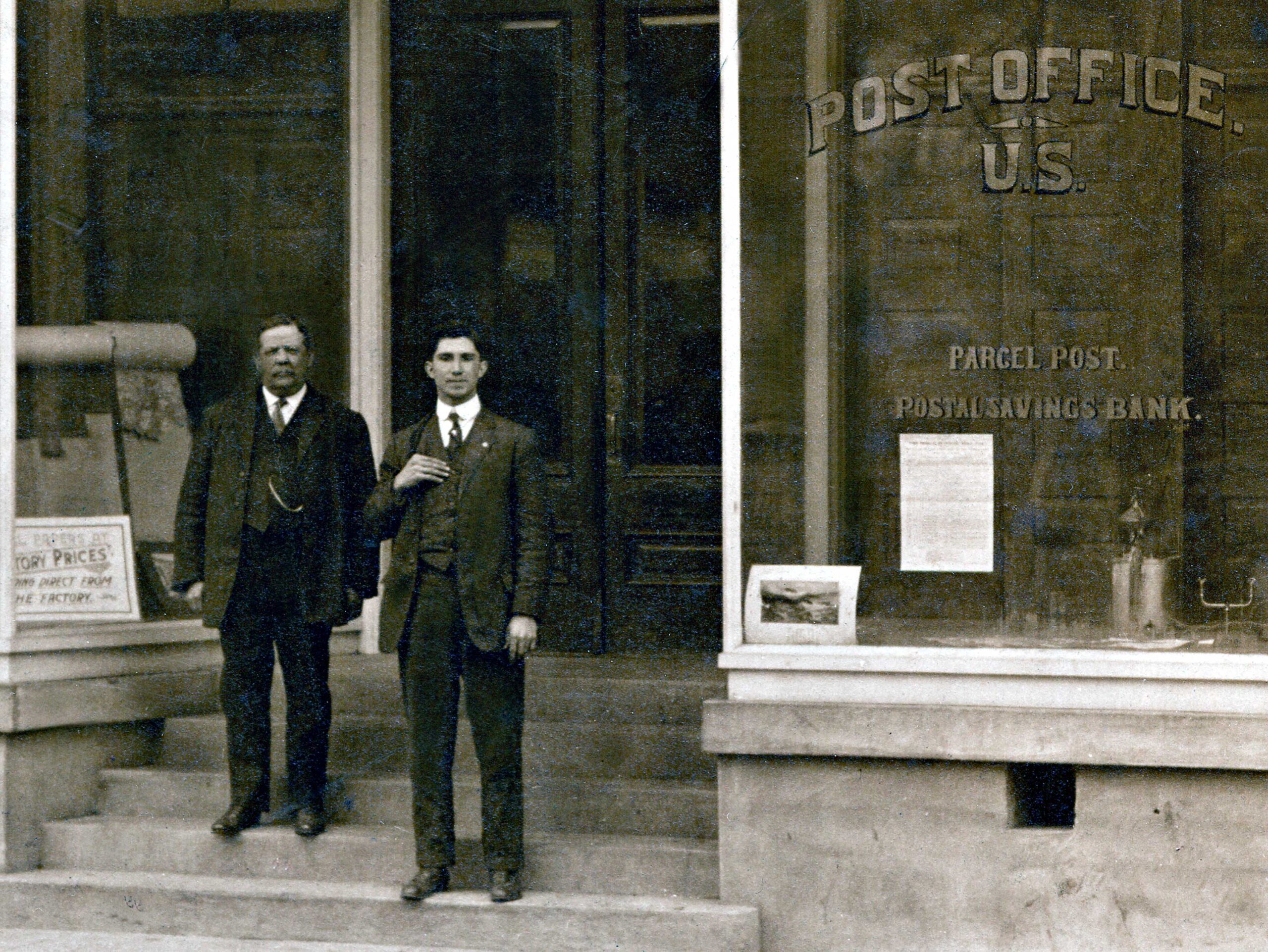
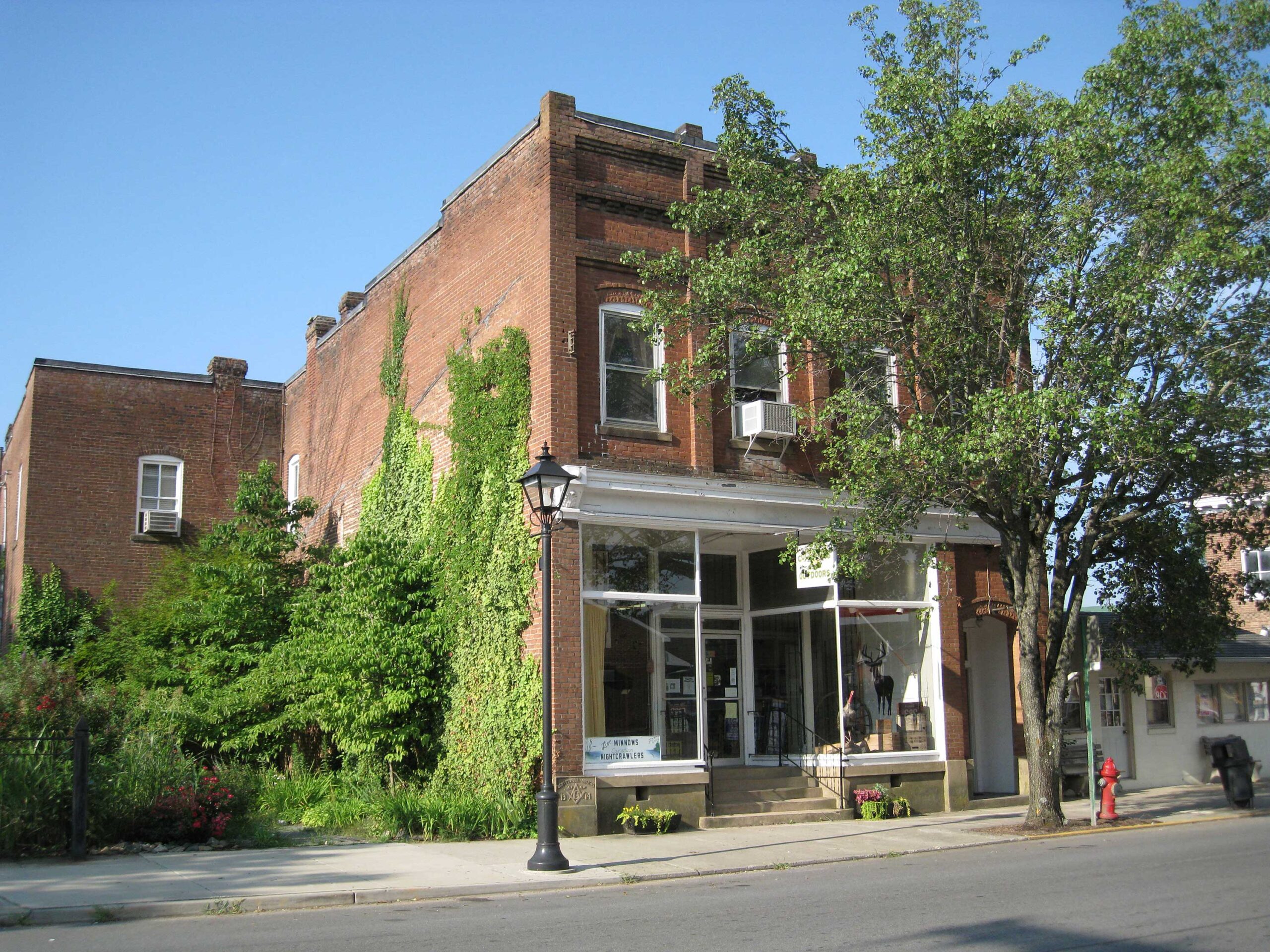
The first Lodge meeting was held in the upstairs meeting area after the building was completed in 1915 at a cost of $6000. The United States Government rented the building’s first floor to serve as the Scottsville Post Office from 1915 until the post office moved in 1964 to a new location on West Main Street. In 2010, Coleman’s Outdoors store occupied the old Post Office’s first floor.
Masonic Lodge #45 began its history in Scottsville on December 7, 1851 and received its charter at their Valley Street meeting hall on the second floor of the Beal Building. James W. Mason opened and closed the charter night exercises as the first Worshipful Master. Members present for this historic meeting were William B. Brady, Sr.; John Hickok, Jr.; James Brady; Silas W. Dawson; Charles E. Little; J.L. Brady; J. M. Wade; W. F. Crawford; James A. Forbes; J.B. Dodd; W. Donoho; and James A. Leitch.
On December 7, 1951, the Scottsville Masons celebrated their 100th anniversary with a public ceremony in front of the Scottsville Masonic Lodge. Following the public program, a social hour was held in the Banquet Room of the Lodge for the members and visiting masons. At 6:30 pm, a banquet was held in the Auditorium of the Scottsville High School which was also ladies night; the guest speaker was Past Grand Master of Masons in Virginia and then the current Grand Secretary of the Grand Lodge of Virginia.
The Scottsville centennial committee in charge of the arrangements for their 100th anniversary celebration was composed of Rt. Wor. A.R. Thacker, Chairman; Wor. W. A. and Ellis P. Jones. The History Committee was composed of Rt. Wor. F.P. Scott; Chairman Rt. Wor. J.H. Duncan; Wor. C.A. Whitted, John P. Dorrier, and T.H. Gillis. In honor of this Masonic anniversary, the History Committee authored a history of the lodge which was printed for distribution on December 7 and found records complete through the Civil War years. On the roster of members of Scottsville No. 45 were Peyton S. Coles, Grand Master of the Grand Lodge of Virginia in 1879 and 1880. There were also three Past District Deputy Grand Masters of the 17th Masonic District who were members of Lodge 45: J.H. Duncan, A.R. Thacker, and F. Pierson Scott.
In 1951 the officers of Lodge 45 were E.B. McCormick, Wor. Master; L. E. Baber, Senior Warden; Larkin Londeree, Junior Warden; J.W. Boggs, Senior Deacon; T.H. Gillis, Junior Deacon; T.A. Allison, Chaplain; C.R. Dorrier, Treasurer; C.A. Whitted Secretary; A.L. Thacker, Tiler; and J.E. Daniel, Chaplain emeritus.
– o • 0 • o –
History of Scottsville Lodge #45, AF&AM GRANTING OF CHARTER
The Scottsville Lodge, No. 45, A.F. & A.M., received its charter from James Evans, Grand Master of Masons in the State of Virginia on December 7, 1851.
Lodge meetings were held in Scottsville prior to the year of 1851. It is impossible to determine when the first meetings were held since no minutes or records were kept. It is known, however, that a group of men in and around Scottsville formed themselves into a lodge and elected James A. Leitch as their Worshipful Master. It was through his efforts that the Grand Lodge of Virginia was petitioned in order to secure a charter for the Scottsville Lodge.
At this time, James Evans was Grand Master of Masons in the state, and it became his duty to examine the petition. After due investigations and with the consent of the Grand Lodge, he constituted and appointed on trusty the following brethren:
James W. Mason, Master William B. Brady, Senior Warden John Hickok, Junior Warden
These men along with those, who were admitted to work with them, were constituted into a lodge of Ancient, Free, and Accepted Masons by the name, title, and designation of Scottsville Lodge, No. 45.
With this granting of charter, the lodge received full power to receive and enter apprentices, to pass fellow crafts, to raise Master Masons, and to perform all other works of the craft according to the ordinances and regulations of the Grand Lodge of Virginia.
The Lodge was also instructed to regulate its own dues, adopt and record its own bylaws, and keep an accurate record of the minutes of all meetings.
The full account of the granting of the charter for the Scottsville Lodge can be found in Volume No. 1, of the Minutes, as recorded by John Dove, Secretary of the Grand Lodge of Virginia.
LOCATIONS
As Scottsville Lodge, No. 45, A.F. & A.M., marks its hundredth anniversary on December 7, 1951, the brotherhood can view with pride the accomplishment of having moved locations only three times over the century.
The accomplishment is even greater with the century recalled. It was one hundred years fraught with wars and depressions, and yet Scottsville Lodge has lived and prospered.
The fascinating story opens on December 7, 1851, in Beal’s Hall, located in the center of Scottsville. The site today is the floor above Mathias’ Store on Valley Street and State Route 20. Here the Lodge met for instruction, work, and refreshment for twenty-nine years, and here the Lodge received its charter.
Charter night was an inspiring meeting. James W. Mason opened and closed the charter night exercises as the first Worshipful Master. The records record that William B. Brady, Sr., was the Senior Warden, and John Hickok, Jr., was the Junior Warden. Members present for the historic meeting were: James Brady, Silas W. Dawson, Charles E. Little, J. L. Brady, J. M. Wade, W. F. Crawford, James A. Forbes, J. B. Dodd, W. Donoho, and Right Worshipful James A. Leitch.
Twenty-nine years later in 1880, the Lodge bought the upstairs floor of the present home of Mrs. John Mayo, of Scottsville, Virginia, and paid $229 for it. This move was unique in the annals of Virginia Masonry. Not many lodges have purchased only one floor of a building for a meeting place and that property a part of a private home. This arrangement held for fifteen years. In 1895, the Lodge bought the first floor for $300, and rented it to Dr. Anderson, D.D.S., from 1895 to 1913.
The second move came in 1913 when the Lodge sold the entire building to Dr. L. R. Stinson, of Scottsville, Virginia, for $1,250, and transferred back to Beal’s Hall, the birthplace of the Lodge. This was the home of the Lodge until January 1, 1915. The first meeting in the new Lodge Hall was not held until January 29, 1915. During the occupancy of Beal’s Hall, the Lodge paid a rent of $21 for a six-month period with the exception of June, 1914, to December, 1914, when the average rent was $20 for the six-months’ period.
June 17, 1914, was a red-letter day in the life of the Lodge. On that date, the cornerstone was laid for a new building, and the present home of the fraternity. On the minutes of the Lodge is written, “The Worshipful Master informed the brethren that this special communication had been called for the purpose of laying the cornerstone in the erection of a Masonic Hall on Main Street of Scottsville, Albemarle County, Virginia. Right Worshipful H. G. Harris was called to preside in the East and filled the offices pro-tem as follows: Wor. T.E. Bruce, Sr., Warden; Wor. L. G. White, Junior Warden; S. R. Gault, Treasurer; T. M. Staples, Secretary; T. F. Robinson, Senior Deacon; Worshipful L. R. Stinson, Junior Deacon; L. H. Walton, Chaplain, and R. L Blackburn, Marshal.”
It was a stirring day in Scottsville. The Lodge led by the Scottsville Band marched down the street to the site of the new building on Main Street. The cornerstone was laid in due and ancient form. Again the line of march was formed, and the brothers paraded behind the band to Moore’s Hall. Here John B. Moon, a Past Master of Scottsville Lodge, was presented, and he in turn introduced Most Worshipful Brother R. T. W. Duke, Past Grand Master of Masons of the State of Virginia. The orator gave a forceful address.
Following the address, the brothers marched back to Beal’s Hall. Due thanks were given to Brother Duke and the Scottsville Band.
Seven months later on January 29, 1915, the Lodge met at its third and present location. It was a new, two-story brick building and had been constructed at the cost of $6,000. The contractors for the new hall were Paulett and Grove. The lower floor of the Masonic building was rented to the United States government for use as a Post Office.
It is interesting to note that today there are four pieces of the original furniture still on hand in the Lodge. The Altar is the only one of the three pieces still in use at this time. New furniture for the station officers was purchased by the Lodge.
That is the record. It is indeed a stable one and gives assurance that the Lodge will live on into a bright future.
As we pass along through this sometimes difficult life, we find that a little humor spread along here and there will often help make the pathway a little more easy to tread and apparently some members of our Lodge thought the same thing a generation ago.
In the Town of Scottsville, a few years following the Civil War, there were two newspapers printed. One was known as the “James River Clarion,” and the other one was the “Scottsville Courier.”
These two papers were printed by two brethren who were members of the Scottsville Masonic Lodge, No. 45.
One was Major James C. Hill, and the other was Mr. William B. Brady. Major Hill was a devout Christian gentleman while Mr. Brady, being all the same a gentleman, did very frequently use the wine cup, and it was not infrequent that he was seen on the streets of our town under such influence.
At that time, there was only one printing press in Scottsville so it was that Mr. Hill would print his paper one week, and then Mr. Brady would print his paper the following week, and so on… Having seen Mr. Brady slightly under the influence one morning just before printing his paper, Mr. Hill thought that he would have some fun at the expense of Mr. Brady by printing a little poem.
No sooner said than done. Major Hill printed the following article in his paper:
Between Brady and brandy There is the difference of a letter When Brady is full of brandy Times seem to be better.
No sooner than Major Hill’s paper reached the street, someone had taken a copy to Mr. Brady, whereupon the gentleman literally hit the ceiling.
The following week when Mr. Brady printed his paper, he came back with a reply to Major Hill thus:
Between Hill and hell There is the difference of a letter When Hill is in HELL Times will be better.
– o • 0 • o –
A Building That’s Seen A Lot! by Ron Smith
One of the great things about Scottsville is its obvious history. And, as visual testaments to that history are the town’s historic buildings. Glancing around one can easily imagine some historical figure with which they are familiar strolling past or into one of these structures. The Scottsville Museum’s annual Spirit Walk has provided many local residents with the opportunity to associate names that are familiar with buildings they might pass daily.
The Masonic building on East Main Street is one of these buildings. Home to Scottsville Masonic Lodge No. 45 for more than one hundred years, this building has seen a lot!
During the late 1800’s and early 1900’s Scottsville’s Beal Building on the corner of Valley Street and Bird Street was “the place” to hold events, meetings or any other reason to gather a significant number of persons together in one place for a specific cause. A fundraising dance was held there in 1902 to raise money to start the first “real” library in Scottsville.
Masonic Lodge No. 45, with its long and rich history, was chartered by the Grand Lodge of Virginia on December 17, 1851. Members met in a room on the second floor of the Beal Building until 1880 when they relocated to the upstairs of a private residence on Valley Street.
In a 2005 article by writer Ruth Klippstein, former Scottsville Mayor Raymon Thacker remembered “his family first lived on the first floor of this home after moving to Scottsville and before they moved into their own home.” The Masonic lodge actually bought the second floor of this house and then the whole house! Dr. Luther Randolph Stinson would come to own the home.
Wishing to have a building of their own, like other lodges around the country, the lodge decided to take the necessary steps to make that dream a reality. In 1914 Lodge No. 45 purchased a parcel of land on Main Street. Some records indicate the property was purchased from the town while Mayor Thacker remembered it being purchased from the county. Either way the town would soon benefit from a beautiful new building that would stand firm and tall and weather the forces of nature that would attack her in the years to come.
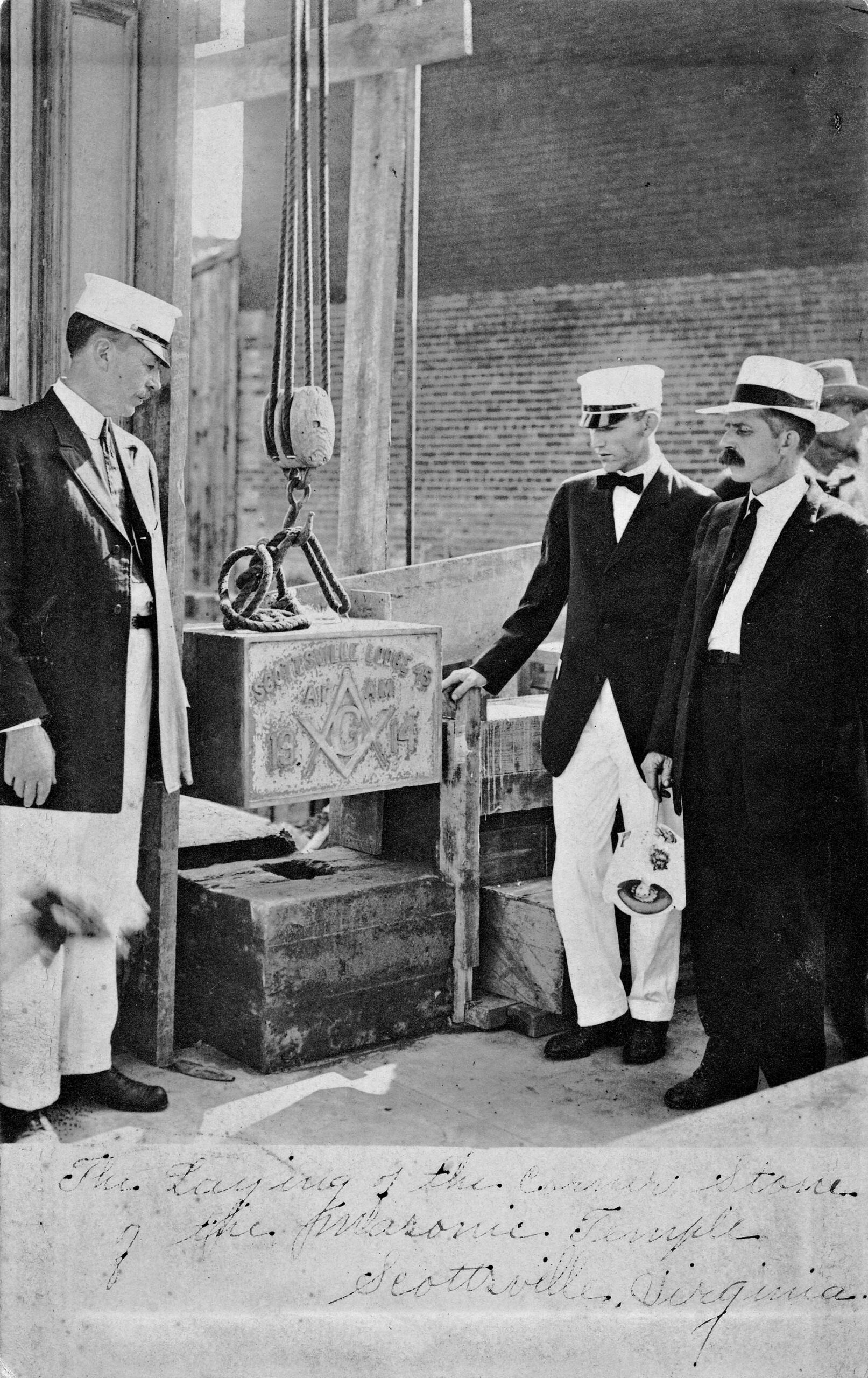
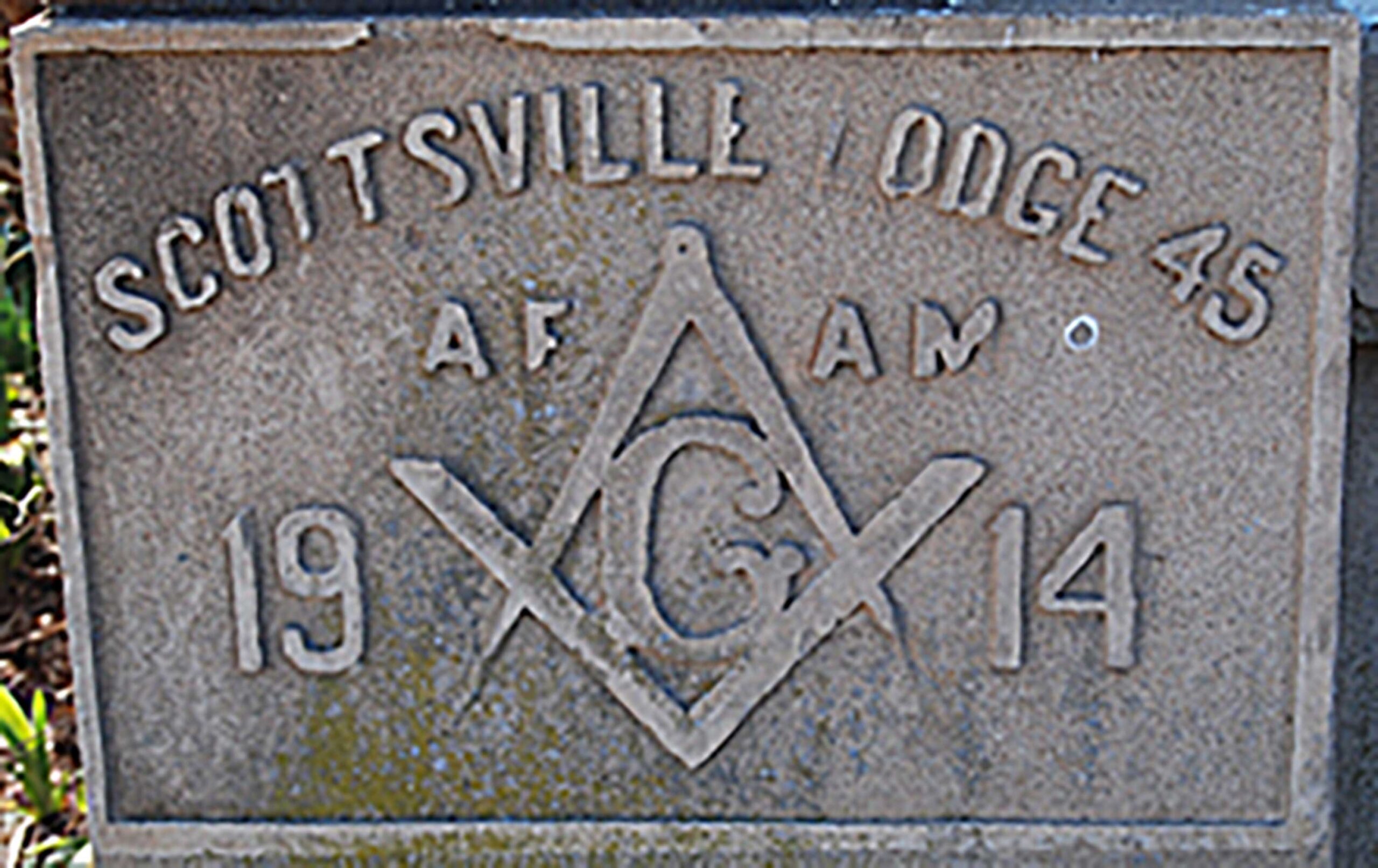
Scottsville Masonic Lodge 45 Cornerstone, 1914
Regardless from whom the purchase was made, and with a deed dated October 14th, 1914, Lodge No. 45 now had their own tract of land. The purchase price was $250, and with a $4000 loan from the town, the lodge was on its way to having its own permanent meeting place.
On June 17th, 1914, following a parade, and with speeches by visiting Masonic dignitaries and the presence of a large number of town residents, the cornerstone (shown at right) was laid and the Masonic Building we know today was, like an expected baby, about to be born into this world and the history of Scottsville.
A Scottsville firm, Paulett and Grove, two names found in much of Scottsville’s history, was chosen as the general contractor. The new two-story building had a suitable space for a business of some type on the first floor, while the upstairs would be the primary home of the Masonic Lodge.
Scottsville’s postmaster, Sam Gault, was a member of the lodge. The post office was housed in a storefront on Valley Street and needed a larger space as the town continued to grow. Gault suggested the post office be relocated to the first floor of the new building. The post office moved to its new location and remained there until 1964. (Shown at left Postmaster Samuel Gault and Ashby Mayo at the Scottsville Post office in 1915) Rent generated from the post office was used by the lodge to help with building maintenance, “not for a profit” as Mayor Thacker remarked.
While no one seems to remember who the architect for the project was, many think it may have been D. Wiley Anderson who designed Victory Hall. He had relocated from Richmond back to Scottsville during the time frame that could have made him the obvious choice.
The National Register of Historic Places identifies the building as “Modified Edwardian,” and at the time of Klippstein’s 2005 article, local architect Fred Schneider and Architectural Review Board Chairman Jeffrey Plank “suggested that ‘modern commercial’ might better describe a business, rather than a domestic structure.” With its dark red bricks, the placement of windows, the white trim and flat roof, the building is similar to several other Masonic Lodge buildings that can be found around the country.
Another feature of the building is the metal ceilings. A number of buildings in Scottsville have the metal tile ceilings which became popular around 1885. The plaster work found in European buildings was attractive to people in this country. When these metal tiles came upon the scene. it offered builders an opportunity to install ceilings that looked like their European counterparts but were easier and less expensive to have. The Masonic Building incorporated this type of ceiling on each floor and those ceilings remain in place today. The metal ceilings give another hint as to Anderson being the architect as he was, from his work in Richmond, very knowledgeable on the subject of metal ceilings.
Sam Gault was a dedicated postmaster for Scottsville and actually lived in the post office! He occupied an apartment in the rear of the building. He also found it necessary to make some changes, one of which involved the post office safe.
You don’t see many businesses today that have a big bulky safe prominently in view of the public although some do exist. Like most safes of the day the safe was heavy enough to begin with, but add the contents and see what happens. The post office safe was too heavy for the floor on which it sat so Gault had an extra concrete pad made on which the safe could rest.
When Gault passed away in 1939, Mayor Thacker was asked to look for Gault’s insurance policy. He found it in the apartment, and Gault’s final expenses were taken care of. Gault rests in the Scottsville Cemetery with an appropriate memorial depicting the Masonic emblem.
Scottsville Masonic Lodge and Coleman’s Outdoors, 2010
R. W. Coleman operated his business in the Masonic Lodge building’s first floor for a number of years. In 1997 Mark Stevens purchased the business. Stevens tells of past floods and their effects on the building. The 1969 arrival of Hurricane Camille devastated much of downtown Scottsville. After the storm left death and destruction in Nelson County, it headed this way. The Masonic Building lay in its path and suffered the effects of the storm. Hurricane Agnes in 1972 had much the same effect on this building as it did on the other structures near the James River.
Stevens can relate stories of how the hurricanes damaged both the inside and outside of the building. In addition to the rear of the building’s exterior being damaged with the loading dock disappearing down the river, the storms left mud everywhere. “Inside the building mud caked everything; the electrical fixtures, the electrical panel, but fortunately the walls were not damaged as significantly as they could have been,” Stevens said in a 2005 interview.
While modifications were made inside in the 1980’s to bolster the structural integrity of the floors, the upstairs, home to Lodge No. 45, has remained relatively modest. The costs of repairs continued to be a problem particularly for a small group with a limited amount of money to spend.
When an adjacent building was demolished, the exterior wall of the Masonic Building revealed a really bad mortar job that can be seen today and was always a source of concern to Mayor Thacker.
Scottsville Supply Co., source of apiary goods, in 2018
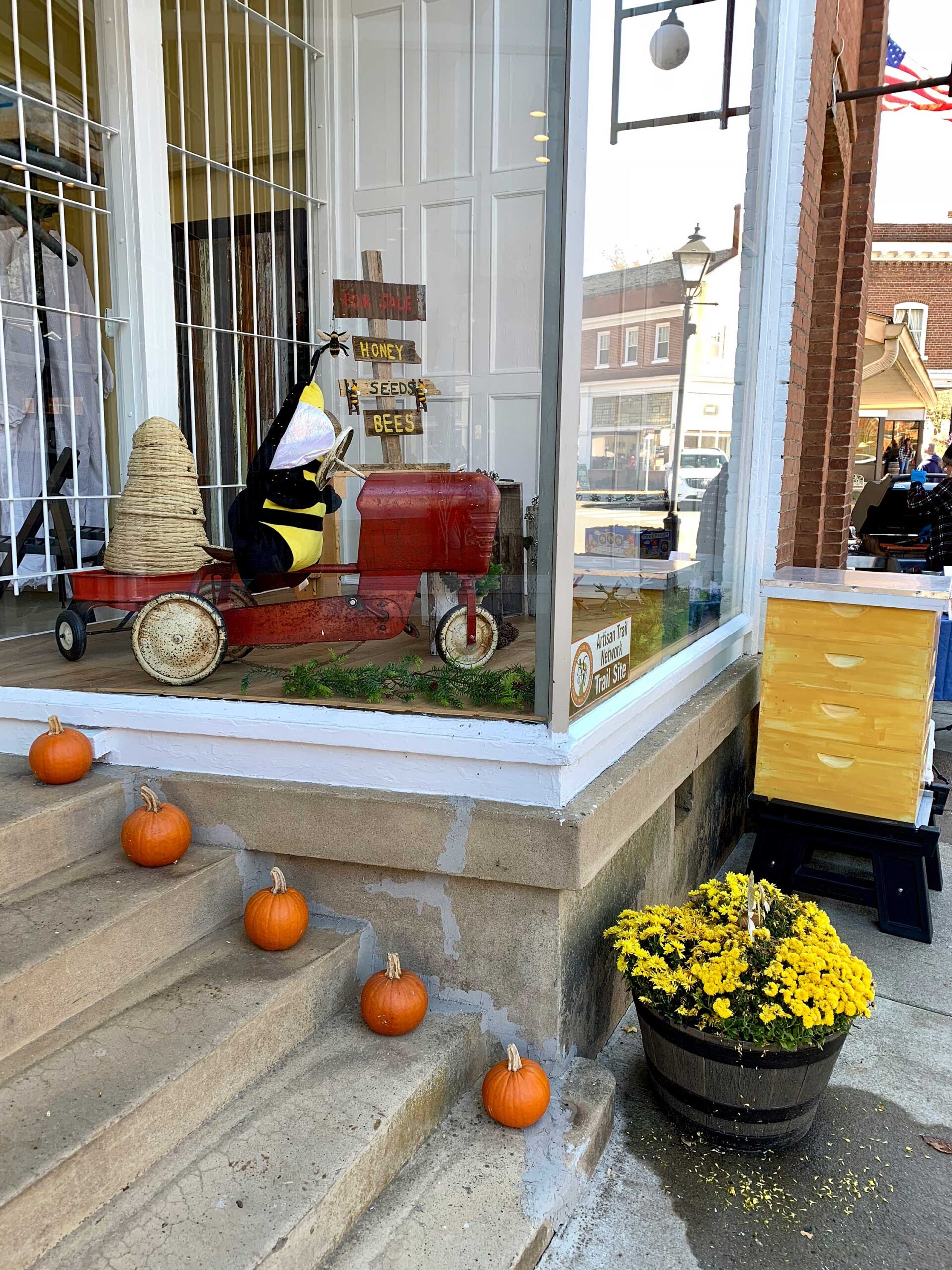
After Coleman’s closed for business, the building’s downstairs remained vacant for a while. When negotiations were completed with a prospective new tenant and a great deal of interior renovation was completed, the Scottsville Supply Company, a business that serves those interested in beekeeping and a source for associated supplies and equipment related to beekeeping, relocated from their location on Valley Street to the Masonic Building occupying the vacant first floor.
In June of 2019, Dimitri Hasson and Lucas RVP V, LLC, having purchased property on East Main Street, the former bus depot, another Scottsville site of historic importance, appeared before town council with a proposal. They would remodel and improve the structure, and it would become a mixed use development that would consist of rental and retail. The town approved the request, and work is currently ongoing.
As with any aging structure, maintenance issues continue to be both unavoidable and costly. When you have a building over a hundred years old this is an inevitable fact. And, with fewer people joining civic and service , revenue that can be used for maintenance is hard to find.
Hasson and Lucas have basically “come to the rescue” and purchased the building. A hundred year old building having only its second owner is most likely a real estate oddity. Brian Lafontaine, a member of Lodge 45, while not going into details, said the arrangement was “really in the best interest of everyone involved.” The first floor tenant will continue to occupy that space, and Lodge 45 will continue to have their space on the second floor.
The next time you stroll down Valley Street or Main Street or you pass one of Scottsville’s historic residences, with a little imagination you might visualize one of the Jeffersons, Teddy Roosevelt, or some other historical figure going in or coming out of one of the buildings you are passing. The Masonic Building has seen a lot. And, with a new lease on life is sure to see much more!
In the February 21, 2020, edition of the Scottsville Monthly, Ron Smith authored the following article about the current status of this Masonic Lodge building in 2020:
– o • 0 • o –
Scottsville’s Masonic Building Sold! By Ron Smith, Correspondent
The cornerstone reads 1914. The building’s architecture is similar to many buildings from that time period found around the country. This Scottsville building has been the meeting place of Scottsville Masonic Lodge No. 45 since its construction. And, it’s only the third location the lodge has called home since being chartered by the Grand Lodge of Virginia on December 17, 1851.
The Beal Building at the corner of Valley and Bird Streets was the social hub of Scottsville in the town’s early days. It was large enough to accommodate a sizeable number of persons for meeting, a dance, or some other social event. Being referred to as Beals’ Hall, the Lodge met regularly on the second floor.
In 1880, Lodge No. 45 moved to a private residence on Valley Street and actually purchaseded the second floor of that structure. In a 2005 Scottsville Monthly article by Ruth Klippstein, Scottsville’s former mayor, Raymon Thacker, related how his family “lived on the first floor of this home when they first moved to Scottsville before moving to a home of their own. In 1913, the home on Valley Street would become the residence of noted Scottsville physician, Dr. Luther Randolph Stinson.
In 1914, Lodge No. 45 purchased a parcel of land on Main Street for $250 dollars. With a loan from the town of $4,000, the Lodge was into what was expected to be a $6,000 project. On June 17, 1914, the cornerstone was laid after a parade and speeches by Masonic dignitaries including a past Grand Master of the Lodge of Virginia.
D. Wiley Anderson was a well-known architect. He had been responsible for a number of large projects in Richmond and had relocated to Scottsville in 1913. While it is not known for sure who the architect for the project was, it is suspected that it was Anderson. What is known for sure is that the contractor for the project was the Scottsville firm of Paulett and Grove. Anderson would later design Scottsville’s Victory Hall.
The National Register of Historic Places describes the building as “Modified Edwardian” based on the pattern in which the bricks are laid, the flat roof, and the window placement. Metal ceiling tiles had become popular in 1885, and this building incorporated them as it was a more economical way to replicate pricier plaster designs then favored in European architecture.
The building has survived a number of floods caused by Hurricane Camille in 1969 and Agnes in 1972. The hurricanes wreaked a lot of damage to the town, and some to the building. There have been some structural changes over the years mostly in areas not seen by the public. The Masonic Lodge has continued to occupy the second floor while the first floor has seen three different occupants.
After completion of the building, the Scottsville Post Office, under the guidance of Postmaster Sam Gault, occupied the first floor until a new post office was built and opened in 1964. Coleman’s, an establishment offering hunting, fishing, and other outdoor related merchandise and services, followed the post office as a tenant until that business closed a few years ago. Now the space is occupied by the Scottsville Supply Company which offers beekeeping supplies, information, and instruction. In the 2005 article, Thacker stated, “We used the rental income not for profit, but to help with the routine maintenance of the building.”
Like a lot of organizations, the Masonic Order has seen a decline in membership. Members get older, and due to health issues or death, membership declines. And many younger individuals do not have either the time or the interest in becoming a part of a service or fraternal organization. Buildings get older, and maintenance costs increase. And with older buildings, maintenance issues arise more frequently.
Last year, Lucas RVP V. LLC and Dimitri Hasson purchased the property on East Main Street that had once been the Scottsville Bus Company. Plans for that property include mixed use, rental, business, retail, and a restaurant. The Town of Scottsville approved the plans, and work is currently progressing on the site.
This company has now made it possible for Masonic Lodge No. 45 to keep their home so to speak as they have worked out an agreement with the Lodge and purchased the Masonic Building. According to Lodge member, Brian LaFontaine, it was “a deal that really made us (the Lodge) happy. We will be able under the agreement to continue to use the upstairs as our meeting place for the foreseeable future.”
One of the great things about Scottsville is its history. Not just the fact that many notables walked the streets, came through town, or lived here. It is the historical significance of the buildings we see every day. Next time you walk down Valley Street or through an adjacent neighborhood, just look around and think about what or who was there before you.
– o • 0 • o –
On January 25, 2021, Evelyn Edson, President of Scottsville Museum, sent the following history email to our readers:
The Masons Are Moving! By Evelyn Edson
The Scottsville Lodge of the Ancient, Free and Accepted Masons has sold its building on Main Street and is moving its meetings to the Taylor Masonic Lodge in Centenary, VA. With only thirty members left in Scottsville, maintaining the building became just too costly. We joined Brian LaFontaine last week as he was cleaning out over a hundred years of documents, furniture, and pictures and contents of a large antique safe.
Freemasonry has its roots in the stonemasons’ guilds of the Middle Ages. In the 18th century, it developed an interesting life of its own, dedicated to Enlightenment ideals such as liberty, equality, religious toleration, and thirst for knowledge. The first Masonic Lodge was opened in America in the 1730s, and in 1755 the young George Washington joined the order. Because of its secret rituals, the Masonic order became a target for conspiracy theories. During the French revolution, the Masons were thought to be plotting the downfall of the monarchy, and in America, they were suspect for their revolutionary views. In 1828, a short-lived Anti-Masonic Party was organized to combat a supposed conspiracy.
William F. Paulette (right) stands with two Masons as they prepare to install the cornerstone of the Scottsville Lodge #45 on June 17, 1914.
The first Scottsville lodge was established in 1851, and over the years many prominent citizens (mayors, ministers, and businessmen) have been members, including Sam Gault, Raymon Thacker, C.R. Dorrier, T.E. Bruce, Thomas Staples Martin, and Dr. Ruebin Stinson. The Lodge met in several places in town, and finally laid the cornerstone of its own building in 1914. The Masons met upstairs, and the street floor was rented to the Post Office. In 1951, the Lodge celebrated its 100th anniversary, “A Century of Faith, Hope, and Charity.”
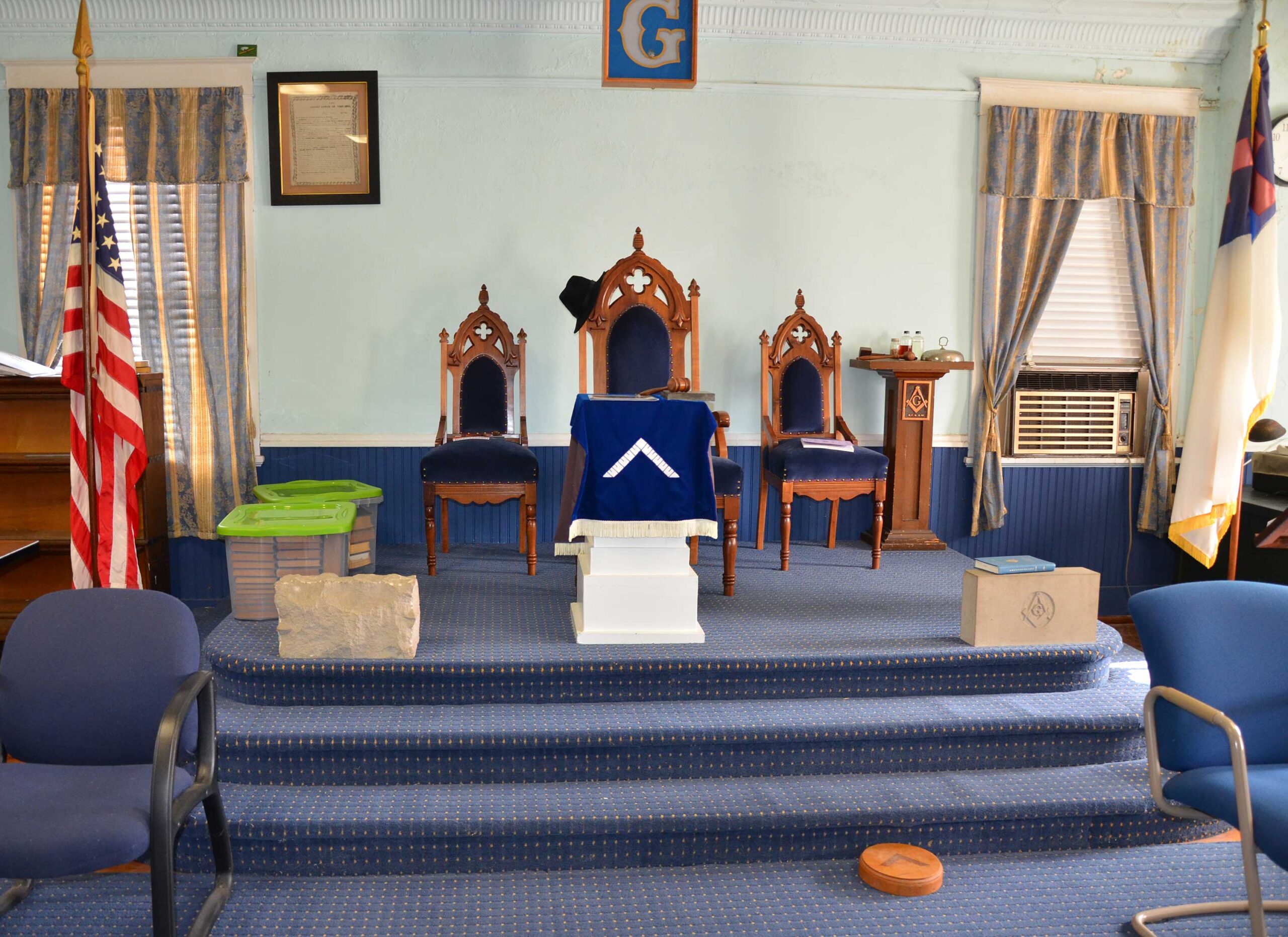
Scottsville Lodge 45’s dais on upper floor of Masonic building
Above is the Scottsville Lodge 45 dais on the upper floor of the building. At the left of the dais is an unpolished ashlar stone, and at the right is a polished stone.
Brian showed us two stones on either side on the dais: one a roughcut ashlar and the other a polished stone with the masonic emblem on it; see above photo. They represent, he said, the rough cut of a new member and his polished state after years of membership. Membership is for men only, but there is an auxiliary order for women, the Daughters of the Eastern Star. Prince Hall, a Masonic Lodge for African-American men, was established in Boston in 1784 as the lodges were then segregated, but local chapters are now open to men of all races.
The Shriners, an upper level of the Masonic order, we know from their zipping around in little cars at Scottsville parades, have established and maintain children’s hospitals throughout the U.S. Local honey-lovers will be pleased to hear that Taylor Schmidt, the purchaser of the Masonic building, intends to continue the lease of Scottsville Supply (the ‘Bee Store’) on the ground floor.
References: A. Scottsville Lodge #45 AF & AM history review for their centennial celebration on December 7, 1951; see www.lehansales.com/masons/scottsville.htm B. Scottsville Sun, Thursday, November 29, 1951, p. 1. Courtesy of Scottsville Museum, Scottsville, VA. C. Https://scottsvillemasoniclodge45.com D. “Scottsville’s Masonic Lodge Building Sold!”, by Ron Smith; Scottsville Monthly, February 21, 2020 – March 19, 2020, pp. 12-13; Valley Publishing Co., Palmyra, VA.
The next leg turns out to be the most interesting yet. Another long one at nearly 30 miles. It will lead across the St. John’s River past a military shipyard, then into a series of mostly wild and winding linked creeks through broad empty marshes, around small remote islands, across Nassau Sound, and finally up the west side of Amelia Island, where we hope to meet with the family of a friend for dinner. If we can get there in time.
The tidal current is for now in our favor, so we quickly finish breakfast and get underway to take advantage of it. One of the things you soon learn on these waterways is to pay close attention to the tides. Not so much to have water under the keel (we’re a small boat), but to ride the currents like sledding hills. Timing of your runs can make the difference between four hours of easy travel, or seven slow hours all uphill. If you time it right, it’s all downhill both ways.
We want to ride the outgoing tide to the St. John’s River, then push across into the marshes on the other side, up to “the head of tide”. This is like the peak of the next hill, where water flows inland around islands from two directions meets. The opposing currents butt heads there and cancel each other out. From there we ride down the other side, then catch the next incoming tide up the Nassau River and along the length of Amelia. At least, that’s the plan.
At the first bridge we can already see the effect. The outgoing current almost doubles our speed.
As we approach the St. John’s, though, we have a steep uphill climb through a tricky stretch of water. All the water coming down the river is against us. And the ICW has been dredged and rerouted, likely to keep traffic away from the shipyard. It now runs along a hardened artificial shoreline to port, with submerged rocks on starboard.
We barely make 2 knots against the current. There’s some concern we may not have enough power to keep us off the rocks. On the radio we hear Coast Guard reports of a boat aground nearby, which is not at all reassuring.
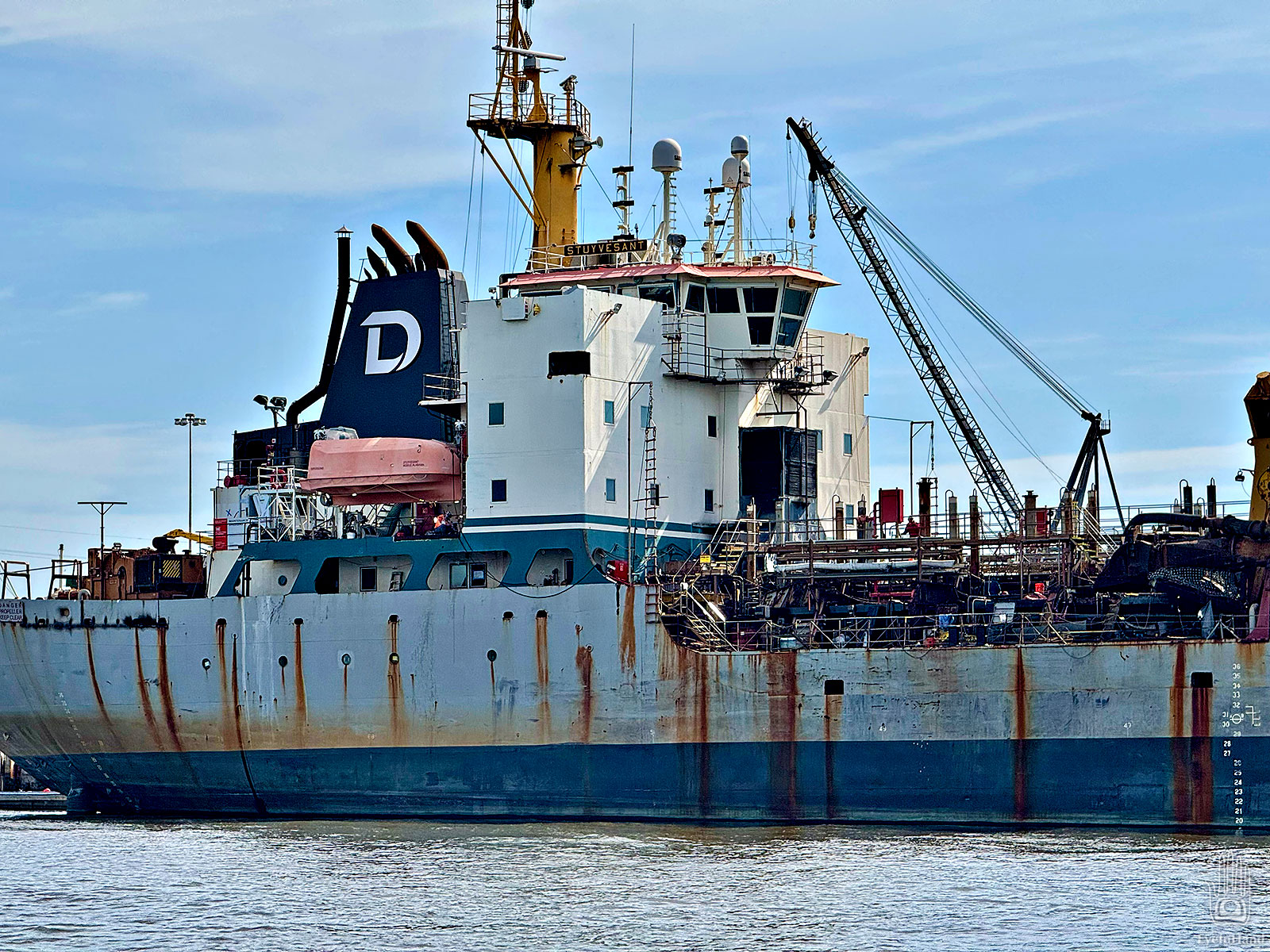
We slog on, and run high past the entrance to Sisters Creek on the opposite shore to avoid getting swept down into the shipyard as we cross. Then make the turn across the river and slip into the mouth of the creek, where the current eases immediately. Rising high above us is the rusty hulk of a large bulk carrier. Doug thinks it’s a dredge dumper, made for hauling spoil out to sea, with doors that swing open underneath like railroad coal cars. One man in a hard hat clatters away with a jackhammer and grinder up on the superstructure like he’s firing a machine gun, the only visible worker on board.
Just inside Sisters Creek
Once into Sisters Creek it’s like we’ve entered another world. We can raise sail again and cut the engine. We glide past shore birds and empty islands. A pod of dolphins feeds alongside and follows us. The tide is almost ebbed here, so the channel is shallow and narrow.
At a turn in the creek we pass a large sail cruiser hard aground on the inside of the curve, canted over in the mud. An inflatable dinghy bumps the hull beside it. Maybe the one in the alerts on the radio? If anyone is onboard, they are hiding down below. The name on the boat is “Mad Max”. I bet he’s mad, too.
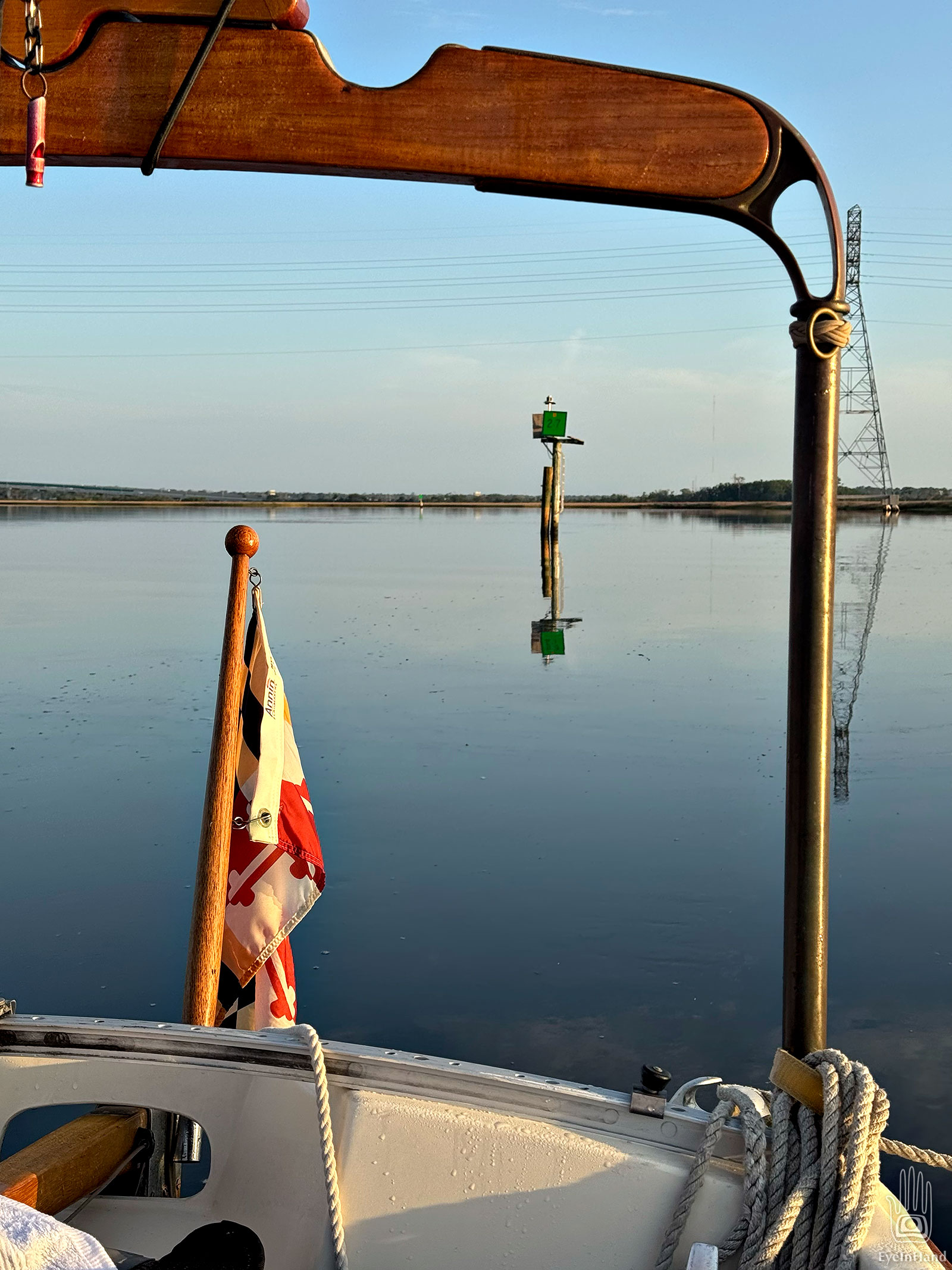
At Nassau Sound we swing out into the wide river. Here we have both wind and incoming tide in our favor, with the southern tip of Amelia Island to starboard. Across the sound we head up the South Amelia River. Manatees do lazy rolls at the surface, and white pelicans glide in sleepy undulating lines over the waves.
Our destination is the far north end at Fernandina Beach – our last stop before we finally exit Florida. (Wahoo!) We have made good time. But Amelia is a long island. We still have 12 miles to go. By late afternoon we lose the wind and tide and fire up the diesel to cover the last few miles.
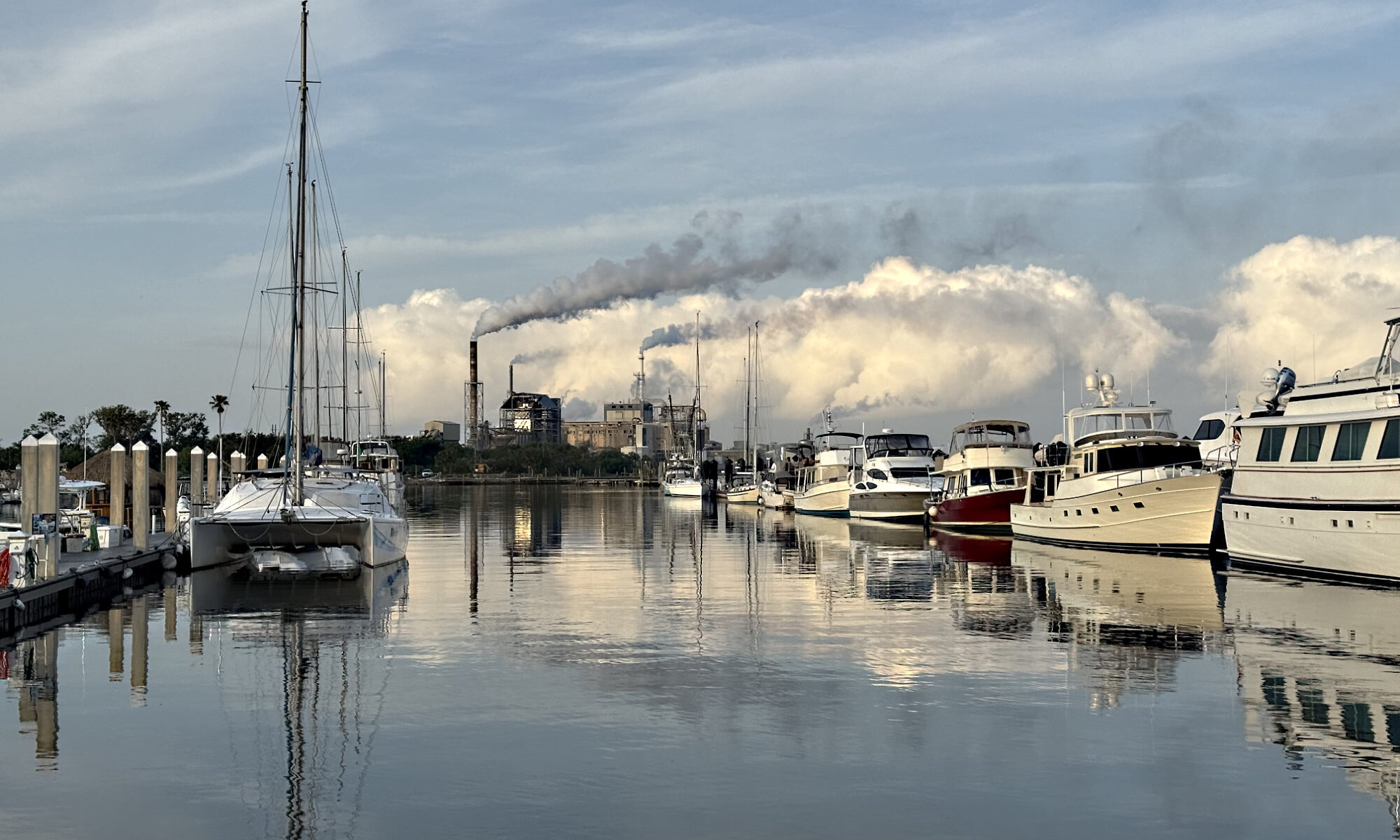
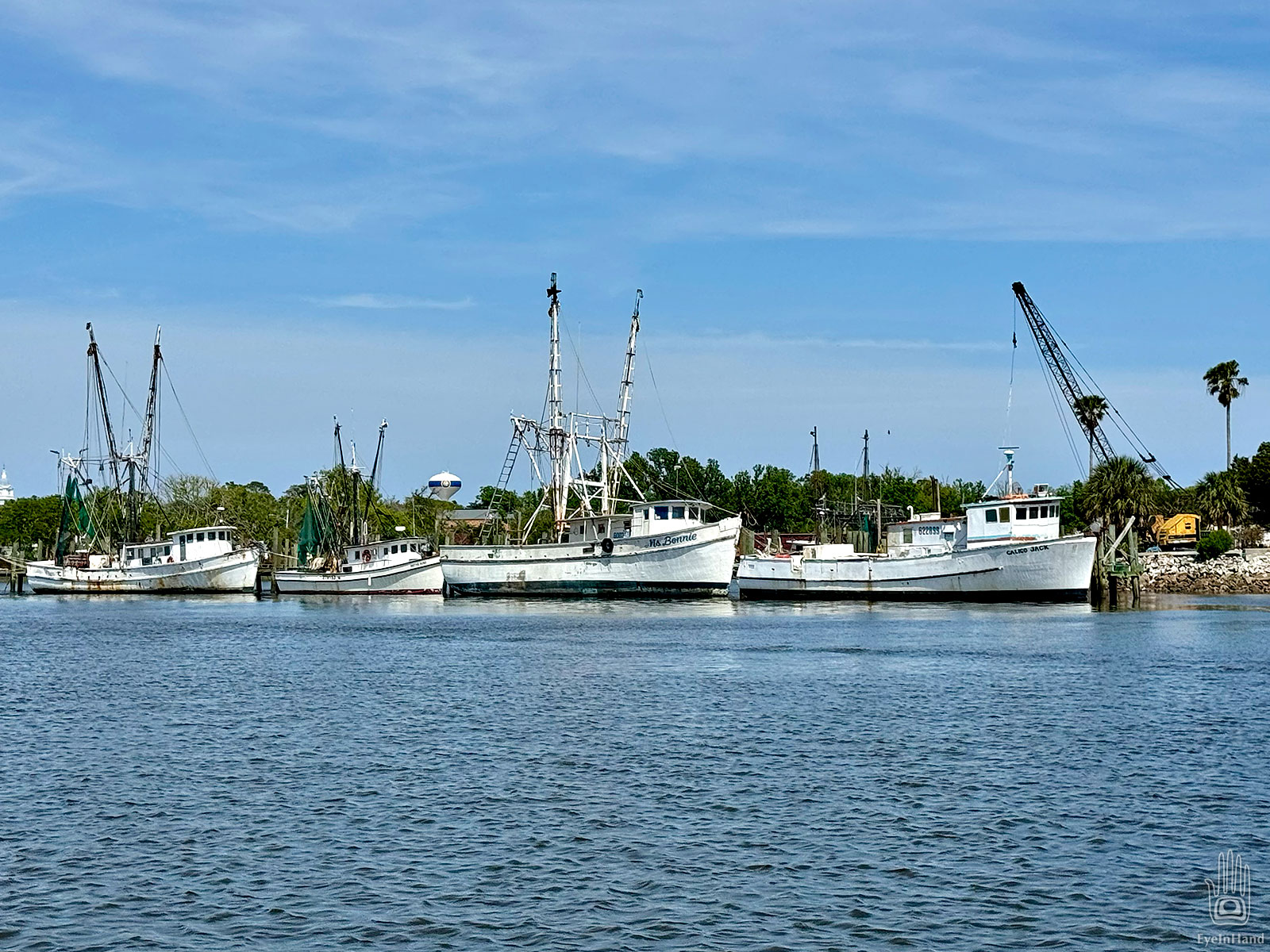
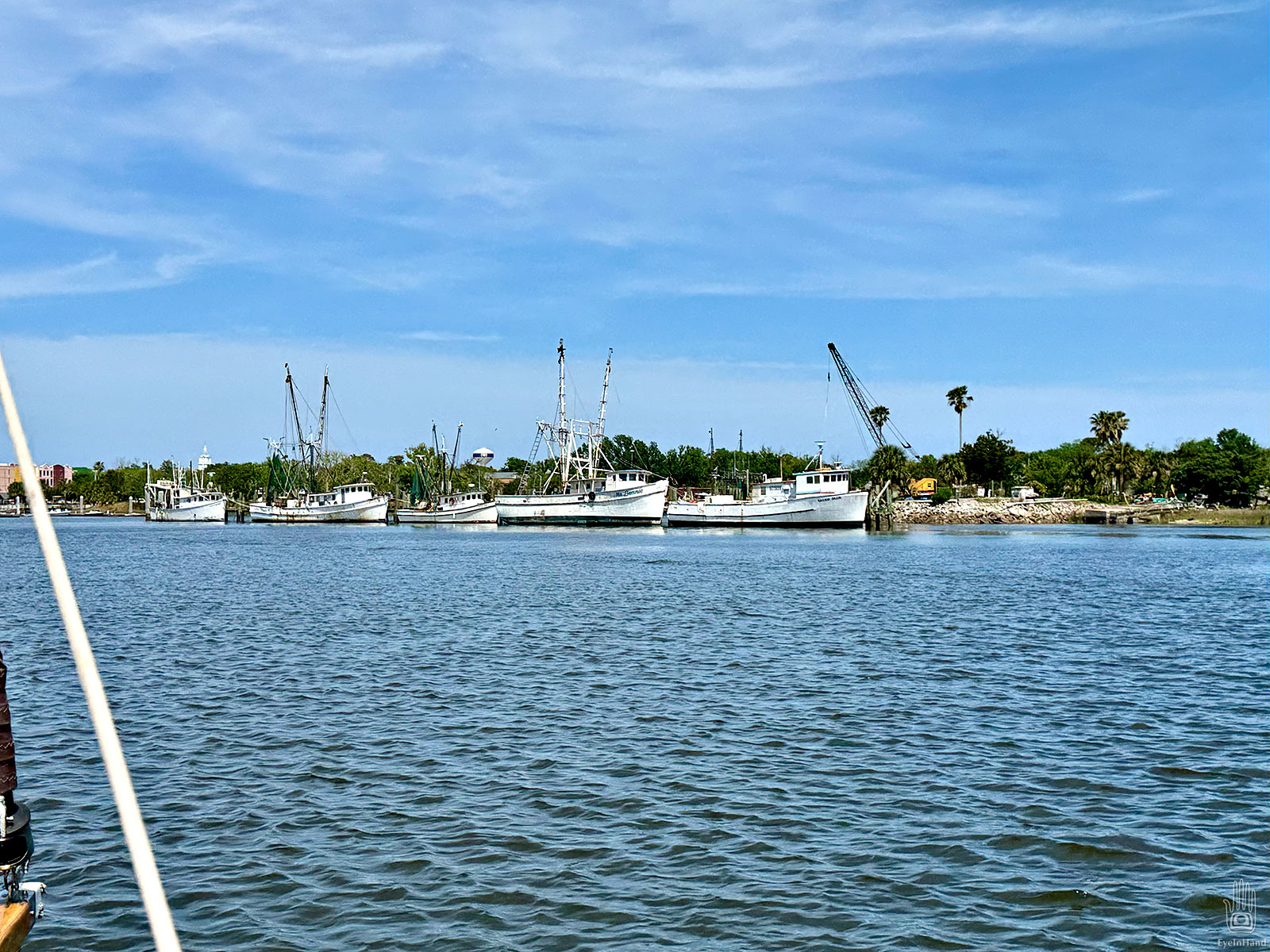
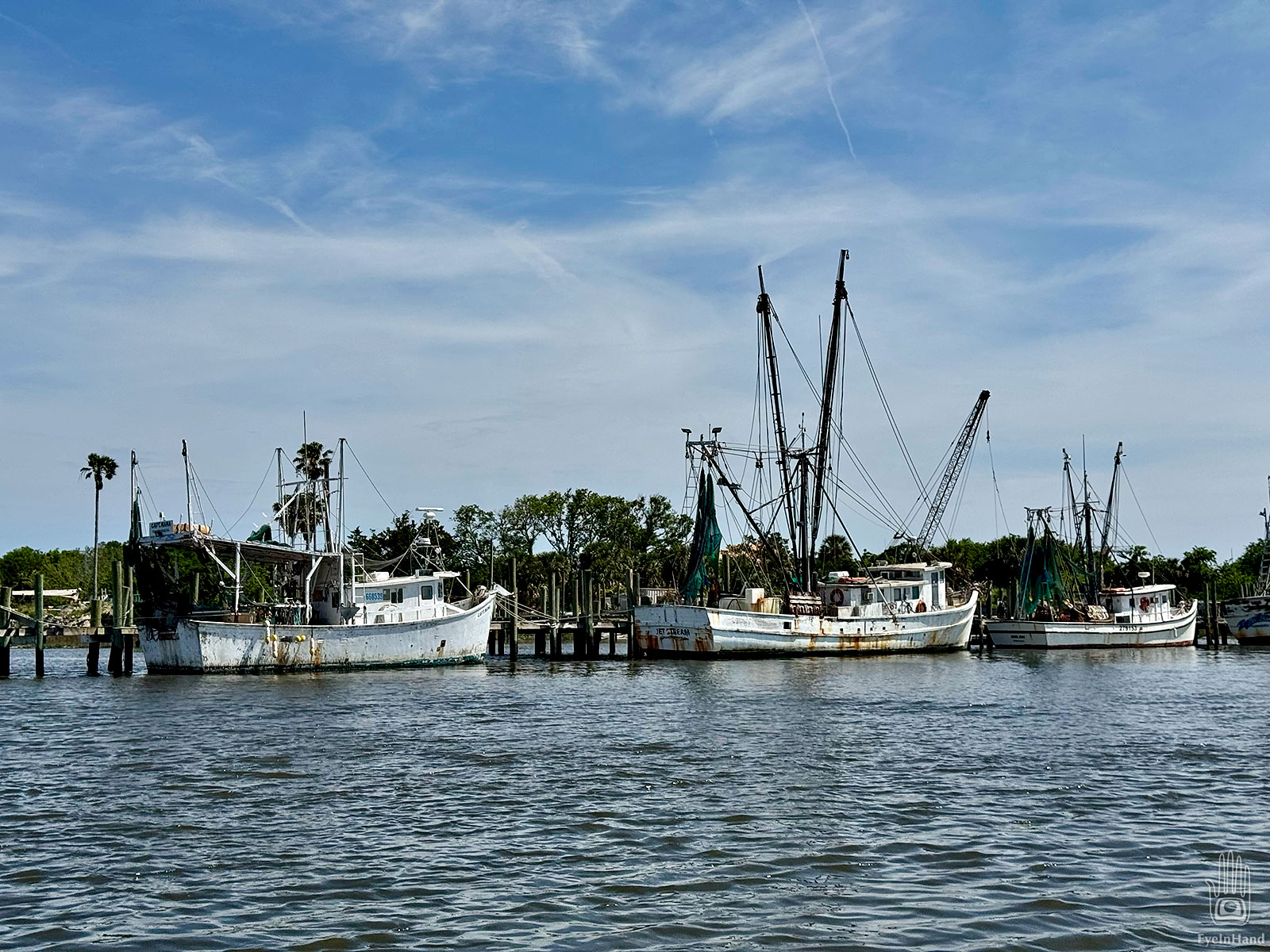
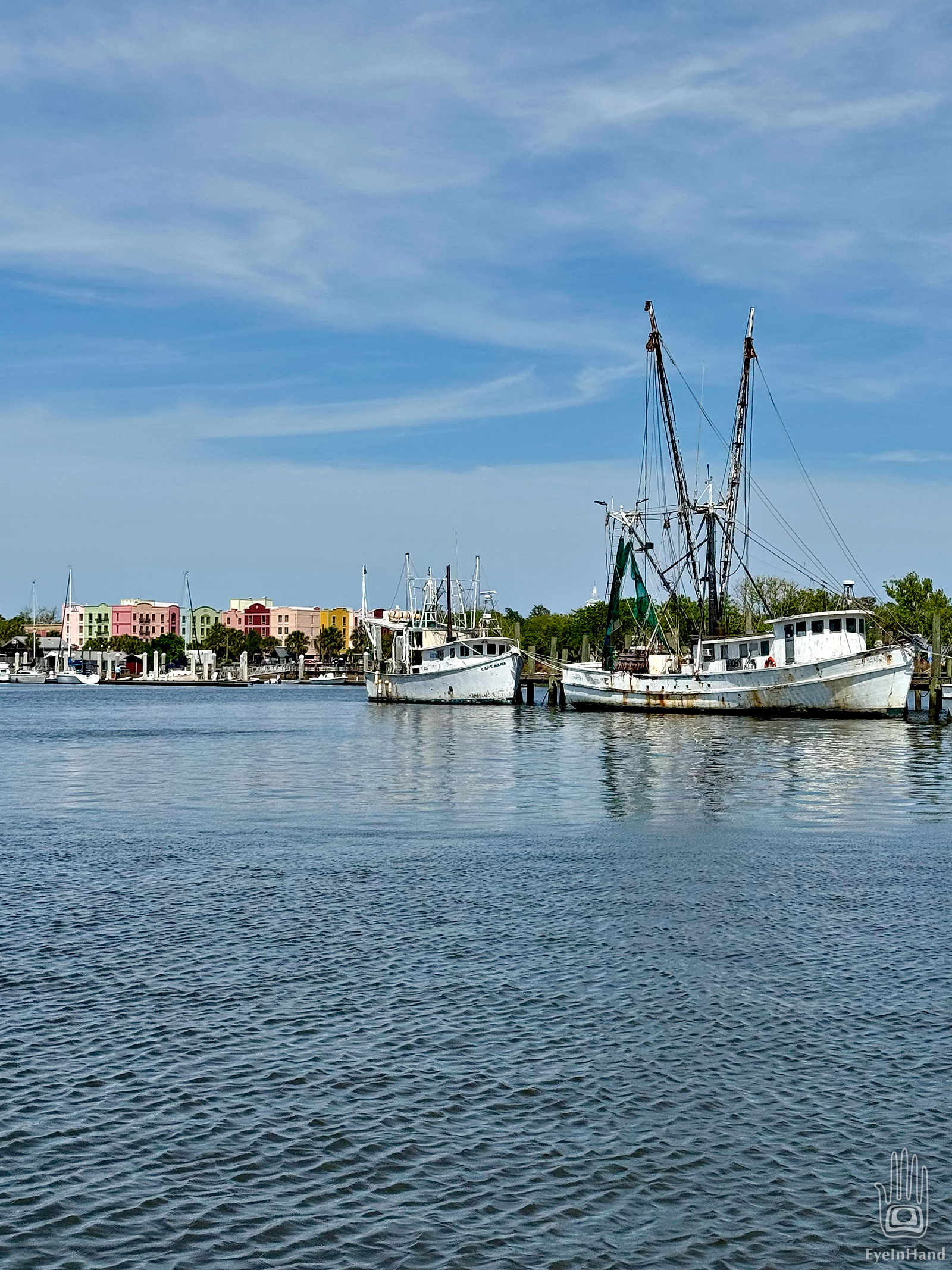
Approaching the harbor we find the first of many surprises. Fernandina Beach is a lovely, very old southern town. But it’s bookended by two very large pulp mills. We could see the first one for miles as we made our way north. Another pod of dolphins is feeding at the surface as we finally pass it just south of town. Beyond that, tied up at a wobbly wharf is a string of shrimp boats that look mostly retired. Fernandina Beach has a long history in the shrimp fishing industry, so maybe these are just here for decoration; a nod to the old days before shrimp was farmed overseas and made local fishing for them unprofitable.
The harbor is large and welcoming, though, and mostly full. We get fuel and a slip and much needed showers before walking into town for dinner.
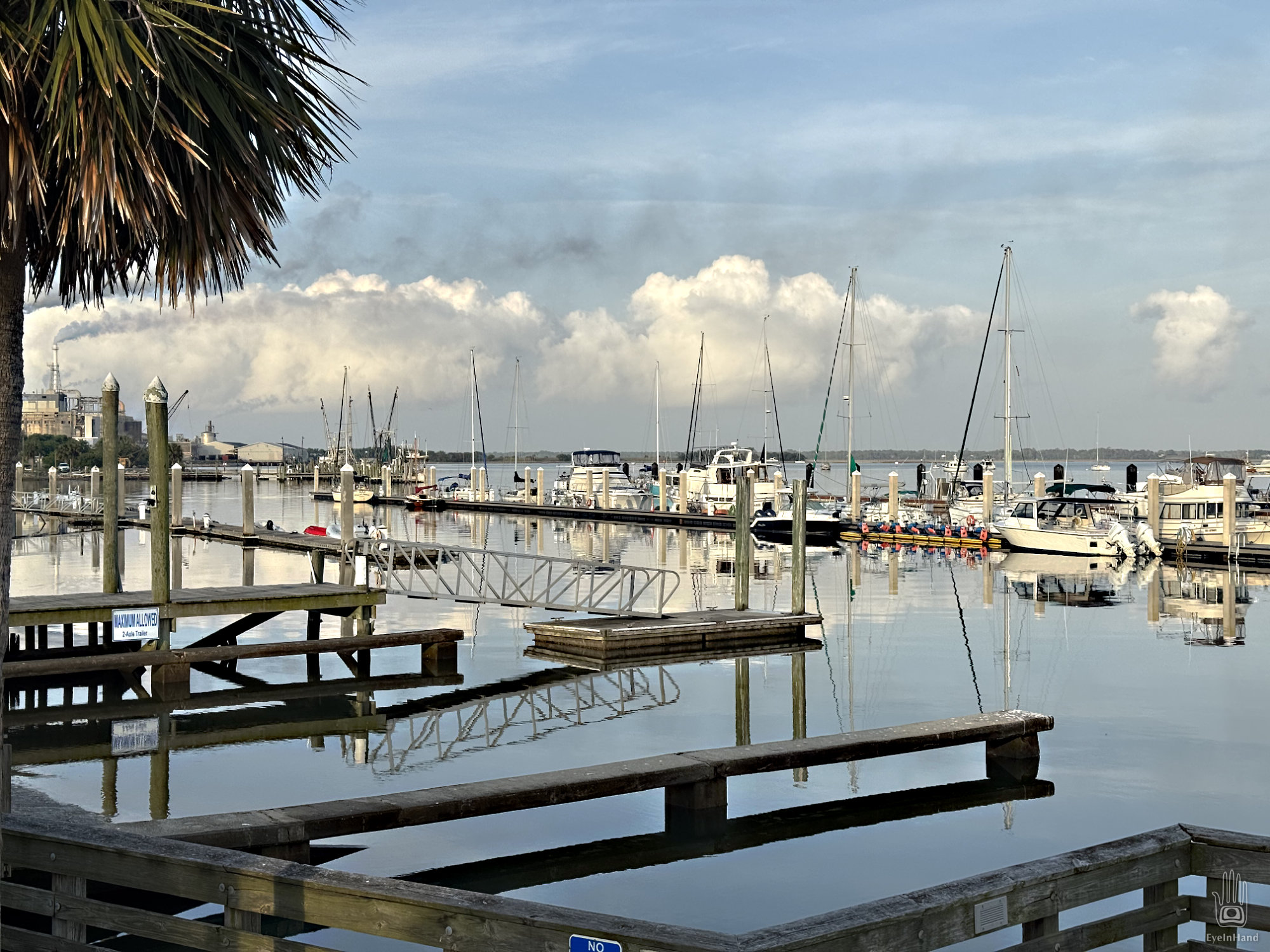
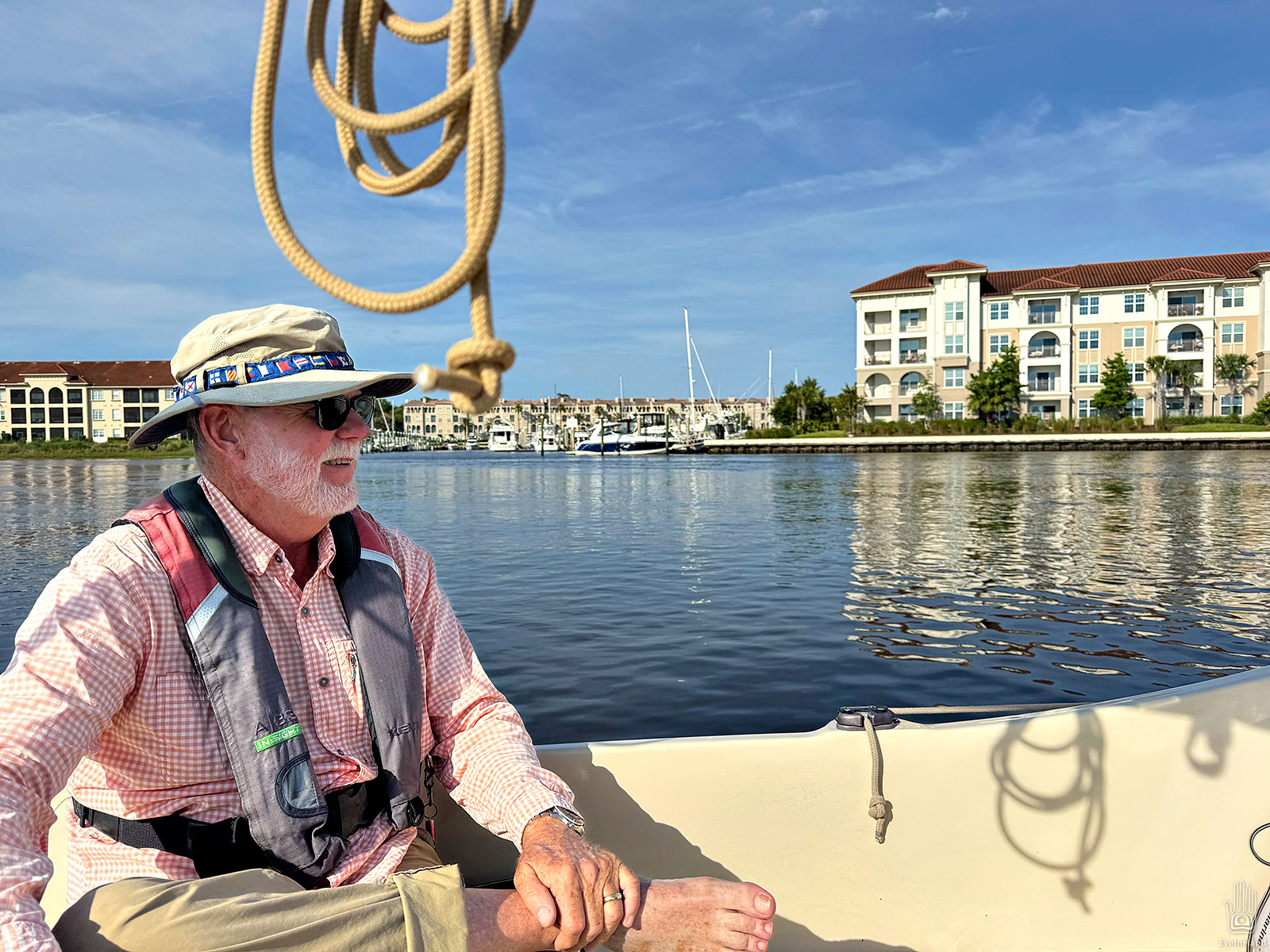
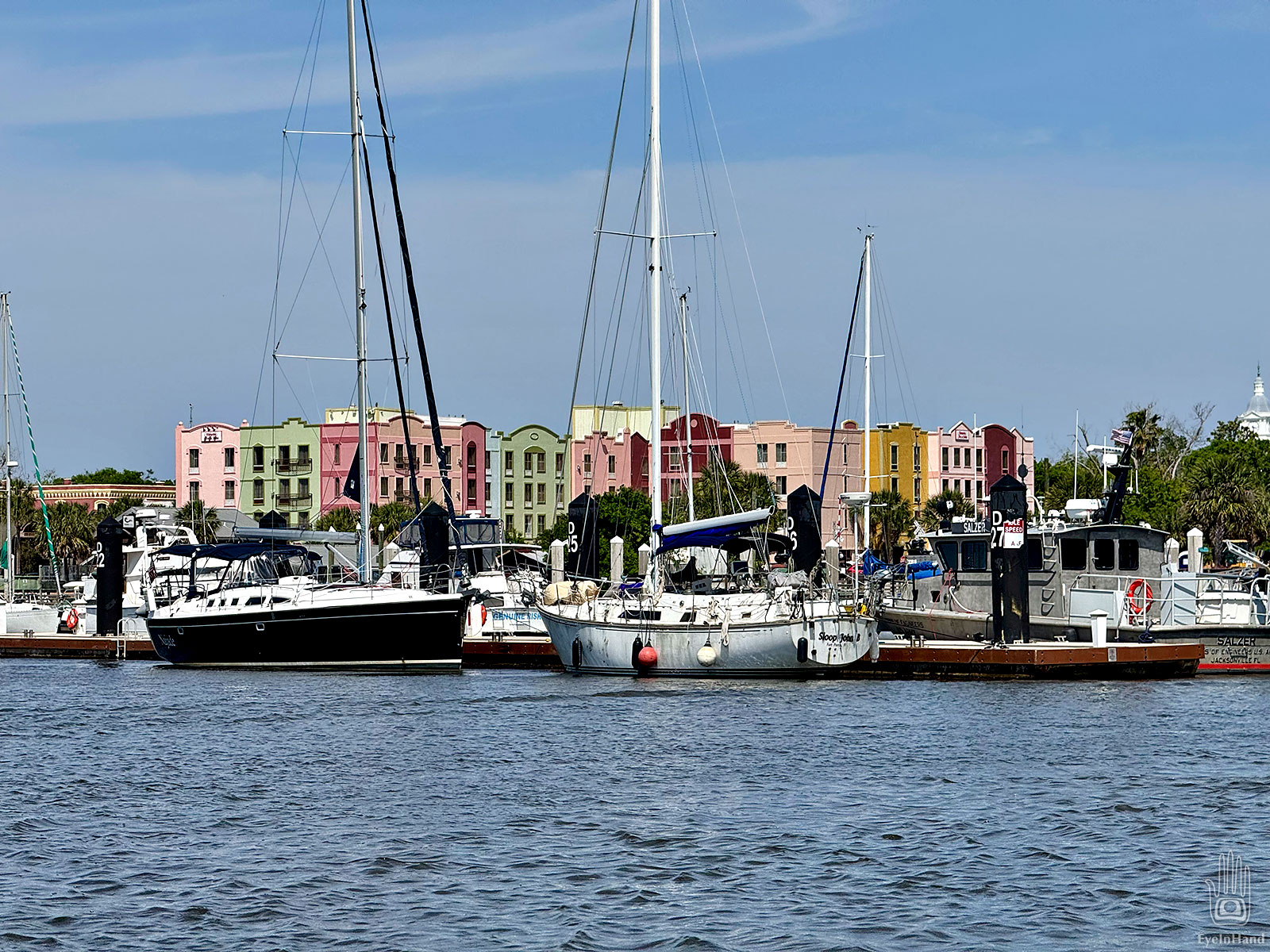
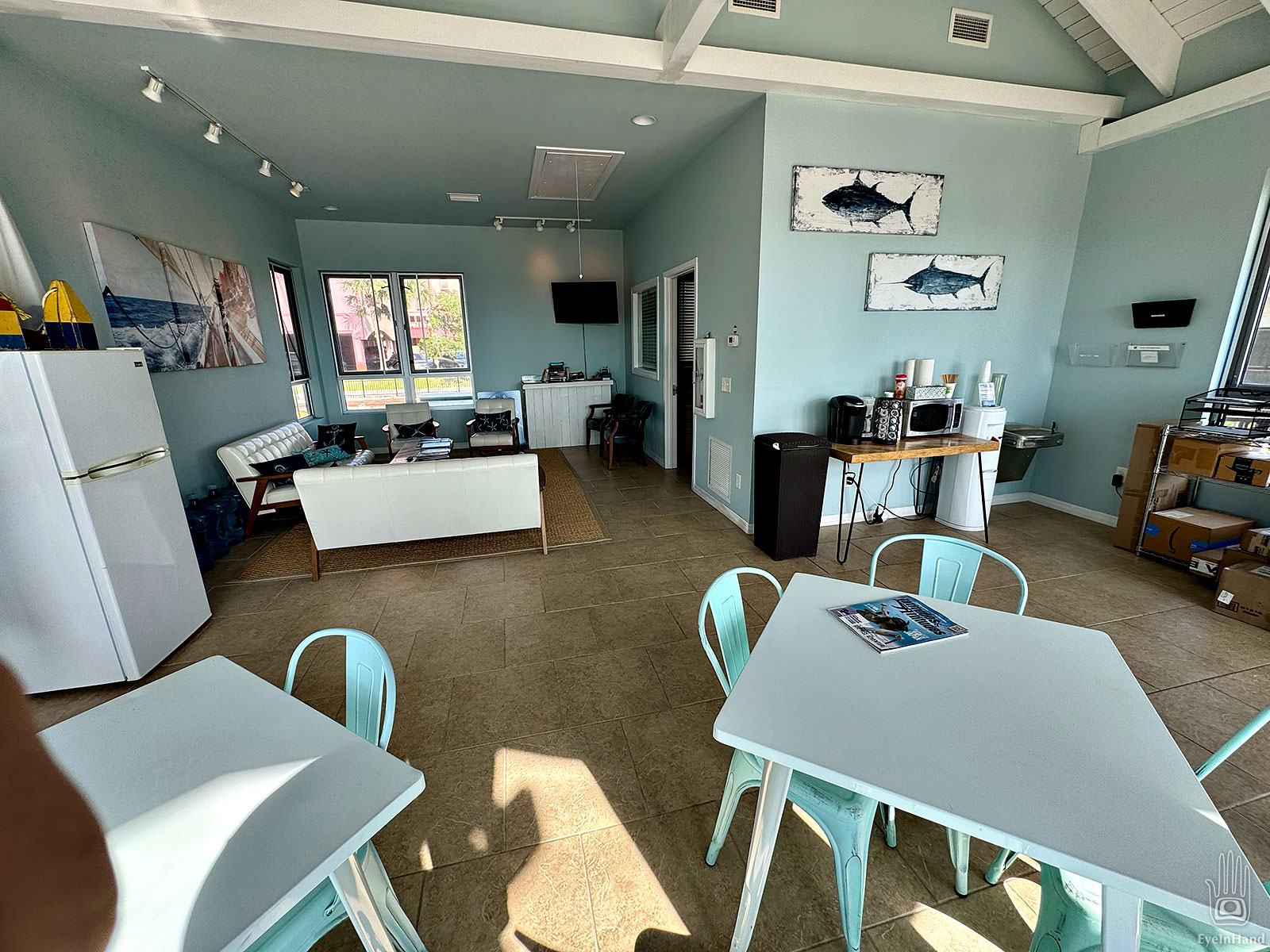
Marina at Fernandina Beach, Amelia IslandCaptain’s Lounge at the marina, complete with showers, wifi, coffee, fridge, and wifi. A+ accommodations.