Modern navigation is a true wonder. Satellite mapping and imagery, GPS, digital charts, crowd-sourced sonar bathymetry, and the shareability of the internet, all make even detailed local knowledge available to anyone. Even with all that, though, reality still imposes limits.
Doug spends many winter nights carefully plotting courses and stopovers using all available tools for the coming season. But even the best information can become stale and outdated before you have a chance to use it. A single storm can change the location of channels and shift shoals overnight. This is especially true in the shallow waters of the southern coast, where sandbars swept by strong tides can snake offshore for 10 miles, and inlets will open and close suddenly in really big storms.
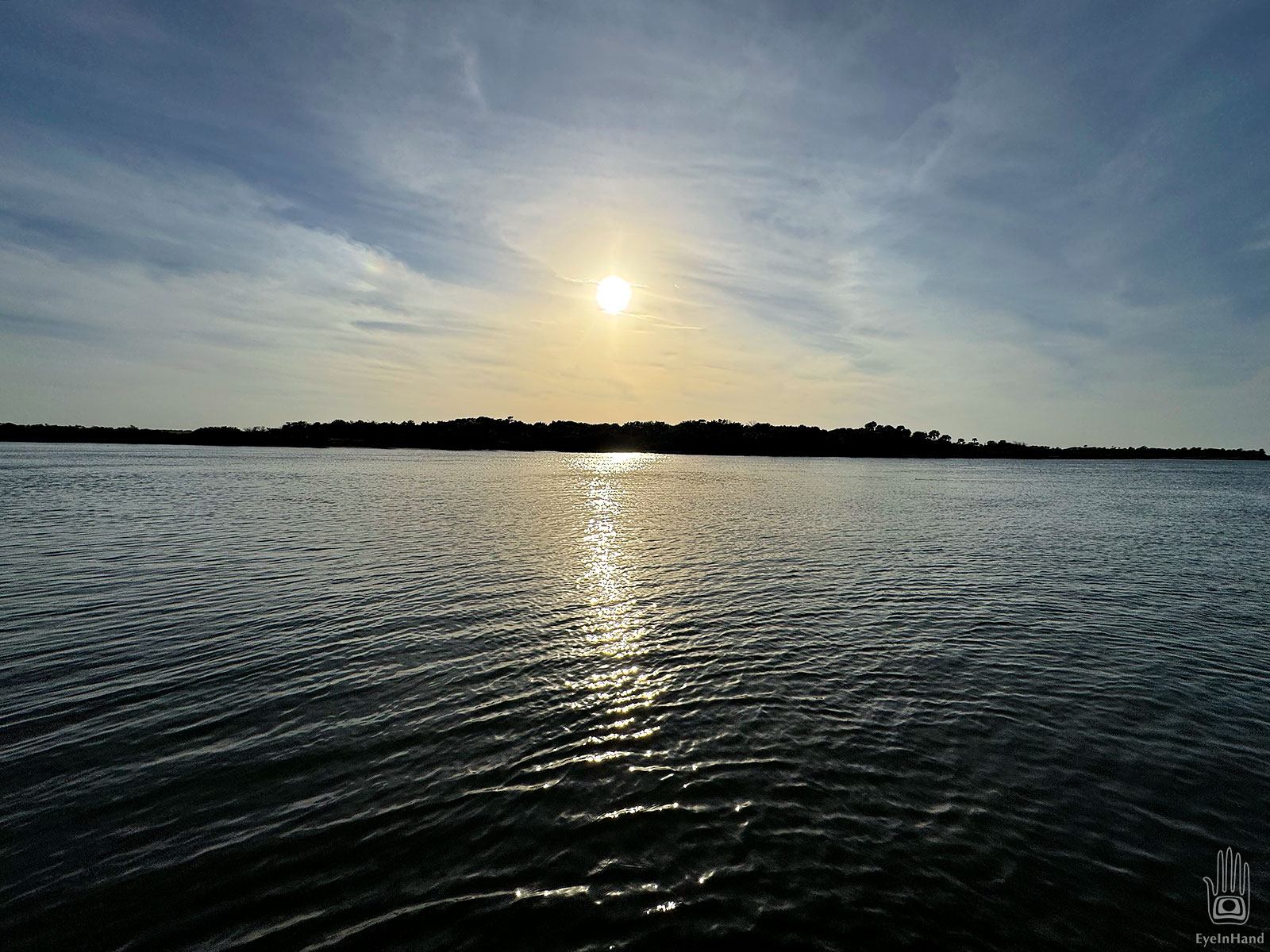
Pellicer Creek beyond the sandbar
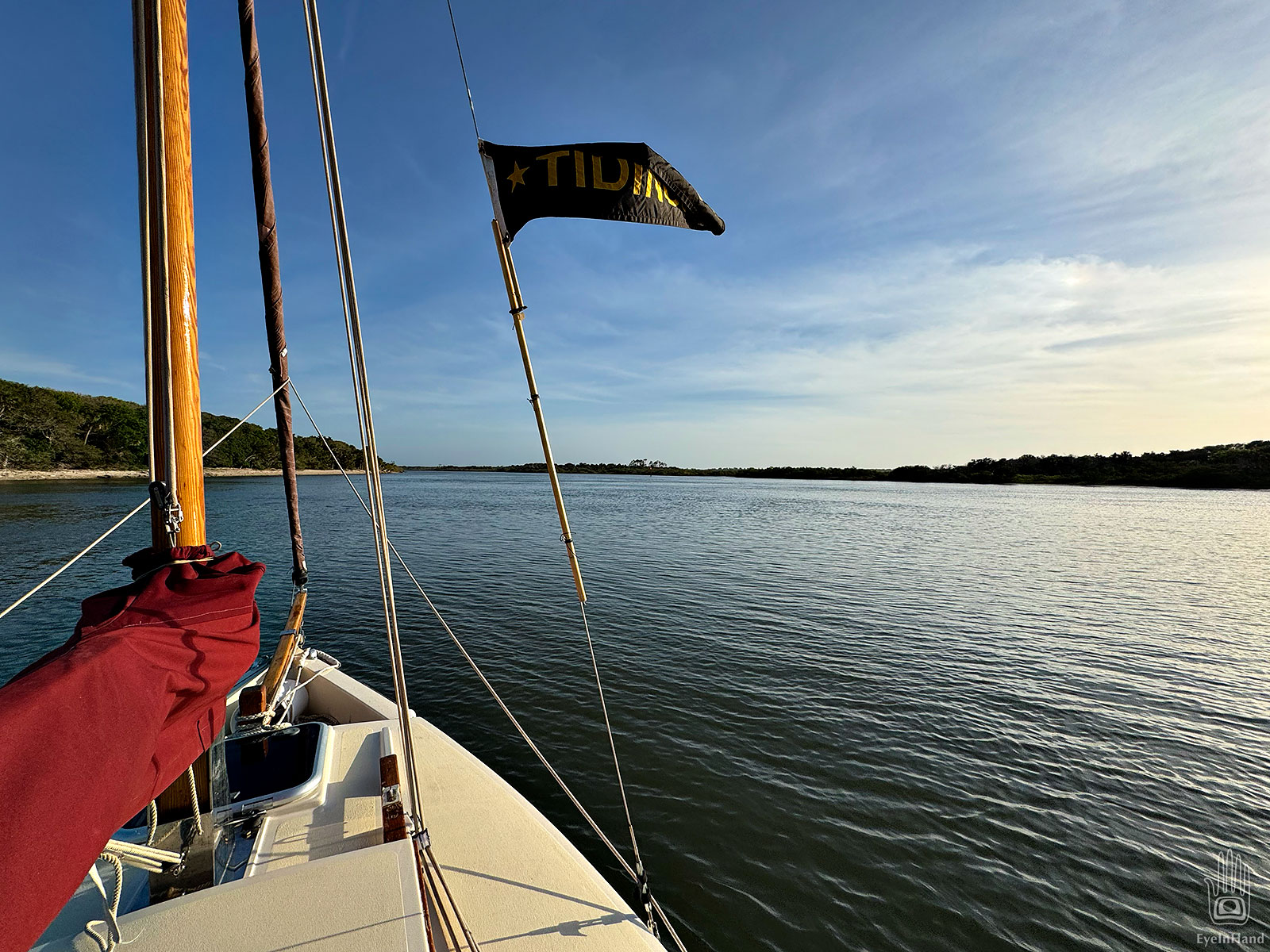
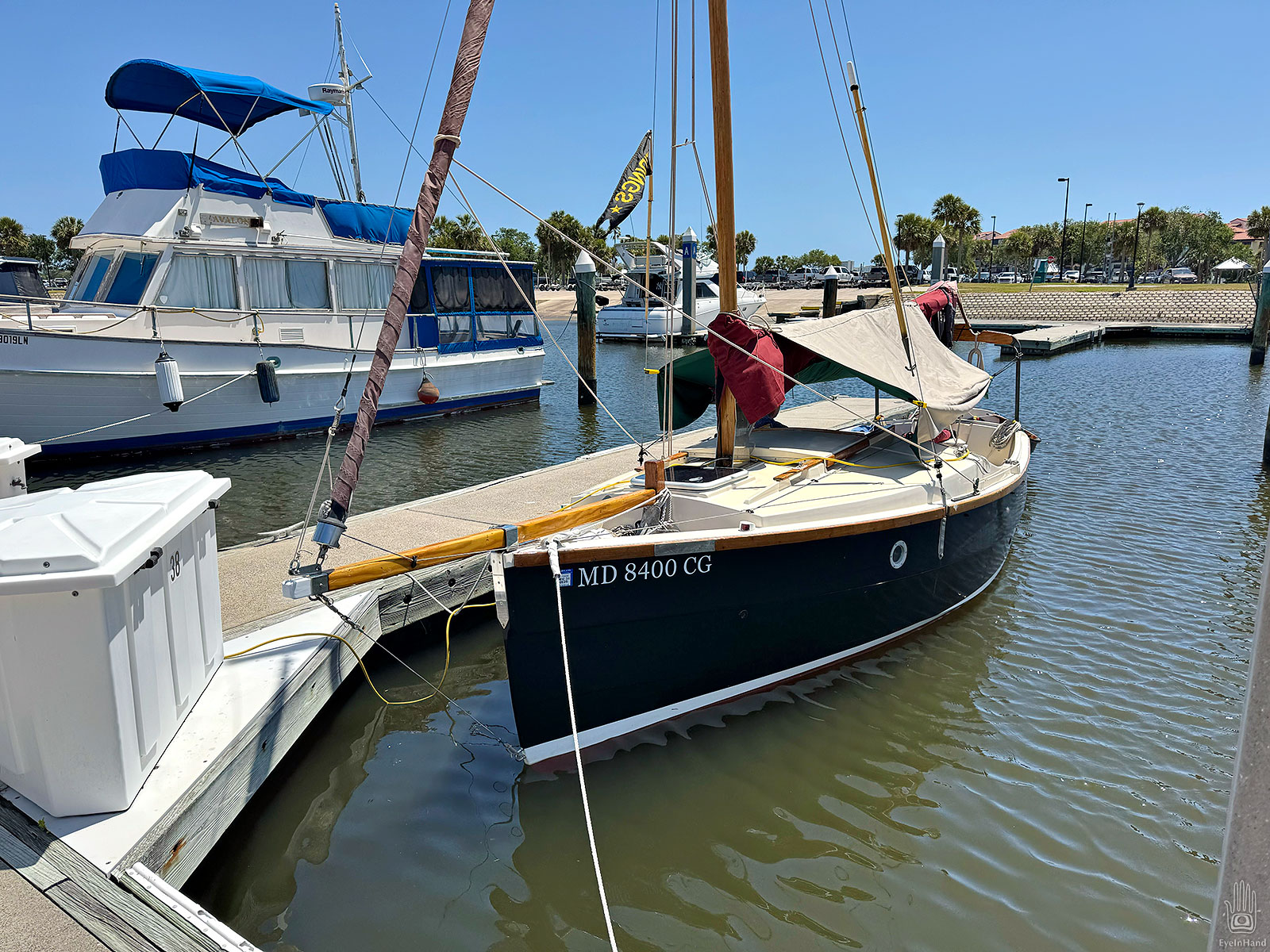
The spot chosen to anchor for the night is a side creek just outside the ditch, just inside the Princess Place Preserve, where a string of small islands separate the ICW from a broad expanse of open water called Pellicer Creek.
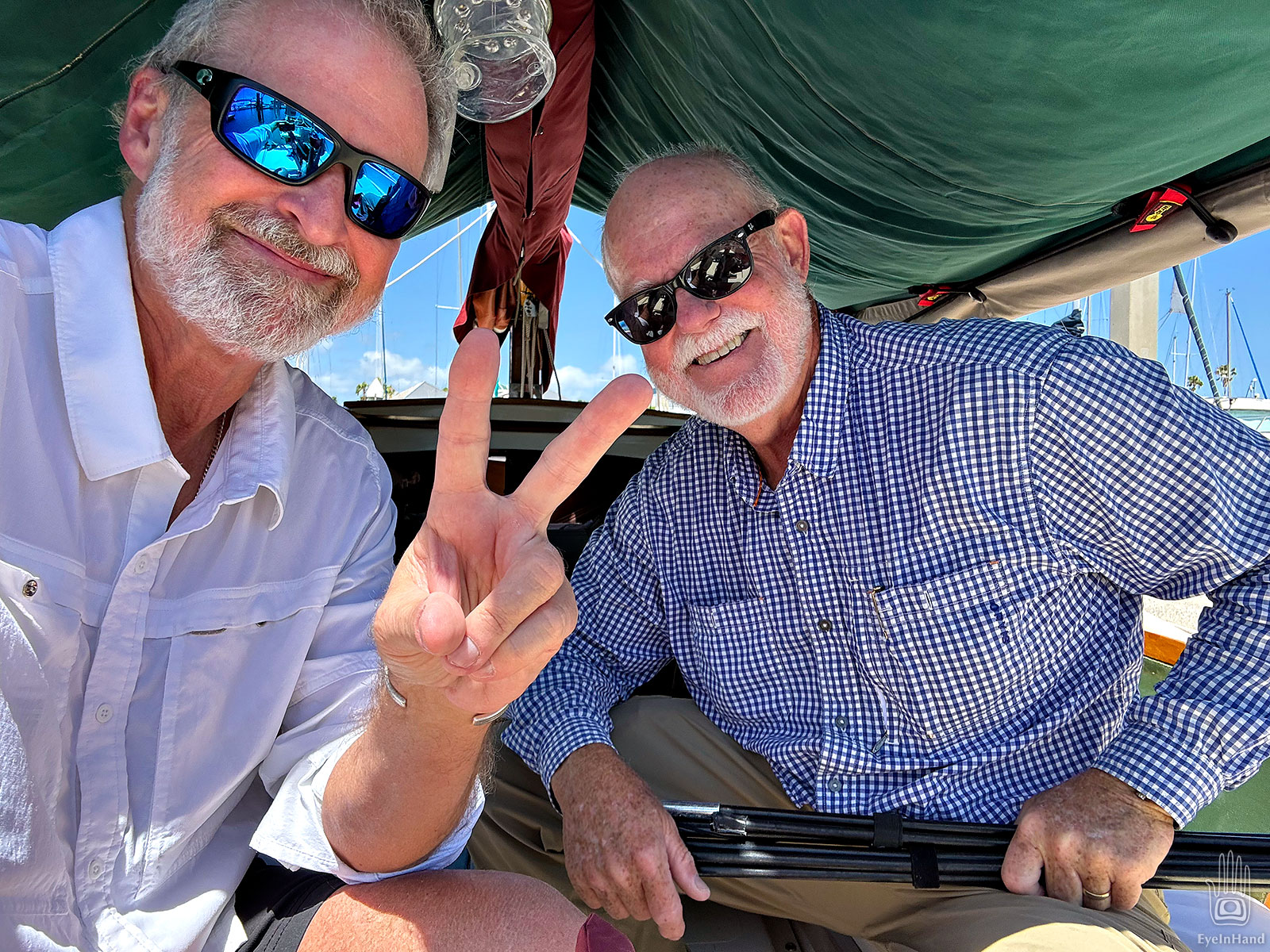
Notes in the chart book from other boaters recommend it as a good anchorage, with 6 feet of water outside the channel. Tidings only draws 2 feet with the board up. Easy peezy. But just to be safe, Doug lowers the motor to idle, reducing our speed to around 1 knot. He has me steer between two islands for the open water while he watches the depthfinder.
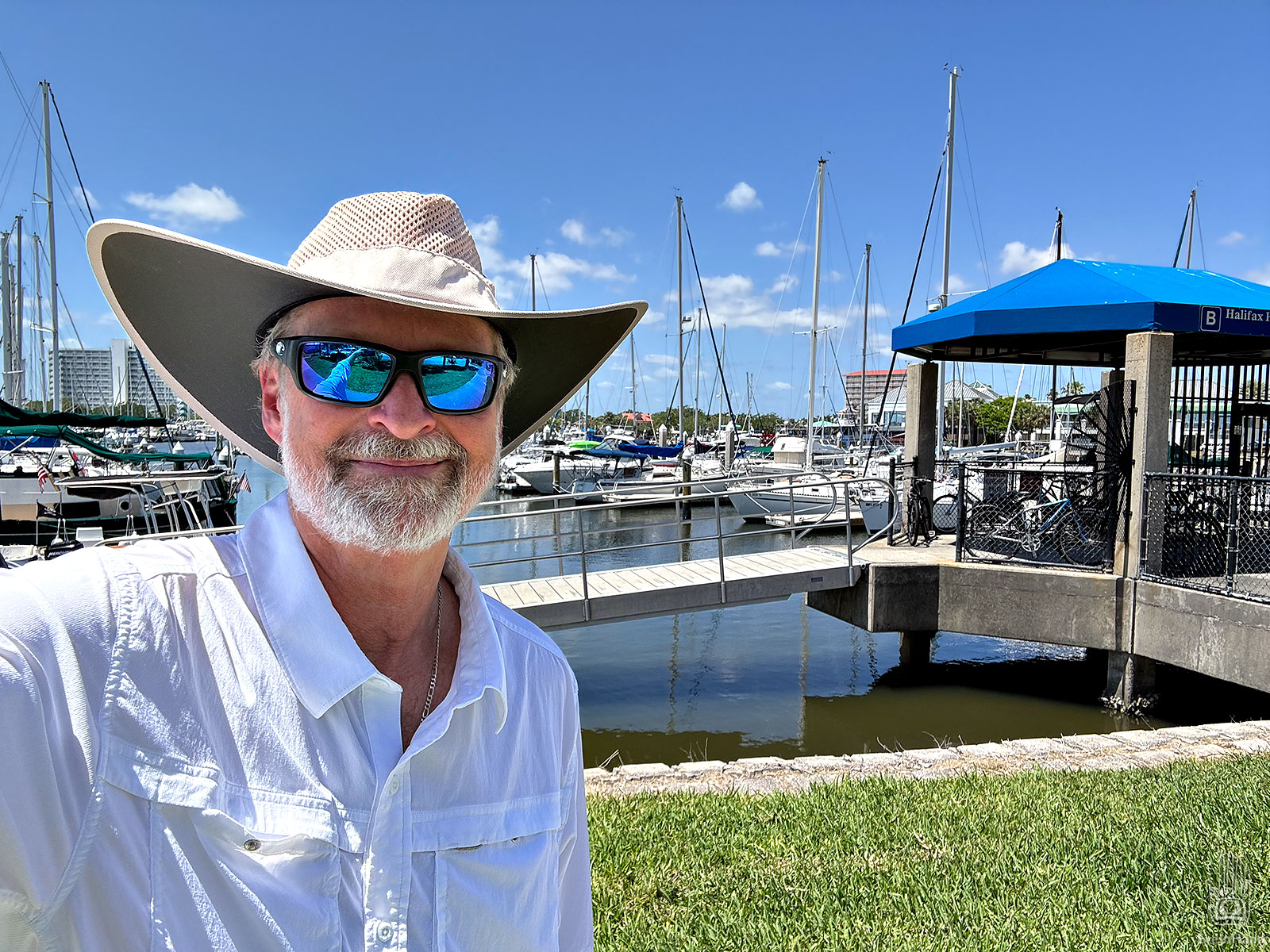
Just after daybreak. It’s almost time to shove off and I have to find a hat. It’s technically still Spring, but the sun here is blazing hot, relentless, and I don’t have a good hat. Couldn’t figure out how to pack one in the carryon for the flight. This is my quest, to be completed before breakfast. I have thirty minutes. I will fail.
Stowage on Tidings is super tight. No room for suitcases, just one collapsable duffel. Everything I can bring for the next three weeks has to fit in a ten gallon cooler box. (And a doctor bag of tech gear, on special dispensation from the captain.) I could not figure out how to pack my favorite straw hat. Figured, “It’s Florida, right? Lots of hats down there. You know, for the tourists.”
The airport is only three miles from the harbor, one of the reasons we chose to connect here. Doug meets me and we hail an Uber for the short hop to the marina. It’s still mid April, but the sun is already a white hot glare off asphalt and concrete. Everything looks sun-bleached and pale.
Halifax Marina is a big municipal marina full of big boats. The GDP of a small country is tied up at the docks. He walks me down the gangway to a slip where Tidings is cheerfully holding her own.
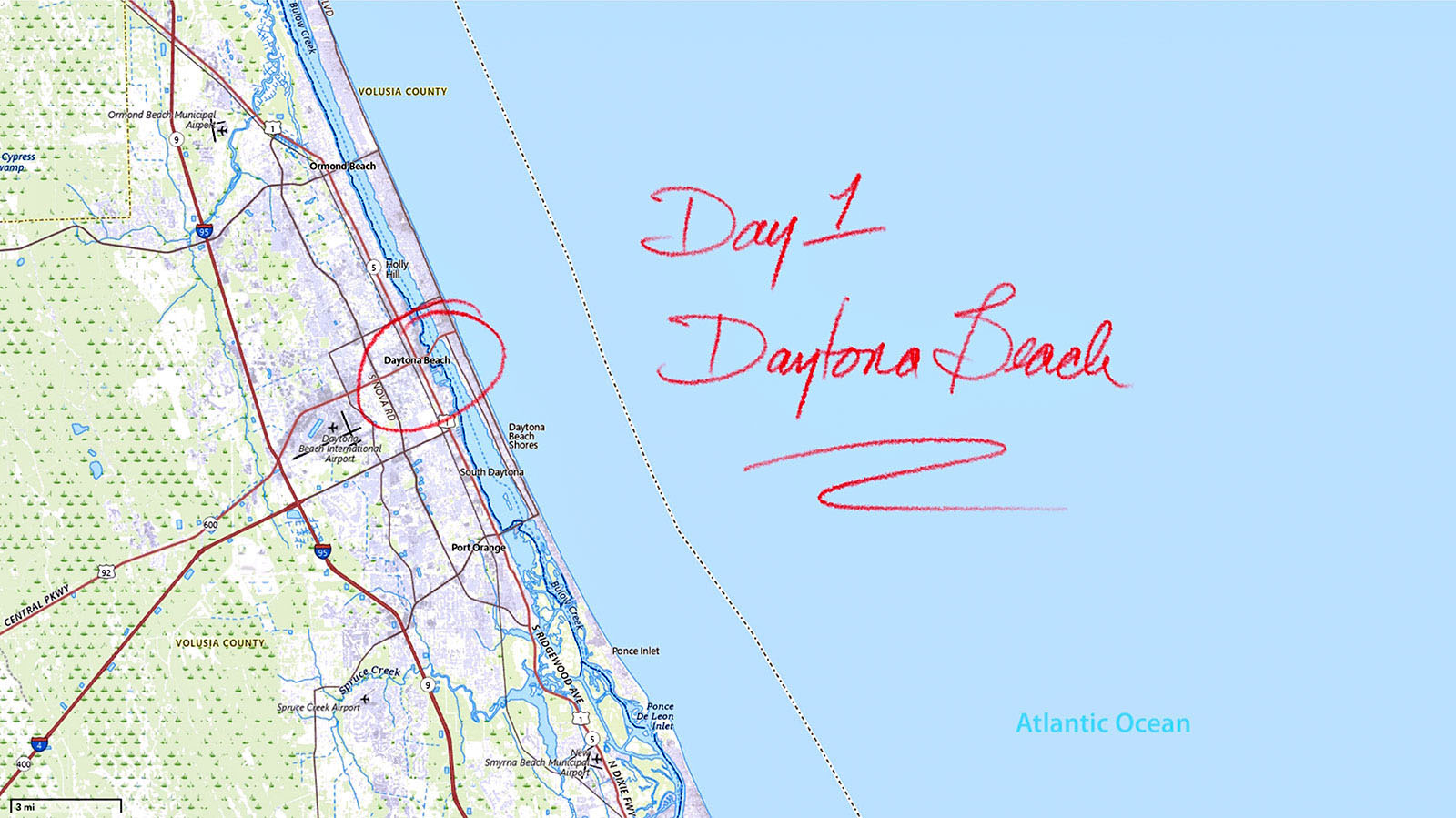
We’ll spend the night here on the boat and get an early start in the morning. I get a quick tour of the layout and stow my duffle, then we’re off again – Doug wants to investigate all this fuss about “World Famous Daytona Beach”.
Beaufort, Port Royal Inlet, and Fripp Island from 30,000 feet.
From 30,000 feet I get a preview of what’s to come. The morning flight drops down out of the clouds, and there below is our destination: Beaufort, and a watery world of marshes, winding creeks, and inlets stretching out to the steel blue Atlantic. It’s deceiving from above as it is up close. The sun glints off obvious water and moves over what one would think is land; but the light strikes water there, too. What appears to be land ribboned with creeks is mainly water, as well. The Low Country and Sea Islands of the South.
One of our daughters and son-in-law moved overseas eight years ago. We tried for years to go see them. As teachers, they have regular breaks to travel. Our simple idea was to meet them somewhere, anywhere. But a worldwide pandemic got in the way, among other things. Plans were made, and cancelled, and made again and cancelled again. It happens. Finally, eight years later, everything fell into place.
They now live in the desert of Saudi Arabia, so they wanted to go somewhere wet and green for spring break. Where else but The Netherlands?
Water everywhere
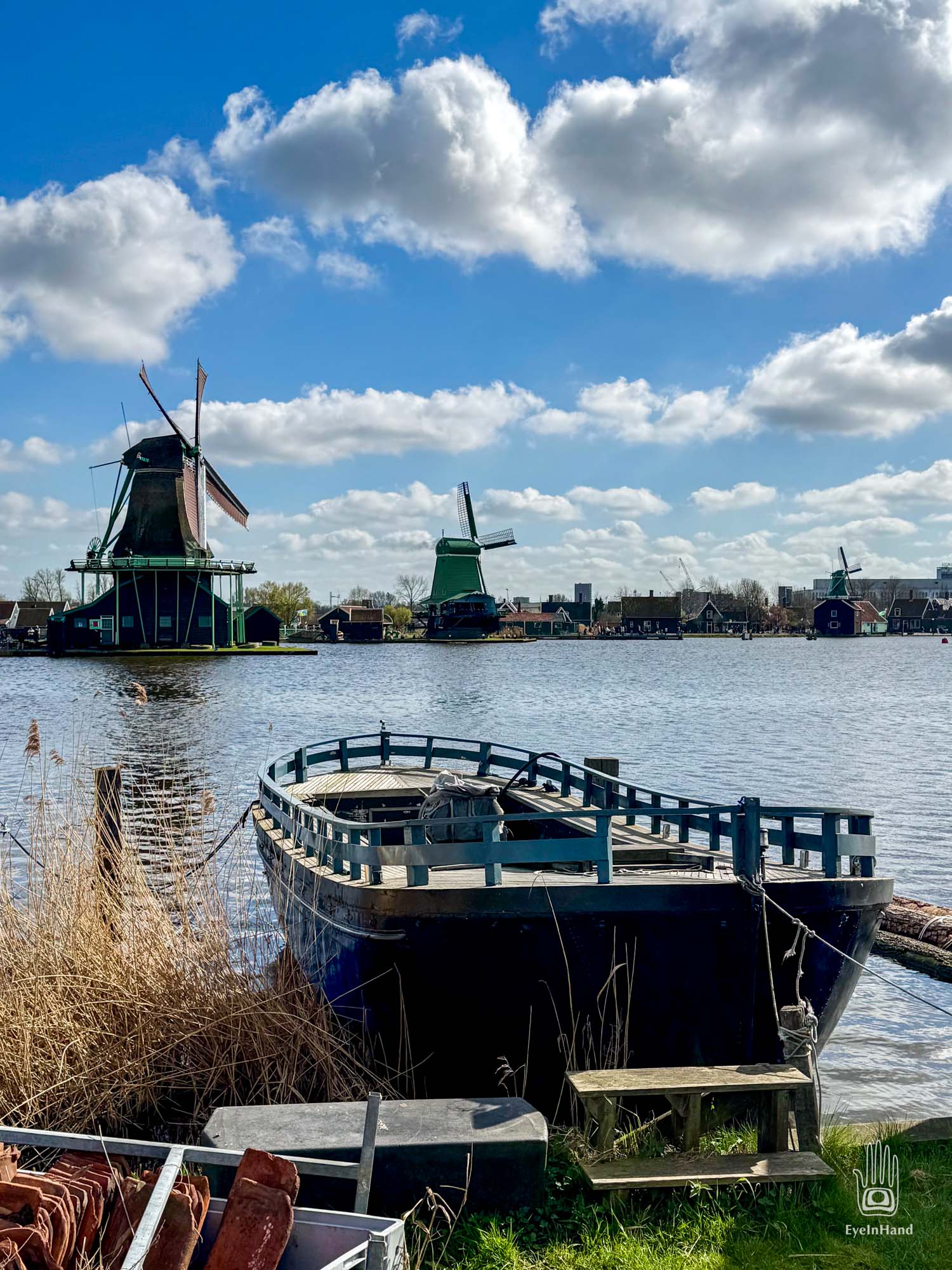
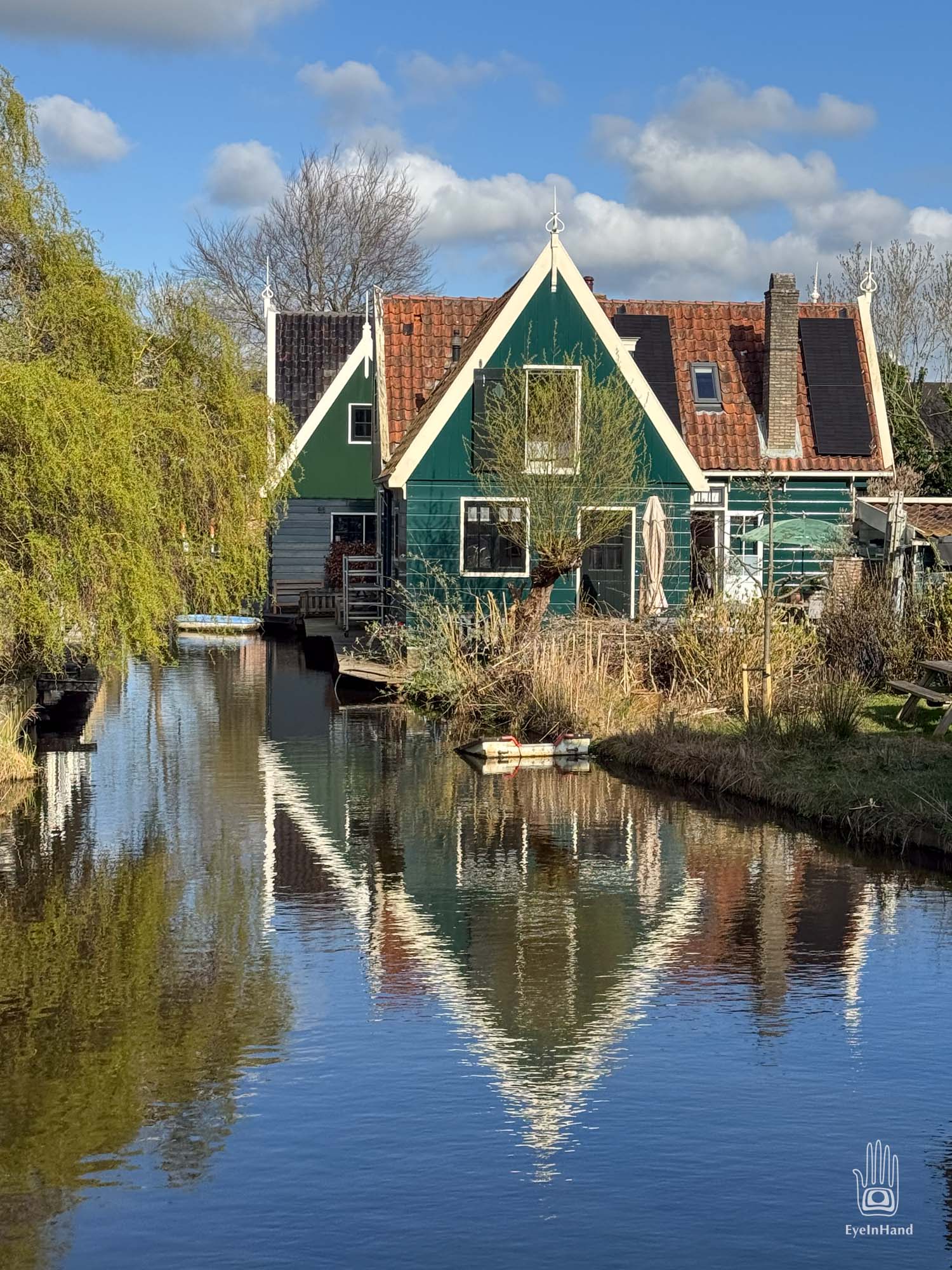
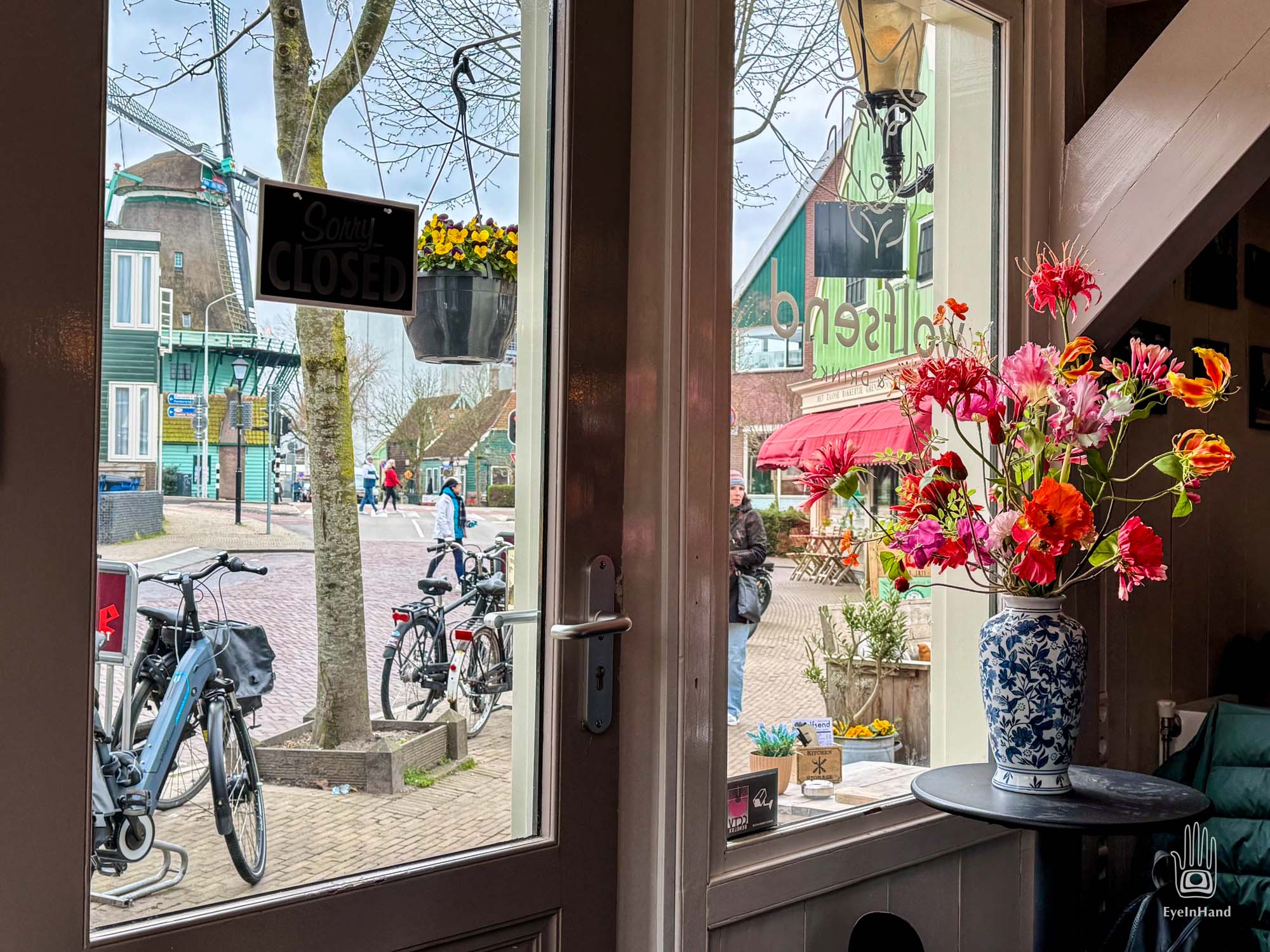
We spent a week in a small cottage in the country, a bit north of Amsterdam. Water everywhere. And windmills. The nearest town of Zaandijk has a train station, bakery, brewery, and couple of cafes, and was just a short bike ride away. A ride along dikes and levees past a dozen working windmills.
Cafe in Zaandijk
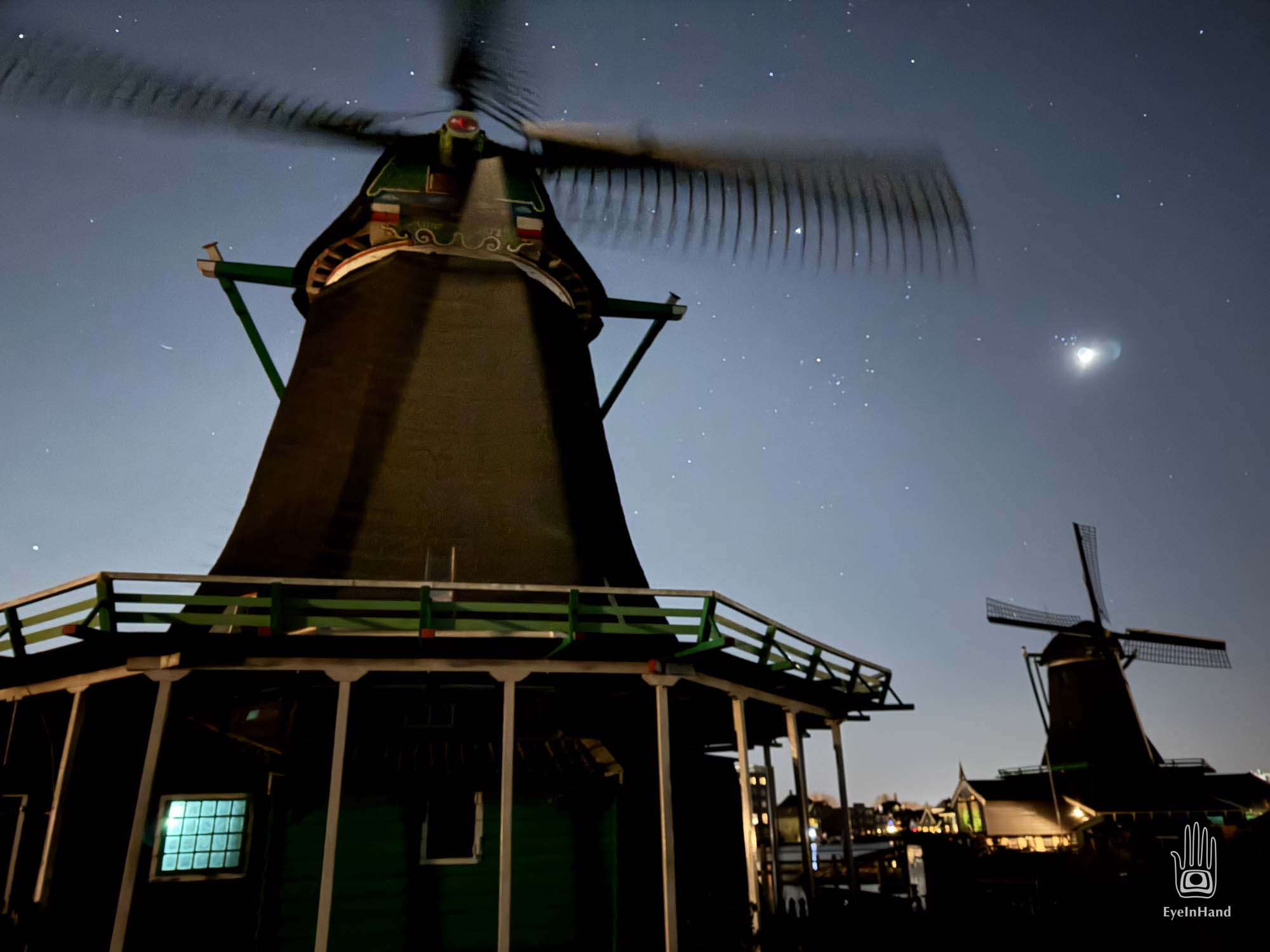
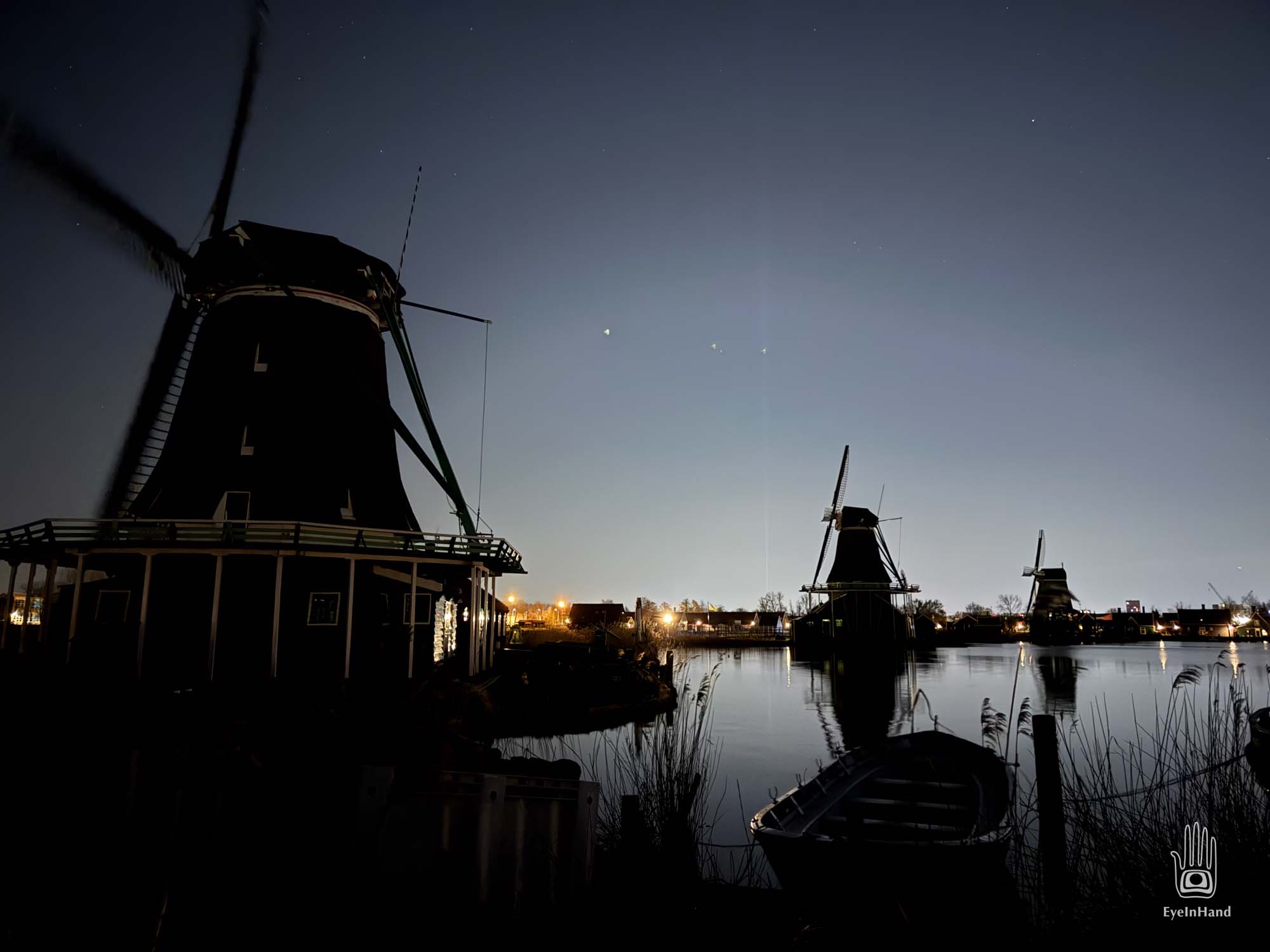
One evening we took the train back from Amsterdam. We walked from the station to the cottage, stopping for dinner in a small cafe. After dinner, we walked the rest of the way back in the moonlight. It was amazing, the windmills whooshing overhead like giant birds flapping in a starry sky. Flocks of geese and ducks in the canals and the polders cackled, adding to the surreal effect.
One morning while the others eased slowly out of bed, I rode by as the windmill crews were just opening up. Several of the mills earn their keep doing the same work they’ve done for hundreds of years. One is a working sawmill. At that early hour there were no crowds to contend with – I was the only visitor. Most of the crews are older men who work the mill, and a few young apprentices have joined them. One of the old Dutch guys saw how interested I was and gave me a personal tour, explaining in detail how it all works (in fluent English), and the history of that particular mill.
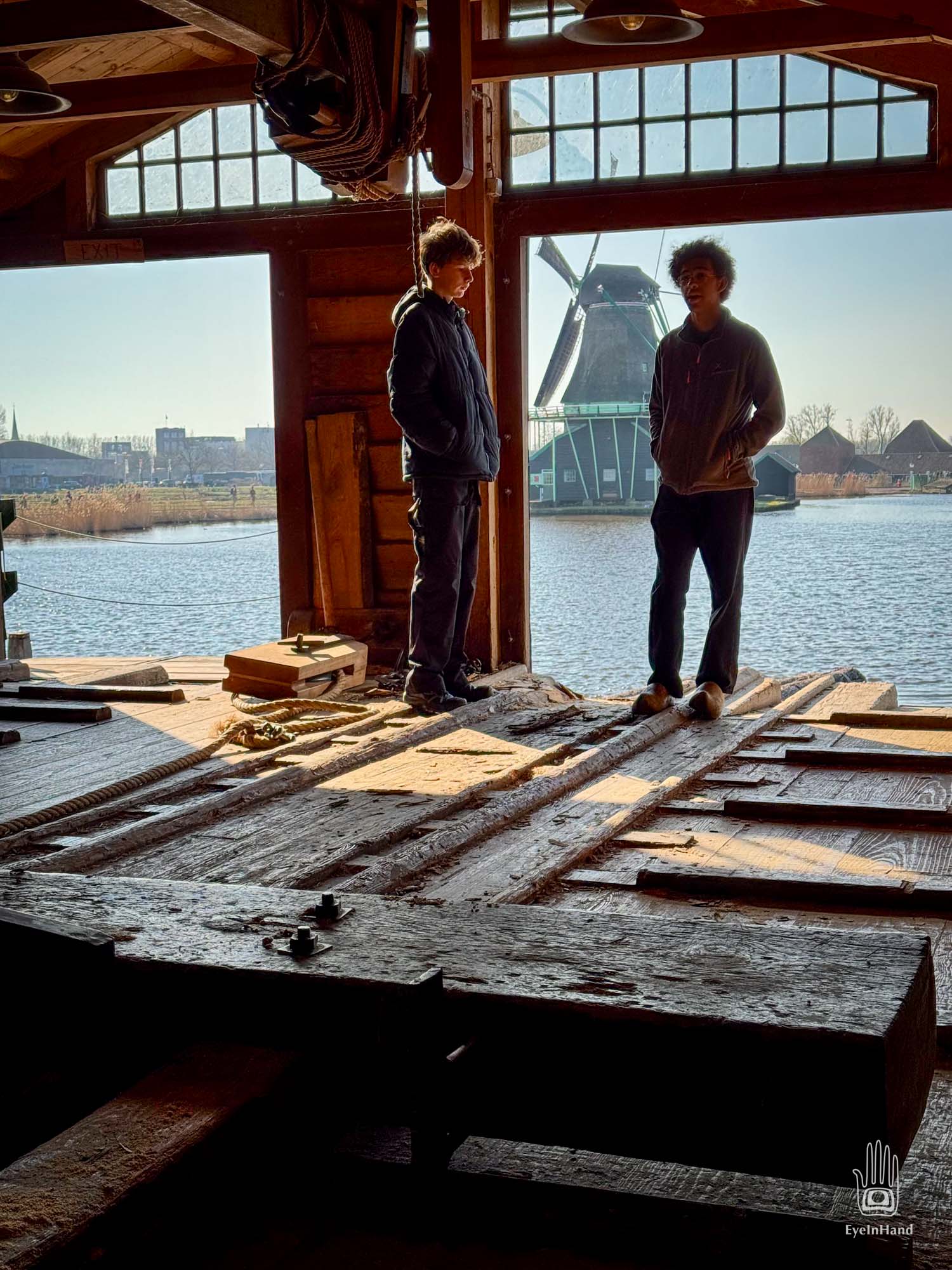
“The Young Sheep”Young Apprentices
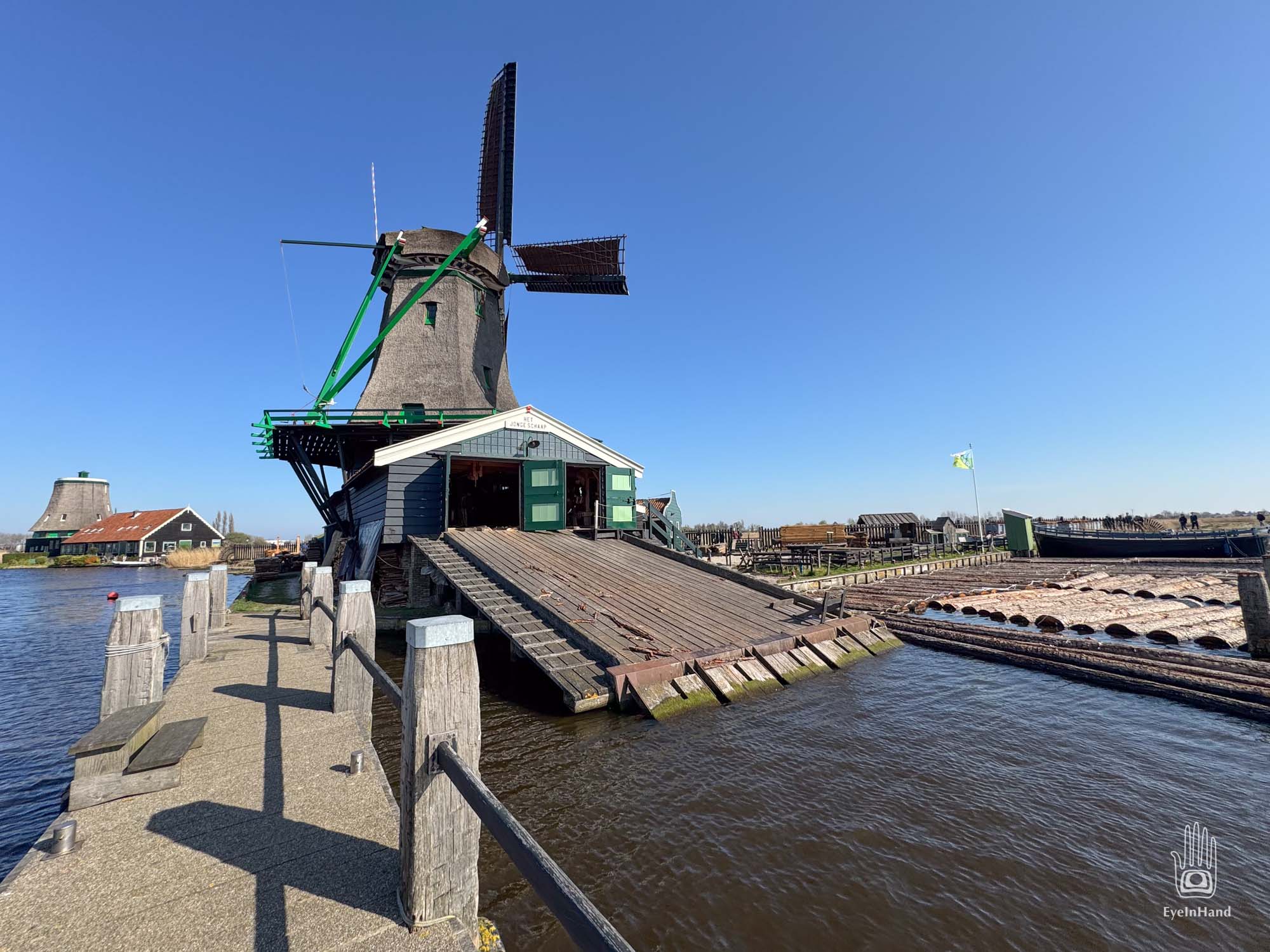
This mill, Het Jong Schaap (“The Young Sheep”), had been in continuous operation for over 400 years, right up until WWII and the Nazi Occupation. Things became so desperate during the war that townspeople needed to dismantle the mill for firewood. But before they did, they documented in detail every piece they removed. Years after the war those plans were found. Funds were raised and the mill rebuilt exactly as it was, along with many others along the Zaans River.
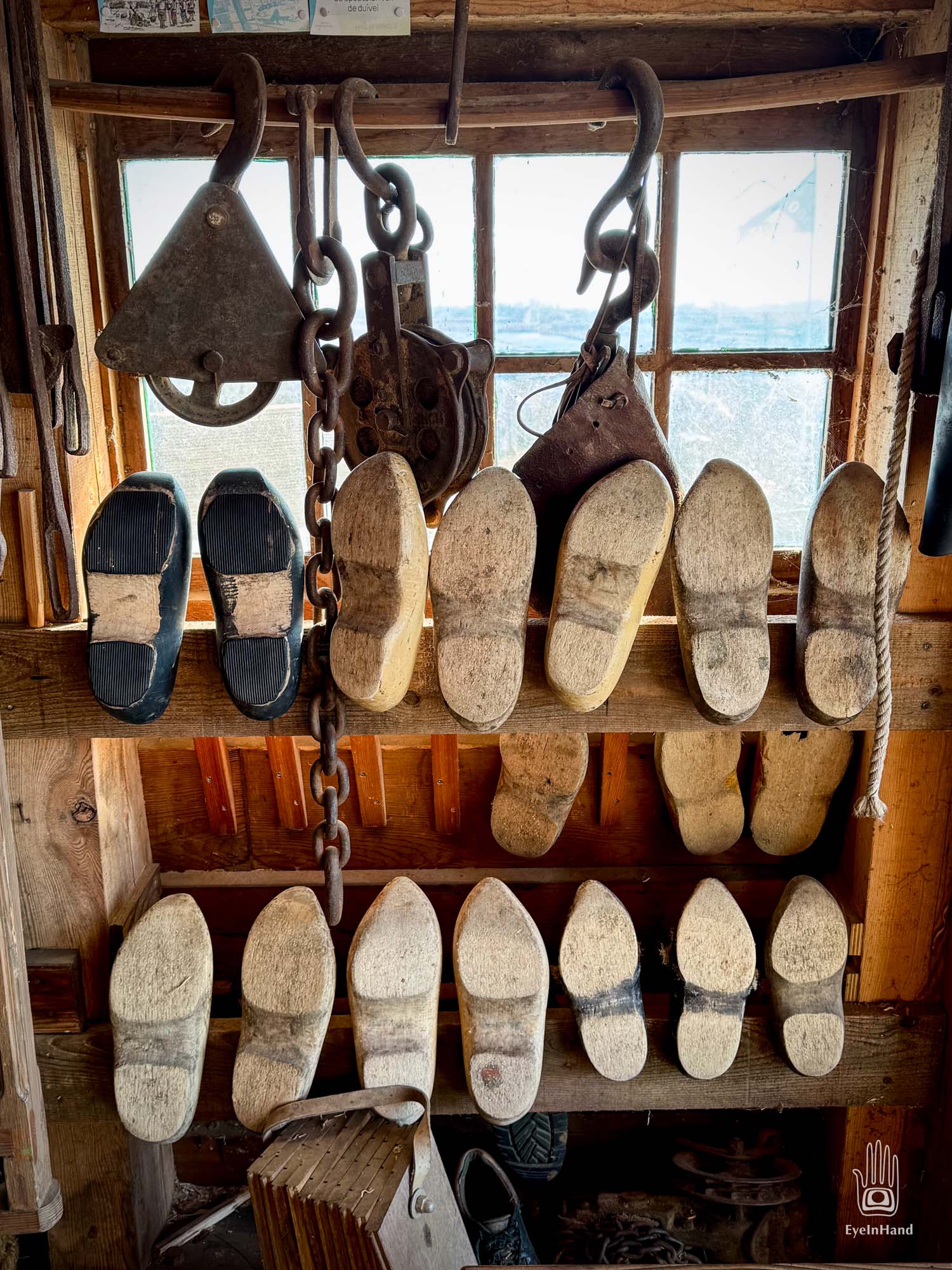
Work Shoes
Inside the mill, I was immediately struck by the sound – it’s like being inside an enormous breathing animal. The pace of respiration rises and falls with natural rhythm of the wind. From slow and steady, like the beast is sleeping, to rapid and muscular.
The canvas on the vanes are trimmed like sails to match the strength of the wind, and the whole head is turned with a crank to follow the wind direction as well, just like a sailing ship. In fact, as he was explaining how the gears work, he suddenly stopped short and made a quick adjustment to take advantage of a gust, which he heard instinctively – just like we do in our small wooden boats. “Just the same, it’s the same principle,” he said.
After the sound, there’s smell of fresh sawdust, and everywhere the rich golden glow of sunlight on wood. No reek of petroleum or exhaust, no screech and whine of industrial motors. Just heaving and sighing.
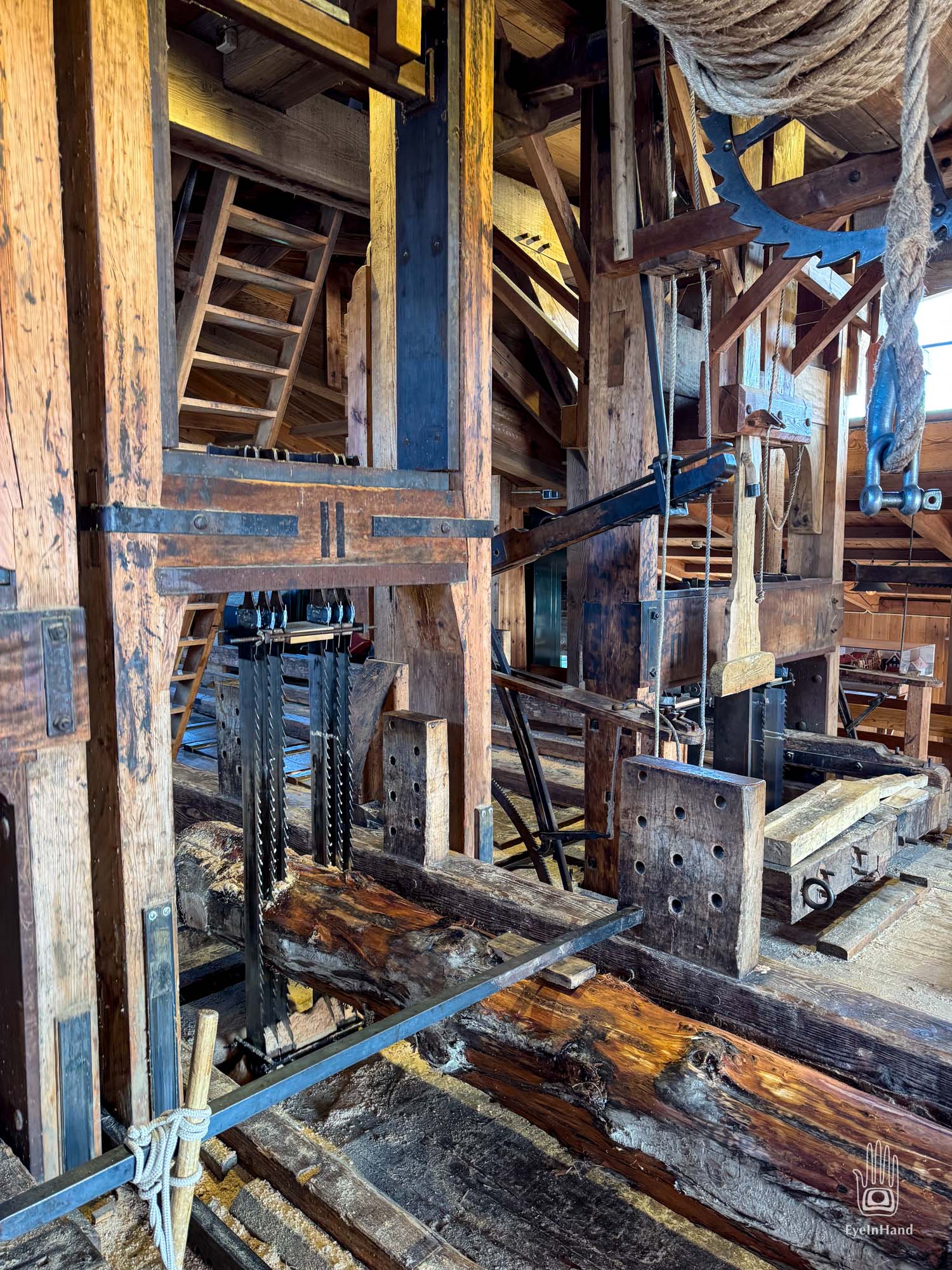
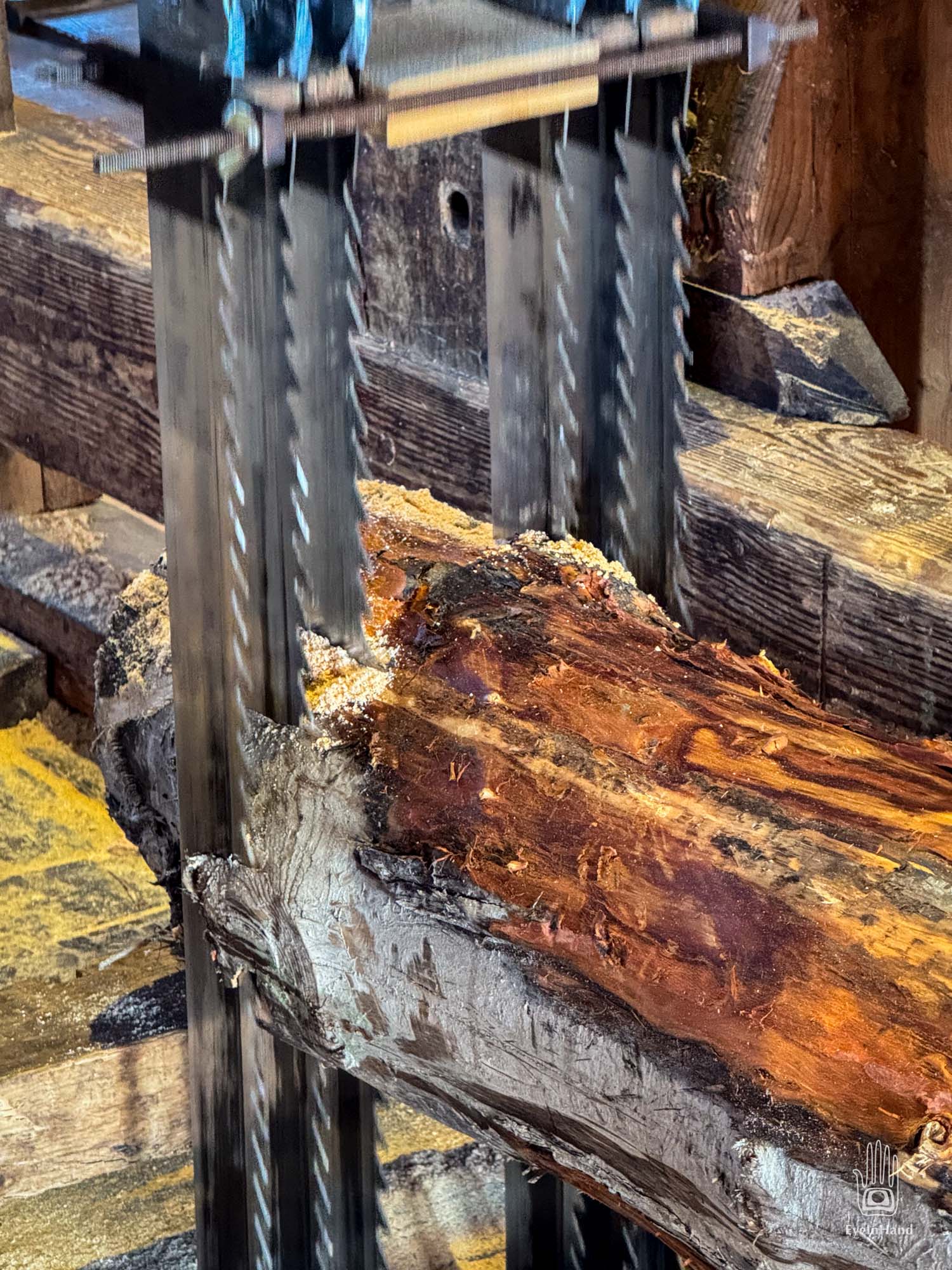
The whole apparatus is built like a big clock inside, and every step of the process is automated and facilitated by the power of the wind harnessed by the vanes. A windlass winds a hawser that hauls logs from the river up the ramp and into the mill, then lifts them onto a carriage where the log is dogged in place. Then another gear, ticking like a slow second hand watch gear, moves the log and carriage steadily into the blades as they pump up and down, the blades driven by a crank shaft turned in the attic by the wind.
The blades are spaced with wooden blocks measured down to the millimeter. Using a combination of blades and spacers, they can cut thin planks and thick timbers from the same log in a single pass. With good wind, they can cut three logs at once, running all three saws side by side.
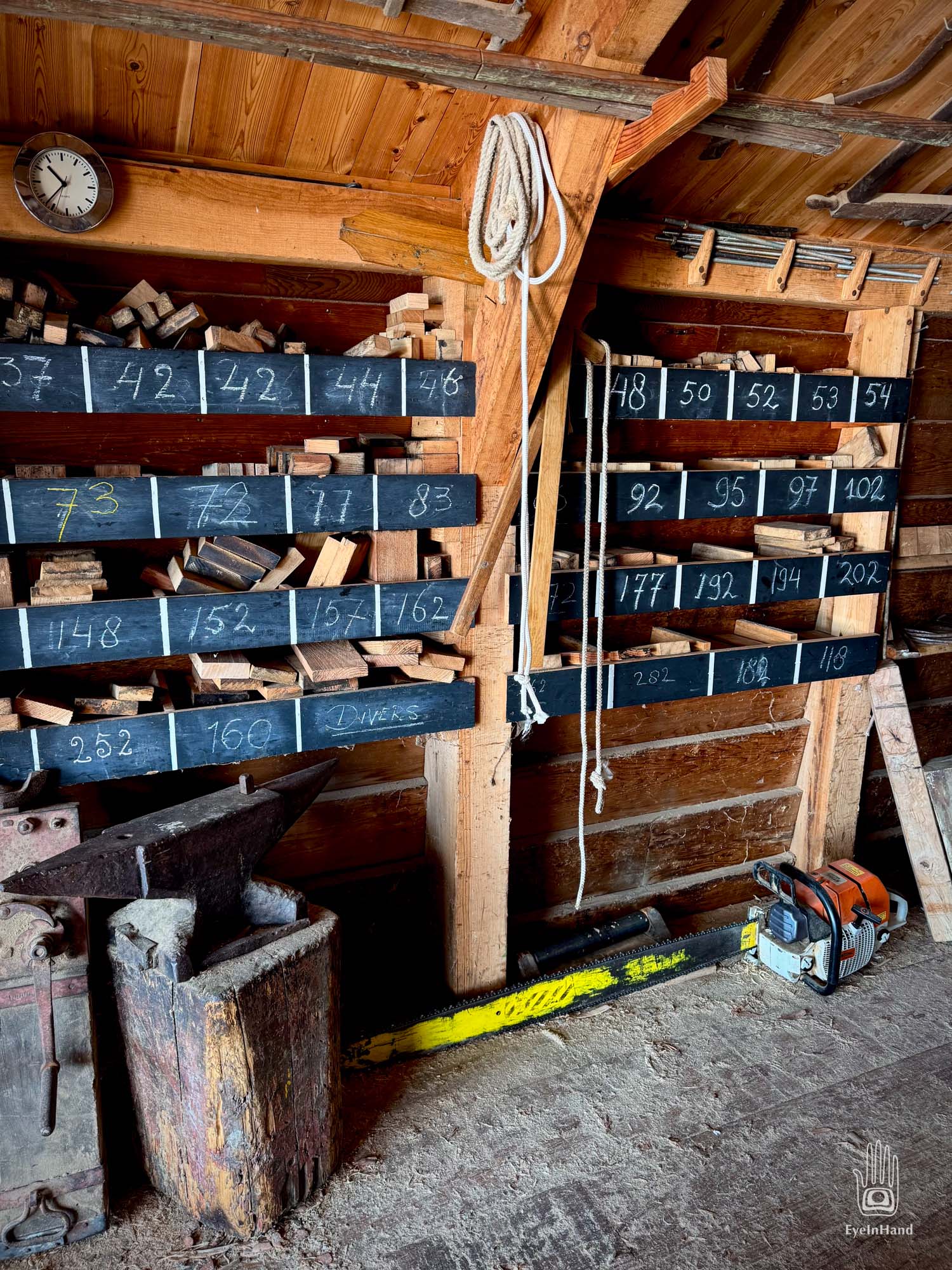
Spacer blocks, sorted to millimeter precision.
My guide, knowing I was a sailor, told me they recently had a commission to make a new mast for a large sailing ship. Cut eight sided and tapered. They used a single log 40 feet long, floated down rivers and canals from the Black Forest in Germany. There are small doors at the back of the mill just for this purpose – opened to let oversized pieces extend out through the walls.
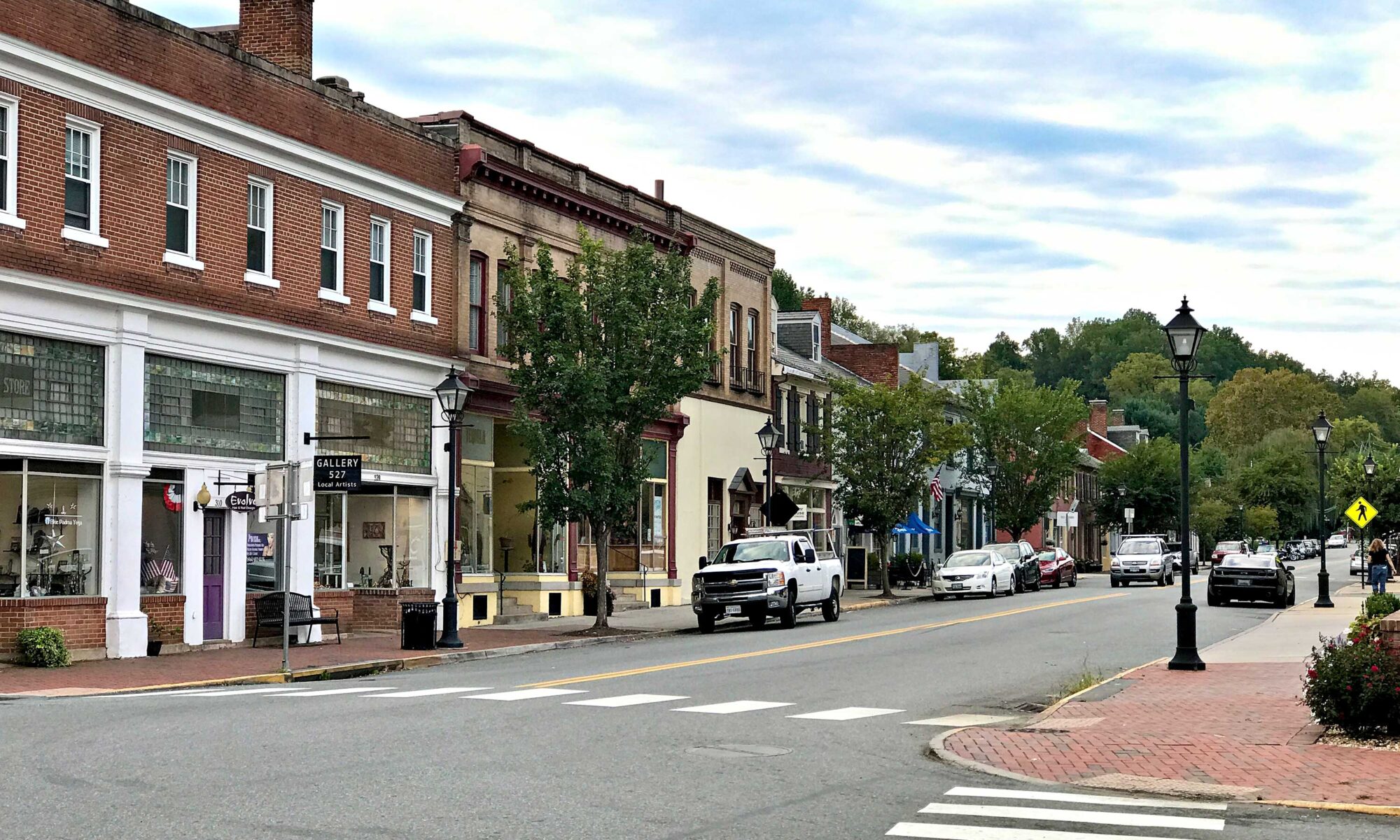
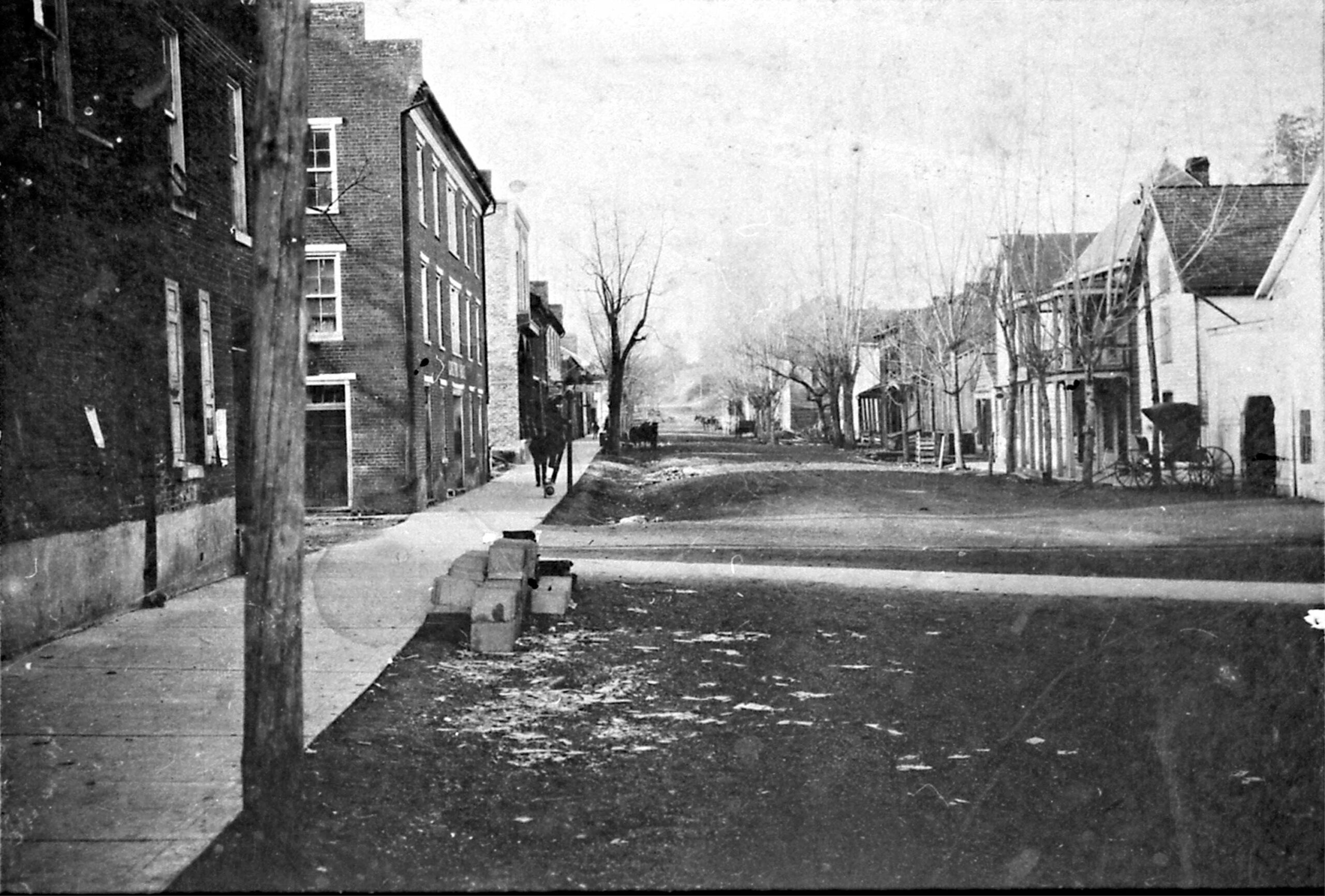
Since the colonial era, Vally Street has been the main commercial corridor in Scottsville. A natural ravine led down the high bluffs to the ferry at Scotts Landing, providing access for wagons loaded with goods and passengers to the James River and trade with the outside world.
Valley Street in Scottsville, Virginia, circa 1898
Burgess took the photo above, the oldest in the collection, with his camera pointing north up Valley Street and his back to the James River. On the sidewalk at the left of the photo, a man can be seen standing on a short ladder to light a carbide street lamp. At that corner, Main and Valley street intersect.
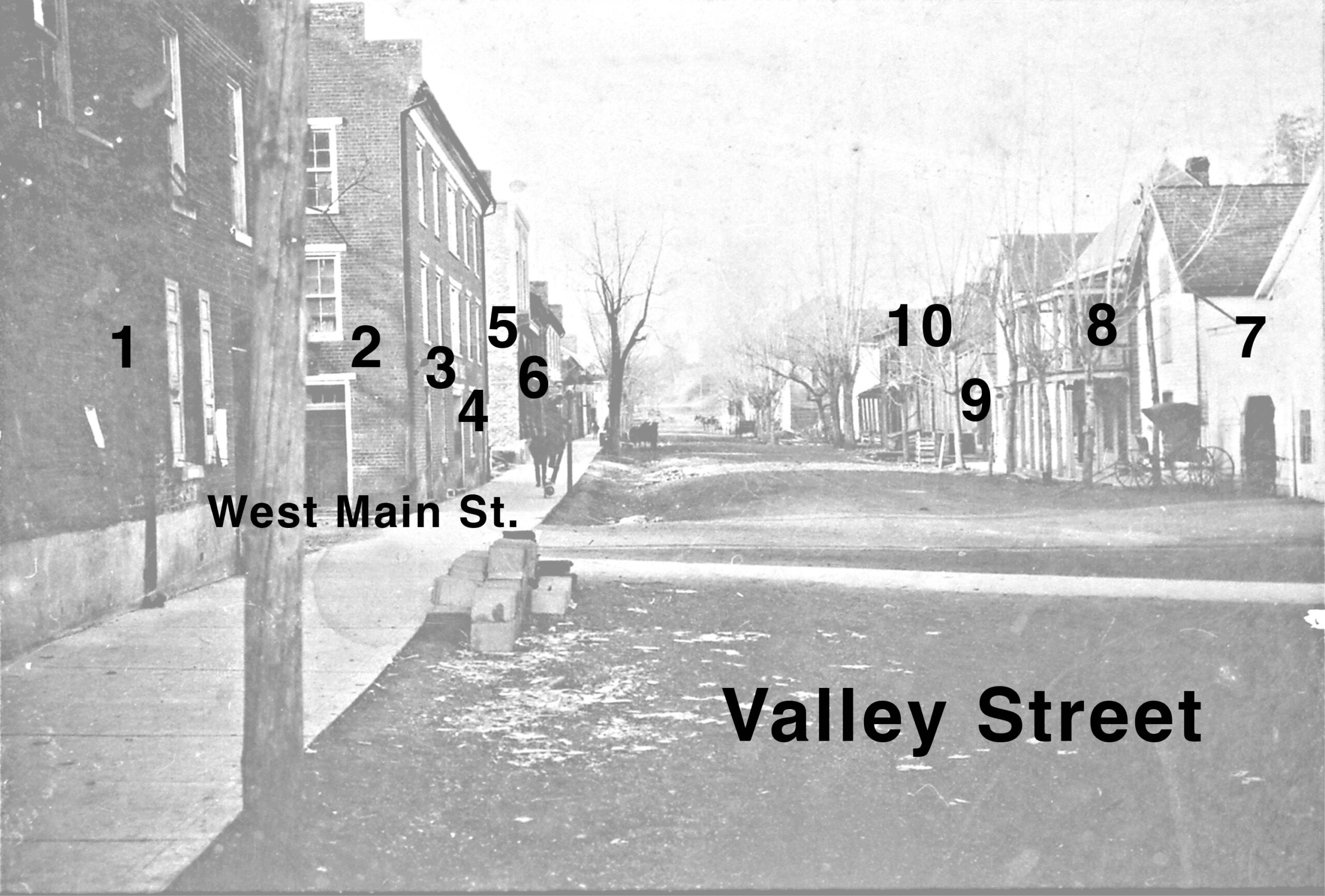
See the image below as a guide to these specific buildings:
(1) Dorrier Building (Corner of Valley Street and West Main) – served as a general merchandise and feed-grain store for many years until its recent conversion to a grocery store.
(2-4) Carlton House – built c. 1840 and contained 3 entrances. Entrance 2 at the corner of Valley Street and West Main was Dickinson’s Drug Store; Entrance 3 at the center of the building was the Carlton House Hotel with its lobby on the first floor and stairs leading to the rooms upstairs; Entrance 4 was to Sclater Hardware Co.
(5) National Bank of Scottsville – David Pitts served as President and Walter Dorrier as cashier.
(6) Post Office and Griffin Building – constructed c. 1840, these two identical brick buildings appear to be one structure. The first building was the town post office from 1884-1914.
(7) Livery Stable – located on the northeast corner of Valley and Main St. Buggy and stable belonged to Charlie Harford.
(8) Fidelity National Bank – this bank was owned and managed by Jacinto V. Pereira. Dr. Wade had his dental offices on the second floor of this building.
(9) Luther Lewis’ General Grocery Store
(10) Moon Bank. Upstairs were the law offices of Hobhouse and Douglas Patterson.
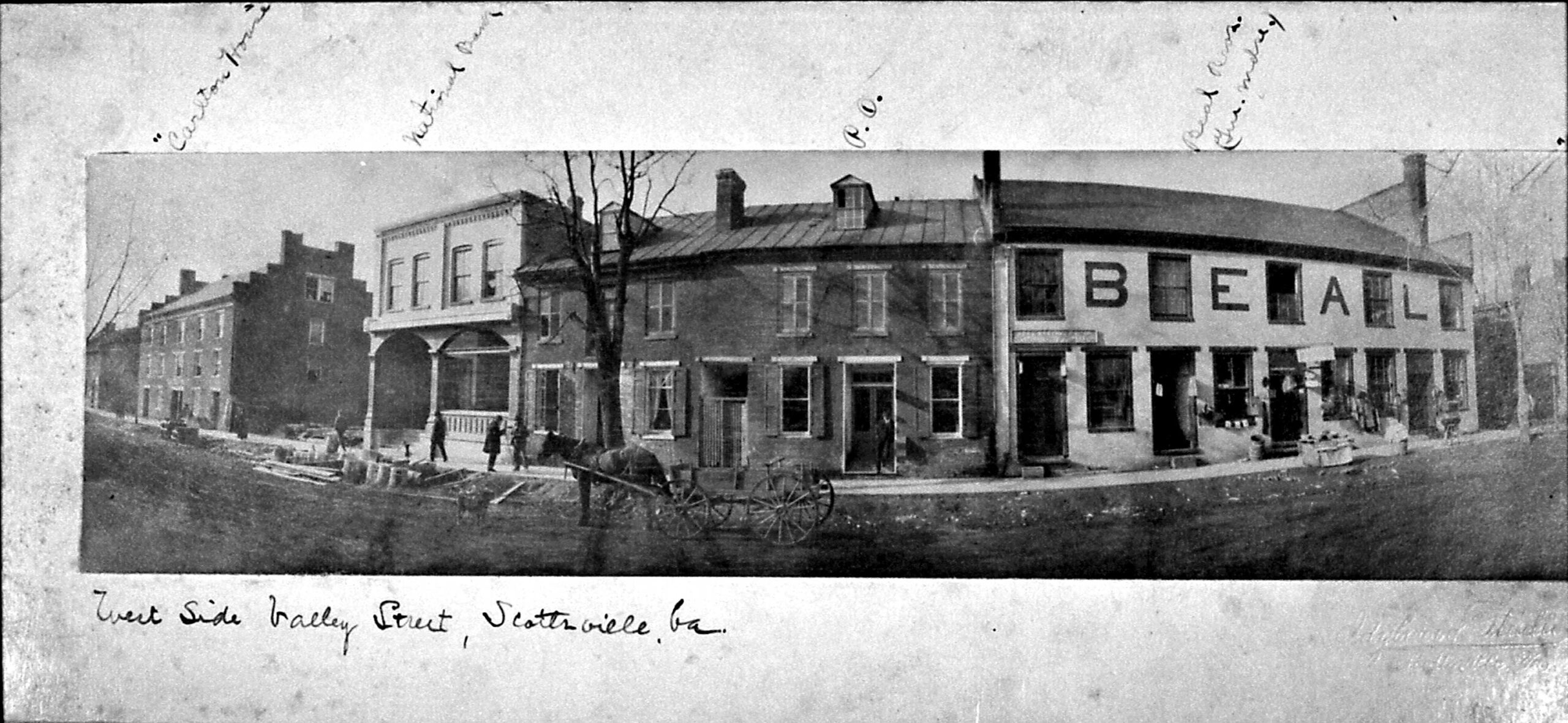
Burgess captured the west side of Valley Street in this photograph, using his panoramic camera with a fisheye lens.
West side of Valley Street in Scottsville, Virginia, circa 1900
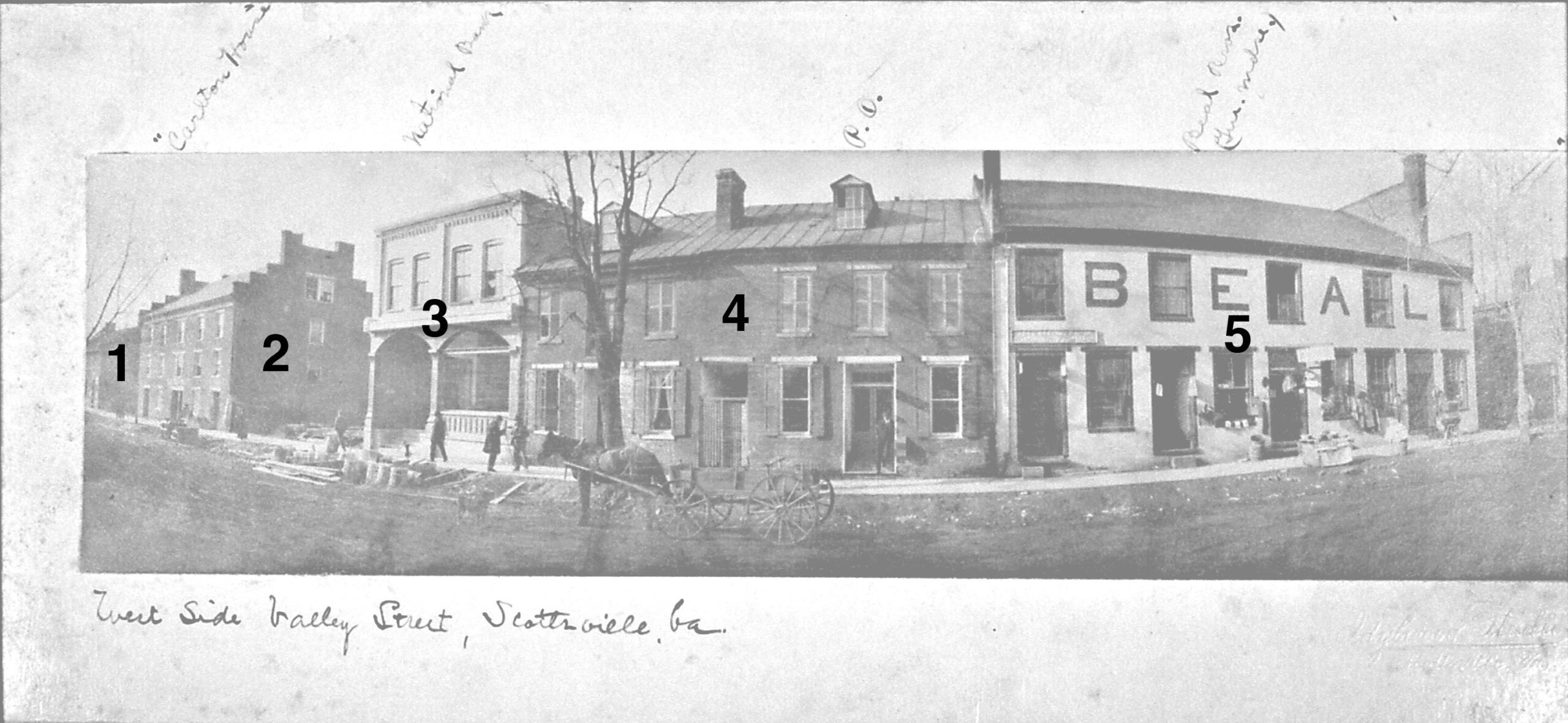
The image below is a guide to specific buildings:
(1) Dorrier Building (Corner of Valley Street and West Main) – served as a general merchandise and feed-grain store for many years until its recent conversion to a grocery store.
(2) Carlton House – built c. 1840 and served as a Civil War Hospital. At this time, the building contained 3 businesses: Dickenson’s Drug Store at the corner of Valley Street and West Main, the Carlton House Hotel at the center entrance with a lobby on the first floor and stairs leading to rooms upstairs; and at the north entrance to the building was Sclater Hardware Co.
(3) National Bank of Scottsville – David Pitts served as President with Walter Dorrier as cashier.
(4) Post Office and Griffin Building – Constructed c. 1840, these two identical brick buildings appear to be one structure. The first building was the town post office from 1884-1914.
(5) Beal Building – This two-story brick building was built about 1840 by the Beal family, and Scottsville Mayor Jackson Beal, Sr., had his office here. For many years, town court was held on the second floor. Here also was the law office of Thomas Staples Martin, elected in 1895 to the U.S. Senate where he served 25 years.
– o • 0 • o –
Population of Scottsville In 1900 Was 1,248; Paper Reveals Interesting Facts Scottsville Sun, May 15, 1958
The population of Scottsville in 1900, according to the geography of Virginia published that year, was 1,248.
At that time, according to The Scottsville Courier, you could get on a train any afternoon or evening, bound for Lynchburg, Cincinnati, Louisville, Chicago, St. Louis, or any point west, or a train leaving the Scottsville Depot twice a day took passengers to Richmond and the Virginia “seaside.” There was a controversy over the financing of a Scottsville bridge in Buckingham County, with poems pro and con taxation to finance it in the editorial columns.
T.W. Heath knew the value of advertising and advertised his Scottsville Roller Mills, adding that “To my Buckingham patrons, I wish to say that I have made an arrangement with Captain Thomas to ferry them across the river and return for 25 cents per wagon.” He also advertised building materials, painting, paper-hanging, and was an agent for “Antiseptic Laundering.”
For $45 you could buy one “brand new top buggy, and spring, piano box, leather top.” A condensed encyclopedia cost 50 cents, and jobs were offered ambitious salesmen who could make $780 to $936 a year, while the “best shoes in the world” cost $3 a pair.
In the issue of July 5, 1901, we find that a rumor was going around that the Albemarle Soapstone Company had bought a controlling interest in the Virginia Soapstone Company, and the two would merge soon.
D. H. Pitts was elected treasurer and Dr. J.P. Blair secretary of the Scottsville Town Council when Messrs Beal and Pereira were added as new members. The tax on whisky was raised to $40 and a tax on dogs was levied.
The wedding of Frank Russell Moon and Annie Dunscomb Horsley was written up in the social column. It took place June 26, 1901 in Grace Church, Buckingham County. The bride, escorted by her brother, Alexander Caldwell Horsley, was attired in white Paris muslin trimmed with lace and carried a shower bouquet of roses. Her attendants carried ferns and daisies.
Conducting the service was Rev. T.H. Lacy. The groom was attended by his brother, Carey Nelson Moon. Mrs. John Horsley played the wedding march.
Mr. Moon was “a popular and prosperous merchant of Manteo.”
After the wedding, “an elaborate luncheon was served” at Traveler’s Rest, Warminster, home of the bride. She was the daughter of the late John Horsley and great granddaughter of Major Charles Yancy of Virginia.
Mrs. Henry Burton, matron of honor, was attired in her wedding gown of white silk.
Cures for stomach ailments were advertised in several columns.
The Scottsville National Bank was established in 1901 and advertised “a general banking business.” Dr. J.P. Blair was the dentist, who advertised that he would visit Buckingham, Columbia, Arvonia, and Howardsville, and the doctor, J.S. Pendleton, also advertised that he would practice in Albemarle, Buckingham, and Fluvanna. In a town of over 1,000, this seems to show that either not so many people were ill as they are nowadays, or the doctors and dentists put in longer hours, and less time per patient!
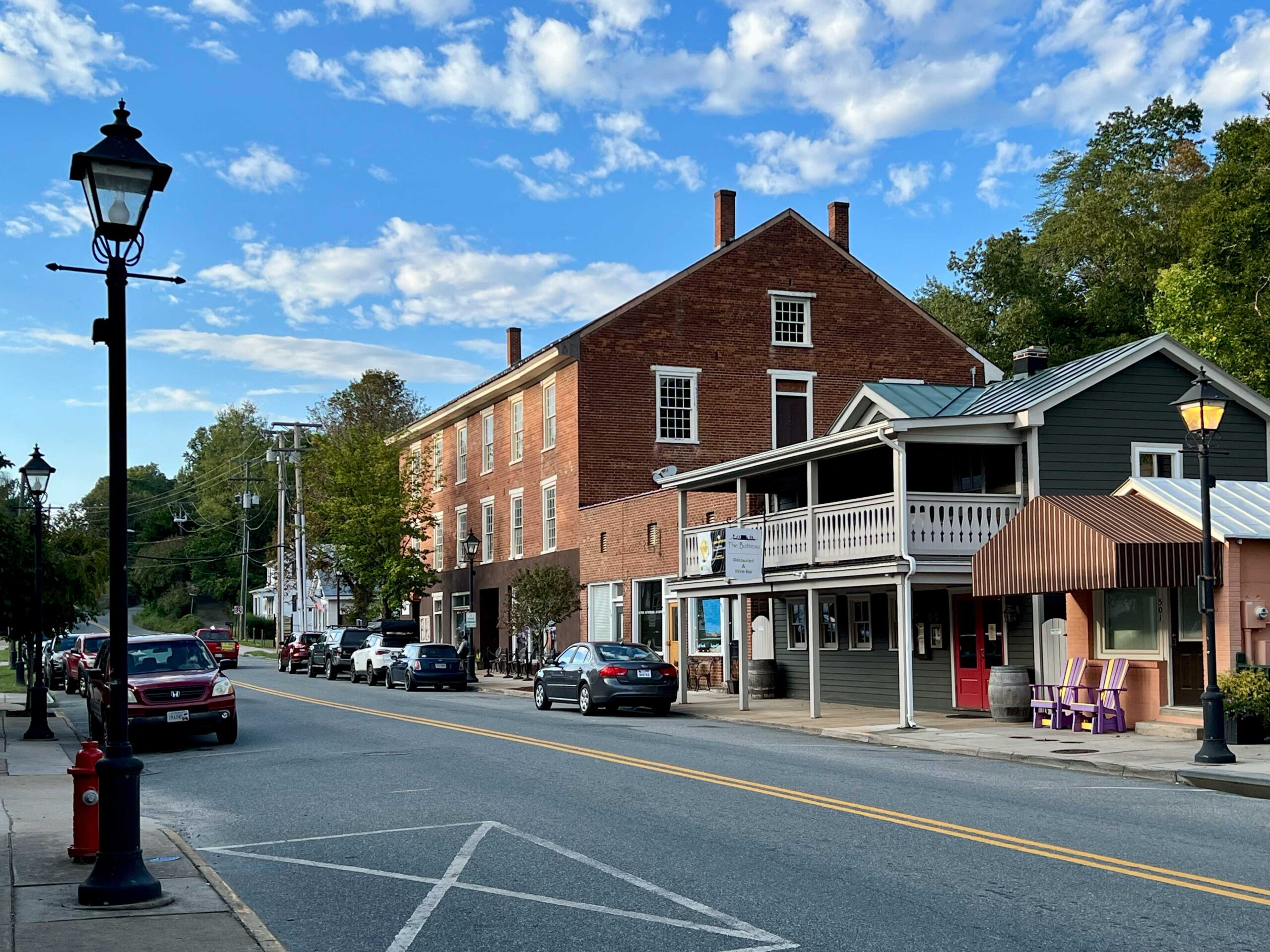
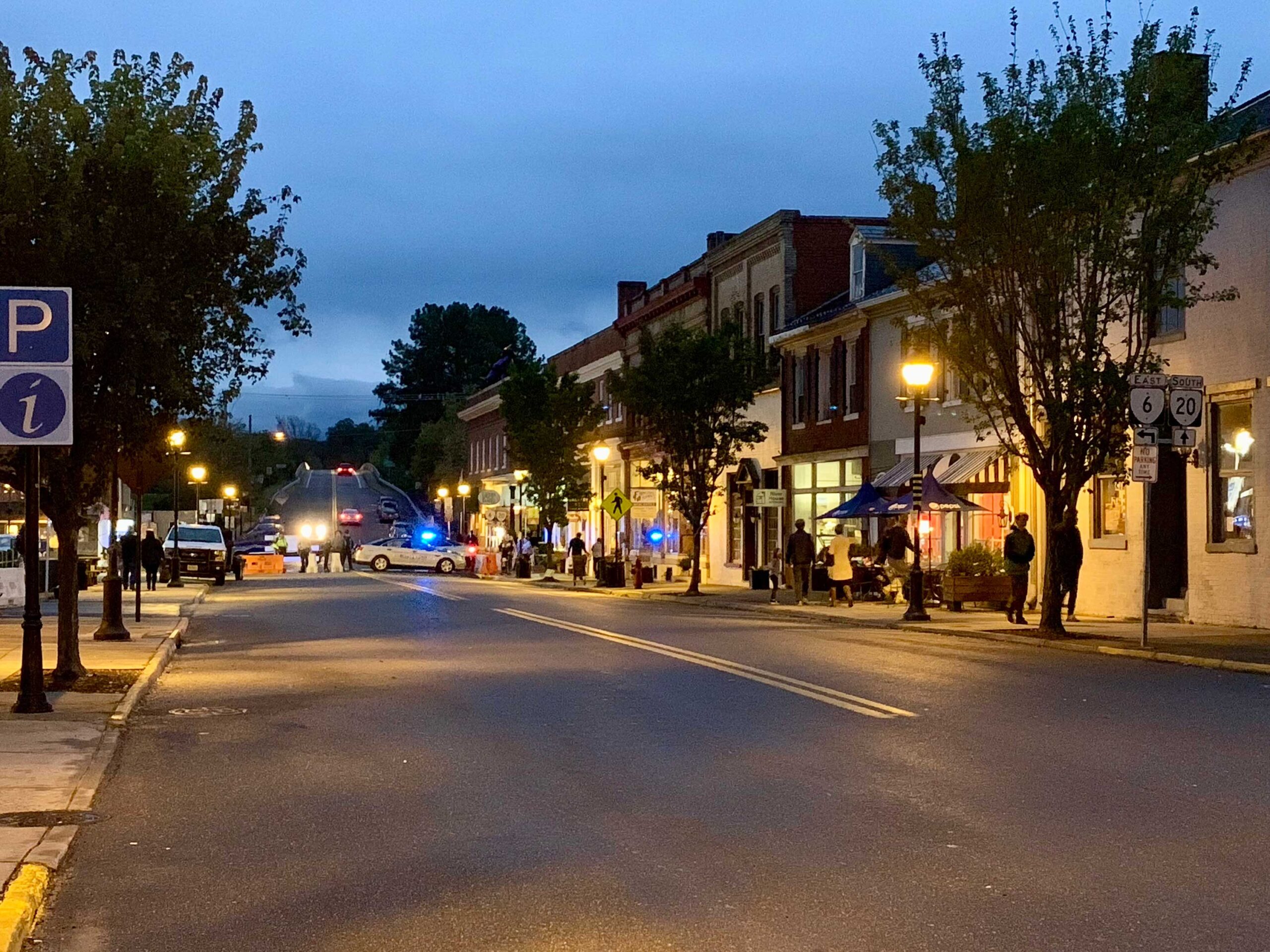
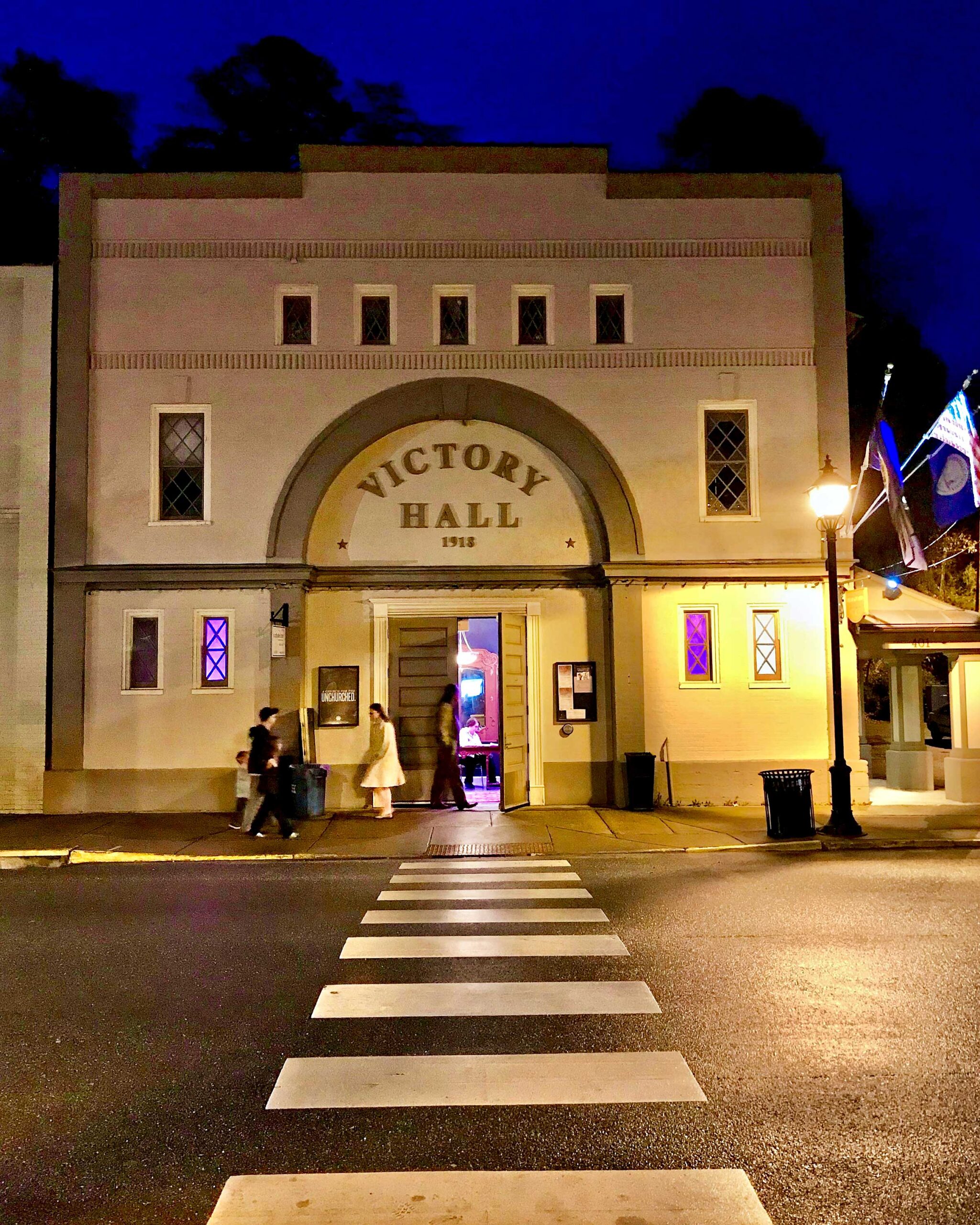
Valley Street traffic paused for Halloween Trick-or-Treeting
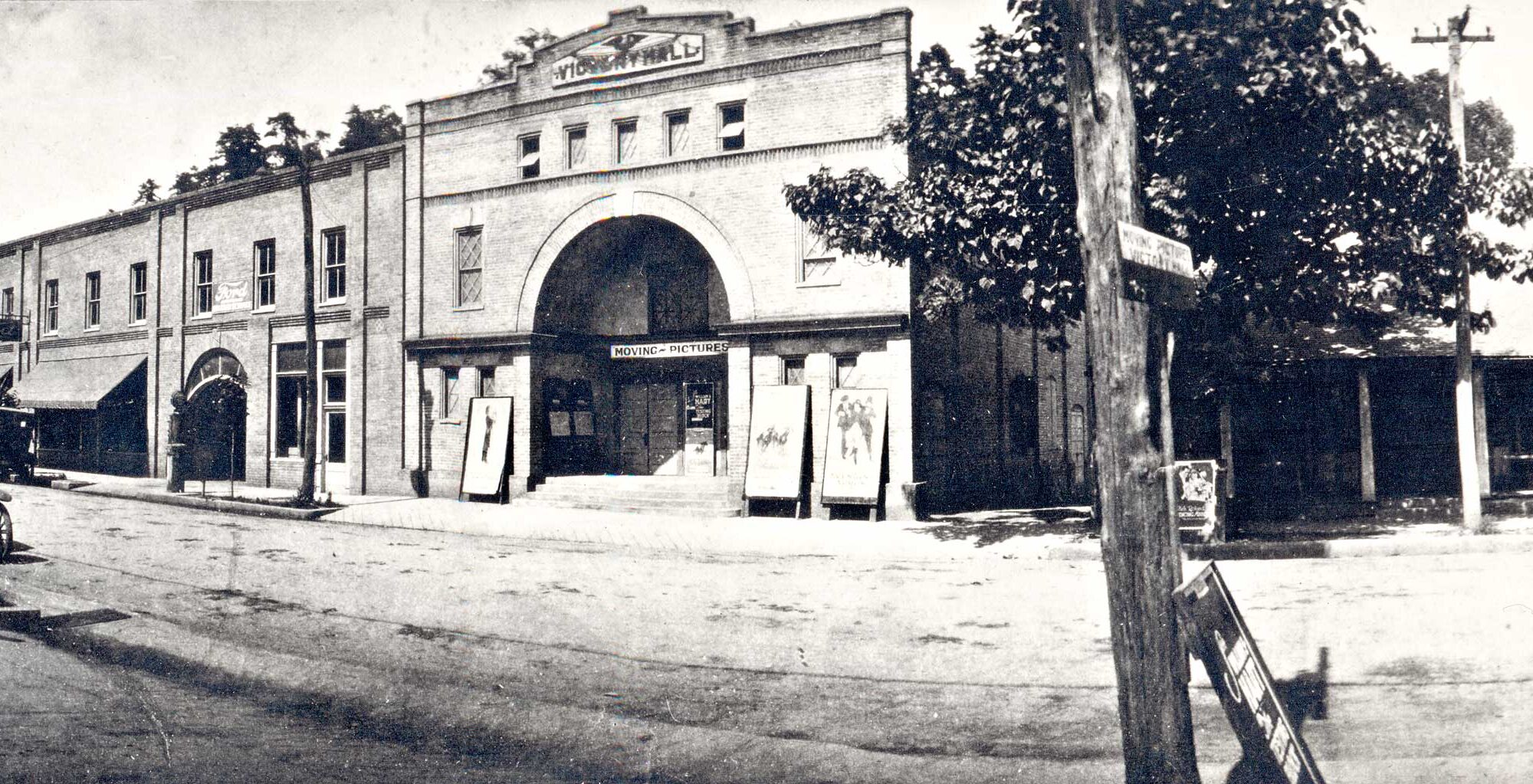
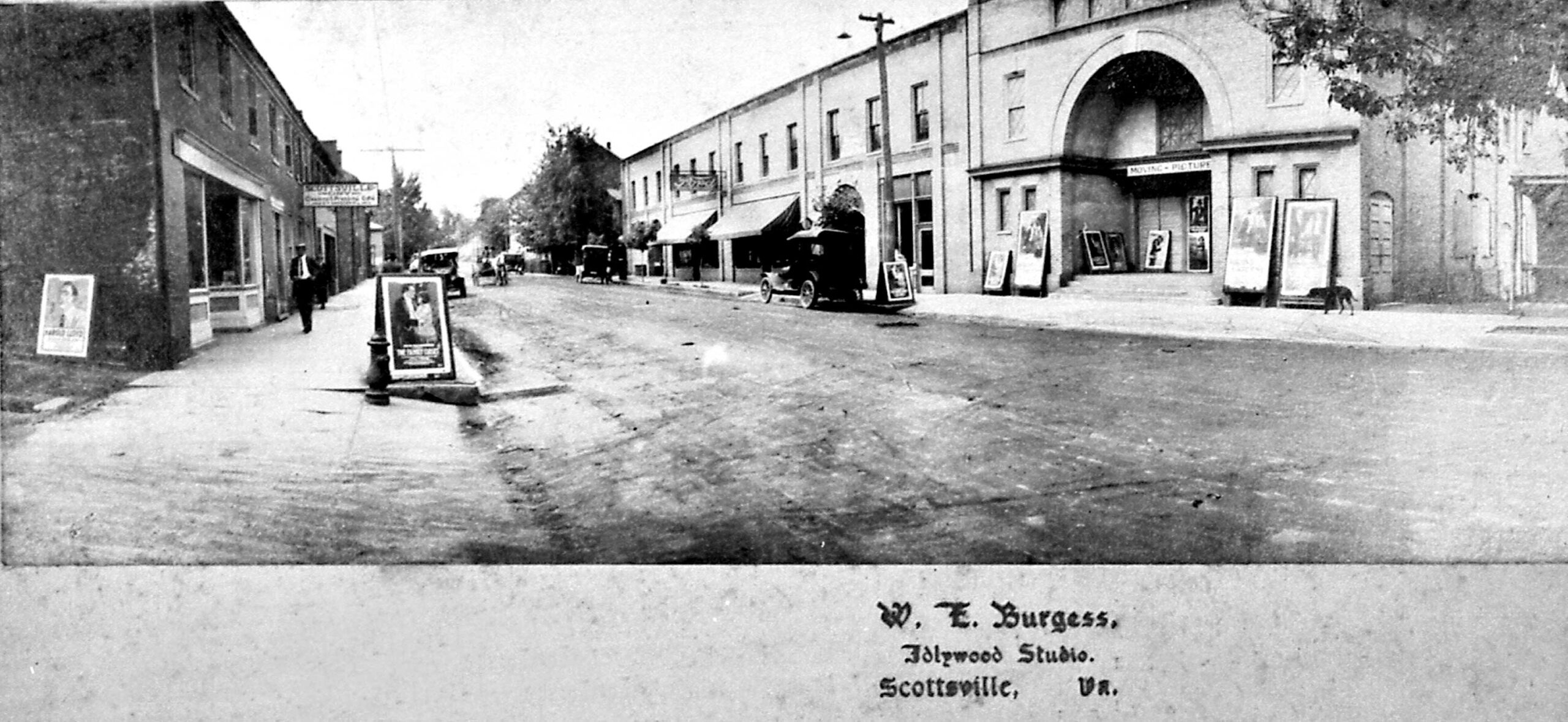
Looking north on Valley Street, Victory Hall on right circa 1925
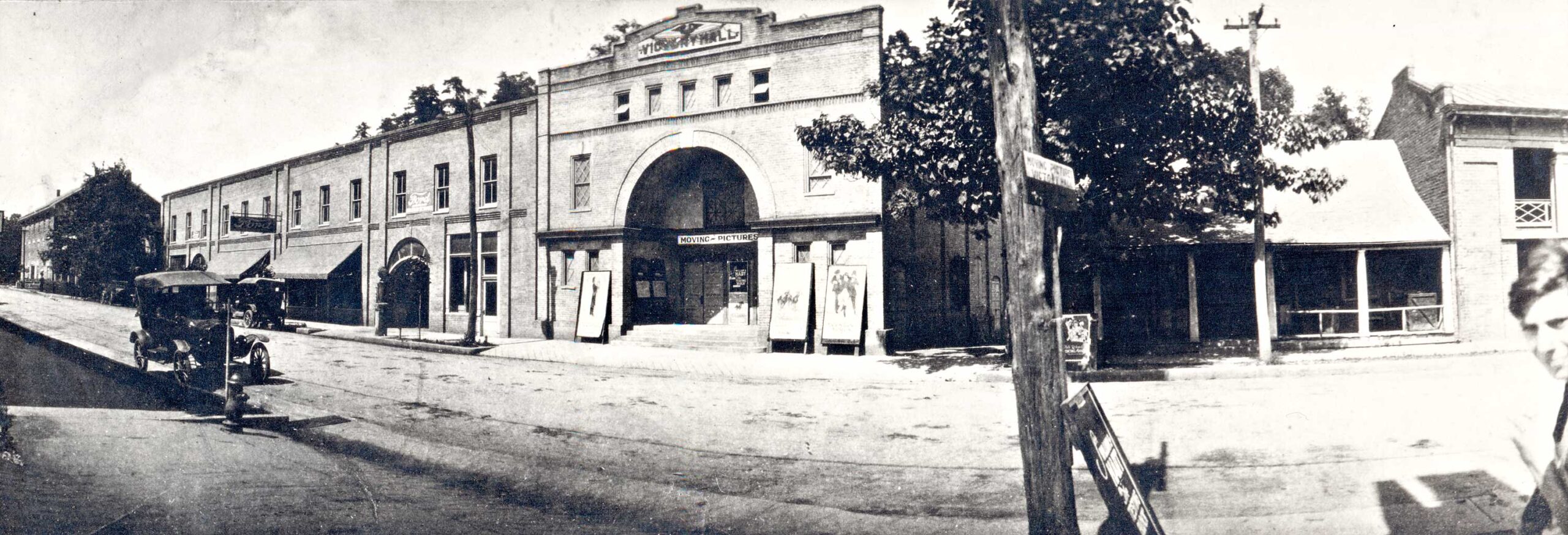
Victory Hall, later called Victory Theatre, was completed in 1920 on Scottsville’s Valley Street to commemorate the Armistice of World I. It was the dream of Scottsville drama teacher, Marion McKay, to have a setting for dramatic performances and traveling vaudeville and Chautauqua shows. Designed by D. Wiley Anderson, a local architect, the hall was constructed of yellowish brick made from John Martin’s foundry on the low grounds of old Snowden. Victory Hall became Scottsville’s cultural center for over four decades as it hosted local dramatic productions as well as the traveling shows that came to town each year. Even the famed violinist Fritz Kreisler once appeared here.
Victory Hall circa 1922
The exterior featured steps, an alcove, and an open half-dome, now preserved in the arch above recently-added front doors. The interior, designed like an opera house, had a lobby, stage, and proscenium. The hall comfortably sat an audience of over three hundred with an interior with a balcony, a lovely heavy velvet stage curtain and embossed valance, and two, large moose heads were displayed on each side of the stage. There were also two backstage dressing rooms. An ornate mirror, recently discovered intact, was part of the elegant decor which included chandeliers and upholstered theatre seats.
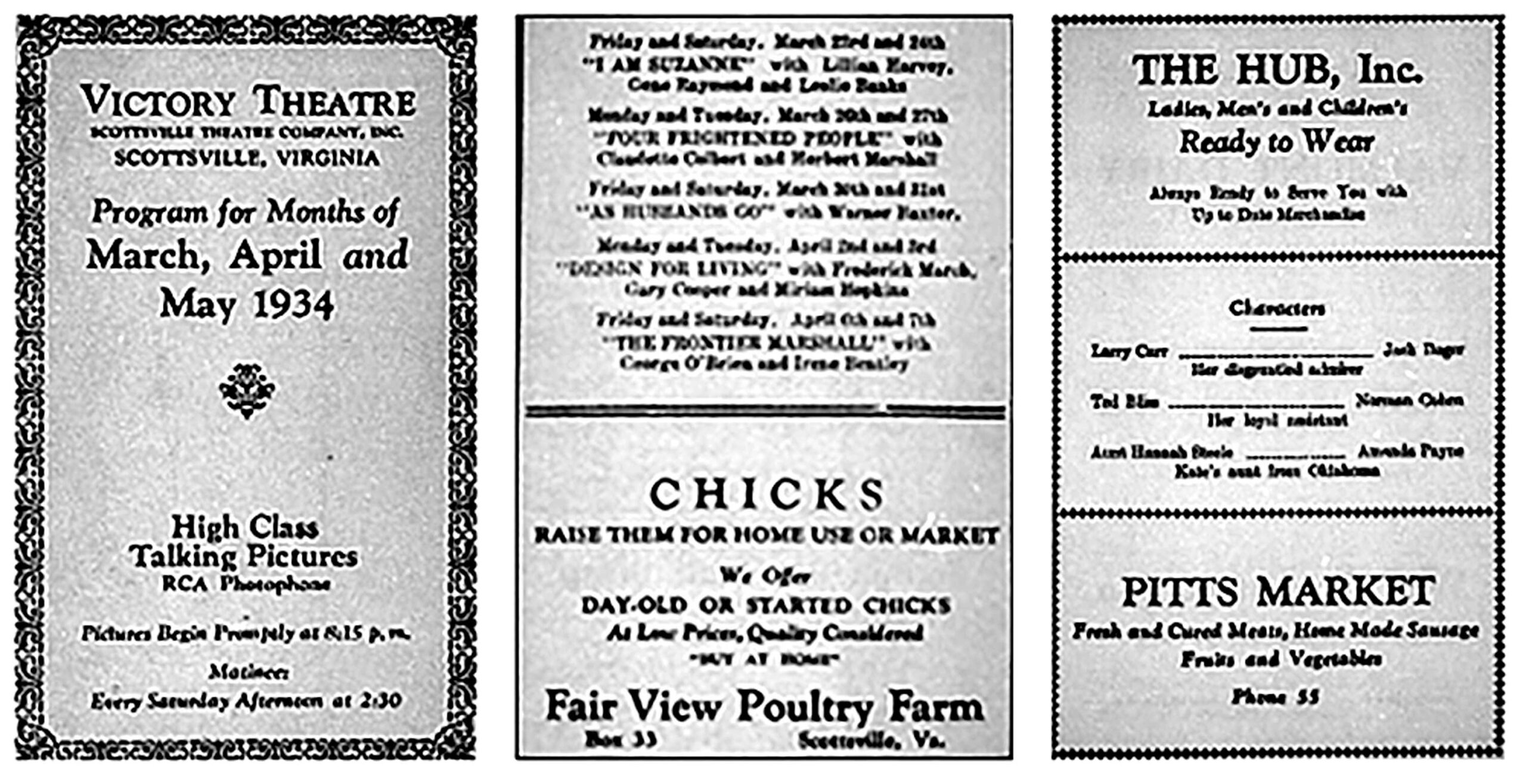
With the advent of movies, William E. Burgess introduced silent films with player piano accompaniment to Victory Hall audiences. Eventually the classics and musicals of Hollywood’s Golden Era were shown here using a big screen and modern projectors; shown below is the Burgess ‘Talking Pictures’ program for three months in 1934. However, live performances and events were always welcome on its stage. For over thirty years, Victory Theatre was the venue for Scottsville High School’s senior class plays, graduation ceremonies, beauty contests, and local talent shows. In the 1940’s and 50’s, many of the future greats of country music performed on the Victory Theatre stage.
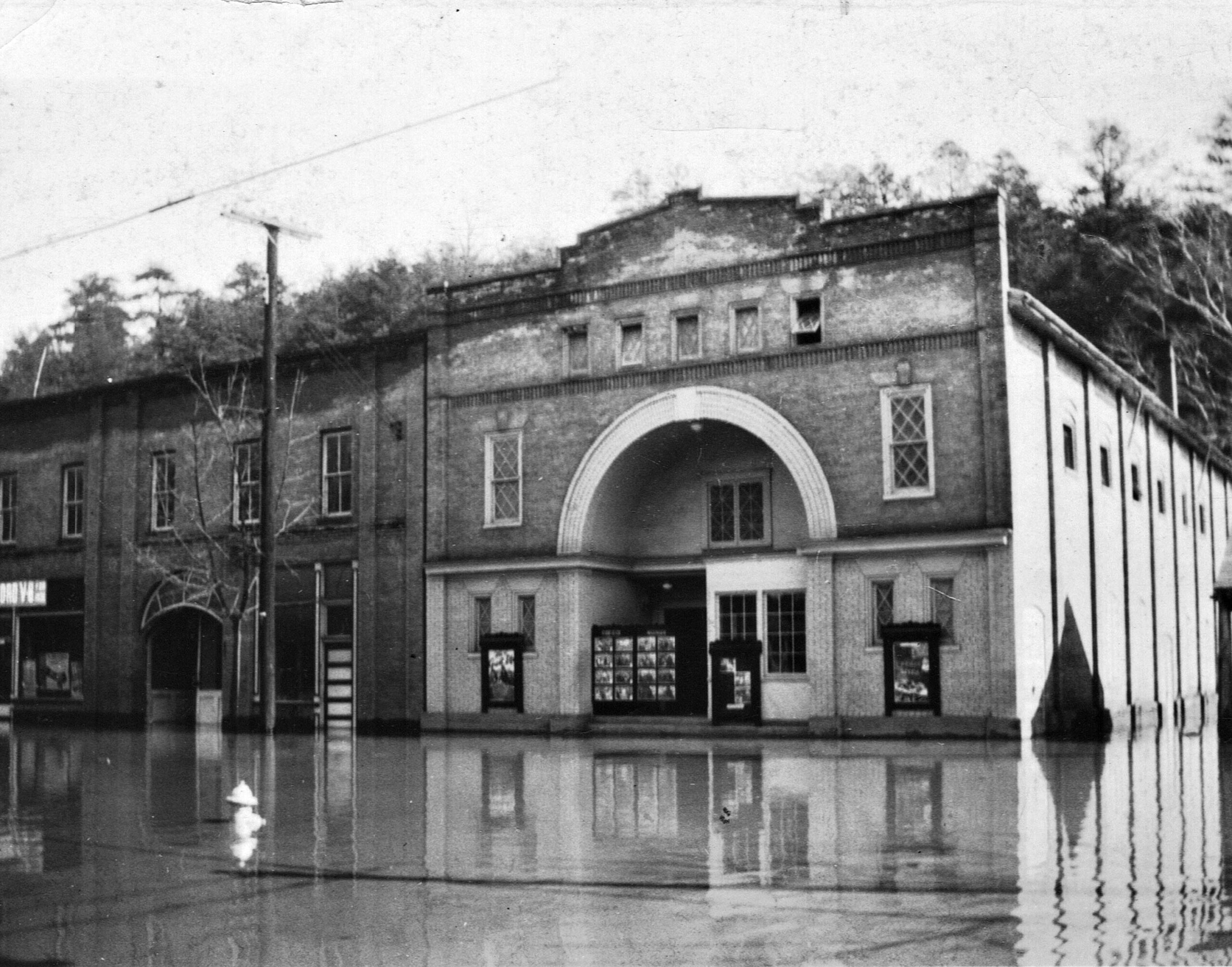
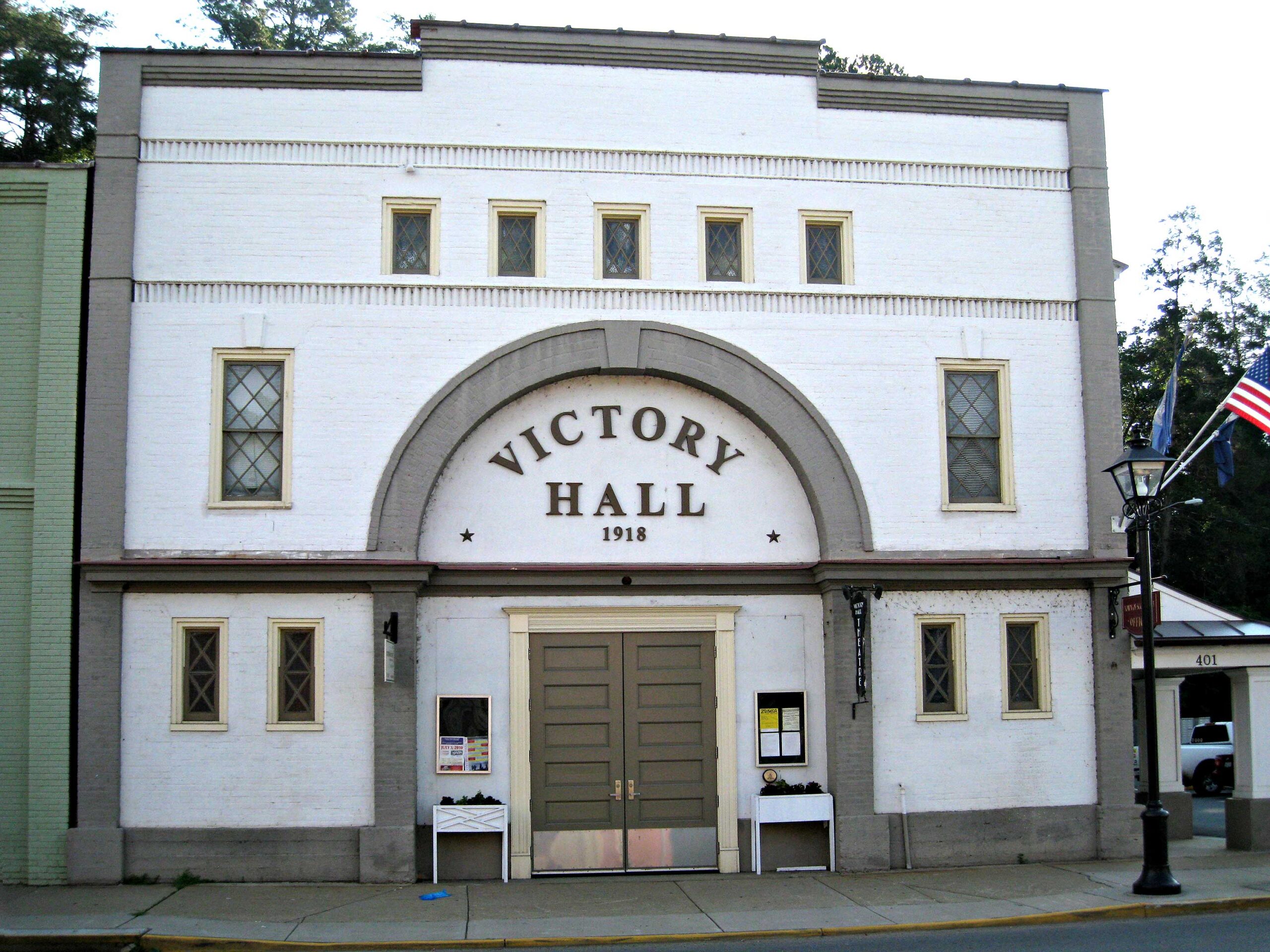
Victory Hall during the flood of 1936Victory Hall, 2010
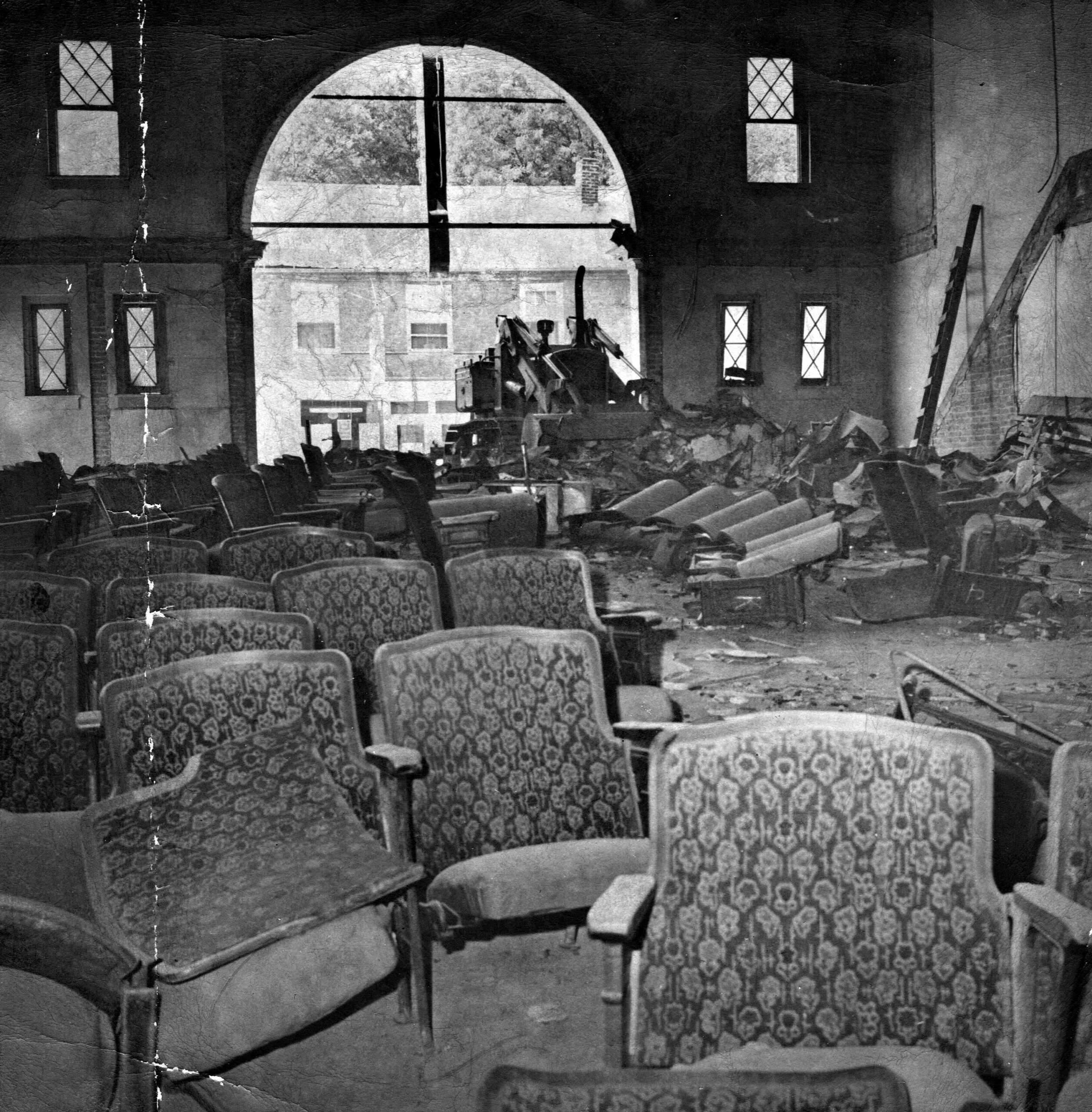
Victory Theatre eventually closed due, in part, to modern transportation and the increasing popularity of television. In the early 1960’s, it was converted into the Scottsville Municipal Building with town offices and meeting rooms upstairs, and a large parking bay downstairs which was first used by the volunteer fire department and later by the volunteer rescue squad for housing vehicles.
Theater conversion to rescue squad in 1967
After the rescue squad moved to its current Scottsville location, the Horseshoe Bend Players received permission to perform The Lion in Winter in the spring of 1999, using portions of the original Victory Theatre stage and auditorium. This was the first dramatic performance in the building in over thirty years.
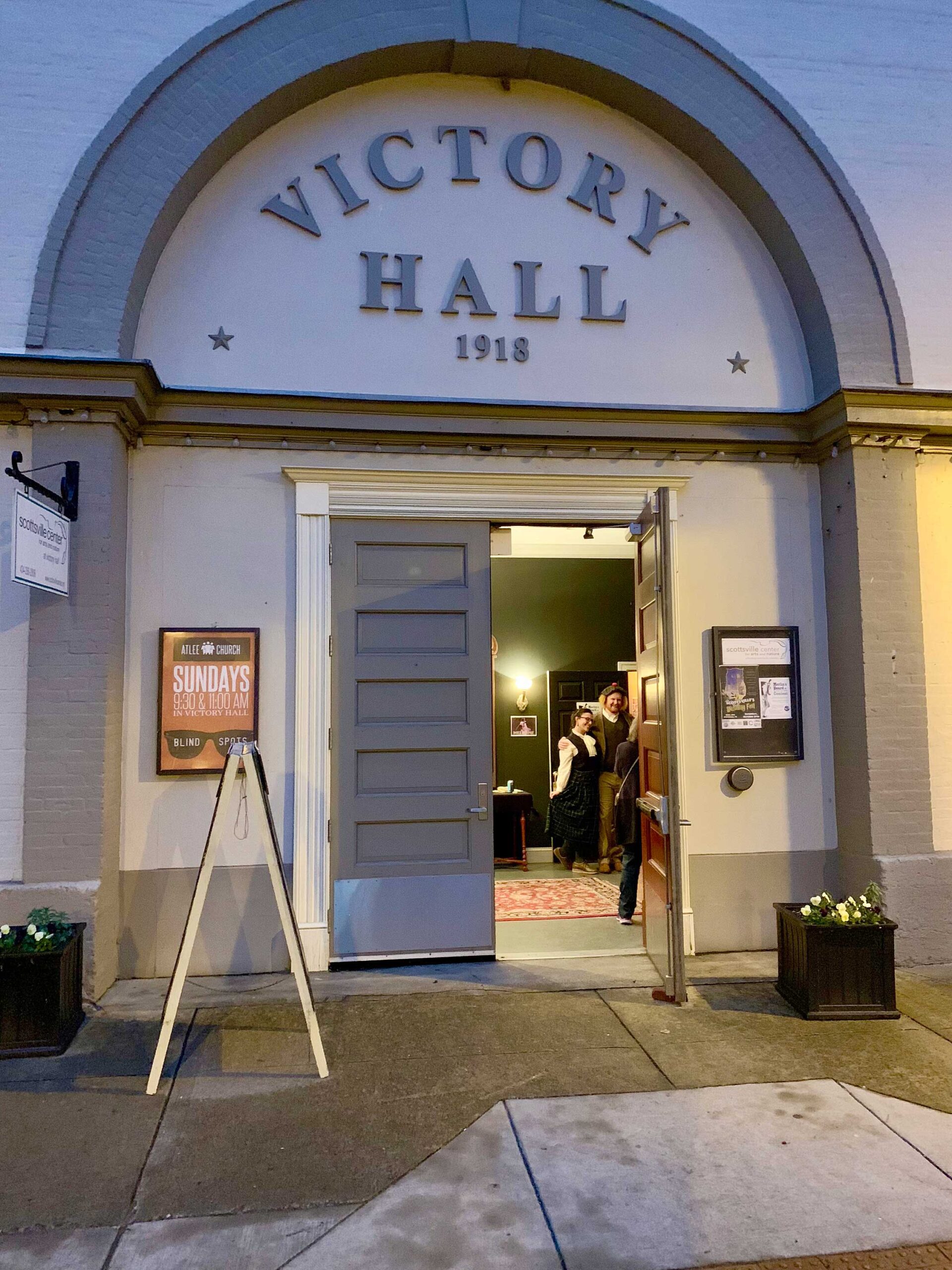
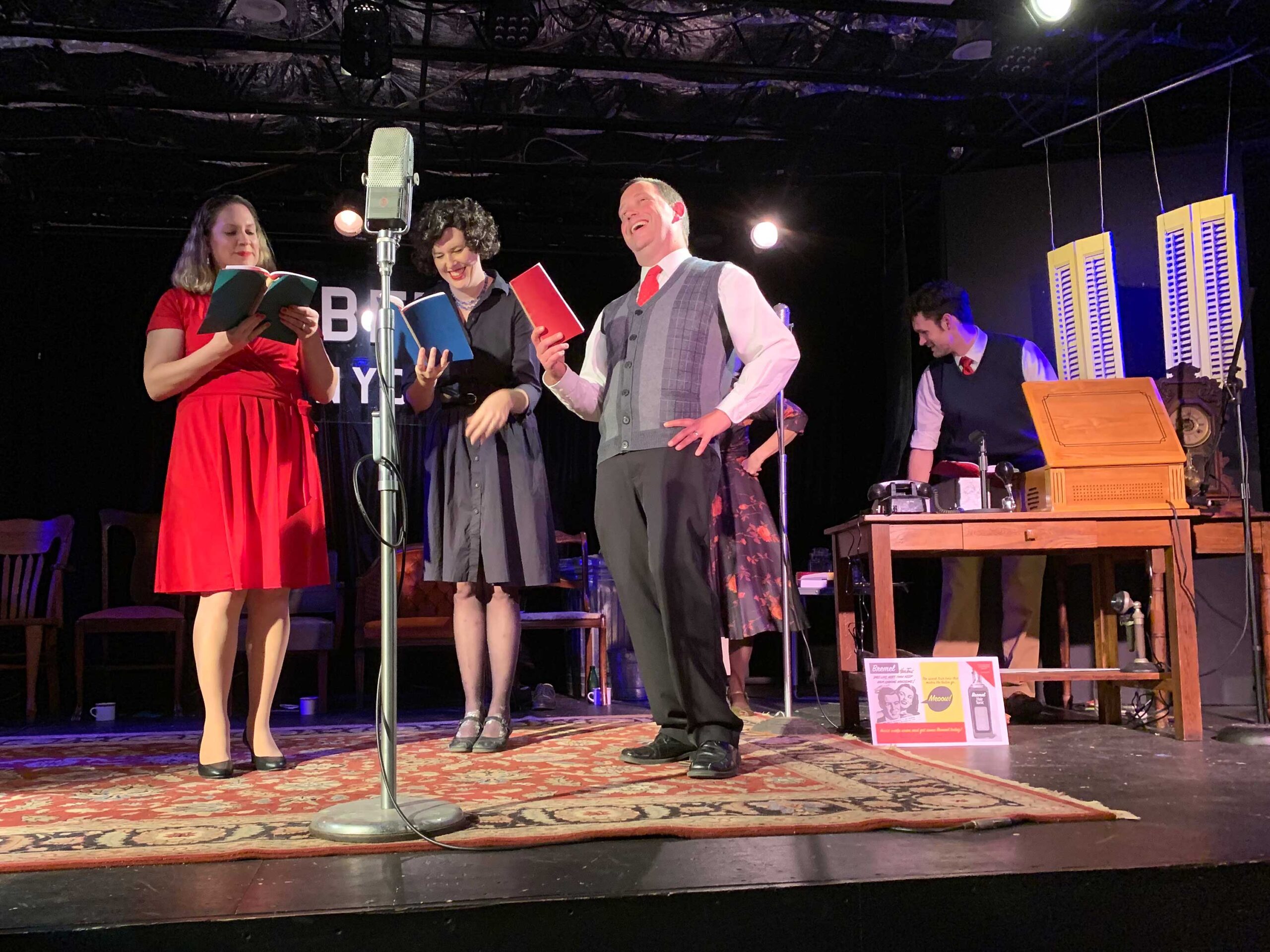
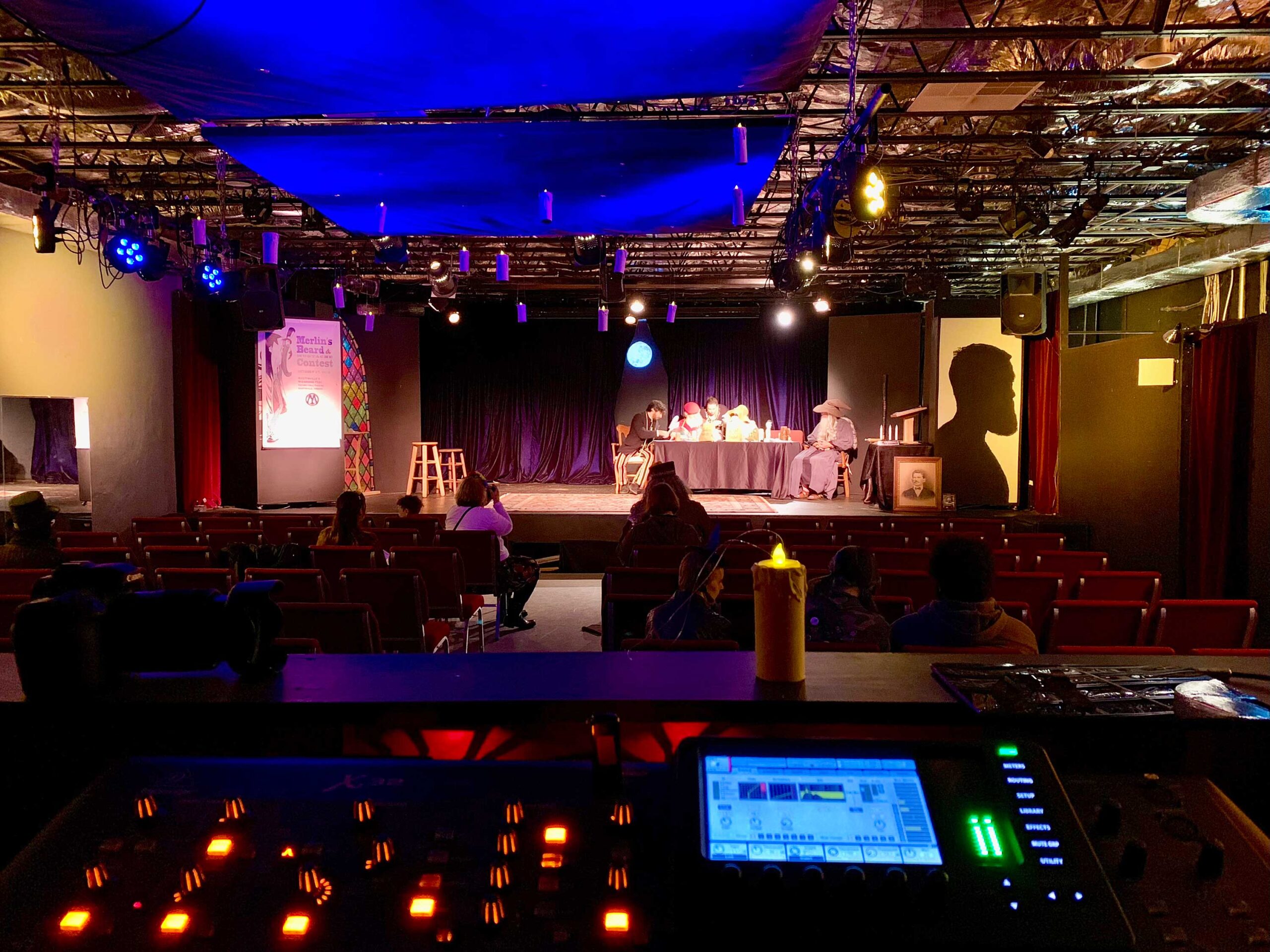
With help from the community and Town Council, the downstairs area of Victory Hall is once again a flexible community theatre space, a venue for music, drama, films, and cultural events. Exterior doors were installed in the front of the building. Interior spaces were constructed accommodating the ‘black box theatre’ performance area, a backstage area, tech booth, and renovated lobby. Scottsville Town Offices remain upstairs in this building.
– o • 0 • o –
Scottsville’s Victory Hall Has Played Many Roles by Robert K. Spencer Scottsville Museum Newsletter Number 9, March 1999
Victory Hall was conceived as a Scottsville community project in 1918 at the Armistice of World War I, when America emerged victorious in the so-called war to end all wars. The leading force behind the project was a lady by the name of Mrs. Marion McKay, a resident and drama coach well known for her productions to entertain townsfolk. Besides commemorating the Armistice, the chief practical impetus for the Victory Hall Project was the fact that Miss Hannah Moore’s Entertainment Hall was no longer usable. Her hall and her pond, which stood at the far east end of what is now known as Jefferson Street and in the shadow of School House Hill, had been the sites of innumerable good times for local folks. The hall had been the town showplace, and the pond, when frozen over in winter, provided great recreational skating.
Mrs. McKay quickly gained the backing of other prominent citizens who recognized the need for a town hall with an auditorium, including local architect D. Wiley Anderson, who drew up the plans for the building, and Mayor Jackson Beal, who probably thought of the idea of people sponsoring bricks for the construction. Soon nearly everyone in the community was helping with the Victory Hall Project.
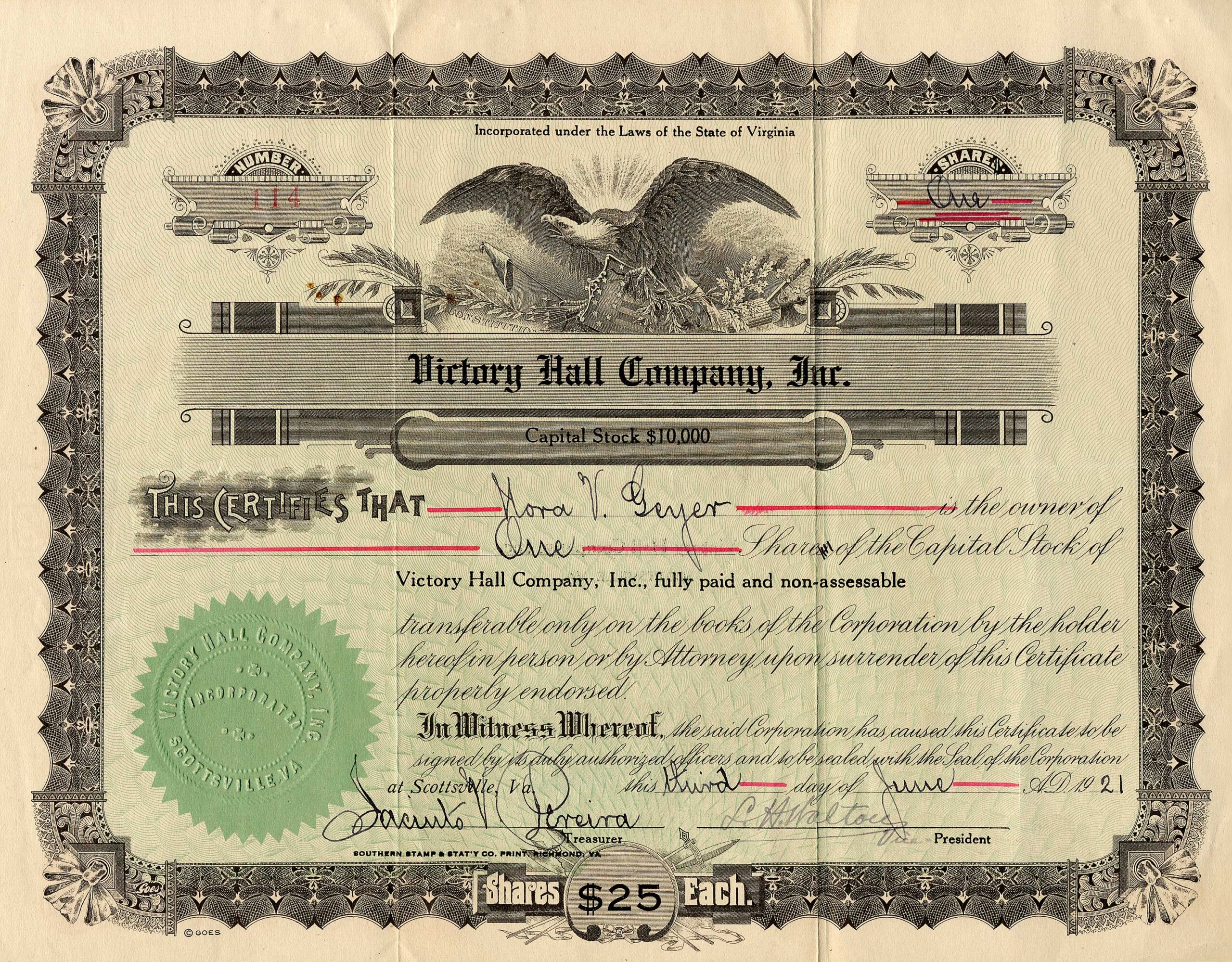
Citizens were invited to subscribe to stocks in the Victory Hall Company, Inc., for funding construction, and certificates were issued. People were asked to buy as many bricks as they could afford for the building. The yellowish gray bricks used were made in John Martin’s foundry located on the lowgrounds at Snowden across the James River Bridge. These bricks also were used in several other structures in town. At a meeting of the corporation held on March 13, 1920, Mr. Jacinto Pereira, Treasurer, reported that to date $2,837.50 had been collected, and he urged that all subscribers who had not paid up should do so immediately, so that the building could be pushed to completion. Indeed, Victory Hall was completed that year, and Scottsville had a spacious new public auditorium that would efficiently and variedly serve the community’s cultural and social needs for several decades.
Not only did the new facility provide a venue for Mrs. McKay’s dramatic productions, it also was acclaimed by the Chautauqua and vaudeville performers who came to town every year and it became the site of many special events and ceremonies of Scottsville High School, and it was a splendid place for town meetings, public recitals and lectures, and forums. For three decades, graduation ceremonies, Senior Class plays, beauty contests, and talent shows were held in Victory Hall.
When the first moving pictures (the “silents”) became available, Victory Hall was leased to Mr. Willie Burgess, the famous local photographer who brought that new form of entertainment to Scottsville Later on, from the mid-1930’s to the early 1950’s, the hall became known as Victory Theatre, showing as many as three feature movies a week. From the late Depression years through World War II, Nelson Tindall and Luther Baber of nearby Centenary leased the theatre and showed the great early musicals and all the war movies. Sometimes there were special showings of movies like “Mrs. Miniver” to benefit the war effort with bond sales. From the mid-1940’s until the advent of TV, the theatre was operated by Reeve Nicholas and Edward “E.D.” Dorrier, who continued to bring all the movies of Hollywood’s Golden Era to our small-town, loyal audiences. It was not unusual on Friday or Saturday evening in the 1940’s for almost all of the 386 seats, including the balcony, to be filled. Tickets then were 35 cents for adults and 25 cents for children under twelve.
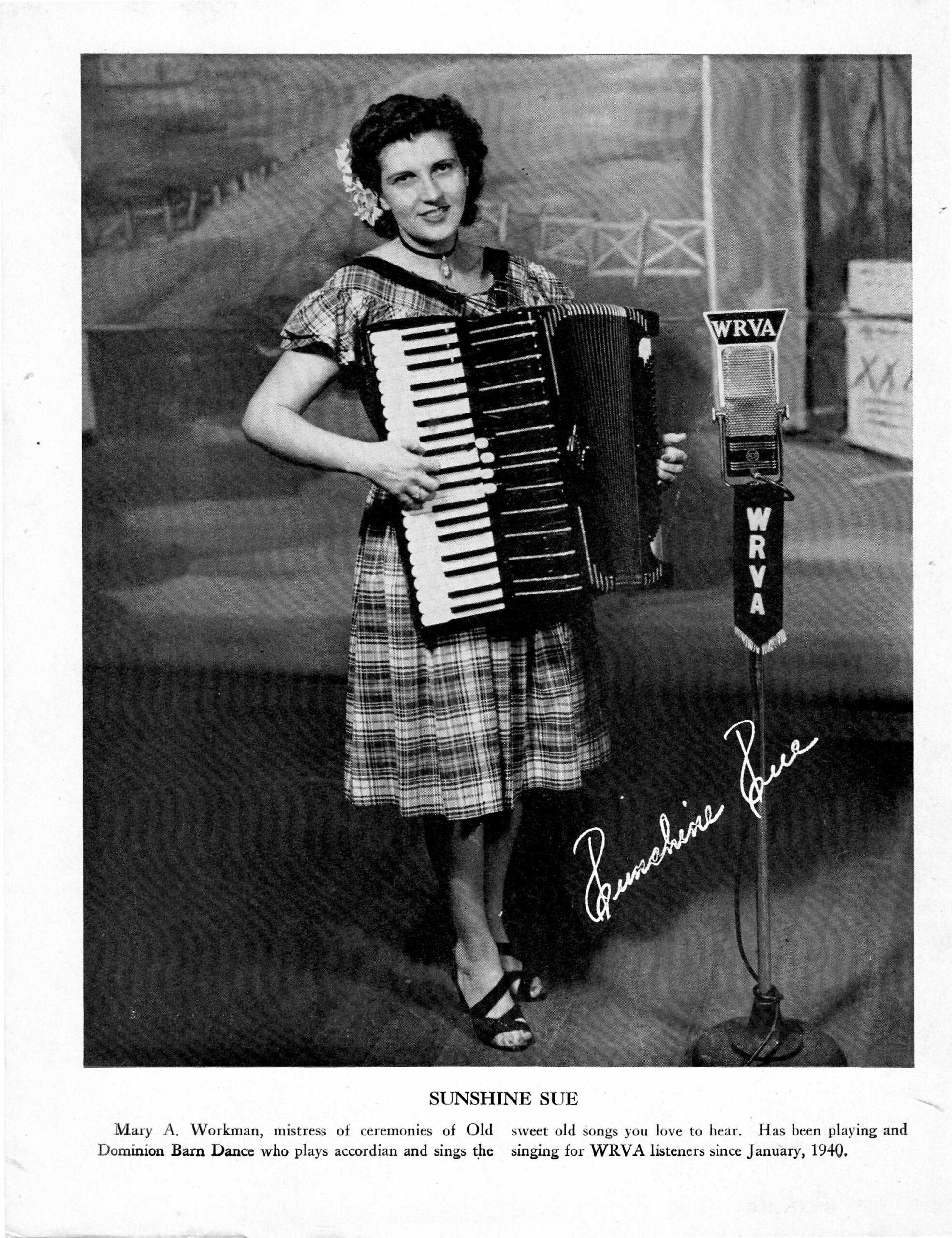
Through all its years of operation, the Victory Theatre also booked an impressive array of “live, in person, on the stage” shows ranging from western movie stars, future country music greats, magicians, and novelty entertainers to Bob Portfield’s trouping Barter Theatre actors. Many of these were sponsored by civic groups wishing to raise funds and, of course, there were annual events like the Lions Club Variety Show and the “Miss Scottsville” Beauty Contest put on by a school group. Country music stars, long “before country became cool,” were a big draw at the Victory Theatre, sometimes necessitating two or more performances. A particular favorite was Sunshine Sue (shown at right) of WRVA Radio in Richmond, and her Old Dominion Barn Dance gang, which included such future greats as Chet Atkins, Grandpa Jones and Ramona, Joe and Rose Maphis, and June Carter Cash. Others who appeared were the Carter Sisters with Mother Maybelle, Lester Flatt and Earl Scruggs, Bill Monroe, Mac Wiserman, Stoney and Wilma Lee Cooper, Patsy Cline, Hank Williams, Smokey Graves, and so on.
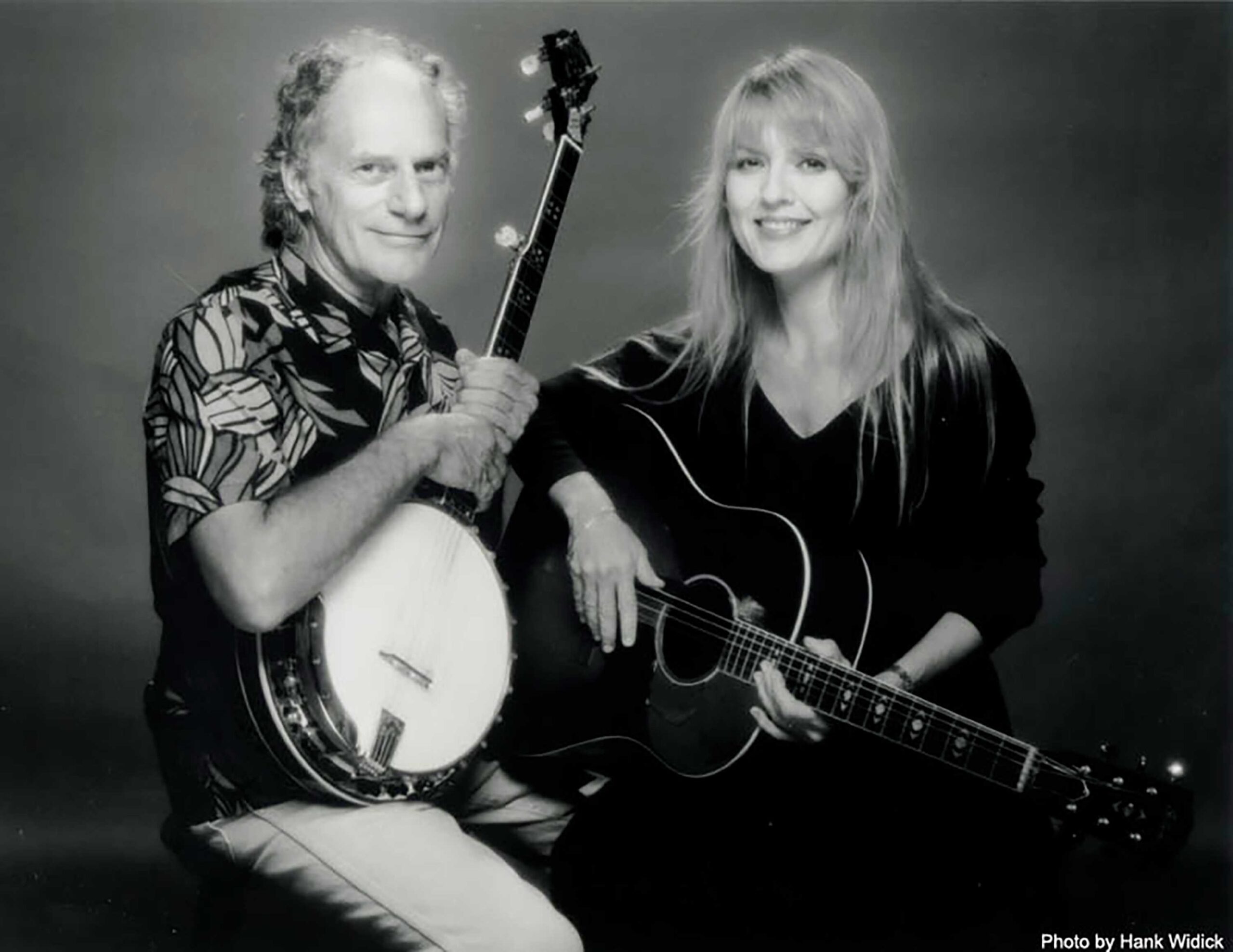
Eddie and Martha Adcock
Scottsville’s own Eddie Adcock, a pioneer world renowned star in bluegrass music, got his start on the stage of the Victory Theatre. Eddie would play his banjo and guitar and sing for the Saturday night crowd before the movie began. At an early age, he joined one of the country music bands that played the theatre. It is hoped that soon Eddie, with his wife and co-star Martha (shown at left), will be able to return to the remodeled stage where he began.
Around 1962, the Scottsville Town Council began to feel that they had a big white elephant on their hands in old Victory Hall. It was noted that the Scottsville Volunteer Fire Department needed larger quarters for its vehicles, so the decision was made to tear out the theatre seats, flatten the cement floor, and create a parking bay for the fire trucks. Also, extensive remodeling was done to the upper level, creating meeting rooms, a town office, a kitchen, and restrooms. So, in 1964, Victory Hall became known as the Municipal Building with the ground floor becoming a large garage. By the mid-1970’s, the Fire Department had built its new station in the uptown area of Scottsville, and the Volunteer Rescue Squad moved its vehicles into the parking bay. Just this past January, the Rescue Squad moved into their new, modern headquarters just outside of town.
Now it is pretty obvious that the old Victory Hall ain’t what it used to be, or even what it has been for the past three decades, but it still can claim a great deal of character and usefulness. The old stage and the dilapidated dressing rooms are still there facing a cavernous space that once was an auditorium. Fortunately for this great old landmark that has played so many roles, there is considerable interest by numerous individuals and several local organizations in turning what is left there into a modest but modern theatre suitable for plays, concerts, lectures, public meetings, and even the showing of movies.
Victory Theatre Remodeling Committee has been formed and working for several months with input from the Scottsville Council for the Arts, the Horseshoe Bend Players, the Family Players Music Studio, an architect, and other interested individuals. The committee will coordinate efforts with town officials on this project. A special fund has been started and contributions have already been received. Anyone interested in helping with the project should contact Robert Spencer, Committee Chairman, or Wyatt Shields, Town Administrative Official.
Top Image Located On: Capturing Our Heritage, CDB03 Roll3Neg20A.tif Roll3Neg20A.jpg Roll3Neg20A.psd
Middle Image Located On: Capturing Our Heritage, CDCG08 CG86cdCG08.tif CG86cdCG08.jpg CG86cdCG08.psd
The images of Sunshine Sue and Eddie and Martha Adcock were contained in the March 1999 Scottville Museum Newsletter and are part of the Robert Spencer collection at Scottsville Museum.