Back in college, I often drove out to the Blue Ridge to clear my head. A couple of hours on the Parkway or Skyline Drive did wonders to reset whatever was muddling my thoughts. My buddy, sometime roommate, often did the same. He was up from Guatemala for a while this summer, and we converged out in Shenandoah for a reset. He drove down with extended family from DC.
We met at Big Meadows for lunch, but before that I took a short solo hike to Black Rock Summit. We had a good two days of heavy rain after a week of sweltering heat here in Virginia, but the storm cleared out at dawn. Cleared out the air as well as my head.
The Appalachian Trail passes through here, paralleling the ridge. It’s easy to hop on the trail for short legs. This section passes over the summit, through a rubble field of shattered rock outcroppings. In some places, threading between fractured walls of granite, smooth faces like Inca stonework.
Scrambling up the blocks of stone, from the top there’s a 360 degree view. Tatters of clouds drift up the hillsides and tumble over saddles into valleys, tangle in the trees and hollers.
The lichen are vivid from the rain, and moss revives in cracks and crevices.
The fog and clouds cleared off for an afternoon of sunshine and light breezes. Enough for a second leisurely sail.
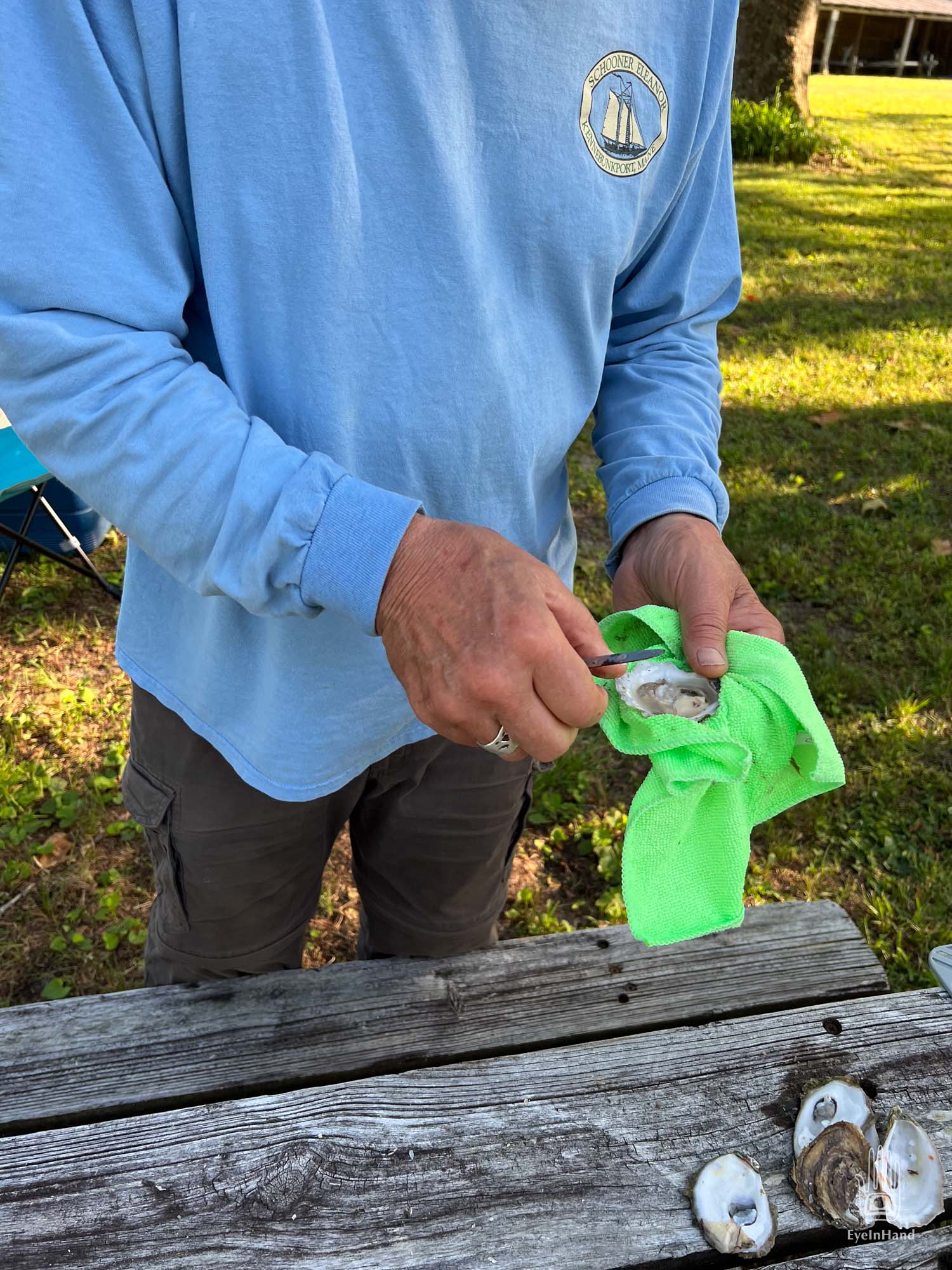
Saturday Supper is always a big pot luck. Lots of great food spread out under the sycamore trees. Dennis and I picked up four dozen local briny oysters to share, and spent most of the evening shucking and jiving and telling stories over beer, lasting past dark when the feast moved around a fire and went late into the night.
Overnight a big rainstorm came through, but was clear again by morning, and too windy to sail. Blowing hard again out of the north. Enough to dry out the tents and gear in time to pack up. Which worked up our appetites again. Vera shares my love of soft crabs and made a few calls around Urbanna. We were in luck, they were in season and we were now on a joint mission to procure a traditional Chesapeake Sunday Brunch.
The Church Crowd beat us to our usual spot, the Virginia Cafe, and the ladies in big flowered hats snapped up the last ones. Next door was sold out, too. But local knowledge goes a long way, and soon we were off down backroads to a working seafood dock with an open air kitchen attached. Success! Fried Soft Crab Hoagies, fresh local flounder with mango chutney tacos, hush puppies, and iced tea.
Another great trip. So glad to be back on the water again.
The wind blew itself out overnight. At dawn I can hear crabbers dropping pots in the water a quarter mile across the water. Big Deadrise Diesels sound like distant thunder as they fire up and head out. This far upriver, though, crabbing is done from flat bottom outboard skiffs, usually by one man working alone. I put water on for coffee and watch one work a line of pots in the fog. It’s a slow motion rodeo, a cowboy on a floating quarter horse doing slow turns around the barrels. Spin slowly around the buoy . . . pull pot – dump crabs– add bait – drop pot . . . then peel off to the next one. Repeat. Repeat. Repeat. The wake draws a line, connecting dots of buoys in the river.
A light breeze comes up, opposite direction of yesterday, and clears away the fog. Took my coffee to the docks and watched our remaining sailors creep out of the creeks and make their way in – some sailing, some rowing. Still others arrive by land with boats on trailers. The sun comes out. Soon a whole fleet of beautiful wooden boats is pulled up along the small beach.
Jim Arthur’s Coquina “Ginger”
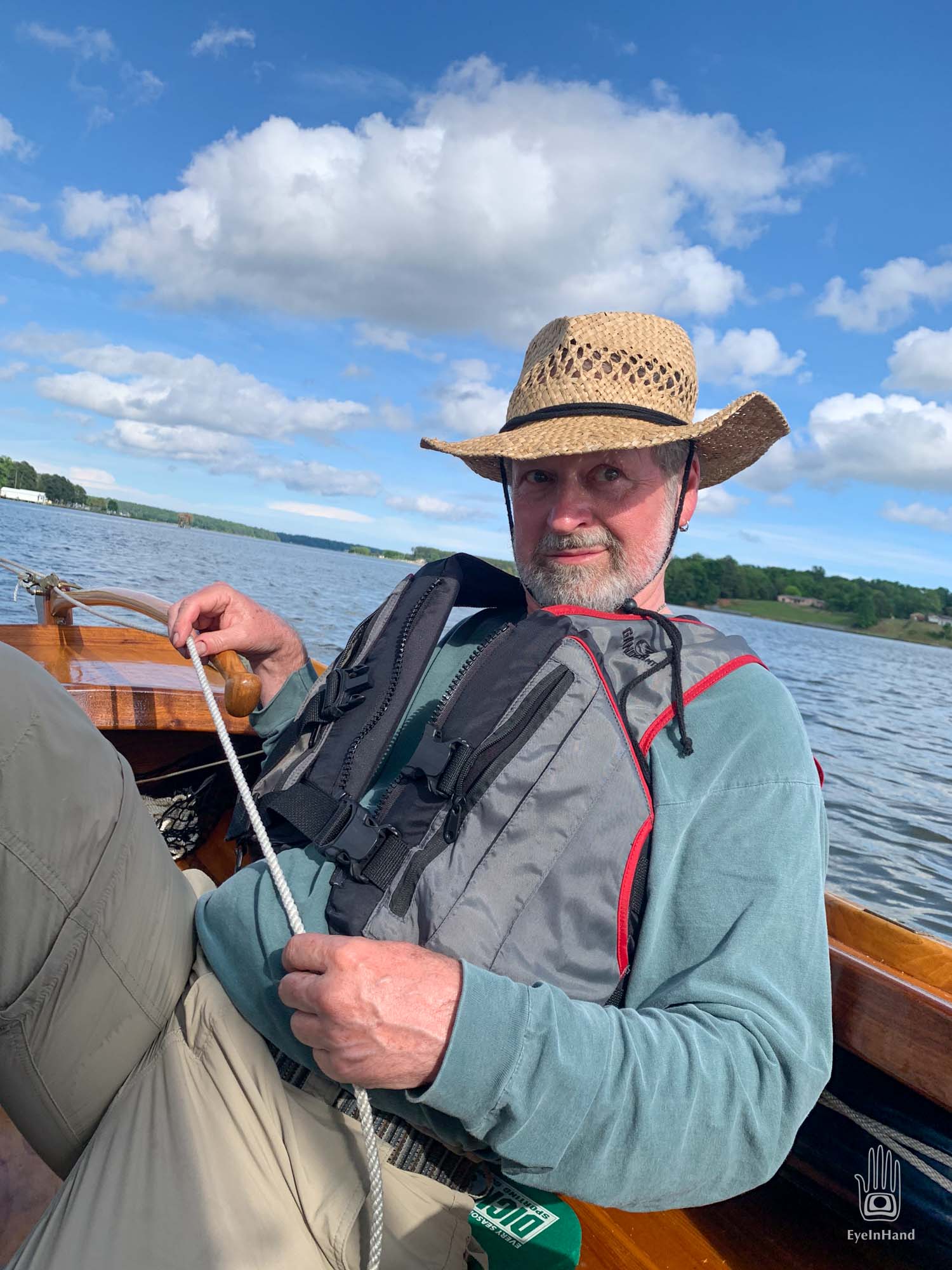
One of the best moments of these gatherings is to see up close the boats you know already only from photos and videos. And their owner/builders, too. Jim Luton and Holly Sears moved down from Brooklyn a couple years ago. Holly has connected with one of the oldest sailing clubs on the Bay, and teaches sailing classes there. Didn’t take long for Jim find his way to the boat shop at the Deltaville Museum. Now he and John England and museum volunteers build deadrise power skiffs, a traditional style of wooden boat native to this region.
Holly launches Cricket, now owned by friend Kerry Fisher.
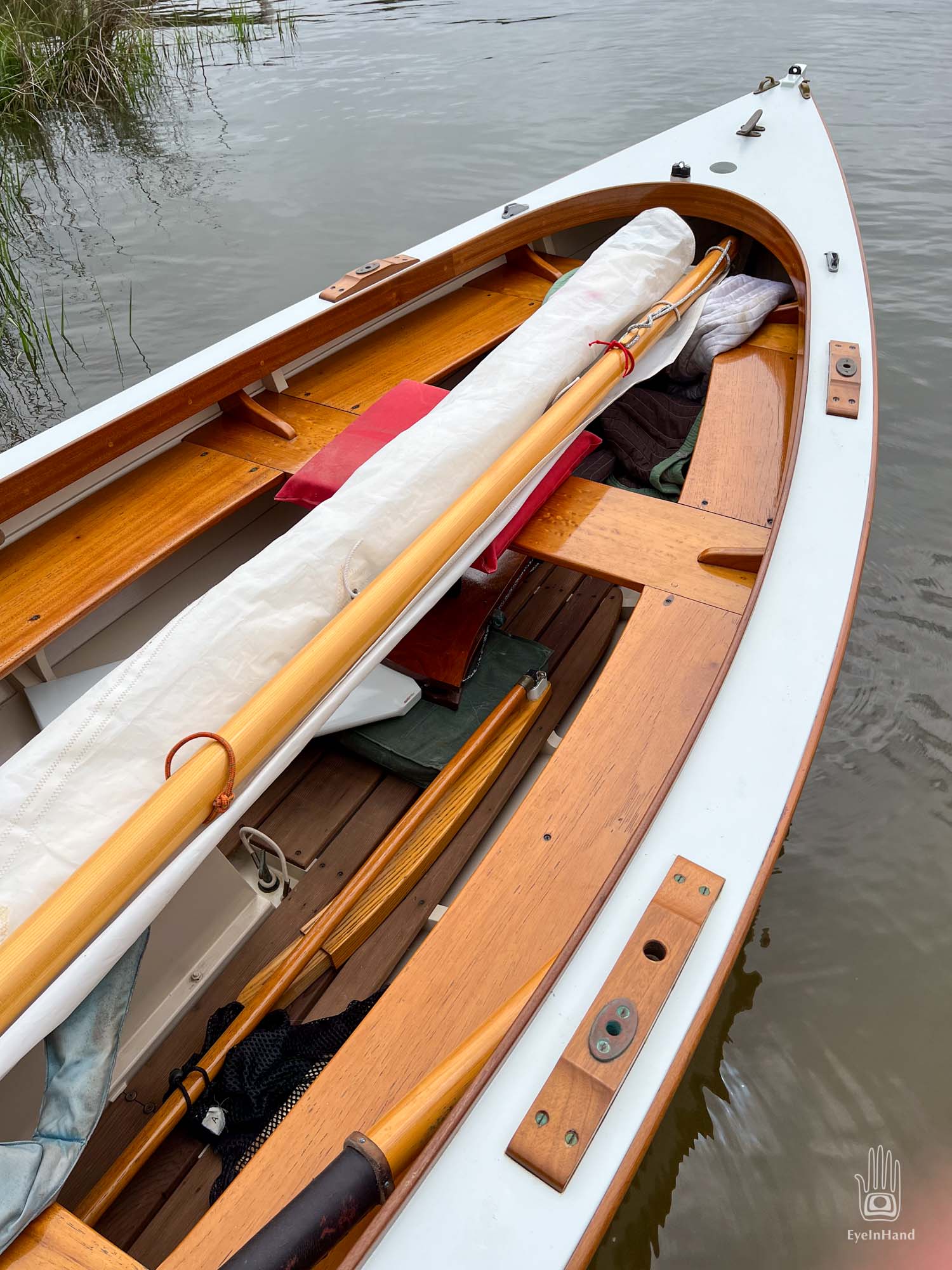
From photos, though, I only knew about the sailboats he built in his shop in Brooklyn. First was a sharpie skiff called Cricket, with a leg o’mutton rig and the classic lines of Chesapeake and Carolina Crabbing Skiffs. Next was the more challenging Matinicus Peapod – all lapstraked and round bottomed, pointy on both ends – designed for the lobster fishery of Matinicus Island in Maine. And here they both were, more beautiful in person than pictures.
Holly rigs the Matinicus Peapod built by Jim Luton.
There are also new boats to me: Greg Taylor’s recently completed Tom Cat, which he turned up to 11 on the detailing, and Rob Kunzig’s Ilur.
Greg Taylor’s Tom Cat
And there are familiar boats not seen since pre-pandemic times. John and Vera’s traditional skiff I know from here and St. Michaels. Dennis Keener’s Caledonia Yawl has fresh paint and a new color scheme, Eddie Breeden’s always fast Sooty Tern, Harris Bucklin’s Caledonia, and Jim Arthur’s Coquina, a fast boat that sails like a wet witch.
Eddie Breeden’s Sooty Tern “Luna”John & Vera EnglandDennis Keener’s Caledonia YawlAn outboard Deadrise Skiff built at the Deltaville MuseumCricket and the fleet on the beach.
Most of the guys who started days ago were beat up pretty well by the wind, had enough and pulled out. The rest of us late comers all set out for a leisurely sail in the Piankatank.
My first saltwater outing in five years was a bumpy re-entry. T and I rigged and shoved off fine, but Aeon’s rudder caught on submerged riprap off the beach by the ramp. By the time we wiggled free we were no longer pointing to open water. Instead, got swung round aiming directly at the dock, and the boats tied to it. I bumped everything possible between the shore and the river – docks, and boats – not hard, but much to our mortification. Everyone was on the dock for the show, of course. Which is just as well – they grabbed lines and fended us off with no visible scars, mine or theirs. And Vera made us all pause mid-bumble to capture the moment.
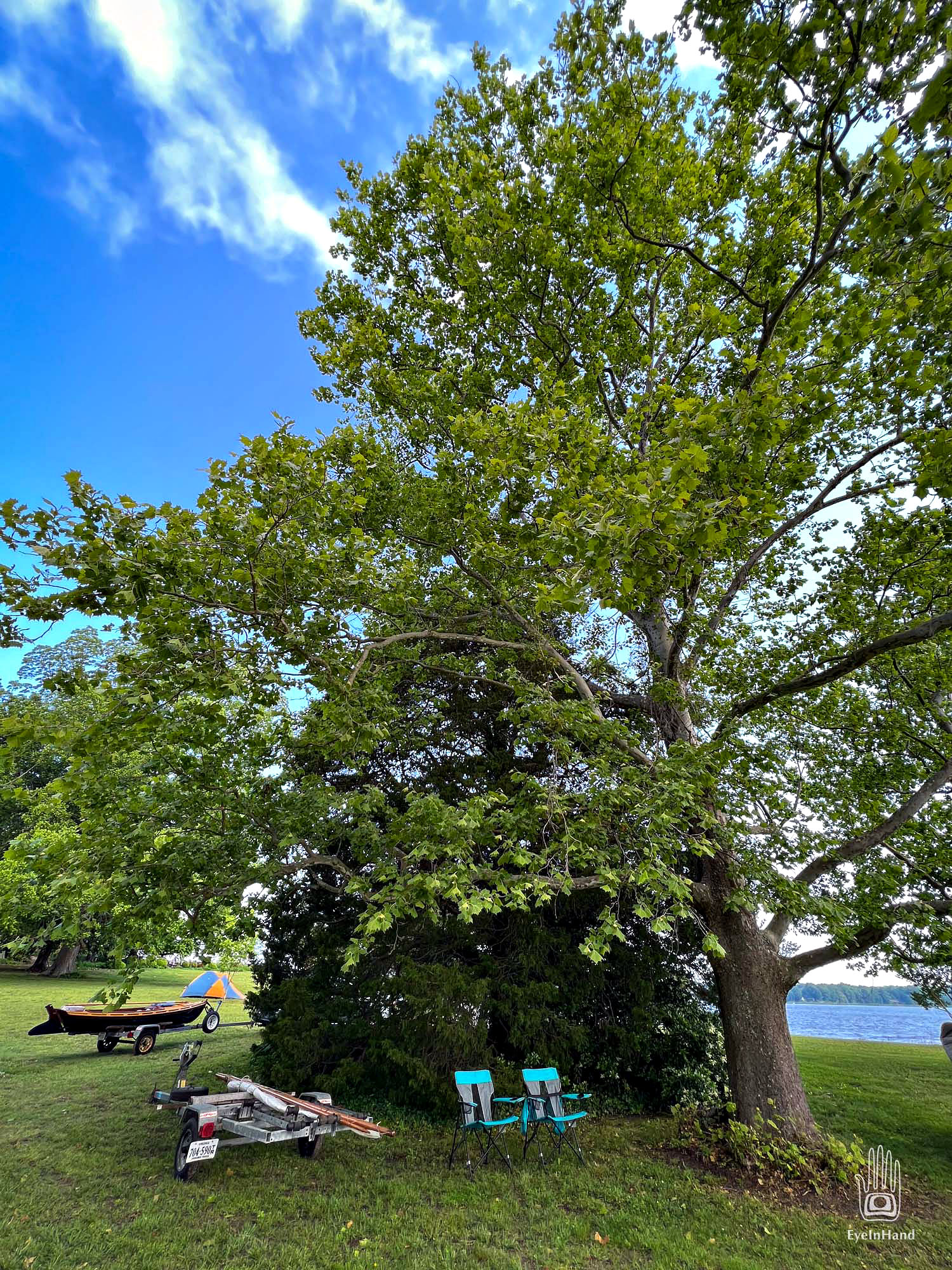
View from our campsite. Jim Luton’s Sharpie Skiff, now owned and sailed by his friend Kerry Fisher.
Vera England can tell you the entire official name. She told me four times and I still can’t repeat the whole thing. But whatever you call it, it’s a terrific time at an undisclosed location somewhere on the Piankatank River in Gloucester County, Virginia. Beautiful boats, good people, and great food.
I missed the annual Chesapeake Float on the Eastern Shore again this year. Also on the Old Bay Club overnight event. Both took place earlier this week, but I just wasn’t ready yet. Smart call, as both groups had a challenging gusty wind in the small craft warning range.
After five years on hiatus, it took me most of a day just to pack and load; a task that gets easier each time. We were happy just to hit the road early Friday and arrive mid-day. Very happy.
Like the Chesapeake Float, this event has been held almost without fail for over 30 years. In this case, Vera and John have organized it with friends and family for over 40. Last time I was here the camping area was full and the beach and docks were packed with boats. But time creeps onward. Some folks have aged out or moved away; those who were kids only a few years ago now have busy families of their own. I warned T there could be a big crowd, but we were the only people on site until Friday evening. We had our choice of campsites, and pitched the new tent in a gusty wind. Was like trying to wrestle and stake down a hot air balloon.
With whitecaps on the Piankatank, there was no point launching the Melonseed, so we had a relaxing afternoon strolling the waterfront and exploring the farm.
The Old Bay Club two day event flowed into this one, and boats sailed up in scattered pairs through the day. We caught lines and helped with docking and hauling out, catching up with old friends. Some chose to spend another night out on the water in various coves and creeks, so arrivals stretched through morning of the next day. All came in telling their own version of adventures, encounters with wind and watermen over the past 48 hours, tired but exhilarated. And happy to be back on solid ground.
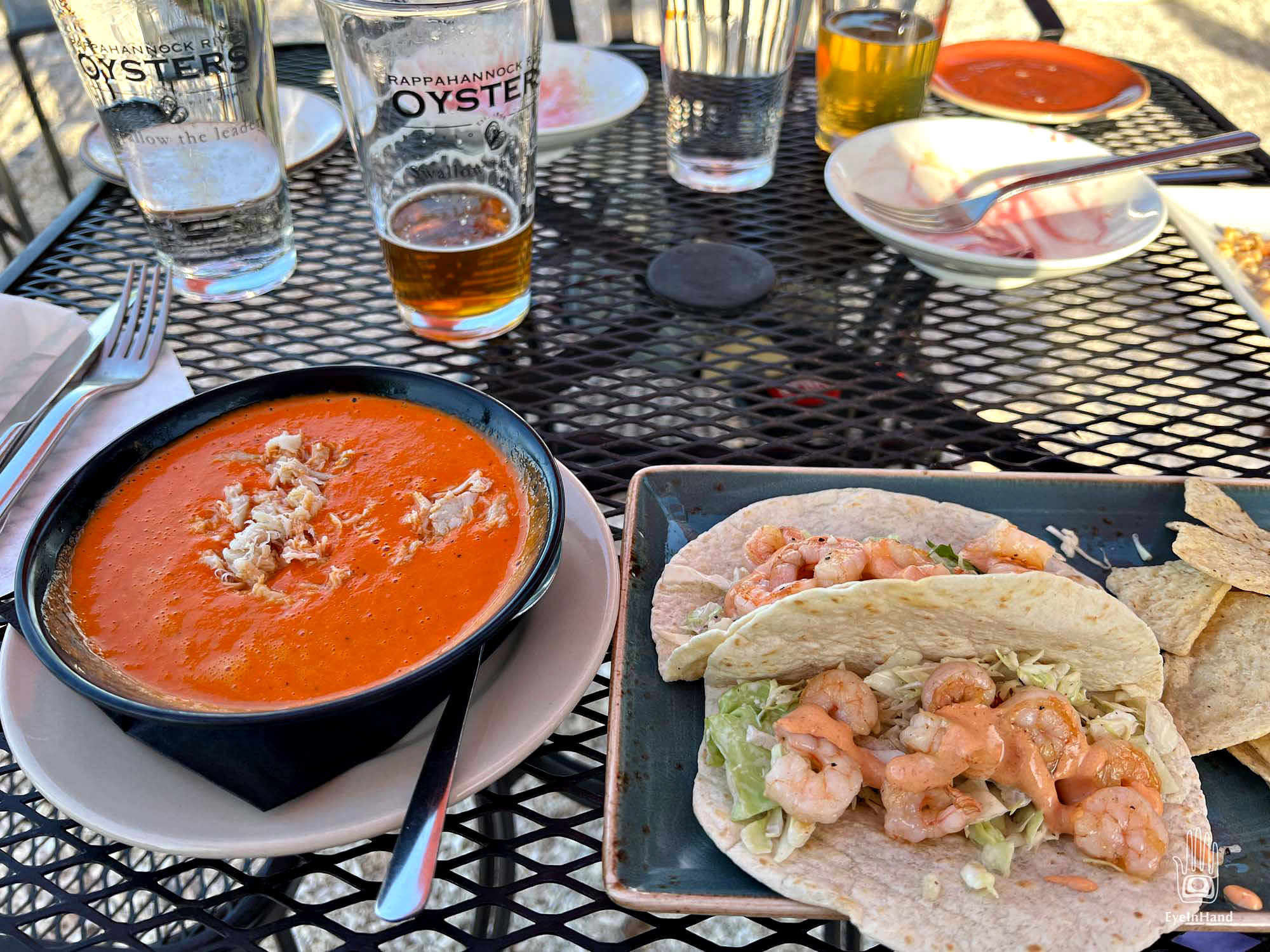
While the first sailors got settled and walked off their sea legs, T and I splurged on a seafood dinner at a favorite restaurant nearby. The wind had settled some, enough that a table by the water was welcome.
The last steamboat stopped at these docks in the 1930s. This old building, in the same family since before the Civil War, served as both steamboat office and general store. The owner, our host for the weekend, showed us around the mostly intact interior, and shared some of the history.
Thoroughly educated and well traveled, he spent a lifetime as an avid hunter. The shelves are lined with trophies and classic sporting gear, animal hides for rugs, a collection of vintage fishing lures, old photos, and antique farming implements. It’s an impressive display.
With only four of us camping that night, we turned in early and slept well, despite wind thrashing the tent until almost dawn.
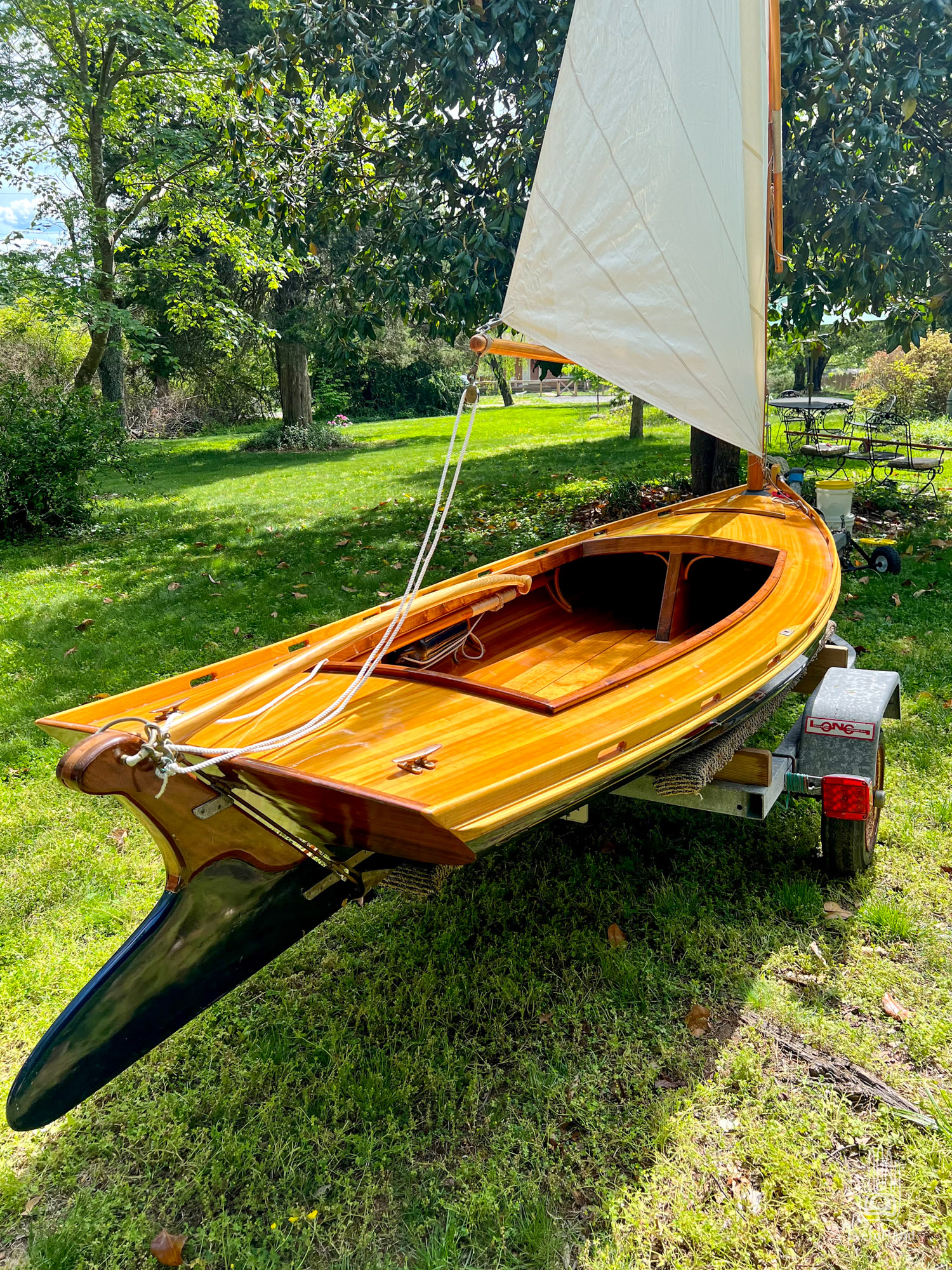
Got one of the boats out of the shed after a long winter nap. Washed off all the dust and mouse nests, gathered up the scattered bits, and tried to remember how all this stuff works again.
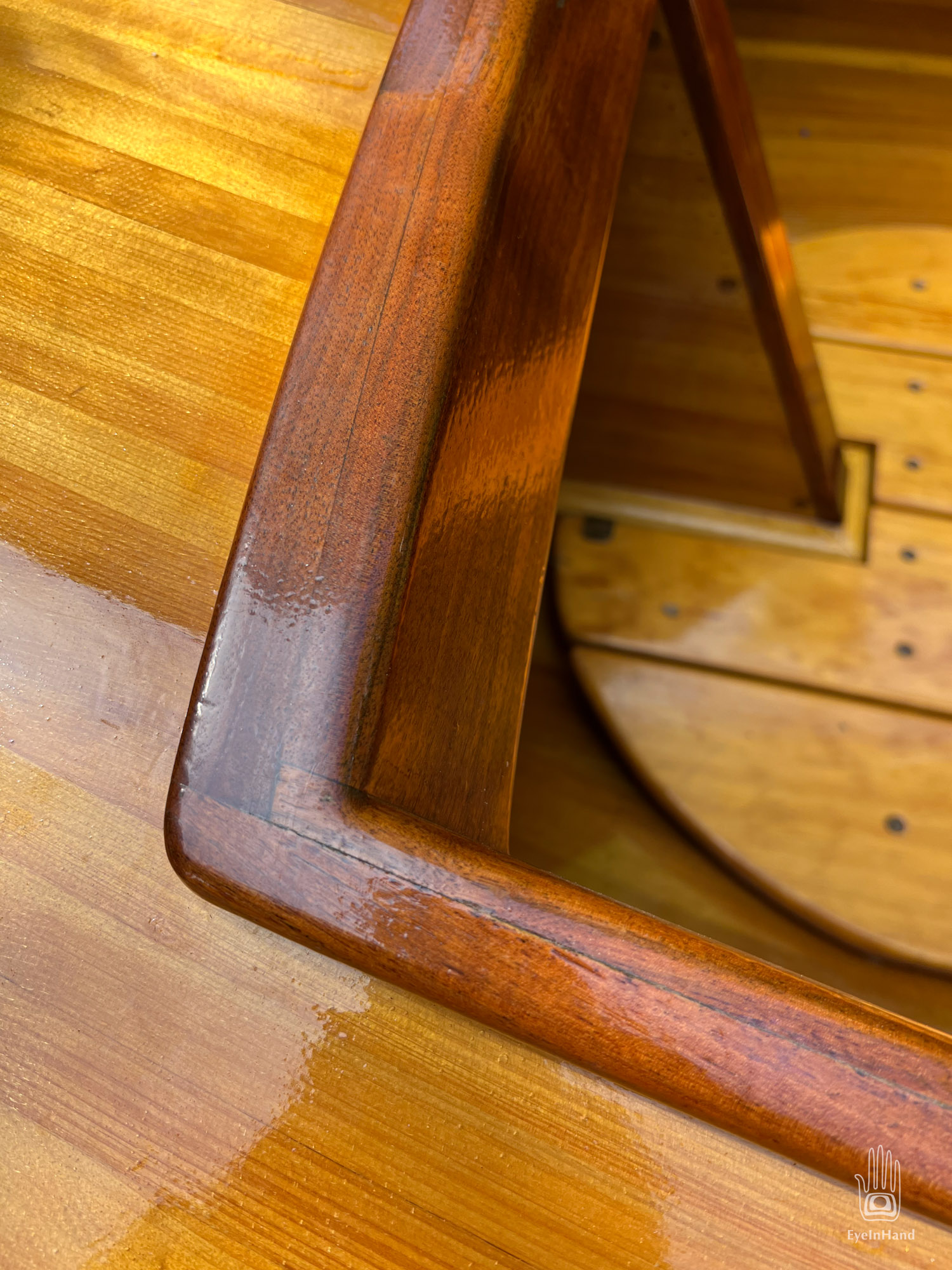
These boats have held up amazingly well. They were first launched over ten years ago, and I’ve only had to refresh with a single coat of varnish five years ago. Just one minor repair after a boneheaded collision with a channel marker in St. Michaels (now I know to sail first, take pictures second).
Was hoping to get out on some big water near the Bay tomorrow. Now the forecast says it will be gusty, pushing the bounds of my comfort zone, which seems more narrow than it once was. If so, we may still do a little refresher cruise on a local lake, where things should be more placid.
So much has transpired since we held the boat birthing party in this backyard. Kind of wild to look back on it all now.
The tiny Wool Sower Wasp stings a fresh young stem and deposits her eggs. The developing eggs use chemicals like hormones to stimulate the tree to produce a very specific growth structure that encases and protects the larvae. This growth is not a normal shape or color or texture of the tree – the growing parasites within the stem tell the tree to do this, and how to do it.
If you open the gall, the larvae look like seeds packed side by side with fuzzy tails. The whole cycle takes two years to complete. Though strangely parasitic, it doesn’t hurt the trees.
Though the gall protects the young larvae from predators, and even pesticides, there are other parasitic wasps that have evolved special ovipositors that allow them to pierce the gall and deposit wasp eggs on the wasp larvae.
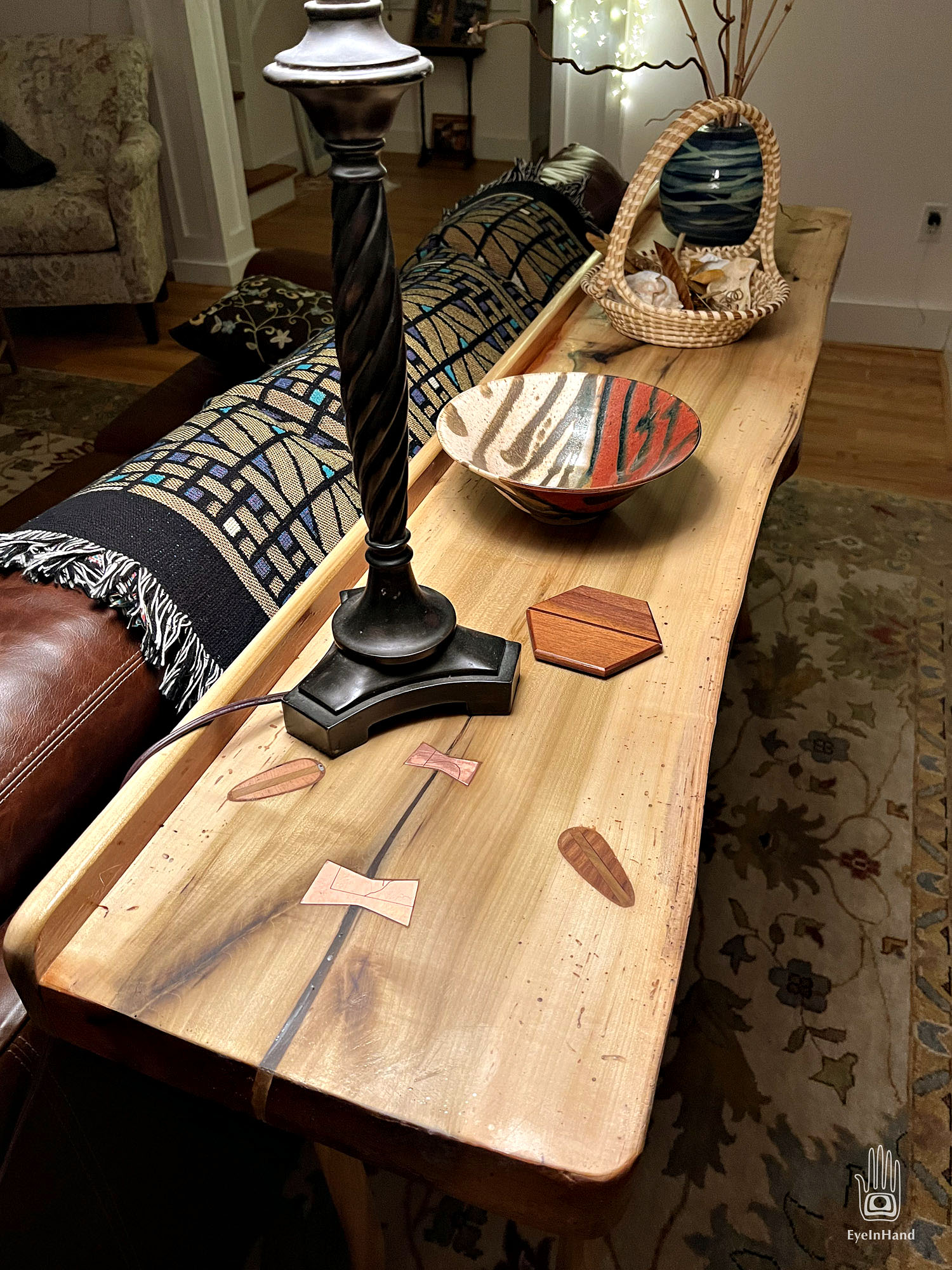
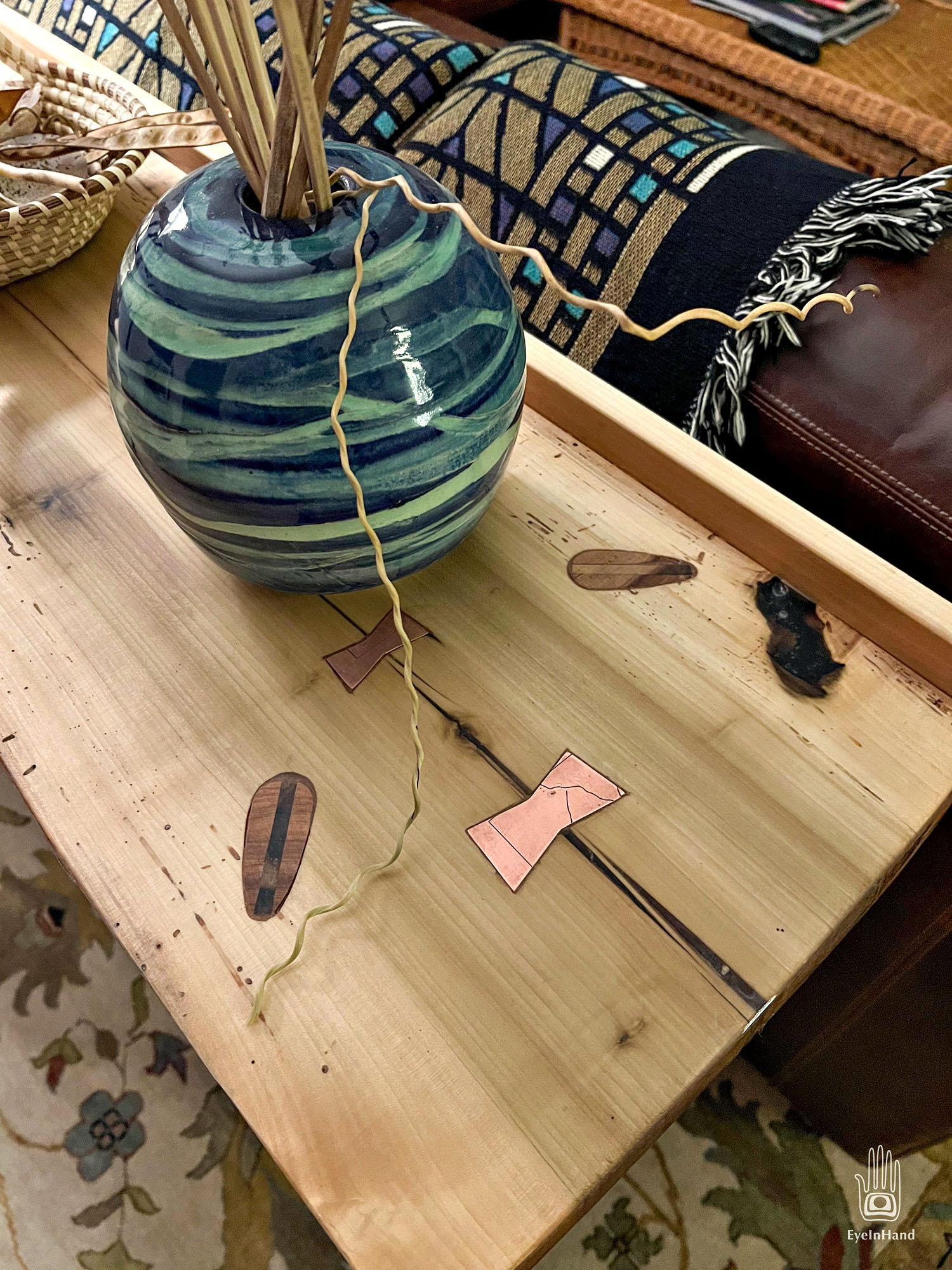
The axe handle console table is done. I may add a coat of varnish when the epoxy cures; but probably not necessary.
It’s a fun art project, with a story.
The Slab Story
Long ago, a friend had an ancient beloved tulip poplar on his land, which had to be taken down. Hundreds of years old, it was easing slowly into the afterlife. He would have let nature take its course, but the old tree towered over their house. So he and a buddy had to cut it down. It fell with a crash that shook the whole house like thunder. They limbed and lopped the hulking leviathan until they tired of it, then hauled off what they could with a farm tractor, leaving behind the massive column of the main trunk.
He, like me, was a porch sitter. The big log laid in view from said porch. Time passed. Thrifty by nature, he realized it was a shame to waste such an impressive piece of wood. And he was sentimentally attached to it. Besides, it was too big to move, even with a tractor.
Many evenings he pondered what one might do with such a fine piece of wood, that big old log laying out in the yard.
John and I worked together then. We often egged each other on in various ill-advised endeavors. So, inevitably, he thought of me. I said I wasn’t interested, had a boat building project already. But every couple of months he’d bring it up again, with fresh enthusiasm and some new idea of what I might make with it. He convinced himself that no one in the world could make anything worthy of this old tree but me, and he spent a couple of years gently trying to convince me of the same. And eventually did. I was renovating the kitchen, and needed an interesting piece of wood for a bar top. This might do.
It wasn’t until I arrived, with nothing but a trailer and a come-along, fully intending to bring the log home, that John mentioned it was too too heavy to move with a tractor. He was known to leave out such practical details. In the intervening years it had settled into the ground. It wouldn’t budge. At all. No way. And furthermore, after all those years of John’s pondering, the wood had continued to decay, getting punky and worm eaten. But there it lay, and here I was.
I suggested the only option was to cut out a couple of big slabs with a chainsaw, and maybe take those. His face fell, but he conceded to the new plan. I went back for the saw. After a couple of hours of chaining, ankle deep in sawdust, sweating and dirty, I had one big slab of poplar – 8 feet long, over 3 feet wide, and 8 inches thick. Even that was too heavy for the two of us to lift, we had to drag it onto the trailer. I got it home, wrestled it into the shed, and left it.
Years later, when we started the kitchen remodel, I divided the slab again into two 4 inch smaller slabs. The widest one, from the center, was split in two and became a countertop and bar, which turned out nice.
That left the narrower outside piece, still in the shed. Where it stayed for 20 years.
Original bar top slab
The Table Project
I got tired of moving that slab around the shed, but couldn’t bear tossing it out after all it took to get there. Next to it was a spare axe handle. Moving them both yet again, I noticed the handle shared a similar elegant S shape with the legs of a table T inherited from her grandmother.
Hmm. We could use a new table. Axes and timber go together.
I went to our local hardware store and got three more handles.
The challenge was to cut clean mortises for the tenons, the head of the axe handles. Axe head holes and handles for them are oblong egg-shapes. This means for a mortise you can’t just bore nice neat round holes. And worse, for the legs to set snug, you have to create a slight hip in the hole like this:
) (
When you drive in a wedge to spread the tenon, this hip gives it something to bite on, holding the leg tight.
So I had to trace the shape of the handles, bore out most of it with a drill press, then clean up the rest with a jigsaw and rasp files, and hope it would be close enough that any gaps would fill when glued.
Test mortise fit for handle tenon.
This last piece of slab was the least desirable section. It had splits in both ends that widened as the old log dried out, and deep gouges left by the chainsaw from when I just eyeballed the original cuts. I trimmed a limb stub off one end and that made the whole piece just narrow enough to run through a planer. Nothing to do about the worst chainsaw cuts, but one side came out clean.
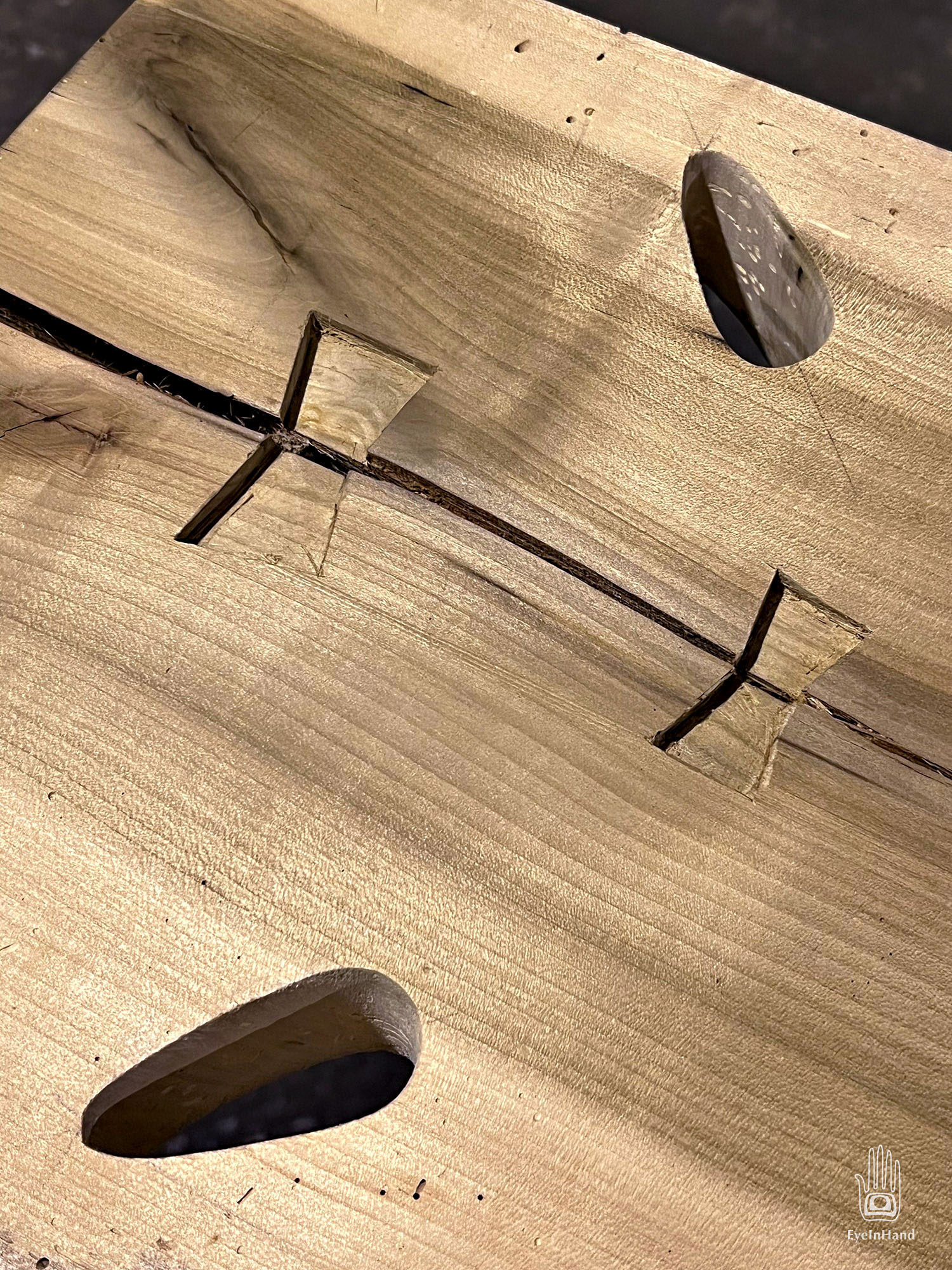
Next challenge is the cracks. These are big splits, with daylight showing all the way through the slab, running much of the length. Bowtie keys (dovetail keys, dutchman keys) would stabilize the cracks and can be sort of decorative on a fanciful art piece.
Paper templates over cracks.
I had a plate of solid copper in the shop. It was the embossing plate from the cover of a literary collection we edited years ago, with the engraving of the original design. It was thick enough to cut into keys and be inset across the cracks. The butterfly shape has the same practical effect as hip-shaped mortises – they lock parts in place so they can’t separate.
Cutting and polishing the bowtie cleatsCutting insets for the cleats
Parts cut and shaped, holes drilled, inlays inset, the last step is to glue everything together and hammer the wedges home. There is only one shot at doing the legs. Once you drive in the wedges, there’s no getting them back out. All you can do is apply the glue before you start and hope for the best. I opted to use epoxy to give me a little more work time, and is better at filling gaps. Epoxy would be used for filling the splits anyway, so using it everywhere prevents weird shifts in the final finish.
I did the keys first so I could hammer those in tight. Then took a deep breath and did the legs. They worked out well, with only one or two places that needed filling with a paste of sawdust and epoxy.
Bowtie cleats glued, legs glued with wedges driven into handle tenons
A week later, I added a backsplash lip of poplar just to keep things from rolling off the back. This was screwed and pegged. Then I could clean up the residue from glue-up and apply the finish coats.
To fill the cracks, tape is applied to the top side, sealed tight, and while the table is inverted the cracks filled with epoxy, which flows down and flat against the tape. Bottoms and legs are just brushed on. A few days later, the assembly can be flipped over and the tape removed.
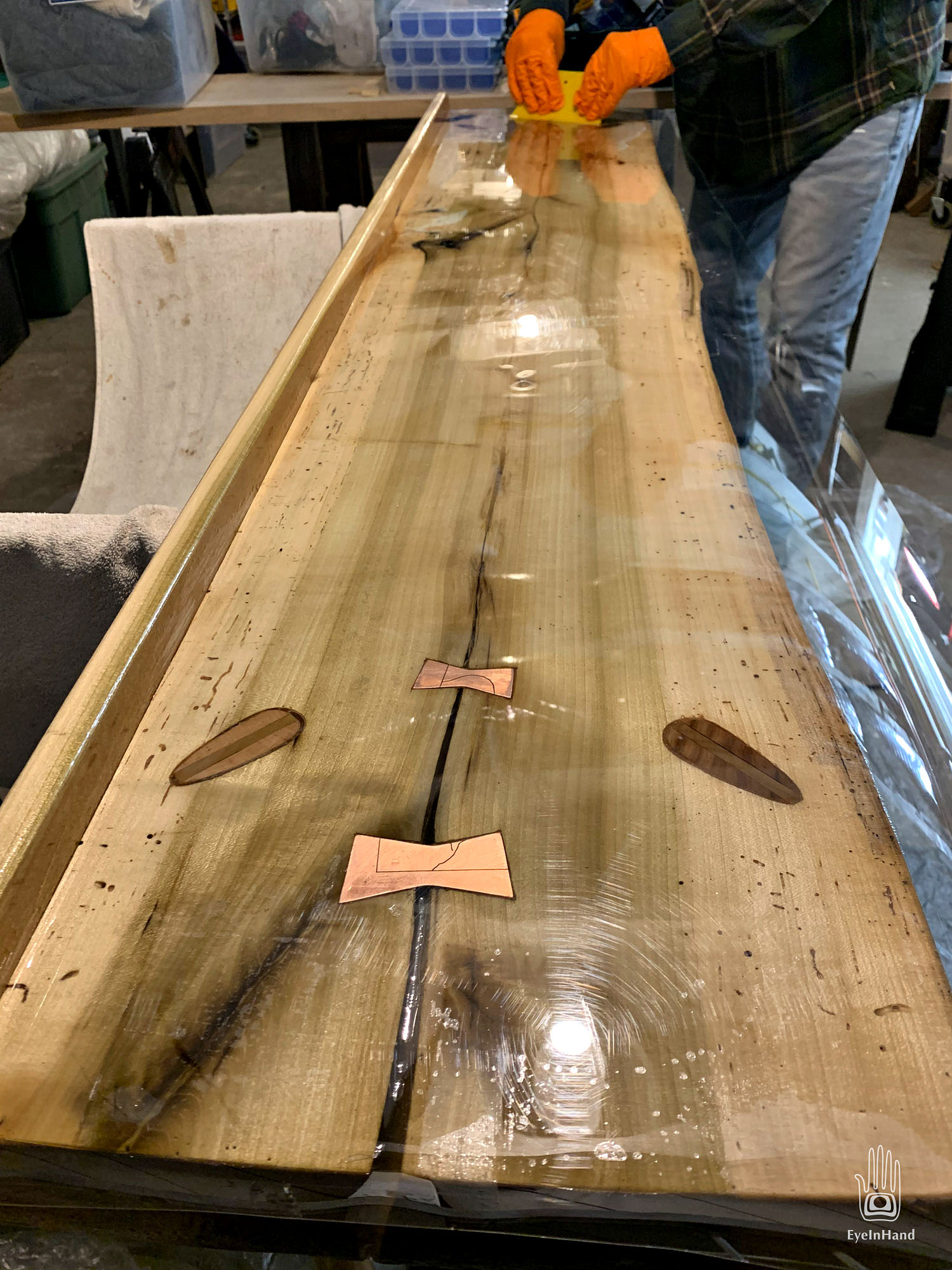
For the top, I used a trick I learned building the boats. You first spread a thin coat of epoxy with a squeegee, then roll out a sheet of mylar film and squeegee out the air bubbles.
A day later, the mylar lifts off clean. This makes a thin, smooth layer of epoxy, perfectly flat. In fact, too flat and glossy for this rough project. So the last step is to buff the surface with 0000 steel wool for a more matte finish.
Overall it came out well. Looks like a greyhound on spindly legs. Weird enough to be fun.