Yankee Point

Almost exactly one year ago, to the day.


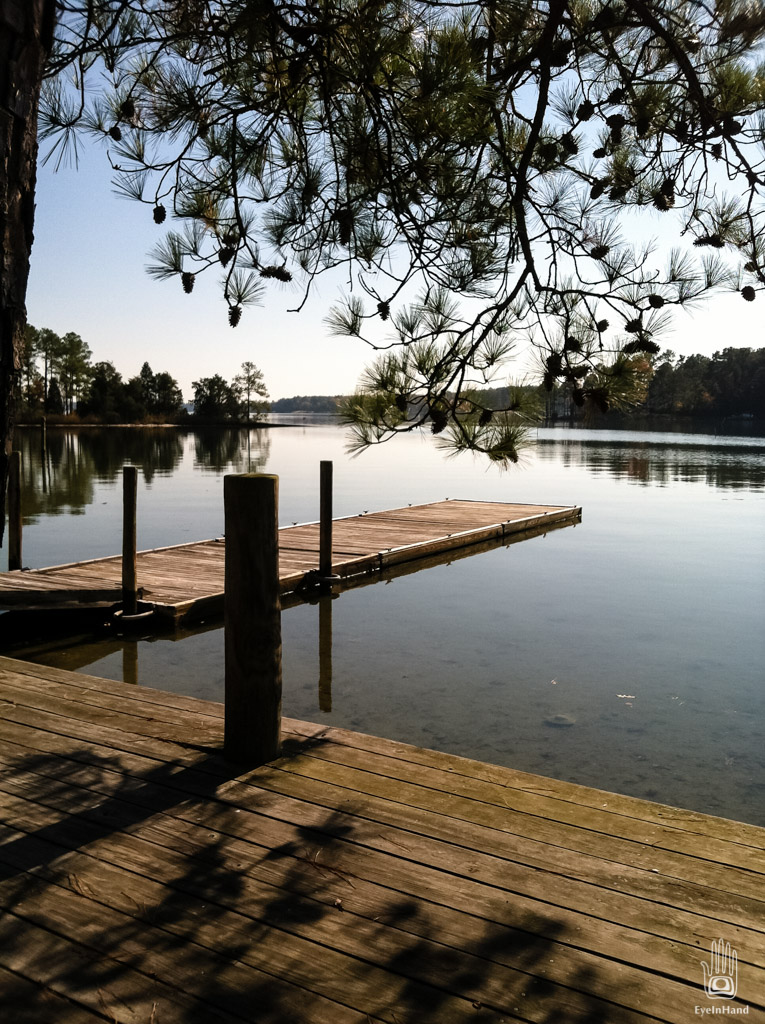
The Corrotoman juts off the north shore of the Rappahannock, a mile or so upriver from the White Stone Bridge.

When I was a boy the bridge scared me. Even my dog was afraid of the bridge, and would cower in the floor of the back seat when she saw the big steel trusses approaching.

Not just because it is very high for a bridge – when it was built post Pearl Harbor, the Navy wanted to use the deep Rappahannock as a hurricane hole and disperse the fleet from Norfolk quickly, and be able to get upriver and back even if a storm (or Japanese planes) knocked out the power, so a low, drawbridge type wouldn’t do – but, more significantly, because it was so high a few people had gone over the edge to their deaths. Driving across you could see scars in the guardrails where they swerved and bounced over. Grandfather never failed to point them out. I could imagine too clearly the bumping crunch, the long silence of the drop, and the explosive splash at the end.

Continue reading “Yankee Point”

180,000 Whales

My first real job was with the Virginia Department of Conservation. I ran the Chesapeake Bay Youth Conservation Corps. It was a great job. I got to give away money, which is a good job to have, even though I made very little money myself. I learned a lot in those years about how different people – and groups of people – have an effect upon resources in the public domain.

I grew up around Watermen. They were independent people who almost always worked alone, hard, and for long hours. And except for a few exceptional situations – unusual circumstances outside their control, or some new technology at their disposal that tipped the scales unexpectedly, or a technique that proved more destructive than productive – they rarely had a lasting impact on the fisheries. As independent fishermen, the system was brutally but effectively self-regulating. If there were not enough fish to catch, using only the limited crude methods at their disposal, most of them would lose everything and look for work elsewhere. Only the most determined and those willing to live on the most modest means survived to fish another day.

Nobody got rich fishing anymore. Those days were long gone.

But, like many things, that whole equation changes when corporations take over the business of fishing. With vast capital resources at their disposal, and hard science and technology at their fingertips, the equation gets skewed. It’s like a few men with chain saws and teams of horses logging sustainably for generations, because they can’t do otherwise given their tools, compared to heavy equipment hydraulic tree harvesters and helicopters airlifting clear-cut forests out of the mountains to railroads specifically built for hauling logs. It’s a whole different ballgame.

My great uncle James was a cook on a Menhaden ship in a fleet that operated in the Chesapeake out of Reedville. He made an awesome Waldorf Salad. Once they started using airplanes to spot the scattered shoals of fish from the air, scooping up what was once an entire season’s catch of the diminishing fish in a few sets of the net, the whole situation changed from sustainable harvesting to endgame resource extraction. And he quit.

So this story really interests me. It’s a good story, even if you don’t have that background, because it follows parallels in so many areas; because human beings are remarkably consistent in our behavior. But it really speaks to the challenges facing any attempt to regulate any resource management that assumes self-regulation by the interested parties.

180,000 whales killed in the span of a few years. Not back in they heyday of whaling. No, this was when they were already endangered. Killed off the books, and illegally. By just one country’s fleet of three factory ships.

A good read. And worth keeping in mind whenever we discuss fishing quotas, resource management, and basics of human behavior:

The Most Senseless Environmental Crime of the 20th Century

180,000 whales. Gone in just five years.

Now imagine a coal or oil or gas industry making decisions in any way other than those that increase the short term value for shareholders. Or willingly harvesting less Menhaden, or Cod. It’s their job to obfuscate the facts if those facts are inconvenient, just as it’s the job of a horse trader to hide the real age of his mares. Imagine fur trappers leaving pelts for another day, and trusting each other to do the same. Or African ivory, or rhino tusks.

We cannot assume that they are not lying.

White Hurricane

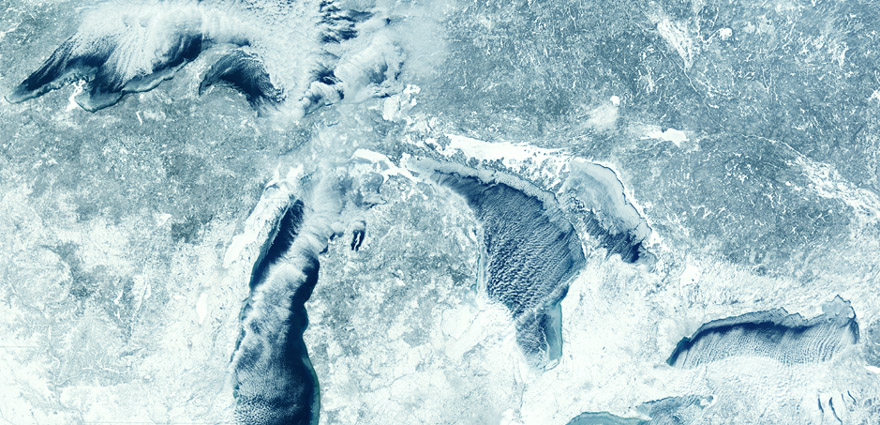
the Great Lakes in winter

“White Hurricane” by Lou Blouin of FoundMichigan.org

An excellent story of an epic storm that struck the Great Lakes 100 years ago today.

Modern weather forecasting was in its infancy. At the time, basic weather observations were gathered by hand by people scattered across the country, like human instruments, then wired back to the Weather Bureau in Washington, DC, where it was all compiled, analyzed for patterns and clues, regurgitated, codified, and wired back. These “forecasts” were a half day or more out of date by the time they arrived. Fast changing conditions simply charged through the open cracks. The warnings of a major storm sometimes arrived after the storm did.

That’s what happened in 1913. A fierce arctic gale out of Canada crashed into a warm gulf front pouring over the Appalachians. The collision occurred over the Great Lakes, and caught the whole region by surprise, exploding into a storm never seen before. Two feet of snow fell overnight. Winds went from balmy to hurricane force within the span of a half hour, whipping up waves 35 feet high. Ships and sailors on the notoriously dangerous waters were caught vulnerable and woefully unprepared for what lay in store.

By the time it was done, 12 major ships and over 250 men were lost in this single storm – more than in all the seasons of the decade before combined. Bodies of sailors washed up on the shores for days, as did parts of their ships, often scribbled with their forlorn farewells to loved ones.

A great story well told, well worth a read.


Cat’s Paws

Steve Earley in Spartina 


A long time ago, when I asked why puffs of wind coursing across the water were called “cat’s paws,” I was told it’s because the wind makes patterns on the surface shaped like a cat’s paw. Sounded reasonable.

Well, obviously, this is wrong. And clearly an explanation made up by someone who never set foot on a sailboat once their whole life.

Continue reading “Cat’s Paws”

Not a Schooner, a Yawl, Y’all

Spartina in the slip


Steve warned me about the wine festival going on next door.

Leaving the mountains before daylight (I am sooo not a morning person), then driving east a couple of hours with nothing but a pot of coffee for breakfast, then headlong into the blinding rising sun, only to arrive in a city already unnavigable on any day, but now with barricaded streets (“Now With Even More Unnavigabilty!”), well dang. Every street within four blocks of Spartina was garrisoned by petulant orange cones blockading the precious oenophiles, barring passage. Tired of circling the block, I bounced over a concrete median into a parking garage, waving at the not overly amused patrolman. He was there for the overtime – getting paid to block the road, not write tickets – and we both knew that.

Continue reading “Not a Schooner, a Yawl, Y’all”

MASCF 2013 ~ Race Day and Sunday Sailing


Video from the Mid-Atlantic Small Craft Festival
clips from the race and sailing with the girls on Sunday

Wrapping up posts from the festival with clips shot during the race on Saturday. We were late leaving the dock, and wind was very light, so we were about 100 yards back when the starting gun went off. No worries, had no intension of competing; just wanted to be in position to take good pictures.


There was a little more wind on Sunday, though most folks cleared out early. Too bad, as it was a fine day to be on the water. Emily took the tiller again, and got her first taste of what it feels like when a puff comes along and makes things more exciting. I think she was hooked.

When we got back to the dock, which was all but cleared out, there was a smartly dressed couple waiting for us. Robert Benic and his girlfriend Tania had driven out from DC hoping to see some Melonseeds. Robert began building one back in Spring of 2012, and is now working on framing and interior, and doing a great job. It’s his first boat build, ever. We really enjoyed talking with them, and they got to see the boats in person they had come to know on the web.

On Saturday, we met a father and son who had been building a Melonseed together, and are on the downhill side of the project, and very excited to finish. They, too, had come out to see some in person. They had come to know all the other builder resources on the web, just as I did, and knew Aeon and Caesura now, too. It was fun for them to see the boats in real life. You could see that seeing the boats in the water, in use, was recharging their desire to finish, already imagining themselves in the boat sailing. It’s what keeps you going.

One of the really nice things about sharing is you get so much back. All the builders who helped me through my project are still well-known to me, and some are now good friends. It’s a very supportive group, and it’s nice to be able to pass that same spirit along to others, and share in their challenges and enthusiasm again. That sense of accomplishment when you finally work through a problem is really rewarding. No doubt they’ll do the same for others that come behind.

Great seeing everyone. Next year.


MASCF 2013 ~ How to Shuck an Oyster


Video from the Mid-Atlantic Small Craft Festival
Clips from Friday and Saturday.

Back when the Depression hit (the one in the ’30s) my grandfather, my dad’s dad, hitched a mule and plow to a fence post in a field in Arkansas. He walked into the road, thumbed a ride with a trucker, and left home and never went back. According to his brothers, this made his father – who was known across three counties for epic rages – mad as hell.

Besides lying about his age to get into the army, among other things, he believed he could scrape together a living if he could play music. He taught himself to play fiddle and started a band. They travelled all over the country playing dance halls and pasture parties full of Oakies and other desperate displaced persons. When he noticed saxophone players were getting better-paying gigs, he taught himself sax and learned to swing. There was a faded black and white photo of him on the wall in the house, wearing a suit and a skinny tie on some stage in a barn in the mid-west, a framed playbill next to it.

By the time I was 12, he’d forgotten how to play most of the songs from those years, and most of the guys who knew them had died.That didn’t stop him and some local buddies from trying, though, after a they’d had a few beers. Eventually, there were only about four songs they could play drunk with a fiddle, a guitar, and a gut bucket. Sitting up with them late at night I learned them all.

“Goodnight Irene” was one of them.